 Preview
 Send
Send Share
Share
 Details

 Download
 Similars
 X-Ray
X-Ray Diaporama
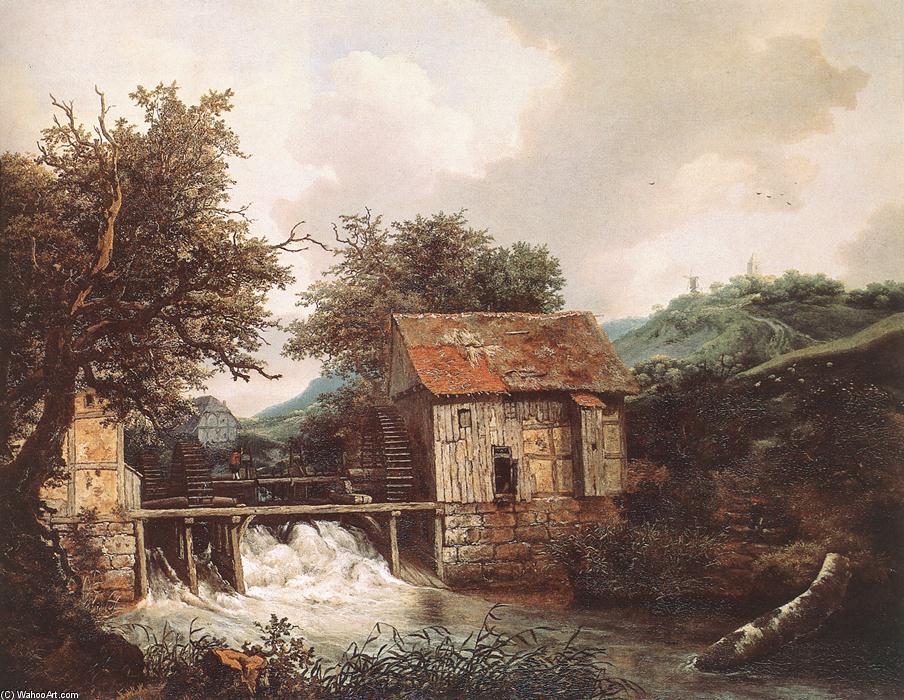
Two Watermills and an Open Sluice near Singraven
 Oil On Canvas
- WallArt
- Dutch Golden Age Landscape
 1650
1650- Early Modern
 87.0 x 111.0 cm
 National Gallery
 Read More
Hand Made Oil Reproduction
Hand-painted oil on canvas in your size and frame, made to order by our artists. ( Buy Print Buy Image)




P118B $10

P118H $10

P118W $10

P438Z $10

P508JH $12

P508YH $12

P805H $10

P805Z $10

P919BZ $10

P919G $10

P919XJ $10

P959ZH $10

P968JZ $12

W106C $8

W218G $10

W218JH $8

W218Y $10

W307PJ $10

W316G $10

W316PJ $8

W316Y $10

W398PJ $8

W4111J $10

W500HY $15

W500JH $15

W692G $12

W849H $8

W940BG $15

W953PJ $8




Pick from our preset sizes that match the artwork's original proportions.

You may enter your own dimensions to fit a specific frame or space. If your selected size does not match the original image's proportions, we will either crop the artwork or extend the painting with additional hand-painted elements. A digital mockup will be sent for your approval before production begins.
Please note that the on-screen preview does not reflect the actual cropping or extension. Only the mockup will accurately show the final composition.
While custom sizes are available, we recommend selecting a dimension from the predefined list to preserve the original proportions.
After order, ArtsDot.com team will email client for instructions and provide a mockup preview
Worldwide Delivery () in 3/4 weeks instead of standard 5 weeks. (27 August). No compromise on quality.

Free Worldwide Express Shipping

High-Quality Linen Canvas

Full Shipping Insurance

Customs Tax Refund Guarantee

True Color Matching Guarantee

60-Day Return Policy (Defects Only)

100% Money-Back Guarantee

Bulk Discount Offer
 Glass option is only available in size under 110 CM

Two Watermills and an Open Sluice near Singraven
Reproduction Medium
Reproduction Size
-


Total Price
$ 263
Artwork Description
A Masterpiece of the Dutch Golden Age
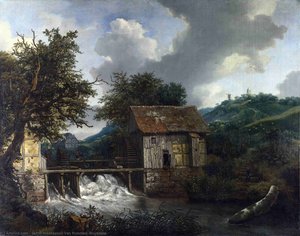
In the heart of the seventeenth century, during the zenith of the Dutch Golden Age, Jacob van Ruisdael captured a moment of profound tranquility and industrious grace in his seminal work, “Two Watermills and an Open Sluice near Singraven.” This painting is far more than a mere topographical record of the Netherlands; it is a poetic meditation on the harmony between human endeavor and the untamed rhythms of nature. As one gazes upon the canvas, they are immediately transported to a lush, verdant valley where the gentle rush of water and the soft rustle of reeds seem almost audible. The composition is masterfully balanced, with two watermills standing as sentinels on opposite banks of a spirited stream, connected by a modest bridge that invites the viewer to step into this idyllic landscape.
Ruisdael’s technical prowess is on full display through his sophisticated use of light and atmosphere. Utilizing a luminous palette dominated by cool blues, deep forest greens, and earthy ochres, he employs thin, delicate glazes to create a sense of depth that feels remarkably tactile. The way the sunlight filters through a heavy, moisture-laden sky—a hallmark of the Dutch landscape tradition—creates a dappled effect across the water and foliage, lending the scene a breathing, living quality. This meticulous attention to detail, from the subtle ripples in the sluice to the distant, ethereal silhouettes of windmills and a church steeple, ensures that every inch of the canvas contributes to an immersive, panoramic experience.
Symbolism and the Spirit of Prosperity
Beyond its breathtaking aesthetic appeal, the painting serves as a profound cultural document. During this era, the watermill was not merely a piece of rural architecture but a powerful symbol of industriousness and economic prosperity. For the Dutch people of the 1650s, these structures represented the technological ingenuity that fueled their global maritime dominance and domestic stability. Yet, Ruisdael avoids a purely celebratory tone; instead, he weaves a narrative of coexistence. The presence of grazing horses, wandering sheep, and small figures tending to the mills suggests a world where human progress does not conquer nature but flows alongside it, much like the very stream that powers the wheels.
For the discerning collector or interior designer, this artwork offers an unparalleled sense of serenity and timelessness. The composition’s ability to balance grandeur with intimacy makes it a versatile centerpiece for any sophisticated space. Whether placed in a sunlit gallery or a quiet study, the painting’s soft, atmospheric light provides a calming focal point that evokes a sense of nostalgia and peace. Owning a high-quality reproduction of this masterpiece allows one to bring the enduring spirit of the Dutch masters into a modern environment, offering a window into a world where beauty, labor, and nature exist in perfect, eternal equilibrium.
Related Artworks
Artist Biography
early life and career
jacob isaackszoon van ruisdael, a prominent dutch painter, draughtsman, and etcher, was born in 1628 in the netherlands. he is widely regarded as the pre-eminent landscape painter of the dutch golden age, a period marked by great wealth and cultural achievement.
artistic style and contributions
van ruisdael's work is characterized by its versatility and prolific nature, depicting a wide variety of landscape subjects. from 1646, he painted remarkable dutch countryside scenes, which later took on a more heroic character after his trip to germany in 1650. his late work, produced while living and working in amsterdam, featured city panoramas and seascapes, often with the sky occupying two-thirds of the canvas.
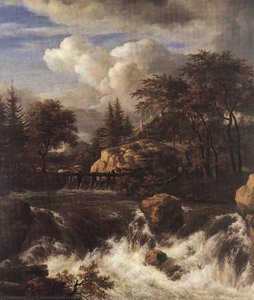
- waterfall in a rocky and mountainous landscape, showcasing his mastery of light and composition.
- view of haarlem with bleaching grounds, exemplifying his ability to capture the essence of the dutch landscape.
- view of the dam and the damrak in amsterdam, highlighting his skill in cityscape painting.
museums and collections
van ruisdael's work is spread across private and institutional collections worldwide, with notable holdings at:
- the national gallery in london
- the rijksmuseum in amsterdam
- the hermitage museum in st. petersburg
influence and legacy
van ruisdael's influence on landscape painting traditions is profound, shaping the english romantics, the barbizon school in france, and the hudson river school in the us. he also inspired generations of dutch landscape artists. notable works:
- view of haarlem with bleaching grounds
- waterfall in a rocky and mountainous landscape
- view of the dam and the damrak in amsterdam
artist's profile on ArtsDot: jacob isaackszoon van ruisdael
jacob isaackszoon van ruisdael
1628 - 1682 , Netherlands
Quick Facts
- Artistic Movement Or Style: Dutch Golden Age, Baroque
- Artists Or Movements Influenced By This Artist:
- English Romantics
- Barbizon School
- Artists Who Influenced This Artist: ['Hendrick Vroom']
- Date Of Birth: 1628/1629, Haarlem
- Date Of Death: 1682, Amsterdam
- Full Name: Jacob Isaackszoon van Ruisdael
- Nationality: Dutch
- Notable Artworks:
- View of Haarlem
- Waterfall landscape
- Amsterdam cityscape
- Place Of Birth: Haarlem, Netherlands
Related Articles

Dutch Masters: 10 Golden Age Paintings That Still Inspire |
Journey into the Dutch Golden Age! Explore 10 iconic paintings by Rembrandt, Vermeer & Hals. Discover the stories behind these Baroque masterpieces and find museum-quality art reproductions to elevate your home decor on .
Golden Light & Dutch Skies: Bringing the Magic of Dutch Golden Age Landscapes into Your Home
Transform your home with the breathtaking light of Dutch Golden Age landscapes. Discover how hand-painted oil reproductions of masterworks like Ruisdael and Vermeer bring timeless elegance, atmosphere, and soulful texture to modern interiors. Elevate your space with museum-quality art.
Jacob van Ruisdael: Master of Dutch Landscape & the Evocation of National Identity
Explore the life & work of Jacob van Ruisdael, the preeminent Dutch landscape painter. Discover his technical brilliance, symbolic depth, and lasting influence on art history. Learn about collecting Ruisdael's masterpieces.
Nicolaes Berchem: Dutch Golden Age Pastoralism & the Evolution of Landscape Painting
Explore the captivating world of Nicolaes Berchem, a leading Dutch Golden Age painter. Discover his idyllic landscapes, masterful technique & lasting influence on art history. Learn more at ArtsDot.
Charles Leickert: Capturing the Dutch Golden Age Light – A Comprehensive Study of Technique, Context, and Legacy
Explore the captivating winter landscapes of Charles Leickert, a master of Dutch Golden Age light & atmosphere. Discover his techniques, symbolism, and lasting legacy – a comprehensive study for art enthusiasts and collectors.