 Preview
 Send
Send Share
Share
 Details

 Download
 Similars
 X-Ray
X-Ray Diaporama
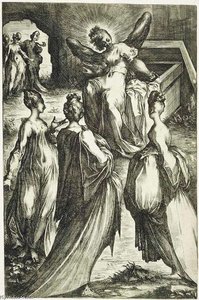
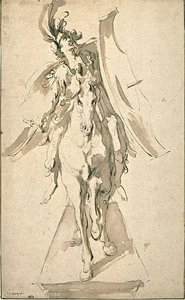
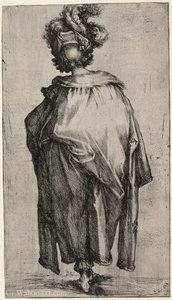
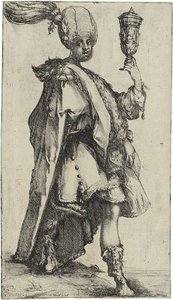
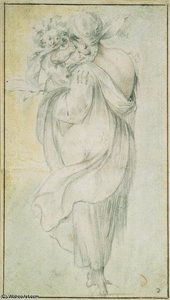
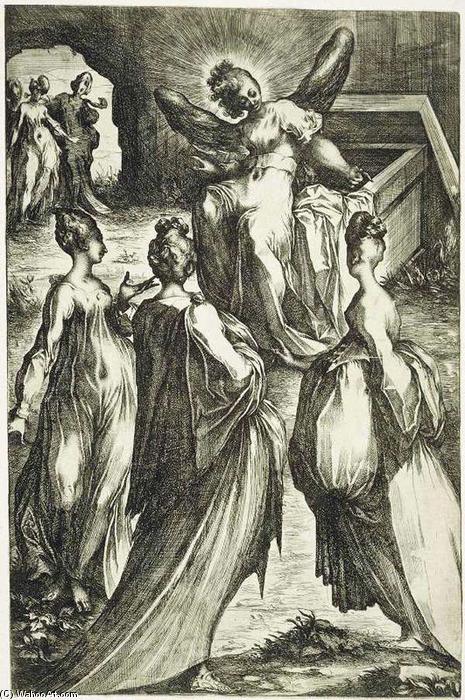
The Three Marys at the Tomb
 Engraving
- WallArt
- Northern Mannerism
 1620
1620 442.0 x 287.0 cm
 British Museum
 Read More
Hand Made Oil Reproduction
Hand-painted oil on canvas in your size and frame, made to order by our artists. ( Buy Print Buy Image)




P118B $10

P118H $10

P118W $10

P438Z $10

P508JH $12

P508YH $12

P805H $10

P805Z $10

P919BZ $10

P919G $10

P919XJ $10

P959ZH $10

P968JZ $12

W106C $8

W218G $10

W218JH $8

W218Y $10

W307PJ $10

W316G $10

W316PJ $8

W316Y $10

W398PJ $8

W4111J $10

W500HY $15

W500JH $15

W692G $12

W849H $8

W940BG $15

W953PJ $8




Pick from our preset sizes that match the artwork's original proportions.

You may enter your own dimensions to fit a specific frame or space. If your selected size does not match the original image's proportions, we will either crop the artwork or extend the painting with additional hand-painted elements. A digital mockup will be sent for your approval before production begins.
Please note that the on-screen preview does not reflect the actual cropping or extension. Only the mockup will accurately show the final composition.
While custom sizes are available, we recommend selecting a dimension from the predefined list to preserve the original proportions.
After order, ArtsDot.com team will email client for instructions and provide a mockup preview
Worldwide Delivery () in 3/4 weeks instead of standard 5 weeks. (17 August). No compromise on quality.

Free Worldwide Express Shipping

High-Quality Linen Canvas

Full Shipping Insurance

Customs Tax Refund Guarantee

True Color Matching Guarantee

60-Day Return Policy (Defects Only)

100% Money-Back Guarantee

Bulk Discount Offer
 Glass option is only available in size under 110 CM

The Three Marys at the Tomb
Reproduction Medium
Reproduction Size
-


Total Price
$ 388
Artwork Description
The Three Marys at the Tomb: A Northern Mannerist Masterpiece
Jacques Bellange’s “The Three Marys at the Tomb,” painted around 1620, is not merely a depiction of a biblical scene; it's a profound meditation on grief, faith, and the mysteries surrounding Christ’s death and resurrection. This arresting engraving, now housed within the walls of the Art Institute of Chicago, offers a rare glimpse into the intensely personal style of a Northern Mannerist artist largely obscured by history – Jacques Bellange himself. His work, characterized by dramatic contrasts, elongated figures, and an almost palpable psychological depth, stands as a testament to his unique vision, a vision that continues to resonate with viewers centuries later.
The scene unfolds within a cavernous space dominated by the stark simplicity of a tomb. Three women – traditionally identified as Mary Magdalene, Mary of Clopas, and Mary Salome – gather in sorrowful contemplation before it. The composition is meticulously constructed, employing a complex layering of figures that creates an overwhelming sense of density and drama. Bellange masterfully utilizes perspective to draw the viewer into the scene, utilizing diagonal lines to guide the eye through the crowded space and emphasizing the emotional weight of the moment. The figures themselves are rendered with elongated forms and exaggerated gestures – a hallmark of Mannerism – conveying not just physical presence but also intense inner turmoil.
A Study in Dramatic Light and Shadow
Bellange’s technical skill is immediately apparent in his masterful manipulation of line and texture. The engraving, executed using the burin tool on a metal plate, showcases an extraordinary level of detail. The folds of the women's drapery are rendered with painstaking precision, creating a tactile illusion that invites the viewer to almost feel the fabric’s weight and texture. Similarly, the rough-hewn stone of the tomb is depicted with remarkable realism, contrasting sharply with the smooth, polished surfaces of the angels’ garments. The use of light and shadow is particularly striking; a central source illuminates key figures while casting deep shadows that heighten the sense of drama and mystery.
The composition's spatial arrangement—with the women positioned in the foreground and the tomb receding into the background—creates an illusion of depth, drawing the viewer’s eye towards the central event. The placement of the angel hovering above the tomb is crucial; its presence signifies divine intervention and offers a glimmer of hope amidst the sorrowful scene. Bellange's deliberate use of diagonals further enhances this sense of movement and dynamism, capturing the emotional intensity of the moment.
Symbolism and Historical Context
“The Three Marys at the Tomb” is deeply rooted in the religious and artistic currents of its time – the Northern Mannerist period. This style, flourishing primarily in the Low Countries and Germany during the 16th century, emphasized emotional expression, psychological complexity, and a departure from the idealized forms of the Renaissance. Bellange’s work reflects these trends through his use of elongated figures, dramatic lighting, and emotionally charged gestures.
The scene itself is laden with symbolism. The tomb represents mortality and the finality of death, while the presence of the three Marys signifies grief, mourning, and ultimately, faith. The angel embodies divine grace and offers a promise of resurrection. Bellange’s choice to depict the women in such an intimate and emotionally charged manner—their faces etched with sorrow, their bodies contorted in grief—underscores the profound impact of Christ's sacrifice on the human soul. The inclusion of the soldiers asleep speaks to the indifference of the world to spiritual matters.
A Legacy Rediscovered
Despite his remarkable talent and the enduring quality of his work, Jacques Bellange’s legacy remained largely obscured for centuries. His lack of surviving paintings led scholars to speculate about his origins and artistic influences. However, in recent decades, renewed interest in Northern Mannerism has brought Bellange's engravings back into the spotlight, revealing him as a significant figure in the history of European art. “The Three Marys at the Tomb” stands as a powerful example of his unique vision—a testament to his technical skill, emotional depth, and profound understanding of the human condition.
Related Artworks
Artist Biography
A Shadowy Master of the Northern Mannerist Spirit
Jacques Bellange remains one of the most enigmatic and captivating figures in the history of European printmaking. A master of the Northern Mannerist style, his life was lived in the twilight of the late Renaissance, a period defined by elongated forms, theatrical tension, and an almost feverish psychological intensity. Though much of his personal biography remains shrouded in the mists of the early 17th century, his artistic legacy is vibrantly clear through the intricate lines of his etchings. Born around 1575 in the Bâse-les-Vosges region of France, Bellange emerged from a landscape of shifting borders and intense religious fervor, eventually finding his creative home within the sophisticated courtly circles of Nancy.
The traces of his early life are as delicate and elusive as his etchings. While historical records regarding his family origins are sparse, scholars often point to his rapid ascent within the Duchy of Lorraine as evidence of a significant, perhaps even noble, connection. There is much speculation that he may have been the illegitimate son of a high-ranking patron, a theory supported by the prestigious title of "knight" attributed to him and his seamless integration into the court of the Dukes of Lorraine. By 1595, he was already established in La Mothe, honing a craft that would soon transform the medium of printmaking into a vehicle for profound emotional expression.
The Elegance of the Lorraine Court
Bellange’s career reached its zenith under the patronage of Henri II and Philippe III, the Dukes of Lorraine. This period of courtly stability provided him with the luxury of time and resources, allowing him to refine a technique that was uniquely his own. Unlike many of his contemporaries who focused on the clarity of the High Renaissance, Bellange embraced the complexities of Mannerism. His work is characterized by a restless energy, where figures seem to twist and writhe with an almost supernatural grace. In the halls of Nancy, he developed a visual language that blended the sacred with the profane, creating works that were as much about the human psyche as they were about religious devotion.
His mastery of the etching needle allowed him to manipulate light and shadow with unprecedented drama. Through the meticulous use of hatching and cross-hatching, he could conjure textures ranging from the heavy folds of ancient drapery to the weathered skin of a street performer. This technical prowess is perhaps most evident in his ability to imbue even the simplest subject with a sense of profound mystery. Whether depicting a noble figure or a common musician, Bellange’s hand is unmistakable, leaving behind a trail of silvery, luminous lines that seem to vibrate with life.
A Legacy Etched in Light and Shadow
The true significance of Jacques Bellange lies in his ability to capture the ephemeral. His oeuvre serves as a window into a world of intense spiritual struggle and theatrical beauty. Some of his most enduring works demonstrate this range:
- The Three Marys at the Tomb: A striking example of his religious gravity, where dramatic figures and intricate details converge to create a moment of profound biblical tension.
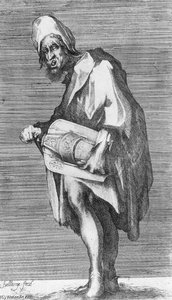
- Hurdy-Gurdy Player: A masterpiece of character study, showcasing his ability to use complex linework to capture the hunched, weary essence of a street musician, imbuing a common subject with deep psychological depth.
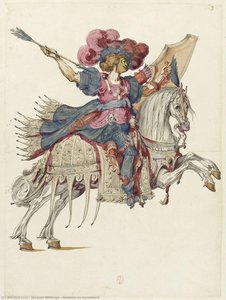
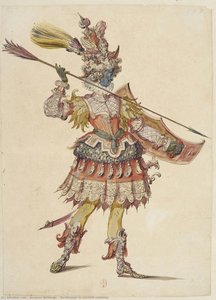
- Gentleman in Ancient Costume: An exploration of the Mannerist obsession with historical fantasy and stylized elegance, featuring a warrior adorned in attire that evokes a sense of mythic grandeur.
Though his life was cut short in 1616, Bellange’s influence endured far beyond the borders of Lorraine. His rediscovery in the 20th century brought a renewed appreciation for the expressive potential of the etched line and the enduring power of the Mannerist aesthetic. Today, he is celebrated not merely as a court artist, but as a pioneer who pushed the boundaries of printmaking, leaving an indelible mark on the history of Western art through his hauntingly beautiful, shadow-drenched visions.
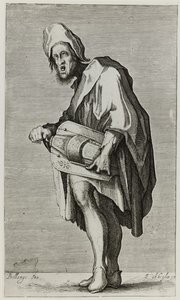
Jacques Bellange
1575 - 1616 , France
Quick Facts
- Artistic Movement Or Style: Northern Mannerism
- Artists Or Movements Influenced By This Artist: ['Renaissance']
- Artists Who Influenced This Artist: ['Hendrik Goltzius']
- Date Of Birth: c. 1575
- Date Of Death: 1616
- Full Name: Jacques Bellange
- Nationality: French
- Notable Artworks:
- Lamentation
- The Three Marys at the Tomb
- Gypsy with a Child
- Place Of Birth: Bâse-les-Vosges, France
Related Articles
Engraving's Golden Age: 10 Masterpieces That Redefined Art | ArtsDot
Journey through art history with our Top 10 Legendary Engravings! Explore masterpieces by Dürer, Rembrandt & Goya. Discover the stories behind these iconic prints and find museum-quality reproductions for your home at ArtsDot.com.
Engraving: A Historical Survey of Technique, Artistic Expression & Enduring Legacy
Explore the rich history of engraving with ArtsDot. Discover techniques, iconic artists like Dürer & Callot, collecting tips, and expert guidance for preserving your art investment. Learn about intaglio printing & more!
Hendrick Goltzius: Master Engraver & the Flourishing of Dutch Mannerism
Explore the life & art of Hendrick Goltzius, a master engraver of Dutch Mannerism. Discover his innovative techniques, iconic engravings like 'Jahel', and lasting influence on Baroque art. Learn about collecting Goltzius today.
The Intricate World of Engraving: A Historical Survey of Technique, Artistic Expression & Enduring Legacy
Explore the rich history of engraving with ArtsDot. Discover techniques, iconic artists like Dürer & Callot, collecting tips, and expert guidance for preserving your art investment. Learn about intaglio printing & more!
The Northern Renaissance: A Flourishing of Realism, Religious Reform & Artistic Innovation
Explore the Northern Renaissance! Discover Jan van Eyck's innovations, religious shifts, & key artists of this influential period. Expert analysis and insights into Early Netherlandish painting at ArtsDot.