 Preview
 Send
Send Share
Share
 Details

 Download
 Similars
 X-Ray
X-Ray Diaporama
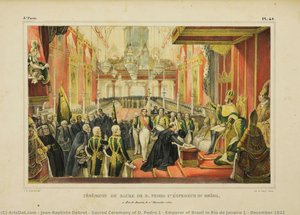
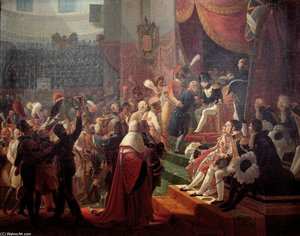
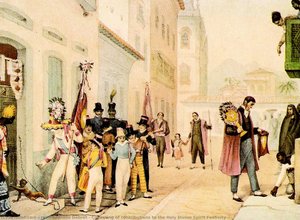
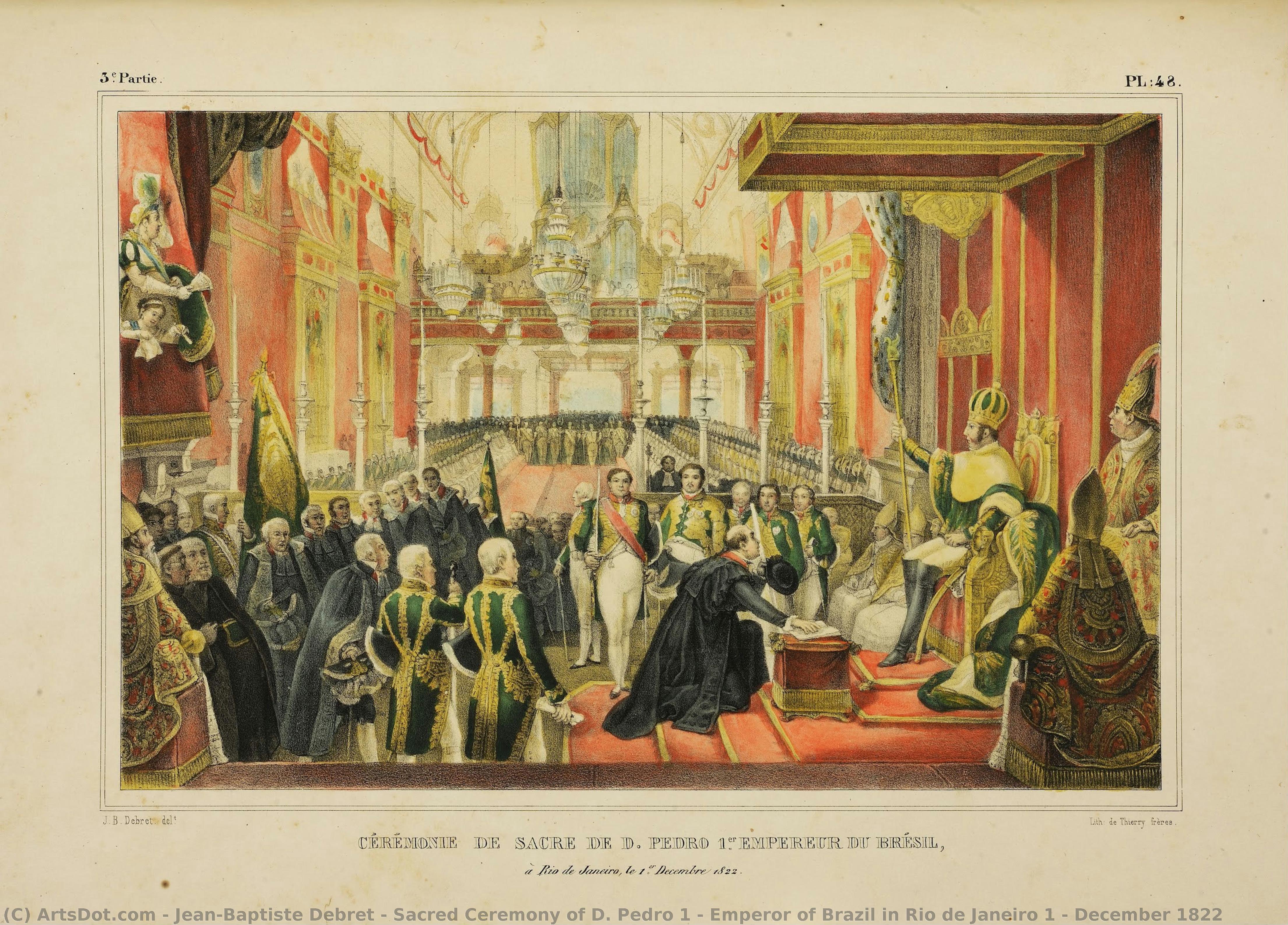
Sacred Ceremony of D. Pedro 1 ° Emperor of Brazil in Rio de Janeiro 1 ° December 1822


 Read More
Giclée / Art Print
Museum-quality giclée or canvas print with fast production and flexible finish options. ( Buy Hand Made Painting Buy Image)




P118B $10

P118H $10

P118W $10

P438Z $10

P508JH $12

P508YH $12

P805H $10

P805Z $10

P919BZ $10

P919G $10

P919XJ $10

P959ZH $10

P968JZ $12

W106C $8

W218G $10

W218JH $8

W218Y $10

W307PJ $10

W316G $10

W316PJ $8

W316Y $10

W398PJ $8

W4111J $10

W500HY $15

W500JH $15

W692G $12

W849H $8

W940BG $15

W953PJ $8




Pick from our preset sizes that match the artwork's original proportions.

You may enter your own dimensions to fit a specific frame or space. If your selected size does not match the original image's proportions, we will either crop the artwork or extend the image with a mirrored or solid-fill edge. A digital mockup will be sent for your approval before production begins.
Please note that the on-screen preview does not reflect the actual cropping or extension. Only the mockup will accurately show the final composition.
While custom sizes are available, we recommend selecting a dimension from the predefined list to preserve the original proportions.
Worldwide Delivery () in 2 weeks instead of standard 4/5 weeks. (6 September)

Free Worldwide Express Shipping

High-Quality Linen Canvas

Full Shipping Insurance

Customs Tax Refund Guarantee

True Color Matching Guarantee

100-Day Return Policy (Defects Only)

100% Money-Back Guarantee

Bulk Discount Offer
 Glass option is only available in size under 110 CM

Sacred Ceremony of D. Pedro 1 ° Emperor of Brazil in Rio de Janeiro 1 ° December 1822
Giclée / Art Print
Reproduction Size
-


Total Price
$ 63
A Chronicle of Empire: The Sacred Ceremony of D. Pedro I
Jean-Baptiste Debret’s “Sacred Ceremony of D. Pedro I Emperor of Brazil in Rio de Janeiro 1° December 1822” is more than a historical illustration; it's a meticulously crafted window into a pivotal moment in Brazilian history and the burgeoning grandeur of the newly formed empire. Executed in 1839, this artwork captures the solemnity and weight of Emperor Pedro I’s coronation – an event that solidified Brazil’s independence from Portugal and established its sovereign status on the world stage. The scene unfolds within a richly decorated hall, brimming with clergymen, dignitaries, and the very symbols of imperial power: the Emperor himself, resplendent in his robes, and the elaborate regalia signifying his authority. Debret's skill lies not just in depicting these figures accurately but in conveying the palpable atmosphere of reverence and formality that permeated such a significant ceremony.
Neoclassical Precision and Lithographic Detail
- Style: The artwork firmly adheres to the Neoclassical style, championed by Debret himself. This is evident in the emphasis on idealized forms, precise lines, and a restrained emotional palette.
- Technique: Executed as a lithograph or engraving, the image showcases Debret’s mastery of this demanding technique. The creation involved meticulously drawing onto stone plates with specialized tools, then transferring the image through repeated printing processes. This resulted in an incredibly detailed rendering – observe the crispness of the architectural details, the carefully delineated folds of fabric, and the precise modeling of facial features.
- Materials: Stone plates were used for etching, and ink was applied to transfer the design. The smooth texture achieved is a direct result of this printing method, contrasting with the brushstrokes typically associated with oil painting.
Symbolism Woven into the Scene
Beyond its technical brilliance, “Sacred Ceremony” is rich in symbolic meaning. The religious attire of the clergy underscores the importance of faith in the newly established empire. The Emperor’s regalia – a crown, scepter, and other symbols of power – visually assert his sovereignty. The composition itself, with its formal arrangement of figures, reinforces the hierarchical structure of Brazilian society at the time. The muted color palette—browns, blacks, and golds—contributes to the overall sense of gravitas and formality, reflecting the solemnity of the occasion and the weight of imperial responsibility.
A Window into 19th-Century Brazil
Created in 1839, this artwork offers a valuable glimpse into the political and social landscape of early 19th-century Brazil. Debret’s work was commissioned to document significant events, solidifying his role as a pioneer in Brazilian arts education. The scene captures a moment of transition – the birth of an independent nation grappling with its identity and future. The slightly flattened perspective, reminiscent of stage presentations, further emphasizes the ceremonial nature of the event, transforming it into a carefully constructed narrative for posterity.
Related Artworks
Artist Biography
Jean-Baptiste Debret: A Neoclassical Painter and Pioneer of Brazilian Arts Education
- Born: Paris, France (April 18, 1768)
- Died: Paris, France (1848)
Early Life and Artistic Training
Jean-Baptiste Debret was a French painter and draughtsman celebrated for his Neoclassical style. Born in Paris, France, in 1768, he received his formal artistic training at the prestigious French Academy of Fine Arts. A pivotal influence on his development was Jacques-Louis David, a renowned neoclassical artist who also happened to be a relative of Debret’s. Under David's guidance, Debret honed his skills and absorbed the principles of Neoclassicism—a style emphasizing classical austerity, idealized forms, and heightened emotional expression.
Career Highlights: Salon Success and Travels to Brazil
Debret made his debut at the Salon des Beaux-Arts in 1798, earning a second prize. His early works reflected the Neoclassical aesthetic, often depicting historical scenes that resonated with the moral climate of the time. A significant turning point in Debret’s career arrived in March 1816 when he joined the French artistic mission to Brazil. This journey proved transformative, both personally and professionally.
- French Artistic Mission: Debret's participation in this mission underscored France's commitment to cultural exchange and arts education abroad.
- Imperial Academy of Fine Arts: In December 1822, he established his atelier at the Imperial Academy of Fine Arts in Rio de Janeiro, quickly becoming a valued teacher.
- First Brazilian Art Exhibition: Debret spearheaded the organization of Brazil's first-ever arts exhibition, showcasing both his own works and those of his students—a landmark event for the burgeoning Brazilian art scene.
Artistic Style and Notable Works
Debret’s paintings are characterized by their meticulous attention to detail and adherence to Neoclassical principles. His subject matter frequently encompassed historical events, portraits, and scenes depicting Brazilian life and culture. His work provides valuable insights into 19th-century Brazil.
- Neoclassical Influence: Debret’s style is deeply rooted in the Neoclassical tradition, evident in his emphasis on clarity, order, and idealized forms.
- Historical Scenes: Many of his paintings depict significant historical moments, reflecting a desire to educate and inspire through art.
- Brazilian Subject Matter: His time in Brazil led him to focus increasingly on depicting Brazilian landscapes, indigenous peoples, and colonial life.
Notable works by Jean-Baptiste Debret can be found on the ArtsDot website, including:
- Sacred Ceremony of D. Pedro 1 ° Emperor of Brazil in Rio de Janeiro 1 ° December 1822 – A detailed lithograph capturing a pivotal moment in Brazilian history.
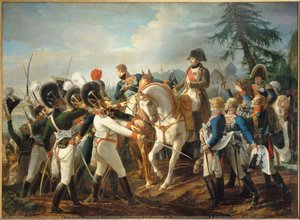
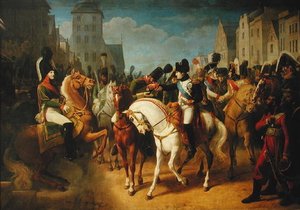
- Napoléon harangue les troupes bavaroises et wurtembourgeoises à Abensberg, 20 avril 1809 – A powerful depiction of Napoleon addressing troops.
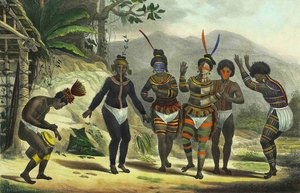
- Indians Crossing A Creek – An example of his detailed depictions of indigenous life.
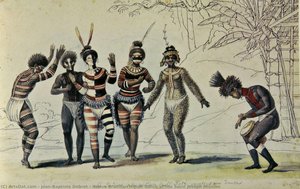
- Indigenous Population Of Cantagalo, C.1826 – A watercolor showcasing Brazilian culture and landscapes.
Legacy and Later Years
Debret returned to France in 1831 and was elected a member of the Académie des Beaux-Arts. He is perhaps best known for his monumental three-volume series of engravings, Voyage pittoresque et historique au Brésil, published in 1834. This work served as a visual record of Brazilian life during his time there and contributed significantly to European understanding of Brazil. Despite achieving recognition, Debret died poor in Paris in 1848.
- Voyage Pittoresque: His publication remains an invaluable resource for historians and art enthusiasts alike.
- Impact on Brazilian Art Education: Debret’s contributions to arts education in Brazil left a lasting legacy, helping to establish a foundation for the development of Brazilian artistic talent.
For further information on Jean-Baptiste Debret and his work, please visit the ArtsDot website or consult Wikipedia's page on the Museu Nacional de Belas Artes.
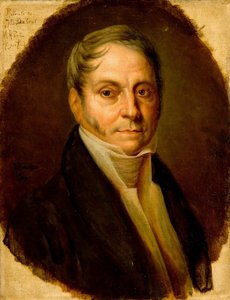
Jean-Baptiste Debret
1768 - 1848 , France
Quick Facts
- Artistic Movement Or Style: Neoclassical art
- Artists Who Influenced This Artist: ['Jacques-Louis David']
- Date Of Birth: April 18, 1768
- Date Of Death: 1848
- Full Name: Jean-Baptiste Debret
- Nationality: French
- Notable Artworks:
- Sacred Ceremony of D. Pedro 1 °
- Napoléon harangue les troupes
- Indians Crossing A Creek
- Indigenous Population Of Cantagalo
- Napoleon Bonaparte Decorating
- Place Of Birth: Paris, France
Related Articles
Jean-Baptiste Debret: Witnessing Brazil’s Emergence Through Art & Identity
Explore the captivating art of Jean-Baptiste Debret, a key witness to Brazil’s imperial era. Discover his iconic portraits, historical scenes & insightful depictions of Brazilian life. Learn about his legacy and find museum-quality reproductions at ArtsDot.

Jean-Baptiste Carpeaux: Sculpting Passion & Controversy in 19th-Century France
Explore the passionate life & controversial works of Jean-Baptiste Carpeaux, a leading French sculptor of the Second Empire. Discover his realism, iconic sculptures like 'Ugolino,' and lasting legacy as a precursor to Rodin.
Jean-Baptiste Pater: Rococo Charm & Ephemeral Beauty of 18th-Century France
Explore the captivating world of Jean-Baptiste Pater, a master of Rococo painting. Discover his elegant *fête galante* scenes and shimmering portraits – a glimpse into 18th-century French aristocracy. Learn about his legacy & find high-quality reproductions.
Benedito Calixto: A Brazilian Modernist's Landscape of Memory & National Identity
Explore the captivating world of Benedito Calixto, a pivotal Brazilian Modernist painter. Discover his iconic landscapes, the story behind the famous Bandeirante portrait, and his lasting impact on Brazilian national identity. Learn more at ArtsDot.
Jean-Baptiste-Siméon Chardin: Master of Still Life & Everyday Elegance
Explore the serene world of Jean-Baptiste-Siméon Chardin, master of still life & genre painting. Discover his revolutionary techniques, enduring legacy, and timeless depictions of everyday elegance. Learn more at ArtsDot.