 Preview
 Send
Send Share
Share
 Details

 Download
 Similars
 X-Ray
X-Ray Diaporama
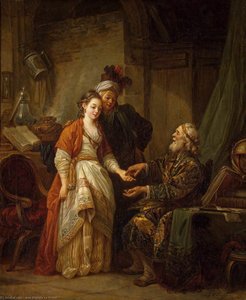
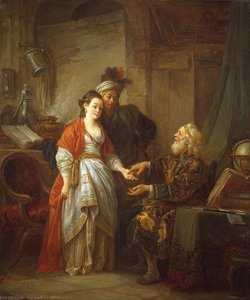
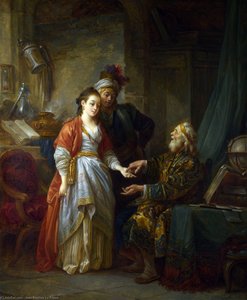
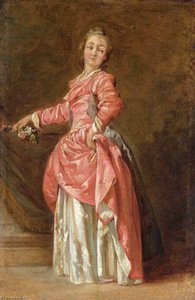
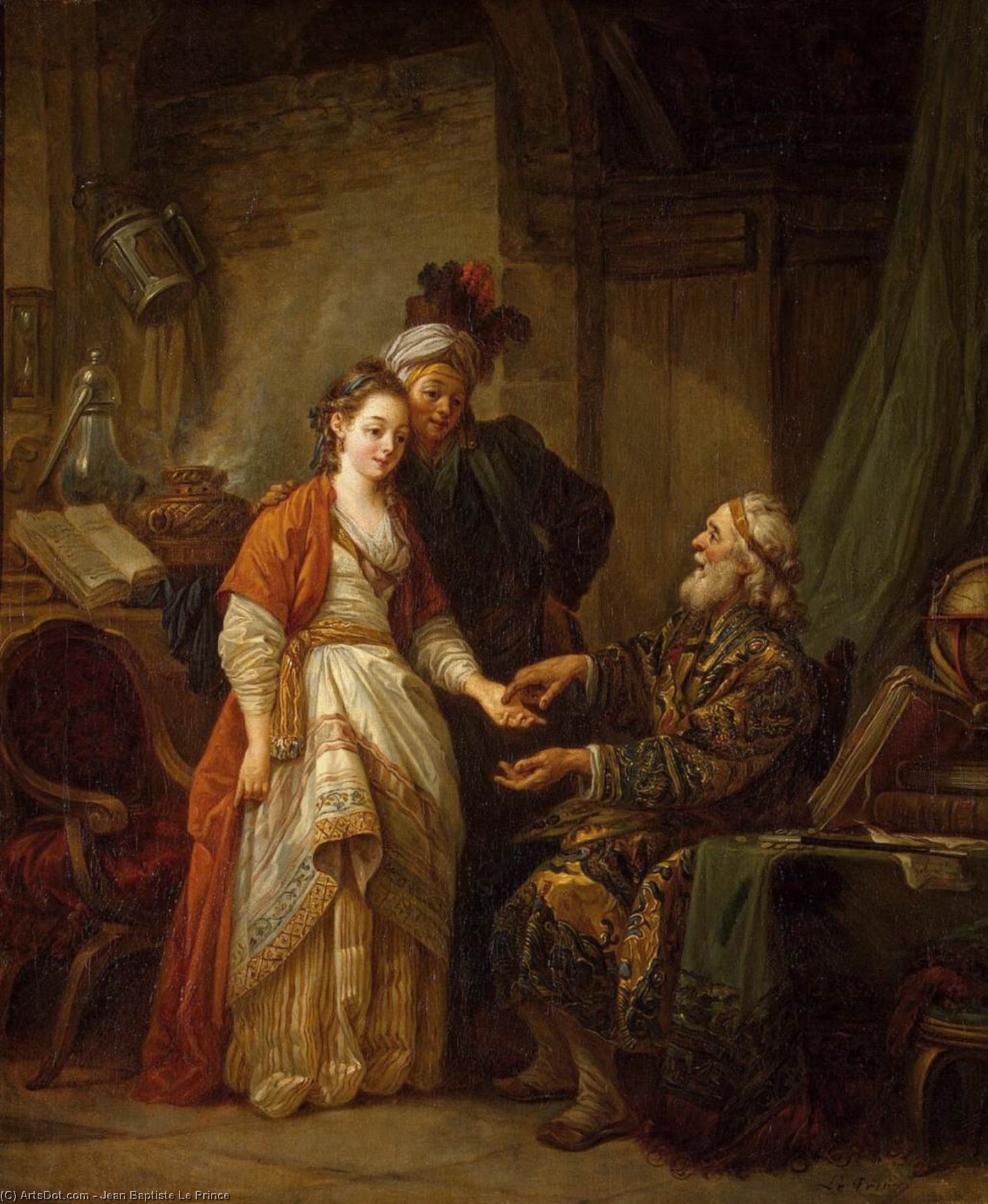
Visit to a Palmist
 Acrylic On Canvas
- WallArt
- Neoclassical Painting
 1775
1775 78.0 x 66.0 cm
 Hermitage Museum
 Read More
Hand Made Oil Reproduction
Hand-painted oil on canvas in your size and frame, made to order by our artists. ( Buy Print Buy Image)




P118B $10

P118H $10

P118W $10

P438Z $10

P508JH $12

P508YH $12

P805H $10

P805Z $10

P919BZ $10

P919G $10

P919XJ $10

P959ZH $10

P968JZ $12

W106C $8

W218G $10

W218JH $8

W218Y $10

W307PJ $10

W316G $10

W316PJ $8

W316Y $10

W398PJ $8

W4111J $10

W500HY $15

W500JH $15

W692G $12

W849H $8

W940BG $15

W953PJ $8




Pick from our preset sizes that match the artwork's original proportions.

You may enter your own dimensions to fit a specific frame or space. If your selected size does not match the original image's proportions, we will either crop the artwork or extend the painting with additional hand-painted elements. A digital mockup will be sent for your approval before production begins.
Please note that the on-screen preview does not reflect the actual cropping or extension. Only the mockup will accurately show the final composition.
While custom sizes are available, we recommend selecting a dimension from the predefined list to preserve the original proportions.
After order, ArtsDot.com team will email client for instructions and provide a mockup preview
Worldwide Delivery () in 3/4 weeks instead of standard 5 weeks. (17 August). No compromise on quality.

Free Worldwide Express Shipping

High-Quality Linen Canvas

Full Shipping Insurance

Customs Tax Refund Guarantee

True Color Matching Guarantee

60-Day Return Policy (Defects Only)

100% Money-Back Guarantee

Bulk Discount Offer
 Glass option is only available in size under 110 CM

Visit to a Palmist
Reproduction Medium
Reproduction Size
-


Total Price
$ 263
Artwork Description
A Moment of Quiet Intrigue: Jean-Baptiste Le Prince’s “Visit to a Palmist”
Jean-Baptiste Le Prince's "Visit to a Palmist," painted in 1775, is more than just a portrait; it’s a carefully constructed tableau of social observation and veiled mystery. The scene unfolds within a modestly furnished room – a dining table dominates the space, surrounded by chairs suggesting an intimate gathering – yet the focus immediately rests on the central figures: three individuals caught in a delicate exchange. A woman, likely a client, extends her hand towards a seated man, presumably a palmist, his face partially obscured and hinting at a practiced detachment. The presence of a second woman adds another layer of complexity to this silent drama, suggesting perhaps an observer or a fellow participant in the unfolding scene.
Le Prince’s style firmly anchors the painting within the Neoclassical tradition, yet it possesses a subtle softness that distinguishes it from the rigid formality often associated with the movement. The figures are rendered with a remarkable degree of realism, their clothing and gestures conveying a sense of everyday life. However, Le Prince skillfully employs light and shadow to create an atmosphere of quiet contemplation, drawing the viewer’s eye to the nuanced expressions on each face. Notice how the diffused light illuminates the woman's hand, emphasizing her gesture while simultaneously casting subtle shadows that hint at unspoken intentions.
The Context of Enlightenment Observation
To fully appreciate “Visit to a Palmist,” it’s crucial to understand the intellectual climate of 18th-century France. The era was marked by an intense interest in observation, both scientific and social. The Enlightenment championed reason and empirical inquiry, yet there remained a deep fascination with the mysteries of human behavior – particularly those related to intuition, psychology, and the supernatural. Palmistry, the practice of reading fortunes from the lines of the hand, was a popular pastime among the aristocracy, offering a seemingly accessible means of understanding the future and navigating social complexities.
Le Prince’s painting reflects this cultural preoccupation with divination and the human desire for knowledge. The palmist himself embodies this fascination – his posture suggests both expertise and a carefully cultivated air of detachment. He is not overtly mystical, but rather presents himself as an interpreter of hidden truths, inviting the viewer to contemplate the potential significance of the lines etched upon the client’s hand.
Symbolism and the Language of Gesture
The painting is rich in symbolic details that invite interpretation. The dining table, a symbol of hospitality and social interaction, underscores the importance of this encounter. The woman's gesture – extending her hand – represents an offering, a request for guidance or insight. The palmist’s response, though unseen, holds the key to understanding the scene’s meaning. The muted color palette—predominantly browns, creams, and ochres—contributes to the painting’s somber mood, suggesting a sense of gravity and introspection.
Furthermore, consider the positioning of the figures within the room. The woman is positioned slightly off-center, drawing attention to her vulnerability and dependence on the palmist's interpretation. The second woman, observing from the side, adds an element of intrigue – is she a confidante, a skeptic, or simply a witness to this private exchange? The subtle details—the folds in the clothing, the arrangement of the furniture—all contribute to a complex narrative that defies simple explanation.
A Legacy of Precision and Psychological Insight
Jean-Baptiste Le Prince was a highly regarded painter during his time, known for his historical and allegorical works. “Visit to a Palmist” stands as a testament to his skill in capturing the nuances of human interaction and conveying a sense of psychological depth. His meticulous attention to detail—particularly in rendering facial expressions and body language—is remarkable, offering a rare glimpse into the inner lives of his subjects.
Reproductions of this captivating painting retain its power to intrigue and provoke thought. Its timeless themes – trust, uncertainty, and the search for meaning – continue to resonate with viewers today. Whether displayed in a private collection or a public gallery, “Visit to a Palmist” remains a compelling example of Neoclassical artistry and a poignant reflection on the enduring human fascination with the unknown.
Related Artworks
Artist Biography
The Illustrious Journey of Jean-Baptiste Le Prince
Born in the historic city of Metz on September 17, 1734, Jean-Baptiste Nicolas Le Prince emerged as a vital figure in the tapestry of eighteenth-century French art. His early years were marked by a profound connection to his native roots, yet his artistic destiny was destined for much broader horizons. After honing his fundamental painting techniques in Metz, the young artist’s talent caught the attention of influential patrons, leading him to Paris around 1750. Under the prestigious sponsorship of Charles Louis Auguste Fouquet de Belle-Isle, Le Prince entered the orbit of the great François Boucher. Studying under such a master of the Rococo style, Le Prince absorbed the delicate grace, fluid lines, and playful elegance that defined the era, an influence that would remain visible in the early lightness of his compositions.
However, Le Prince was far more than a mere disciple of the Rococo; he was an artist of immense curiosity and geographical breadth. In 1758, his career took a transformative turn when he journeyed to Russia to serve the court of Catherine the Great. Working within the splendor of the Imperial Palace in St. Petersburg under the direction of the renowned architect Francesco Bartolomeo Rastrelli, Le Prince experienced a world of imperial grandeur. His travels during this period were nothing short of epic, as he ventured through Finland, Lithuania, and even into the vast, mysterious reaches of Siberia. These excursions provided him with a unique reservoir of visual experiences, allowing him to capture the essence of diverse cultures and landscapes, ranging from the intimate details of Russian everyday life to more exotic, far-reaching vistas.
A Mastery of Style and Subject
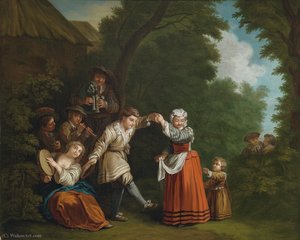
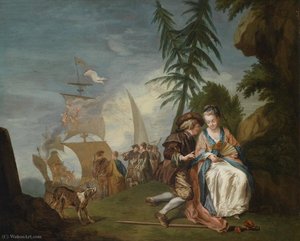
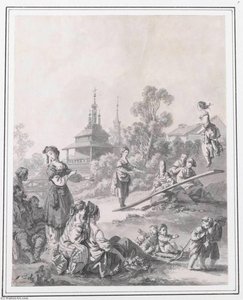
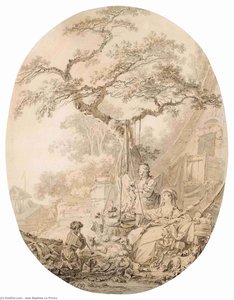
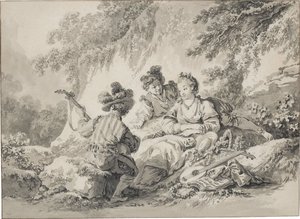
As his career matured, Le Prince’s work began to reflect a sophisticated blend of his Rococo training and an emerging interest in more grounded, narrative subjects. He became a highly skilled etcher and painter, capable of navigating between the whimsical and the poignant. His oeuvre is characterized by a remarkable versatility that allows him to move seamlessly from the lightheartedness of pastoral scenes to the profound gravity of historical or ethnographic studies. In works such as Two Men & a Lady, one can witness his ability to evoke an atmosphere of idyllic beauty and musical harmony, utilizing soft lighting and delicate textures to enchant the viewer.
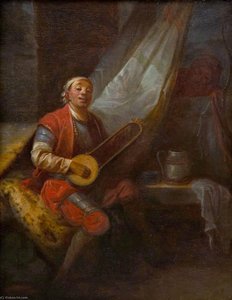
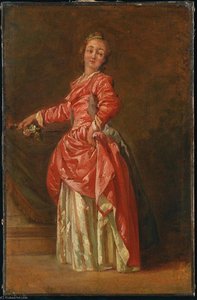
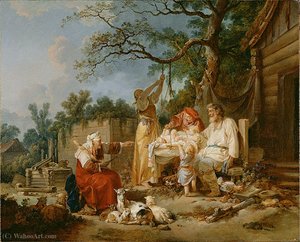
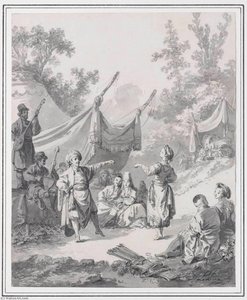
His technical prowess is perhaps most evident in his ability to utilize light and shadow to create depth and emotion. Whether he was depicting a Scene from Russian Everyday Life or the rustic charm of The Russian Cradle, Le Prince employed meticulous detail and emotive lighting to breathe life into his subjects. His later works often leaned toward a more structured approach, foreshadowing the shift toward Neoclassicism that would soon dominate the European art scene. This transition is beautifully captured in pieces like Visit to a Palmist, where the artist demonstrates a masterful command of social composition and portraiture, showcasing a meticulous attention to the textures of fabric and the subtle expressions of his figures.
Legacy and Artistic Significance
The historical significance of Jean-Baptiste Le Prince lies in his role as a cultural bridge. He was an artist who connected the refined salons of Paris with the burgeoning imperial splendor of Russia, and the delicate aesthetics of Boucher with the more robust, observational styles that would follow. His ability to document both the aristocratic elegance of the Enlightenment and the rugged realities of distant territories makes his body of work an invaluable historical record.
Though often overshadowed by the monumental figures of the Neoclassical movement who followed him, Le Prince’s contributions remain indispensable. His legacy is found in:
- Technical Versatility: The seamless integration of Rococo grace with a burgeoning realism and ethnographic detail.
- Cultural Documentation: His unique perspective as an artist who traveled extensively through the Russian Empire, capturing scenes that would otherwise have remained unknown to Western Europe.
- Influence on Printmaking: His skill as an etcher, which helped disseminate much of his visual narrative across the continent.
Today, the works of Jean-Baptiste Le Prince continue to captivate collectors and historians alike, serving as a window into a transformative era of European history where art, travel, and empire were inextricably linked.
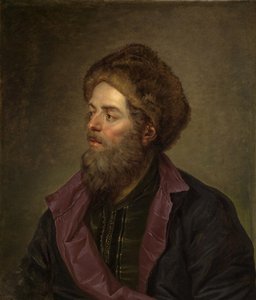
jean baptiste le prince
1734 - 1781 , France
Quick Facts
- Artistic Movement Or Style: Neoclassical
- Artists Or Movements Influenced By This Artist: ['Romanticism']
- Artists Who Influenced This Artist: ['David']
- Date Of Birth: 1734 Metz France
- Date Of Death: 1781 Paris France
- Full Name: Jean Baptiste Regnault
- Nationality: French
- Notable Artworks:
- Education of Achilles
- Alexandre and Diogène
- Place Of Birth: Paris France
Related Articles

Evolving Portraits: Personalized Art as a Chronicle of Family Life Across Generations
Create a timeless family legacy with custom portraits! ArtsDot connects you with skilled artists for heirloom-quality paintings & prints. Explore styles, commission your unique artwork today.
The Enduring Legacy of Family Portraiture: A Historical & Artistic Exploration
Explore the rich history of family portraiture with ArtsDot. Discover artistic styles, symbolism & collecting insights. Commission a custom oil painting or appraise your existing artwork today!

Preserving Generations: The Enduring Significance of Family Portraits as Legacy
Discover the enduring power of family portraits. Explore how commissioning a custom oil painting preserves your legacy for generations. Expert artists & heirloom quality.
Depicting Kinship: Family Values Across Artistic Movements & Historical Contexts
Explore the rich history of depicting kinship in art! From Dutch Masters to contemporary artists, discover how family values have been represented across movements & time. Expert insights for collectors at ArtsDot.
From Snapshot to Legacy: Reimagining Family Portraits Through the Lens of Old Master Techniques
Transform cherished memories into lasting heirlooms with custom family portraits inspired by Old Master techniques. Expert artists, museum-quality craftsmanship & a timeless legacy guaranteed. Explore the art of portraiture.