 Preview
 Send
Send Share
Share
 Details

 Download
 Similars
 X-Ray
X-Ray Diaporama
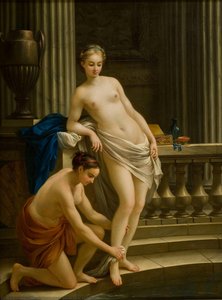
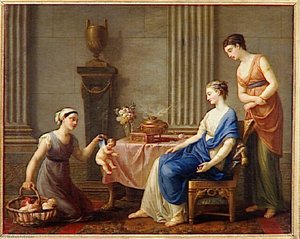
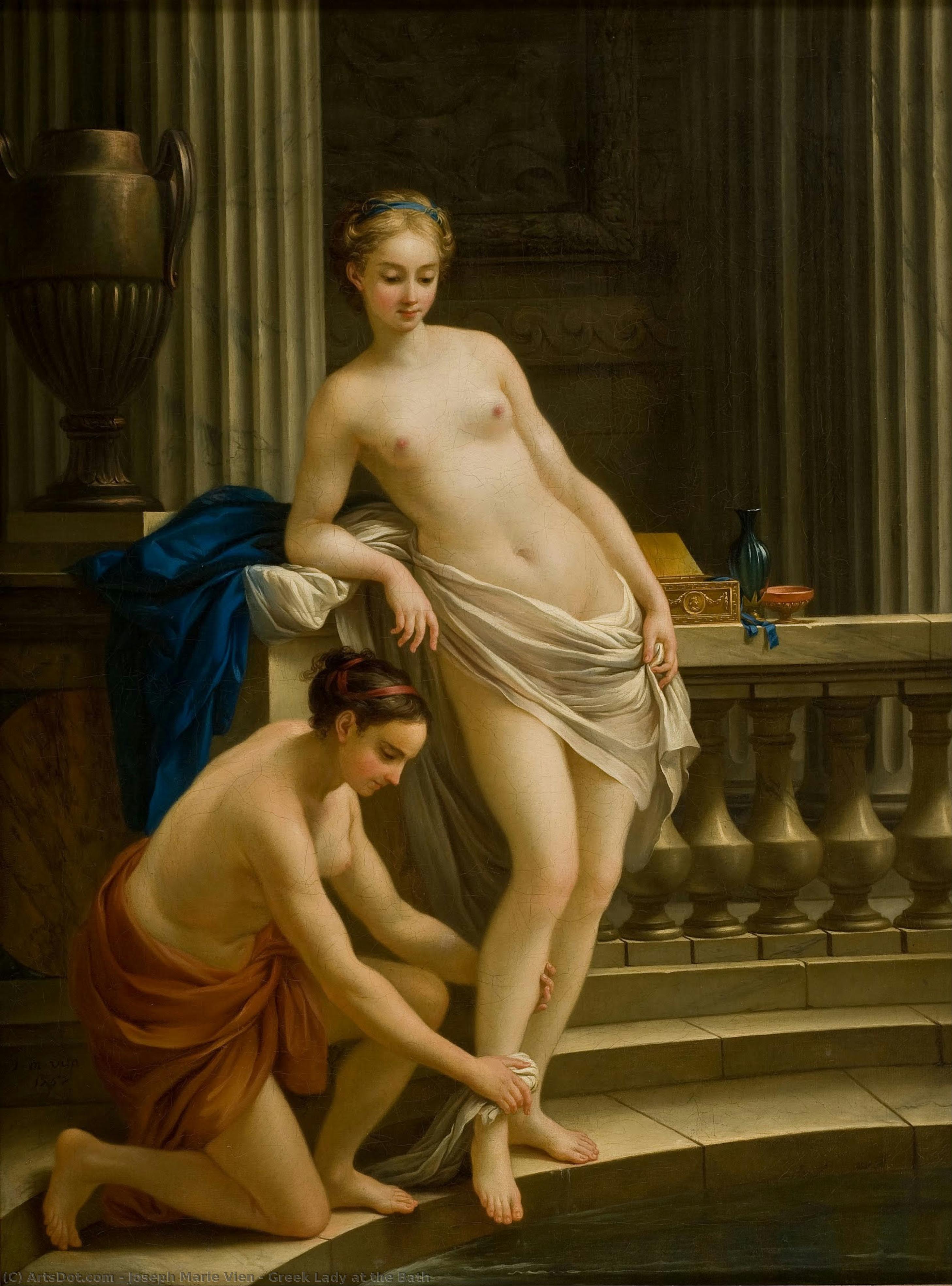
Greek Lady at the Bath
 Oil
Oil- WallArt
- French Rococo
 1767
1767- Early Modern
 90.0 x 67.0 cm
 Museo de Arte de Ponce
 Read More
Hand Made Oil Reproduction
Hand-painted oil on canvas in your size and frame, made to order by our artists. ( Buy Print Buy Image)




P118B $10

P118H $10

P118W $10

P438Z $10

P508JH $12

P508YH $12

P805H $10

P805Z $10

P919BZ $10

P919G $10

P919XJ $10

P959ZH $10

P968JZ $12

W106C $8

W218G $10

W218JH $8

W218Y $10

W307PJ $10

W316G $10

W316PJ $8

W316Y $10

W398PJ $8

W4111J $10

W500HY $15

W500JH $15

W692G $12

W849H $8

W940BG $15

W953PJ $8




Pick from our preset sizes that match the artwork's original proportions.

You may enter your own dimensions to fit a specific frame or space. If your selected size does not match the original image's proportions, we will either crop the artwork or extend the painting with additional hand-painted elements. A digital mockup will be sent for your approval before production begins.
Please note that the on-screen preview does not reflect the actual cropping or extension. Only the mockup will accurately show the final composition.
While custom sizes are available, we recommend selecting a dimension from the predefined list to preserve the original proportions.
After order, ArtsDot.com team will email client for instructions and provide a mockup preview
Worldwide Delivery () in 3/4 weeks instead of standard 5 weeks. (22 August). No compromise on quality.

Free Worldwide Express Shipping

High-Quality Linen Canvas

Full Shipping Insurance

Customs Tax Refund Guarantee

True Color Matching Guarantee

60-Day Return Policy (Defects Only)

100% Money-Back Guarantee

Bulk Discount Offer
 Glass option is only available in size under 110 CM

Greek Lady at the Bath
Reproduction Medium
Reproduction Size
-


Total Price
$ 263
Artwork Description
An Intimate Encounter in Eighteenth-Century France
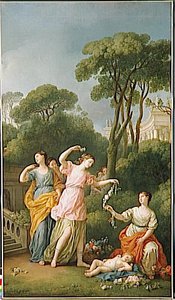
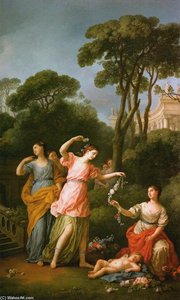
In the delicate dance of light and shadow that defines the Rococo era, Joseph Marie Vien captures a moment of profound intimacy and quiet grace in his masterpiece, Greek Lady at the Bath. Painted in 1767, this work serves as a breathtaking window into the eighteenth-century French genre tradition, where the boundaries between the mythological and the domestic often blurred into a single, seamless expression of beauty. The scene unfolds with a tender vulnerability, presenting a bathing ritual that feels both timeless and deeply personal. As we gaze upon the composition, we are drawn into a private sanctuary, where the soft textures of skin and fabric harmonize with the cool stillness of the surroundings.
The subject matter invites the viewer to witness a ritual of care and companionship. A woman stands poised in the center of the frame, her form illuminated by a gentle, diffused light that suggests the soft glow of an afternoon sun filtering through a high window. Beside her, a second figure kneels in a gesture of devotion, her hands reaching out in a touch that is both nurturing and ceremonial. This interaction creates a rhythmic flow within the painting, guiding the eye from the draped blue cloth over the attendant's shoulder to the delicate curves of the central figure. The presence of classical elements, such as the elegantly placed vases and the solitary cup, lends an air of Hellenistic nobility to the scene, elevating a simple moment of hygiene into a poetic tribute to the classical ideal.
Mastery of Light and Textural Elegance
Technically, the painting is a triumph of chiaroscuro and tonal subtlety. Vien employs a palette that is both muted and luminous, utilizing soft creams, pale blues, and warm flesh tones to create a sense of atmospheric depth. The artist’s brushwork is masterful, capturing the tactile reality of different surfaces: the smooth, porcelain-like quality of skin, the heavy drape of woven cloth, and the hard, reflective surfaces of the ceramic vessels. This meticulous attention to texture does more than just demonstrate skill; it builds a sensory experience for the viewer, making the cool air of the bathing chamber almost palpable.
For the discerning collector or interior designer, this piece offers an unparalleled sense of sophistication and tranquility. The composition is balanced yet dynamic, making it an ideal focal point for a room designed for reflection or luxury. Whether placed in a grand salon or a more intimate study, Greek Lady at the Bath brings with it a legacy of European refinement. It is not merely a depiction of a scene, but an invitation to appreciate the quiet splendor found in the most delicate human connections. Owning a high-quality reproduction of this work allows one to infuse a contemporary space with the romanticism and historical weight of the French Enlightenment, providing a timeless anchor of elegance and emotional resonance.
Related Artworks

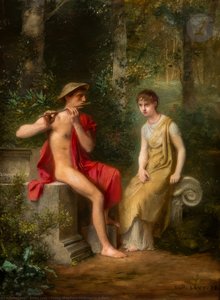
Artist Biography
Luis Egidio Meléndez: The Master of the Humble Still Life
Luis Egidio Meléndez de Rivera Durazo y Santo Padre (1716-1780) remains a captivating enigma in the history of Spanish art. For much of his life, he was largely overlooked, a forgotten figure overshadowed by the grander narratives of the 18th century. Yet, today, he is recognized as the greatest still-life painter of Spain during that era—a master who transformed the most commonplace objects – fruits, vegetables, earthenware – into scenes brimming with luminous beauty and profound emotional resonance. His legacy lies not in dramatic historical paintings or courtly portraits, but in a quiet revolution of perception, demonstrating how extraordinary artistry could be found within the ordinary. Meléndez’s early life was steeped in artistic tradition. Born in Naples to Francisco Meléndez de Rivera Diaz, a miniaturist painter who had traveled extensively and settled there after serving as a soldier for Spain, and Maria Josefa Durazo y Santo Padre Barrille, he inherited a lineage of artists. His father, having returned to Madrid with his family, secured positions within the royal court, training young Luis and his brother José Agustín under his own tutelage. This foundation in miniature painting provided a crucial understanding of detail, light, and texture—skills that would later inform Meléndez’s distinctive style. He entered the Real Academia de Bellas Artes de San Fernando in Madrid at the age of 23, an institution known for its progressive approach to art education, one that embraced genres often considered secondary, such as still life. This acceptance was a pivotal moment, allowing him to develop his unique vision without the constraints imposed by more traditional artistic circles. Despite being admitted and achieving considerable success within the academy, Meléndez’s career was tragically marred by a dispute with its director, Francisco. A seemingly minor disagreement escalated into a public confrontation, resulting in Meléndez's expulsion from the institution in 1748. This event, fueled by ambition and perhaps a touch of resentment, effectively ended his formal artistic training and plunged him into a period of relative obscurity. Remarkably, despite this setback, he continued to paint prolifically, largely supporting himself through commissions and selling works directly to patrons. His later years were marked by poverty, yet he persisted in his craft, producing some of his most celebrated paintings during this time—a testament to his unwavering dedication and artistic spirit. Meléndez’s style is instantly recognizable and profoundly influential. He eschewed the elaborate compositions and dramatic lighting favored by many of his contemporaries, instead focusing on a carefully orchestrated simplicity. His still lifes are characterized by an almost unnerving stillness, as if frozen in time—a deliberate choice that invites prolonged contemplation. He meticulously rendered every detail, from the delicate veins of a leaf to the subtle variations in color and texture of each object. Light plays a crucial role, bathing the scenes in a soft, diffused glow that seems to emanate from within the objects themselves. This masterful use of light not only reveals the beauty of the subjects but also imbues them with an almost spiritual quality—transforming mundane items into symbols of life, abundance, and mortality. His work draws heavily on the Baroque tradition, particularly in its emphasis on dramatic chiaroscuro (the contrast between light and dark), but he elevates this technique to a new level of subtlety and nuance. Meléndez’s artistic influences are complex and multifaceted. While his father's training in miniature painting provided a foundational understanding of detail, he was also deeply inspired by the works of Italian masters such as Caravaggio and Rembrandt—artists who were renowned for their mastery of light and shadow. The influence of Peter Paul Rubens is also evident in his vibrant color palette and dynamic compositions. However, Meléndez’s style transcends mere imitation; he synthesized these influences into a uniquely personal vision, creating still lifes that are both deeply rooted in tradition and strikingly original. His paintings were not simply depictions of objects; they were carefully constructed narratives—silent dialogues between the artist, the subject, and the viewer. The enduring appeal of Luis Egidio Meléndez’s work lies in its ability to evoke a sense of quiet contemplation and profound beauty. His still lifes are not merely decorative images; they are windows into another world—a world where the ordinary is transformed into the extraordinary, and where the simplest objects hold within them a wealth of meaning. Today, his paintings are celebrated for their technical brilliance, emotional depth, and enduring relevance—a testament to the genius of an artist who was tragically overlooked during his lifetime but whose legacy continues to inspire and captivate audiences around the world.Itō Jakuchū: A Revolutionary Vision of Nature
Itō Jakuchū (1716-1800) stands as a pivotal figure in Japanese art history, a master painter who pushed the boundaries of traditional ukiyo-e style with radical experimentation and a profound appreciation for nature. Born into a family of Kyoto grocers, Jakuchū’s artistic journey began under the tutelage of Ōoka Shunboku, a renowned Kano school artist known for his exquisite bird and flower paintings. This early training instilled in him a deep understanding of traditional techniques and aesthetics, but Jakuchū quickly surpassed his teacher, developing a distinctive style that would revolutionize the ukiyo-e genre. Jakuchū’s career was marked by a relentless pursuit of innovation. He embraced the “Lineage of Eccentrics,” a group of artists who challenged established conventions and explored new artistic possibilities. Unlike many of his contemporaries, who adhered rigidly to traditional styles, Jakuchū sought to capture the fleeting beauty of nature with unprecedented realism and dynamism. His paintings are characterized by vibrant colors, loose brushstrokes, and an almost hallucinatory sense of movement—a departure from the static compositions favored by earlier ukiyo-e artists. He was particularly fascinated by birds, creating a series of iconic works depicting chickens, pheasants, and other fowl in astonishing detail and with a remarkable sensitivity to their behavior. Jakuchū’s artistic vision was deeply influenced by Zen Buddhism, which emphasized the importance of direct experience and intuitive understanding. His paintings are not merely representations of nature; they are attempts to capture its essence—its energy, vitality, and impermanence. He often depicted birds in mid-flight, conveying a sense of movement and spontaneity that was rarely seen in traditional Japanese art. His use of color is particularly noteworthy—he employed broken colors and shimmering effects to create a sense of luminosity and depth, as if the subjects were radiating light. The impact of Itō Jakuchū’s work extended far beyond his own lifetime. He became a celebrated figure within the ukiyo-e community, inspiring a new generation of artists who embraced his innovative techniques. His paintings are considered masterpieces of Japanese art, and they continue to be admired for their beauty, originality, and technical brilliance. His legacy is particularly evident in the “Lineage of Eccentrics,” a group of artists who followed in his footsteps, challenging established conventions and pushing the boundaries of artistic expression.Joseph-Marie Vien: The Pioneer of Neoclassicism
Joseph-Marie Vien (1716–1809) was a pivotal figure in the transition from the Rococo to Neoclassical styles in 18th-century European painting. Born in Montpellier, France, he received his early artistic training under Jean-Baptiste Natoire and quickly established himself as a talented painter at the Académie Royale de Peinture et de Sculpture in Paris. Vien’s career was marked by both success and controversy, largely due to his embrace of classical antiquity—a departure from the prevailing Rococo style that favored frivolity and ornamentation. Vien's artistic development was profoundly shaped by his extensive travels through Italy during the 1740s. He spent several years studying the ruins of Pompeii and Herculaneum, which had been recently excavated, and immersing himself in the works of Roman masters such as Raphael and Caravaggio. This experience ignited a passion for classical antiquity within him, leading him to adopt a Neoclassical style characterized by clarity, order, and restraint—a stark contrast to the elaborate and sensual imagery of Rococo art. Despite his growing reputation as a champion of Neoclassicism, Vien faced considerable opposition from other artists at the Académie Royale. His bold approach to composition and color was seen as disruptive and challenging to established conventions. This led to a protracted “Quarrel of the Colourists,” a bitter dispute between artists who favored drawing and line—the traditional foundation of Western art—and those who championed colour and light. Vien, with his emphasis on vibrant hues and dynamic brushwork, found himself at the center of this conflict. Despite these challenges, Vien continued to produce works that were both innovative and influential. He is best known for his depictions of ancient Roman scenes, which he rendered with remarkable realism and attention to detail. His paintings often feature mythological figures and historical events, presented in a clear and orderly manner—a hallmark of Neoclassical style. Vien’s work helped to establish the Neoclassical movement as a dominant force in European art, paving the way for future generations of artists who sought to emulate his commitment to classical ideals.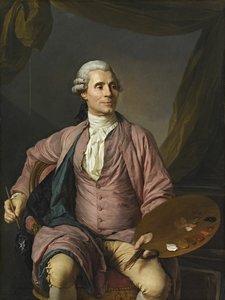
joseph marie vien
1716 - 1809
Quick Facts
- Artistic Movement Or Style: Still-life painting
- Artists Or Movements Influenced By This Artist: ['18th-century Spanish painting']
- Artists Who Influenced This Artist: ['Francisco Meléndez']
- Date Of Birth: 1716
- Date Of Death: 1780
- Full Name: Luis Egidio Meléndez de Rivera Durazo y Santo Padre
- Nationality: Spanish
- Notable Artworks:
- The Butcher's Stall
- The Fruit Basket
- The Kitchen Table
- Place Of Birth: Naples, Spain
Related Articles
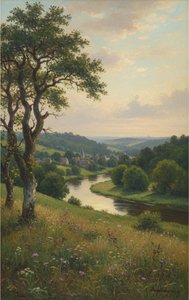
Henri-Joseph Harpignies: Capturing the Poetic Essence of the French Landscape
Explore the serene landscapes of Henri-Joseph Harpignies, a master of the Barbizon School. Discover his atmospheric paintings, recurring themes & enduring legacy in 19th-century French art. Learn more at ArtsDot.
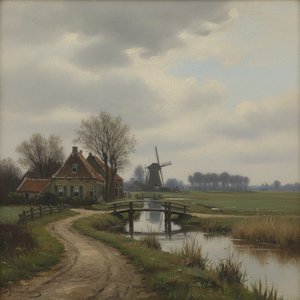
Jacob Henricus Maris: A Master of Dutch Atmospheric Realism & the Intimate Landscape
Explore the captivating world of Jacob Henricus Maris, a leading figure of the Dutch Hague School. Discover his atmospheric landscapes, signature brushstrokes & lasting influence on 19th-century art. Learn more at ArtsDot.
Scenes of Daily Life: A Comprehensive Exploration of Genre Painting Through History
Explore the rich history of genre painting! Discover Dutch Masters & European artists who captured everyday life with stunning realism. Learn about symbolism, techniques & lasting influence.
Joseph Highmore: Moral Tales & Domestic Genre in 18th-Century British Art
Explore the captivating world of Joseph Highmore, a leading British Rococo painter. Discover his elegant portraits, insightful 'Pamela' illustrations & contributions to 18th-century art history. Learn more at ArtsDot.
Jean-Baptiste Greuze: Morality, Sentiment & the Rise of Genre Painting
Explore the life & art of Jean-Baptiste Greuze, a pivotal French Rococo painter renowned for his emotionally resonant genre scenes and moral lessons. Discover his legacy & impact on 18th-century art history.