 Preview
 Send
Send Share
Share
 Details

 Download
 Similars
 X-Ray
X-Ray Diaporama
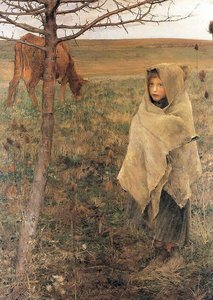
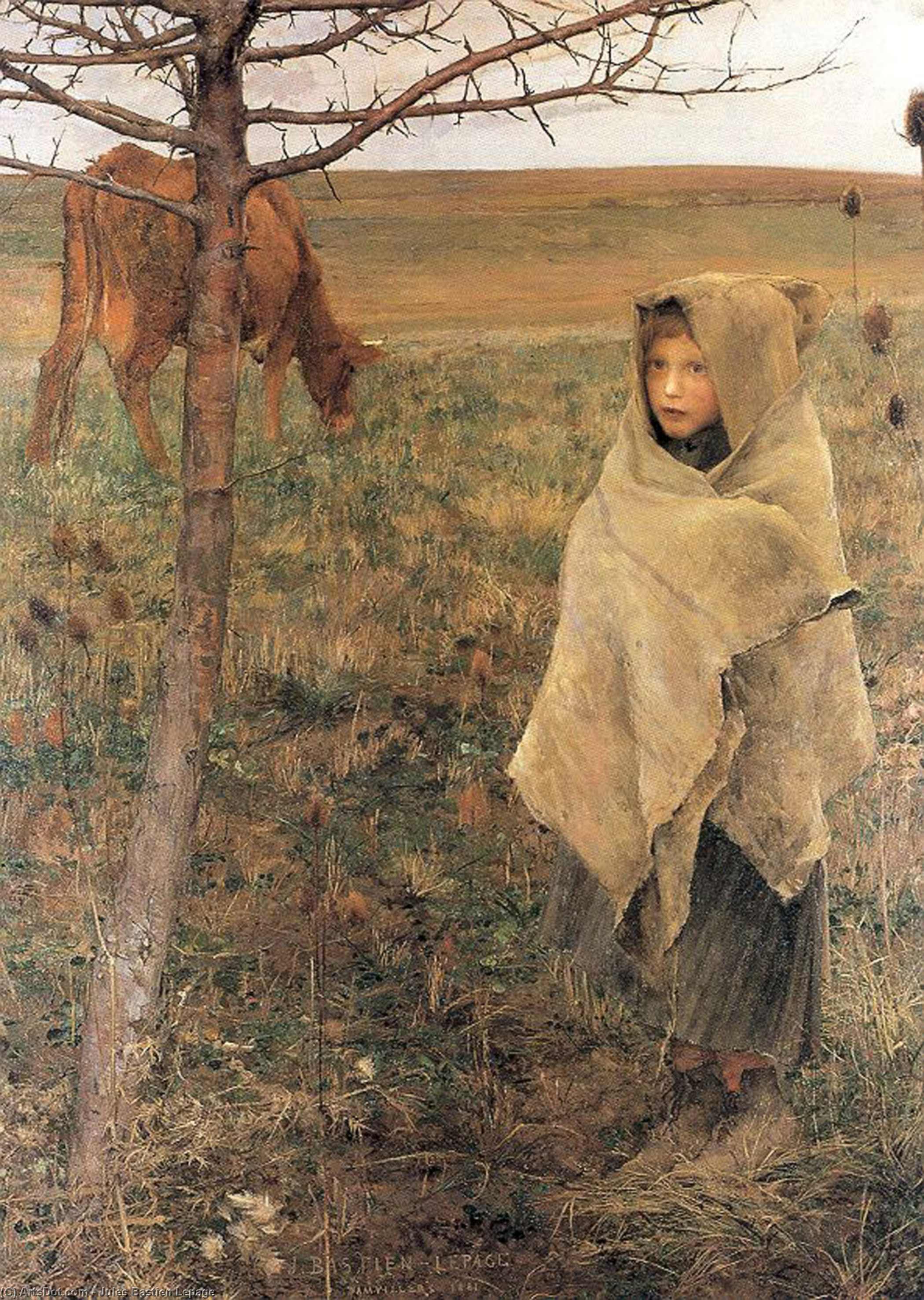
Pauvre Fauvette


 Read More
Giclée / Art Print
Museum-quality giclée or canvas print with fast production and flexible finish options. ( Buy Hand Made Painting Buy Image)




P118B $10

P118H $10

P118W $10

P438Z $10

P508JH $12

P508YH $12

P805H $10

P805Z $10

P919BZ $10

P919G $10

P919XJ $10

P959ZH $10

P968JZ $12

W106C $8

W218G $10

W218JH $8

W218Y $10

W307PJ $10

W316G $10

W316PJ $8

W316Y $10

W398PJ $8

W4111J $10

W500HY $15

W500JH $15

W692G $12

W849H $8

W940BG $15

W953PJ $8




Pick from our preset sizes that match the artwork's original proportions.

You may enter your own dimensions to fit a specific frame or space. If your selected size does not match the original image's proportions, we will either crop the artwork or extend the image with a mirrored or solid-fill edge. A digital mockup will be sent for your approval before production begins.
Please note that the on-screen preview does not reflect the actual cropping or extension. Only the mockup will accurately show the final composition.
While custom sizes are available, we recommend selecting a dimension from the predefined list to preserve the original proportions.
Worldwide Delivery () in 2 weeks instead of standard 4/5 weeks. (21 August)

Free Worldwide Express Shipping

High-Quality Linen Canvas

Full Shipping Insurance

Customs Tax Refund Guarantee

True Color Matching Guarantee

60-Day Return Policy (Defects Only)

100% Money-Back Guarantee

Bulk Discount Offer
 Glass option is only available in size under 110 CM

Pauvre Fauvette
Giclée / Art Print
Reproduction Size
-


Total Price
$ 63
Collectible Description
The Heart of a French Landscape
Jules Bastien-Lepage’s “Pauvre Fauvette” (Poor Little Wild Girl) isn't merely a depiction of a young peasant child; it’s a poignant distillation of rural life in 19th-century France, imbued with a quiet dignity and profound melancholy. Painted in 1881, the artwork captures a fleeting moment – a girl, no older than seven or eight, huddled beneath a skeletal tree against the backdrop of a bleak winter landscape. The scene unfolds within the artist’s native region of Damvillers, Meuse, imbuing it with an authenticity that transcends simple representation and speaks to a deeply felt connection between the artist and his roots.
Naturalism’s Gentle Hand
Bastien-Lepage, a pivotal figure bridging Realism and Impressionism, belonged to the burgeoning Naturalist movement. Unlike the often idealized portrayals of peasant life prevalent at the time, he sought to capture the raw reality of rural existence – its hardships, its beauty, and its inherent dignity. “Pauvre Fauvette” exemplifies this approach. The girl’s face, etched with a subtle sadness, is rendered with remarkable detail; every wrinkle, every shadow speaks volumes about her life. The artist masterfully employs a muted palette—ochres, browns, and greys—to evoke the austerity of the winter season, emphasizing the vulnerability of the subject within this harsh environment. Bastien-Lepage’s technique is characterized by loose, expressive brushstrokes that create a sense of immediacy and movement, while simultaneously maintaining a meticulous attention to detail in capturing the textures of the girl's ragged clothing and the weathered bark of the tree.
Symbolism Woven into the Scene
Beyond its immediate depiction, “Pauvre Fauvette” is rich with symbolic resonance. The girl’s simple shawl, offering scant protection from the cold, represents the precariousness of her existence and the lack of material comforts. The tree itself, stripped bare by winter, symbolizes loss and hardship. Yet, despite this bleak setting, the girl's gaze—directed towards an unseen point beyond the canvas—suggests a quiet resilience, a sense of observation and perhaps even hope. The presence of the cows in the background further reinforces the theme of rural life, highlighting the symbiotic relationship between humans and nature. The composition’s asymmetry – with the girl positioned slightly off-center – creates a dynamic tension that draws the viewer's eye and amplifies the emotional impact of the scene.
A Legacy of Emotional Truth
Jules Bastien-Lepage’s “Pauvre Fauvette” remains a powerful testament to his artistic vision and his commitment to portraying the human condition with honesty and empathy. It's a painting that invites contemplation, prompting viewers to consider the lives of those often overlooked by society. The work’s enduring appeal lies in its ability to evoke a deep sense of emotion—a mixture of sadness, compassion, and perhaps even admiration for the girl’s quiet dignity. Reproductions of this masterpiece offer an opportunity to bring this evocative scene into any interior space, serving as a reminder of the beauty and fragility of life in rural France and the enduring power of art to capture the essence of human experience.
Related Artworks
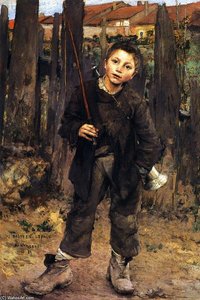
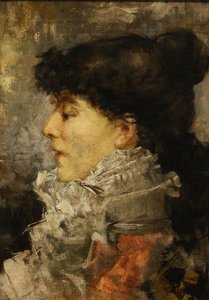
![Pas Mèche [nothing Doing] — Jules Bastien-lepage, Naturalist Painting](/media/artworks/images-thumb/01/c8/01c885499ff56bb2e6383eef008f6c1b.jpg)
Artist Biography
A Pioneer of Naturalism: The Life and Art of Jules Bastien-Lepage
Jules Bastien-Lepage emerged as a pivotal figure in late 19th-century French painting, a bridge between the established Realist tradition and the burgeoning Impressionist movement. Born in 1848 in the small village of Damvillers, nestled within France’s Meuse region, his artistic trajectory was deeply rooted in the landscapes and lives of rural France. This connection to his origins wasn't merely biographical; it became the very essence of his art, imbuing his canvases with an authenticity that resonated profoundly with audiences seeking a more honest depiction of the world around them. His brief but intensely productive career, tragically cut short by his death in 1884 at just thirty-six years old, left an indelible mark on the development of Naturalism and influenced artists across Europe.From Rural Roots to Artistic Training
Bastien-Lepage’s initial artistic education came from his father, himself a painter who recognized and nurtured his son's talent. The young Jules filled sketchbooks with studies of the countryside, capturing the rhythms of rural life with an observant eye. This early immersion in the natural world would remain a defining characteristic of his work. Formal training followed at the École des Beaux-Arts in Paris, beginning in 1867, where he studied under Alexandre Cabanel – a prominent academic painter known for his polished technique and historical subjects. While mastering the skills demanded by the Salon system, Bastien-Lepage simultaneously harbored a desire to break free from its constraints. The outbreak of the Franco-Prussian War in 1870 interrupted his studies, leading him to serve as a volunteer soldier. This experience, coupled with a subsequent illness, brought him back to Damvillers, reinforcing his commitment to portraying the lives of those he knew best: the peasants and laborers of his homeland.The Rise of Naturalism and Bastien-Lepage’s Style
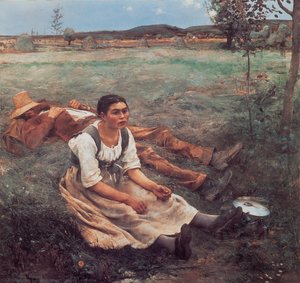
Upon returning to Paris after the war, Bastien-Lepage began exhibiting works that signaled a departure from traditional academic painting. His style was characterized by an intricate application of paint – small, deliberate brushstrokes building up texture and form – combined with a palette dominated by warm, natural tones. He embraced *plein air* painting, working directly from nature to capture the fleeting effects of light and atmosphere. This dedication to observation and authenticity aligned him with the emerging Naturalist movement, which sought to depict life as it was, without idealization or romanticism. Haymaking (1877), exhibited at the Salon in 1879, proved to be a watershed moment, establishing Bastien-Lepage as a leader of this new artistic direction. The painting’s realistic portrayal of rural workers and its luminous depiction of the countryside captivated critics and audiences alike. He wasn't merely documenting peasant life; he was elevating it, imbuing his subjects with dignity and respect.Major Works and Lasting Influence
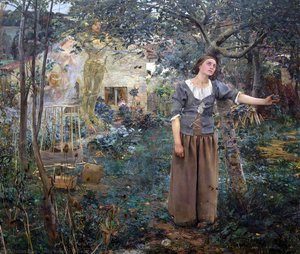
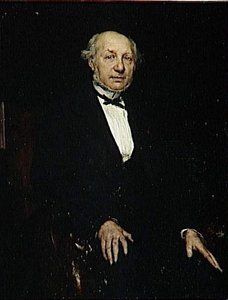
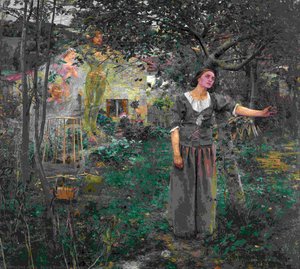
Bastien-Lepage’s success extended beyond genre scenes. His portraiture gained considerable acclaim, notably Portrait of my Grandfather (1874), which garnered early recognition, and a striking portrait of the celebrated actress Sarah Bernhardt in 1879 – a commission that brought him further prominence. He also tackled historical subjects with a naturalist sensibility, as exemplified by his painting Joan of Arc, now housed at the Musée d'Orsay. This work presented Joan not as a mythical heroine but as a young woman rooted in her rural origins, reflecting Bastien-Lepage’s commitment to portraying figures within their social and historical context. By 1883, his influence was so widespread that critics observed artists across Europe were emulating his style – a testament to the power of his vision. His work resonated with British painters like George Clausen and Tom Roberts, who incorporated elements of his naturalism into their own depictions of rural life. Jules Bastien-Lepage’s legacy lies not only in the beauty and emotional depth of his paintings but also in his role as a catalyst for artistic change. He paved the way for future generations of artists to explore new ways of representing the world around them, challenging conventional norms and embracing a more honest and authentic approach to art.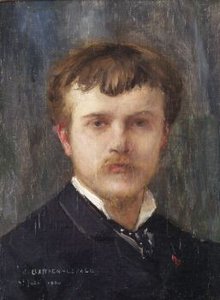
Jules Bastien-Lepage
1848 - 1884 , France
Quick Facts
- Artistic Movement Or Style: Naturalism
- Artists Or Movements Influenced By This Artist: ['Impressionism']
- Artists Who Influenced This Artist:
- Realist Movement
- George Clausen
- Tom Roberts
- Date Of Birth: 1848
- Date Of Death: 1884
- Full Name: Jules Bastien-Lepage
- Nationality: French
- Notable Artworks:
- Portrait of my Grandfather
- Joan of Arc
- Haymaking
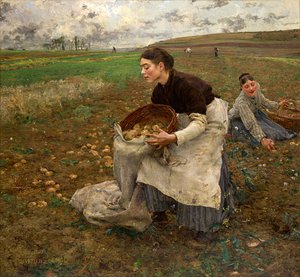
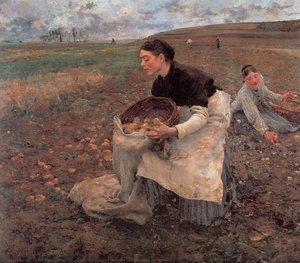
- October - gathering potatoes
- At Harvest Time
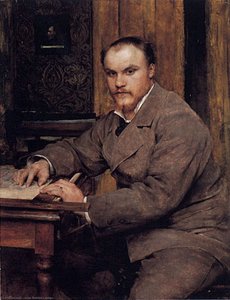
- Laura, Lady Alma Tadema
- Sarah Bernhardt
- Charcoal landscape, winter
- Place Of Birth: Damvillers, France
Related Articles
Jules Breton: Capturing the Poetic Soul of French Rural Life
Explore the captivating world of Jules Breton, master of French Realism. Discover his iconic paintings of rural life, learn about his artistic journey, and find high-quality reproductions to elevate your art collection at ArtsDot.
Léon Augustin L'Hermitte: Capturing the Soul of French Rural Life
Discover the captivating realist paintings of Léon Augustin L'Hermitte, masterfully depicting French rural life. Explore his technique, influences & legacy – a cornerstone of 19th-century art.
Jules Lefebvre: Master of Academic Realism & the Pursuit of Belle Âme
Explore the captivating figure paintings of Jules Lefebvre (1836-1911), a renowned French academic artist and educator. Discover his masterpieces, signature style, and lasting influence on art history. Shop high-quality reproductions at ArtsDot.
Echoes of Rural Life: Art's Enduring Representations of the Countryside
Explore the rich history of rural life in art! Discover masterpieces from Millet to Mauve & beyond. Learn about Realism, Barbizon School & find inspiration for your home with ArtsDot.
Cultivating Visions: Rural Life & Social Commentary in Art History
Explore the rich history of rural life in art! Discover masterpieces from Dutch Masters to Van Gogh & Courbet. Uncover artistic movements, social significance & expert collecting insights at ArtsDot.