 Preview
 Send
Send Share
Share
 Details

 Download
 Similars
 X-Ray
X-Ray Diaporama
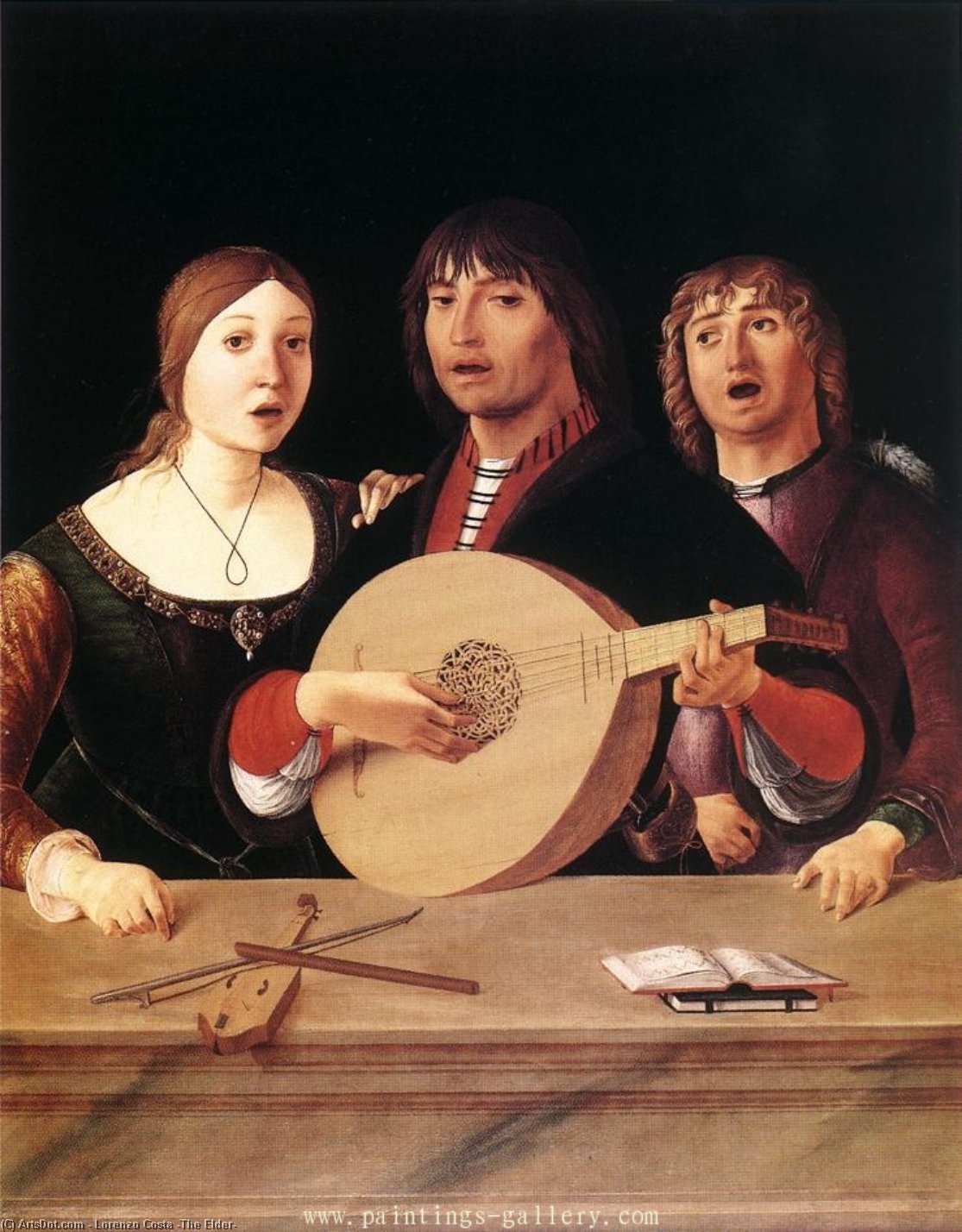
Concert
 Oil On Canvas
- WallArt
- Italian Renaissance
 1485
1485- Renaissance
 95.0 x 75.0 cm
 National Gallery
 Read More
Giclée / Art Print
Museum-quality giclée or canvas print with fast production and flexible finish options. ( Buy Hand Made Painting Buy Image)




P118B $10

P118H $10

P118W $10

P438Z $10

P508JH $12

P508YH $12

P805H $10

P805Z $10

P919BZ $10

P919G $10

P919XJ $10

P959ZH $10

P968JZ $12

W106C $8

W218G $10

W218JH $8

W218Y $10

W307PJ $10

W316G $10

W316PJ $8

W316Y $10

W398PJ $8

W4111J $10

W500HY $15

W500JH $15

W692G $12

W849H $8

W940BG $15

W953PJ $8




Pick from our preset sizes that match the artwork's original proportions.

You may enter your own dimensions to fit a specific frame or space. If your selected size does not match the original image's proportions, we will either crop the artwork or extend the image with a mirrored or solid-fill edge. A digital mockup will be sent for your approval before production begins.
Please note that the on-screen preview does not reflect the actual cropping or extension. Only the mockup will accurately show the final composition.
While custom sizes are available, we recommend selecting a dimension from the predefined list to preserve the original proportions.
Worldwide Delivery () in 2 weeks instead of standard 4/5 weeks. (17 August)

Free Worldwide Express Shipping

High-Quality Linen Canvas

Full Shipping Insurance

Customs Tax Refund Guarantee

True Color Matching Guarantee

60-Day Return Policy (Defects Only)

100% Money-Back Guarantee

Bulk Discount Offer
 Glass option is only available in size under 110 CM

Concert
Giclée / Art Print
Reproduction Size
-


Total Price
$ 63
Collectible Description
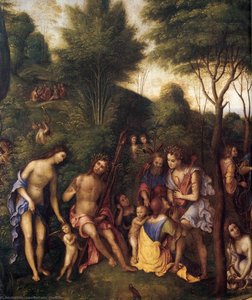
A Symphony in Paint: Exploring Lorenzo Costa's "Concert"
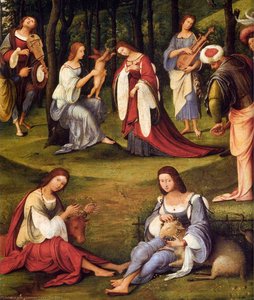
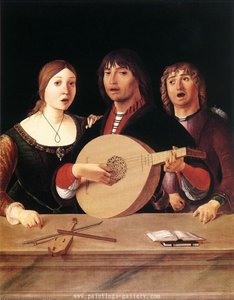
To gaze upon Lorenzo Costa’s "Concert" is to step directly into the vibrant, cultured heart of the Italian Renaissance. This painting is not merely a depiction of musicians; it is an auditory experience rendered visible, a moment suspended in time where artistry and human connection converge. The composition immediately draws the viewer into the warm glow of what must have been a magnificent gathering. Three figures stand poised, each intimately connected to their craft through the instruments they hold—guitars resting ready, suggesting melodies about to spill forth.
The sheer profusion of musical implements speaks volumes: cellos anchor the scene near the center, while a delicate violin waits in the lower right. These objects are more than props; they are extensions of the artists' souls, embodying the intellectual and emotional life of the era. The air around them feels thick with potential music, a palpable energy that transcends the canvas.
Renaissance Mastery: Technique and Context
Painted in 1485, this work places us squarely within the burgeoning cultural explosion of Ferrara. Lorenzo Costa (the Elder), whose career spanned the height of Renaissance brilliance, masterfully captures the period's blend of humanist ideals and deep spiritual resonance. While his biography speaks to his training under masters like Francesco Francia, here we see a confident hand at work, utilizing techniques that lend depth and luminosity to every fold of drapery and every polished curve of wood.
The handling of light across the figures suggests an expert understanding of pictorial space, allowing the viewer's eye to wander naturally from the left-hand musician across the grouping, finally settling on the instruments clustered at the bottom. It is a testament to Renaissance naturalism—a commitment to depicting life not just beautifully, but truthfully.
Symbolism and the Art of Gathering
Beyond the technical brilliance lies a rich tapestry of symbolism. Music itself in art history has always been linked to harmony, divine order, and the very structure of civilized life. In this "Concert," the gathering suggests more than mere entertainment; it hints at patronage, scholarly exchange, and the communal elevation of the spirit through art. The instruments become symbols of knowledge and refined taste, making this piece a profound statement for any collector who values culture.
For the modern admirer or designer, owning a reproduction of this work is acquiring not just decoration, but a conversation starter—a dialogue about beauty, intellect, and enduring human creativity. It imbues a room with an immediate sense of cultivated history.
An Emotional Resonance for the Modern Home
The emotional impact of "Concert" is one of joyful anticipation. You can almost hear the resonance of the strings, feel the warmth of the gathering, and share in the camaraderie depicted. This painting offers a sophisticated focal point, perfect for an entryway, a library, or a formal drawing-room where conversation and culture are paramount. It invites contemplation while simultaneously celebrating life's most harmonious moments.
To bring this piece into your space is to invite a timeless Italian salon—a place where the pursuit of beauty was considered a sacred endeavor.
Related Artworks

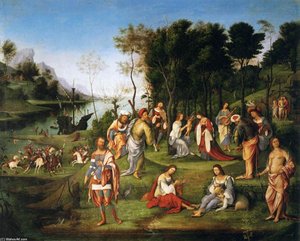
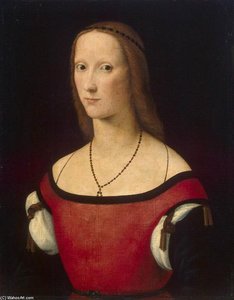
Artist Biography
The Painter of Myth and Faith: The Life of Lorenzo Costa
Lorenzo Costa (1460–1535) stands as a cornerstone figure within the flourishing artistic landscape of the Italian Renaissance, embodying the intellectual dynamism of the Ferrara and Bologna schools. Born in the vibrant city of Ferrara, Costa emerged during a period where the boundaries between spiritual devotion and humanist inquiry were beautifully blurred. His oeuvre is characterized by a distinctive blend of stylistic elegance and profound contemplation, a quality that allowed him to navigate the complex demands of both religious institutions and the most sophisticated secular courts of his era. Through his brush, the ethereal light of the divine met the structured grace of classical mythology, creating a visual language that resonated deeply with the Renaissance spirit.Formative Years and the Mastery of Light
While the archival records of Costa’s earliest years remain somewhat elusive, his artistic DNA was clearly forged in the workshops of Northern Italy. It is widely recognized that he underwent rigorous training under the master Francesco Francia in Bologna. This apprenticeship was transformative, instilling in him a meticulous attention to detail and an early fascination with the technique of sfumato—the subtle, smoky blending of tones popularized by Leonardo da Vinci. From Francia, Costa inherited a profound understanding of perspective and the dramatic use of chiaroscuro, which allowed him to sculpt figures out of shadow and imbue his compositions with an unprecedented sense of depth and emotional weight. This technical foundation enabled him to move beyond mere representation, seeking instead to capture the very atmosphere surrounding his subjects.The Splendor of the Mantuan Court
The zenith of Costa’s career was inextricably linked to his prestigious appointment as court painter to Isabella d'Este, the Marchioness of Mantua. As one of the most formidable and discerning patrons in European history, Isabella d'Este demanded art that functioned as both aesthetic triumph and intellectual puzzle. Under her watchful eye, Costa’s work evolved to embrace complex mythological allegories and humanist ideals. His paintings became much more than religious icons; they were sophisticated narratives designed for an audience of scholars and aristocrats. This period of his life was marked by:- The integration of classical Greek and Roman myths into contemporary Italian painting.
- A heightened focus on symbolic meaning, where every gesture and botanical detail carried weight.
- The refinement of a soft, atmospheric style that could convey the delicate grace required by courtly taste.
Legacy and Historical Significance
As the Renaissance progressed, Costa’s influence rippled through the artistic communities of Ferrara and Bologna, leaving an indelible mark on the development of the Italian school. His ability to harmonize the rugged, emotive traditions of the Ferrarese masters with the more lyrical, polished style of the Bolognese painters created a unique stylistic bridge. Even as new movements began to emerge, Costa’s dedication to the balance of beauty and narrative remained a standard for his successors. Today, he is remembered not merely as a skilled craftsman, but as a visionary who captured the soul of an age—an artist capable of making the ancient myths feel as immediate and breathing as the sacred figures of the Christian faith.
lorenzo costa (the elder)
1460 - 1535 , Italy
Quick Facts
- Artistic Movement Or Style: Ferrara & Bologna Schools
- Artists Who Influenced This Artist:
- Cosimo Tura
- Francesco Francia
- Date Of Birth: c. 1460 Ferrara, Italy
- Date Of Death: March 5, 1535
- Full Name: Lorenzo Costa il Vecchio
- Nationality: Italian Renaissance
- Notable Artworks:
- Venus (detail)
- High Altarpiece, Oratory of S. Pietro in Vincoli
- Madonna and Saints
- Place Of Birth: Ferrara
Related Articles
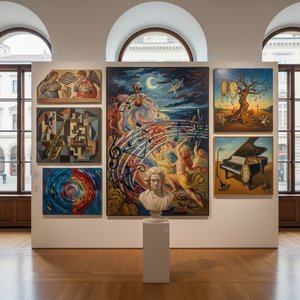
Harmonies on Canvas: Exploring the Visual Representation of Music in Art History
Explore the fascinating history of music's visual representation in art! From ancient symbolism to modern abstraction, discover how artists have captured sound and emotion on canvas. Expert insights & stunning examples.
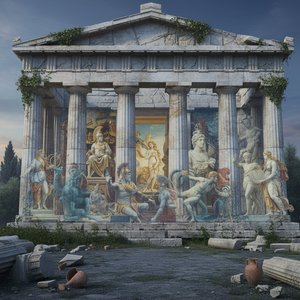
Echoes of Olympus: Mythological Narratives in Western Art Through the Ages
Explore the captivating history of mythological narratives in Western art! From ancient Greece to modern masterpieces, discover iconic artworks & symbolism. Expert analysis and high-quality reproductions at ArtsDot.

Cosmè Tura: Rediscovering the Ferrarese Master & His Distinctive Style
Discover Cosmè Tura (1430-1495), founder of the Ferrara School. Explore his unique style, key artworks & lasting influence. Expert insights for collectors.
The Hague School: Realism, Atmosphere & the Dawn of Dutch Impressionism
Explore the Hague School's pivotal role in Dutch art history. Discover realism, atmospheric landscapes & its influence on Impressionism. Learn about key artists like Mauve & Maris with ArtsDot.

Hudson River School: 10 Masterpieces That Capture America's Wild Beauty | ArtsDot
Journey through America's breathtaking landscapes with our guide to the Top 10 Hudson River School masterpieces. Explore Thomas Cole, Frederic Church & more! Find museum-quality art reproductions and elevate your home decor at ArtsDot.com.