 Preview
 Send
Send Share
Share
 Details

 Download
 Similars
 X-Ray
X-Ray Diaporama
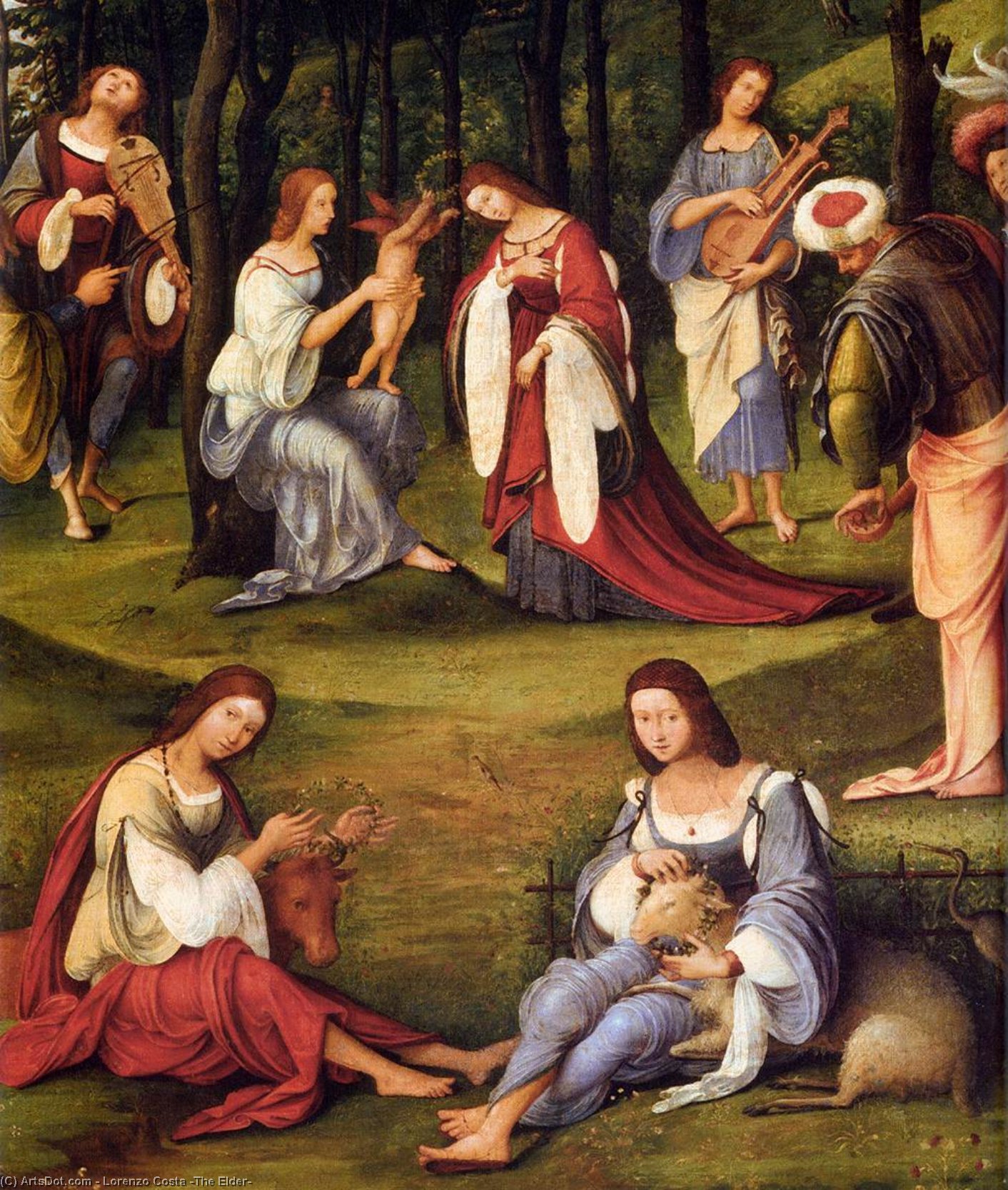
Court of Isabella d'Este (detail)


 Read More
Hand Made Oil Reproduction
Hand-painted oil on canvas in your size and frame, made to order by our artists. ( Buy Print Buy Image)




P118B $10

P118H $10

P118W $10

P438Z $10

P508JH $12

P508YH $12

P805H $10

P805Z $10

P919BZ $10

P919G $10

P919XJ $10

P959ZH $10

P968JZ $12

W106C $8

W218G $10

W218JH $8

W218Y $10

W307PJ $10

W316G $10

W316PJ $8

W316Y $10

W398PJ $8

W4111J $10

W500HY $15

W500JH $15

W692G $12

W849H $8

W940BG $15

W953PJ $8




Pick from our preset sizes that match the artwork's original proportions.

You may enter your own dimensions to fit a specific frame or space. If your selected size does not match the original image's proportions, we will either crop the artwork or extend the painting with additional hand-painted elements. A digital mockup will be sent for your approval before production begins.
Please note that the on-screen preview does not reflect the actual cropping or extension. Only the mockup will accurately show the final composition.
While custom sizes are available, we recommend selecting a dimension from the predefined list to preserve the original proportions.
After order, ArtsDot.com team will email client for instructions and provide a mockup preview
Worldwide Delivery () in 3/4 weeks instead of standard 5 weeks. (30 August). No compromise on quality.

Free Worldwide Express Shipping

High-Quality Linen Canvas

Full Shipping Insurance

Customs Tax Refund Guarantee

True Color Matching Guarantee

60-Day Return Policy (Defects Only)

100% Money-Back Guarantee

Bulk Discount Offer
 Glass option is only available in size under 110 CM

Court of Isabella d'Este (detail)
Reproduction Medium
Reproduction Size
-


Total Price
$ 263
A Renaissance Echo of Virtue and Patronage
In the heart of the Italian Renaissance, where the boundaries between spiritual devotion and humanist inquiry blurred into a singular, luminous vision, Lorenzo Costa the Elder crafted a masterpiece that transcends the mere depiction of a royal court. Court of Isabella d'Este (detail) is not simply a window into a bygone era; it is a profound visual manifesto of power, intellect, and moral fortitude. Created around 1506, this work was commissioned for the studiolo—the private, contemplative sanctuary of Isabella d’Este, the Duchess of Mantua. As one of the most sophisticated patrons of her age, Isabella sought art that reflected her dedication to classical wisdom and virtuous living, and in Costa’s brush, she found a painter capable of weaving mythological grandeur with the delicate textures of reality.
The scene unfolds within a meticulously rendered garden, a lush landscape that serves as a sanctuary of Harmony. Through his masterful application of sfumato—a technique learned during his formative years in Bologna—Costa achieves an ethereal atmosphere where light and shadow dance across the foliage. This soft, smoky transition between tones imbue the painting with a dreamlike quality, transporting the viewer into a tranquil, idealized world. The artist’s commitment to observational accuracy is evident in the way he renders the weight of drapery and the intricate textures of the garden, creating a sense of depth that invites the eye to wander through the verdant landscape, discovering hidden details of birds in flight and the gentle movement of life within the glade.
The Language of Allegory and Symbolism
Beyond its breathtaking aesthetic, the painting functions as a complex tapestry of mythological allegory. Every figure present serves a purpose in celebrating the virtues of the Duchess. At the heart of this celestial ceremony, we witness the intersection of the divine and the earthly. The presence of Venus, holding Anteros, symbolizes the triumph of divine love and virtue, while the act of crowning Isabella with a laurel wreath signifies honor and intellectual achievement. This is not merely a portrait of a ruler, but an exaltation of the human spirit guided by reason.
The composition is further enriched by figures representing Chastity and Reason, such as Diana and Cadmus, who preside over the scene like guardians of moral integrity. For the discerning collector or interior designer, this artwork offers more than just visual beauty; it provides a narrative depth that can anchor a room with intellectual weight. The symbolic layers of the piece—ranging from the triumph of love to the stability of justice—make it an ideal centerpiece for spaces designed for reflection, such as libraries, studies, or formal salons. To possess a reproduction of this work is to invite the enduring spirit of Renaissance humanism into a modern environment, creating a dialogue between historical wisdom and contemporary elegance.
A Timeless Legacy for the Modern Collector
For those seeking to curate an atmosphere of sophistication and grace, Court of Isabella d'Este offers unparalleled inspiration. The painting’s ability to balance the structural strength of the Ferrarese School with the lyrical, emotive grace of the Bolognese style ensures that it remains visually captivating from every angle. Whether viewed as a study in light or a complex historical document, the work radiates a sense of peace and ordered beauty.
Integrating a high-quality reproduction of this masterpiece into an interior design scheme allows for the introduction of rich, classical textures and a palette of luminous greens and soft earth tones. It serves as a conversation piece that speaks to a refined appreciation for art history and the enduring pursuit of excellence. In an age of rapid change, the steady, virtuous gaze of Costa’s figures offers a timeless connection to the foundational ideals of Western civilization, making this artwork a profound addition to any curated collection.
Related Artworks









Artist Biography
The Painter of Myth and Faith: The Life of Lorenzo Costa
Lorenzo Costa (1460–1535) stands as a cornerstone figure within the flourishing artistic landscape of the Italian Renaissance, embodying the intellectual dynamism of the Ferrara and Bologna schools. Born in the vibrant city of Ferrara, Costa emerged during a period where the boundaries between spiritual devotion and humanist inquiry were beautifully blurred. His oeuvre is characterized by a distinctive blend of stylistic elegance and profound contemplation, a quality that allowed him to navigate the complex demands of both religious institutions and the most sophisticated secular courts of his era. Through his brush, the ethereal light of the divine met the structured grace of classical mythology, creating a visual language that resonated deeply with the Renaissance spirit.Formative Years and the Mastery of Light
While the archival records of Costa’s earliest years remain somewhat elusive, his artistic DNA was clearly forged in the workshops of Northern Italy. It is widely recognized that he underwent rigorous training under the master Francesco Francia in Bologna. This apprenticeship was transformative, instilling in him a meticulous attention to detail and an early fascination with the technique of sfumato—the subtle, smoky blending of tones popularized by Leonardo da Vinci. From Francia, Costa inherited a profound understanding of perspective and the dramatic use of chiaroscuro, which allowed him to sculpt figures out of shadow and imbue his compositions with an unprecedented sense of depth and emotional weight. This technical foundation enabled him to move beyond mere representation, seeking instead to capture the very atmosphere surrounding his subjects.The Splendor of the Mantuan Court
The zenith of Costa’s career was inextricably linked to his prestigious appointment as court painter to Isabella d'Este, the Marchioness of Mantua. As one of the most formidable and discerning patrons in European history, Isabella d'Este demanded art that functioned as both aesthetic triumph and intellectual puzzle. Under her watchful eye, Costa’s work evolved to embrace complex mythological allegories and humanist ideals. His paintings became much more than religious icons; they were sophisticated narratives designed for an audience of scholars and aristocrats. This period of his life was marked by:- The integration of classical Greek and Roman myths into contemporary Italian painting.
- A heightened focus on symbolic meaning, where every gesture and botanical detail carried weight.
- The refinement of a soft, atmospheric style that could convey the delicate grace required by courtly taste.
Legacy and Historical Significance
As the Renaissance progressed, Costa’s influence rippled through the artistic communities of Ferrara and Bologna, leaving an indelible mark on the development of the Italian school. His ability to harmonize the rugged, emotive traditions of the Ferrarese masters with the more lyrical, polished style of the Bolognese painters created a unique stylistic bridge. Even as new movements began to emerge, Costa’s dedication to the balance of beauty and narrative remained a standard for his successors. Today, he is remembered not merely as a skilled craftsman, but as a visionary who captured the soul of an age—an artist capable of making the ancient myths feel as immediate and breathing as the sacred figures of the Christian faith.
lorenzo costa (the elder)
1460 - 1535 , Italy
Quick Facts
- Artistic Movement Or Style: Ferrara & Bologna Schools
- Artists Who Influenced This Artist:
- Cosimo Tura
- Francesco Francia
- Date Of Birth: c. 1460 Ferrara, Italy
- Date Of Death: March 5, 1535
- Full Name: Lorenzo Costa il Vecchio
- Nationality: Italian Renaissance
- Notable Artworks:
- Venus (detail)
- High Altarpiece, Oratory of S. Pietro in Vincoli
- Madonna and Saints
- Place Of Birth: Ferrara
Related Articles
Musée d'Orsay Masterpieces: 25 Iconic Paintings & Art Decor Ideas
Journey through the Musée d'Orsay’s 25 most iconic artworks! Explore Impressionist & Post-Impressionist masterpieces by Monet, Van Gogh, Degas & more. Find museum-quality art reproductions and curated decor ideas to bring timeless beauty home. Discover all masterpieces on ArtsDot.com

Lorenzo Lotto: Unveiling the Enigma of a Venetian Master's Portraits
Explore the captivating world of Lorenzo Lotto, a Venetian Renaissance master renowned for his psychologically insightful portraits & enigmatic symbolism. Discover his life, style, and rediscovered legacy with ArtsDot.
Franz Xaver Winterhalter: Court Painter, Academician & Embodiment of Mid-19th Century Portraiture
Explore the life & art of Franz Xaver Winterhalter, the celebrated court painter of the 19th century. Discover his exquisite portraits of royalty and aristocracy – a symbol of prestige and refined taste.

Cosmè Tura: Rediscovering the Ferrarese Master & His Distinctive Style
Discover Cosmè Tura (1430-1495), founder of the Ferrara School. Explore his unique style, key artworks & lasting influence. Expert insights for collectors.
Hans von Aachen: Mannerism's Courtly Visionary & Imperial Portraiture
Explore the captivating world of Hans von Aachen, a leading Mannerist painter renowned for his exquisite imperial portraits & mythological scenes. Discover his legacy and influence on 16th-century European art.