 Preview
 Send
Send Share
Share
 Details

 Download
 Similars
 X-Ray
X-Ray Diaporama
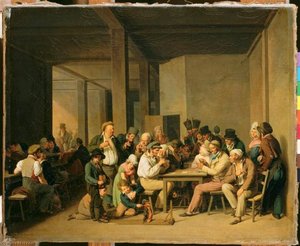
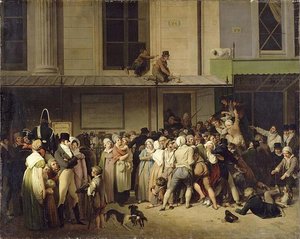
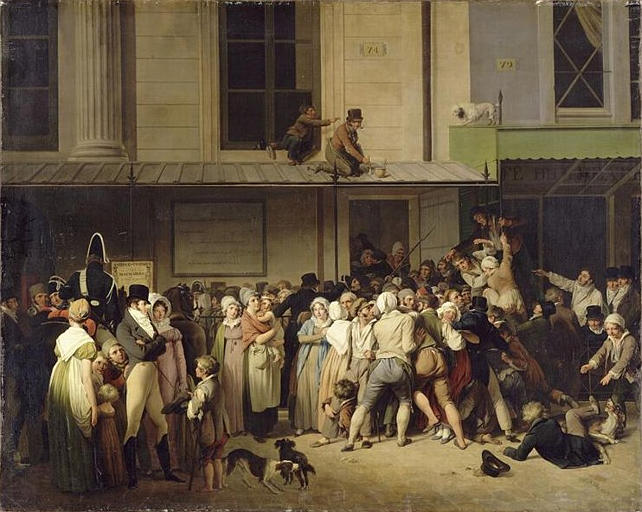
L'entrée du théâtre de l'ambigu comique à une représentation gratis


 Read More
Giclée / Art Print
Museum-quality giclée or canvas print with fast production and flexible finish options. ( Buy Hand Made Painting Buy Image)




P118B $10

P118H $10

P118W $10

P438Z $10

P508JH $12

P508YH $12

P805H $10

P805Z $10

P919BZ $10

P919G $10

P919XJ $10

P959ZH $10

P968JZ $12

W106C $8

W218G $10

W218JH $8

W218Y $10

W307PJ $10

W316G $10

W316PJ $8

W316Y $10

W398PJ $8

W4111J $10

W500HY $15

W500JH $15

W692G $12

W849H $8

W940BG $15

W953PJ $8




Pick from our preset sizes that match the artwork's original proportions.

You may enter your own dimensions to fit a specific frame or space. If your selected size does not match the original image's proportions, we will either crop the artwork or extend the image with a mirrored or solid-fill edge. A digital mockup will be sent for your approval before production begins.
Please note that the on-screen preview does not reflect the actual cropping or extension. Only the mockup will accurately show the final composition.
While custom sizes are available, we recommend selecting a dimension from the predefined list to preserve the original proportions.
Worldwide Delivery () in 2 weeks instead of standard 4/5 weeks. (31 August)

Free Worldwide Express Shipping

High-Quality Linen Canvas

Full Shipping Insurance

Customs Tax Refund Guarantee

True Color Matching Guarantee

60-Day Return Policy (Defects Only)

100% Money-Back Guarantee

Bulk Discount Offer
 Glass option is only available in size under 110 CM

L'entrée du théâtre de l'ambigu comique à une représentation gratis
Giclée / Art Print
Reproduction Size
-


Total Price
$ 63
A Glimpse into Parisian Life: Boilly’s “L'entrée du théâtre de l'ambigu comique à une représentation gratis”
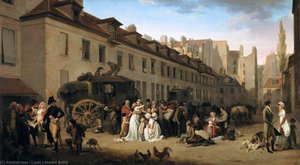
Louis Léopold Boilly’s 1819 painting, "L'entrée du théâtre de l'ambigu comique à une représentation gratis," isn’t merely a depiction of a bustling street scene; it’s a vibrant snapshot of Parisian society at the cusp of a dramatic era. More than just a record of a theatrical event, this work offers a captivating window into the social dynamics and everyday experiences of 18th-century France – a world brimming with both opulence and fervent popular entertainment. The painting immediately draws the eye with its chaotic energy, a carefully orchestrated scene of movement and interaction that speaks volumes about the era’s spirit.
Boilly masterfully employs a technique characteristic of his style: meticulous detail combined with a loose, almost impressionistic approach to capturing light and atmosphere. He utilizes a muted color palette dominated by earthy tones – browns, ochres, and greys – lending the scene an air of authenticity and grounding it in the realities of urban life. The artist’s brushstrokes are visible, particularly in the rendering of clothing and faces, contributing to a sense of immediacy and realism. Notice how he subtly shifts from darker, cooler tones in the foreground to warmer, brighter hues as the eye moves towards the background, creating depth and guiding the viewer's gaze through the crowded scene.
The Theater as a Mirror of Society
The setting itself – the entrance to the Ambigu-Comique theater – is crucial. This wasn’t just any venue; it was renowned for its productions of *mélodrames*, dramatic plays that blended music, dance, and spoken dialogue, catering specifically to the popular tastes of the time. Boilly's choice to depict this particular event reflects a broader cultural shift occurring in Paris during the Napoleonic era – a desire to revitalize the city’s artistic landscape after the upheaval of the Revolution. Napoleon himself actively promoted theatrical performances as a means of fostering national unity and celebrating French culture, and the Ambigu-Comique was at the heart of this effort.
The painting is rich in symbolic detail. The diverse crowd – from elegantly dressed bourgeois to ragged street urchins – represents the social strata of Parisian society. Observe how some individuals are actively pushing and shoving, vying for a place within the throng, while others stand back observing with detached amusement or even disdain. This dynamic highlights the tensions and inequalities inherent in 18th-century France. The inclusion of details like the “Boucherie” (butcher) and “Charcuterie” (delicatessen) signs further anchors the scene in a specific urban environment, reminding us that this was not just a theatrical spectacle but also a vibrant commercial center.
A Study in Character and Emotion
Beyond its historical context, "L'entrée du théâtre de l'ambigu comique à une représentation gratis" is profoundly engaging on an emotional level. Boilly doesn’t simply record the scene; he captures the energy, excitement, and even a touch of chaos that permeated it. The artist skillfully uses composition to draw our attention to key figures – a fallen dog adding a touch of realism amidst the frenzy, a young boy attempting to help someone up, and an aloof gentleman observing the commotion with a critical eye. These small details invite us to speculate about the lives and motivations of these individuals, creating a sense of connection and empathy.
The painting’s enduring appeal lies in its ability to transport us back in time, offering a glimpse into a world both familiar and distant. It's a testament to Boilly’s skill as an observer and interpreter of human nature – a master of capturing the essence of Parisian life with remarkable precision and emotional resonance. Reproductions of this work offer a beautiful way to bring this vibrant scene into any interior space, serving as a reminder of the enduring power of art to illuminate history and evoke emotion.
Related Artworks
Artist Biography
Louis Léopold Boilly: A Life in Portraiture and Parisian Society
- Born: July 5, 1761, La Bassée, France
- Died: January 4, 1845, Paris, France
Early Life and Artistic Development
- Boilly's artistic journey began early; he produced works as young as twelve. Largely self-taught, his initial training included trompe-l’oeil painting under Dominique Doncre.
- His talent was recognized by the Augustinians of Douai in 1774, leading to an invitation from the Bishop of Arras. This period saw him create over three hundred small portrait paintings.
- Early works often featured amorous and moralizing subjects, demonstrating a developing skill in capturing likenesses and details.
Artistic Style and Key Works
- Style: Boilly's style is characterized by meticulous detail, careful coloring, and a focus on depicting everyday life within the French middle class. He skillfully blended portraiture with genre scenes.
- Evolution: After 1794, his compositions became more crowded, reflecting the bustling social scene of Paris. His portraits gained widespread acclaim, with over 5,000 painted throughout his career.
- Notable Works:
- The Suitor's Gift – An early work showcasing amorous themes and meticulous detail.
- Triumph of Marat – A patriotic piece created to avoid condemnation during the Reign of Terror.
- The Arrival of a Mail-Coach in the Courtyard of the Messageries – A vibrant depiction of Parisian life and transportation.
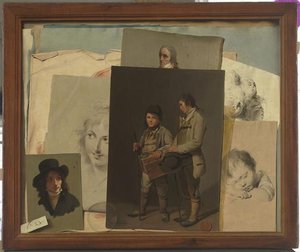
- Optical Illusions: Boilly was fascinated by optics, as demonstrated in works like *Un Trompe-l'œil*, which introduced the term to describe his technique of creating realistic imagery that mimics three-dimensional objects.
Recognition and Legacy
- Salon Success: Boilly received a medal from the Paris Salon in 1804, solidifying his reputation as a skilled artist.
- Honors: He was decorated as a Chevalier of the Légion d'Honneur in 1833, recognizing his contributions to French art.
- Family Influence: His son, Alphonse Boilly, became a professional engraver and apprenticed in New York with Asher Brown Durand.
- Historical Significance: Boilly’s work provides invaluable insights into the social customs, fashion, and daily life of the French middle class during a period of significant political upheaval. He is remembered as one of France's most celebrated portraitists and genre painters.
Museum Holdings
- Musée des Beaux Arts, Lille: Holds Triumph of Marat among other works.
- Louvre Museum: Features selections from Boilly’s extensive oeuvre.
- National Gallery of Art (Washington D.C.): Possesses several paintings including *Self-Portrait*, *Les Amateurs de Tableaux* and *The Public in the Salon of the Louvre, Viewing the Painting of the "Sacre"*.
- Getty Museum: Holds a collection of Boilly's works.
Louis Léopold Boilly
1761 - 1845 , France
Quick Facts
- Artistic Movement Or Style: Genre painting, Portraiture
- Artists Who Influenced This Artist:
- Gabriel Metsu
- Willem van Mieris
- Gerard ter Borch
- Date Of Birth: July 5, 1761
- Date Of Death: January 4, 1845
- Full Name: Louis Léopold Boilly
- Nationality: French
- Notable Artworks:
- The Suitor's Gift
- Triumph of Marat
- Arrival of a Mail-Coach
- Place Of Birth: La Bassée, France
Related Articles
Jean-Louis Forain: Capturing Parisian Life with Wit & Realism
Explore the captivating world of Jean-Louis Forain, a master Impressionist chronicler of Belle Époque Paris. Discover his satirical paintings, realistic scenes & lasting legacy. Learn about collecting Forain's art today!
Édouard Cortès: Capturing Parisian Life – A Comprehensive Study of the 'Painter of Paris'
Explore the captivating world of Édouard Cortès, 'The Painter of Paris'. Discover his iconic street scenes, unique style & lasting legacy. Expert insights for collectors and art enthusiasts.
Antoine Blanchard (Marcel Masson): Parisian Abstraction & the Legacy of Automatism
Explore the captivating world of Antoine Blanchard (Marcel Masson) and his nostalgic Parisian scenes. Discover his artistic influences, unique style, and the challenges of authentication. Expert insights & art appraisal information.
Morris Louis: Pioneering Color Field Painting & Abstract Expressionism's Legacy
Explore the groundbreaking abstract expressionism of Morris Louis, a pioneer of Color Field painting. Discover his innovative techniques, influential series & lasting legacy in post-war American art. Learn more at ArtsDot.
Jean-Georges Béraud: Capturing Parisian Life in the Belle Époque
Explore the captivating world of Jean-Georges Béraud, master painter of Belle Époque Paris. Discover his iconic scenes, artistic evolution, and social commentary. A deep dive into 19th-century French art.