 Preview
 Send
Send Share
Share
 Details

 Download
 Similars
 X-Ray
X-Ray Diaporama
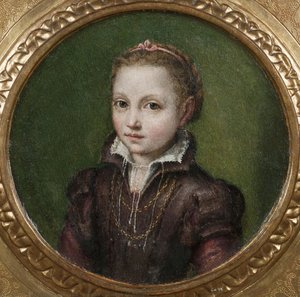
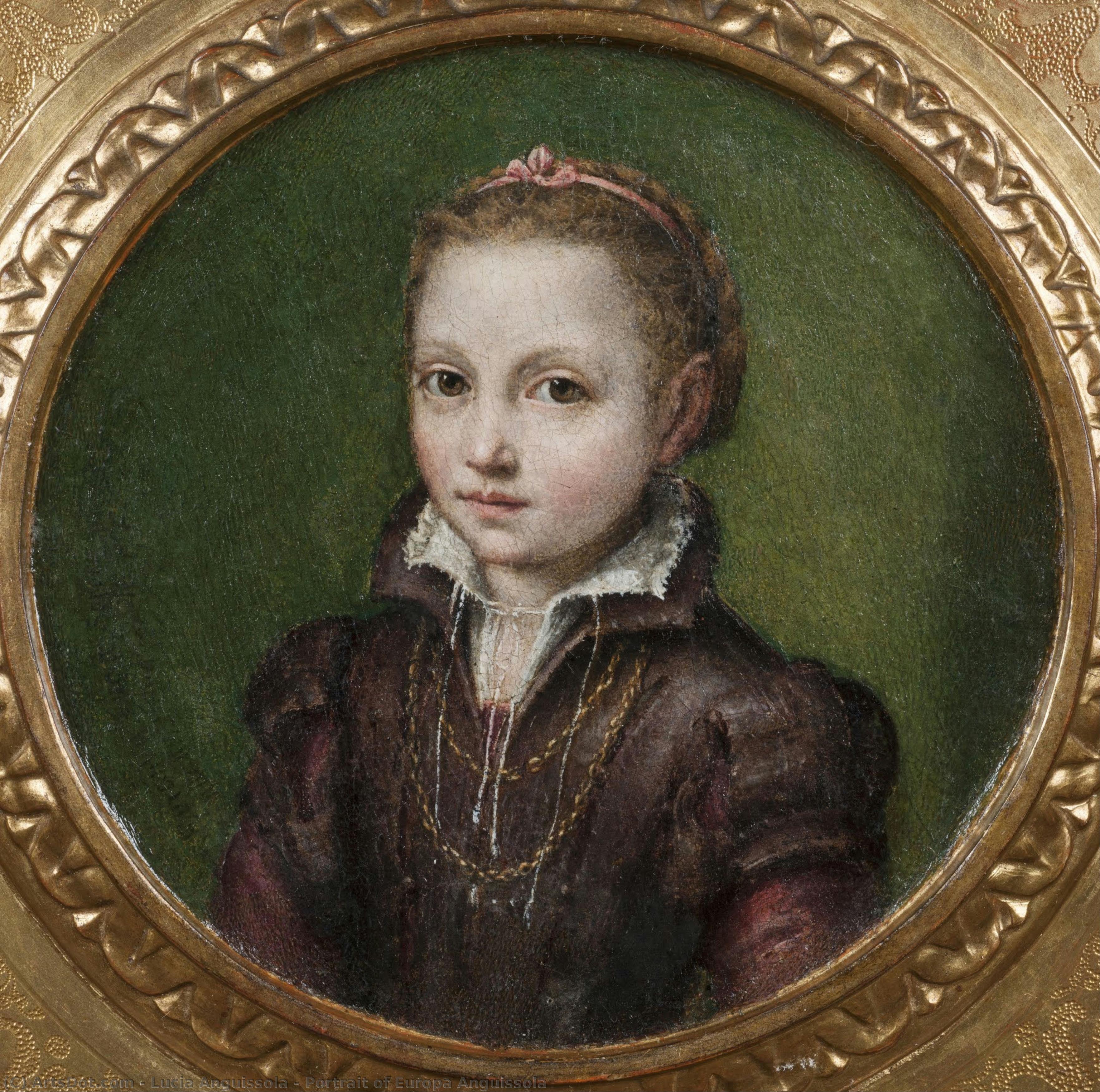
Portrait of Europa Anguissola


 Read More
Hand Made Oil Reproduction
Hand-painted oil on canvas in your size and frame, made to order by our artists. ( Buy Print Buy Image)




P118B $10

P118H $10

P118W $10

P438Z $10

P508JH $12

P508YH $12

P805H $10

P805Z $10

P919BZ $10

P919G $10

P919XJ $10

P959ZH $10

P968JZ $12

W106C $8

W218G $10

W218JH $8

W218Y $10

W307PJ $10

W316G $10

W316PJ $8

W316Y $10

W398PJ $8

W4111J $10

W500HY $15

W500JH $15

W692G $12

W849H $8

W940BG $15

W953PJ $8




Pick from our preset sizes that match the artwork's original proportions.

You may enter your own dimensions to fit a specific frame or space. If your selected size does not match the original image's proportions, we will either crop the artwork or extend the painting with additional hand-painted elements. A digital mockup will be sent for your approval before production begins.
Please note that the on-screen preview does not reflect the actual cropping or extension. Only the mockup will accurately show the final composition.
While custom sizes are available, we recommend selecting a dimension from the predefined list to preserve the original proportions.
After order, ArtsDot.com team will email client for instructions and provide a mockup preview
Worldwide Delivery () in 3/4 weeks instead of standard 5 weeks. (4 September). No compromise on quality.

Free Worldwide Express Shipping

High-Quality Linen Canvas

Full Shipping Insurance

Customs Tax Refund Guarantee

True Color Matching Guarantee

60-Day Return Policy (Defects Only)

100% Money-Back Guarantee

Bulk Discount Offer
 Glass option is only available in size under 110 CM

Portrait of Europa Anguissola
Reproduction Medium
Reproduction Size
-


Total Price
$ 263
Lucia Anguissola’s ‘Portrait of Europa’, A Window into Renaissance Domesticity
Lucia Anguissola's “Portrait of Europa,” painted around 1556-1558, is more than just a likeness; it’s a carefully constructed tableau that offers a rare glimpse into the private world of a noble Italian family during the late Renaissance. Far from a grand court portrait, this intimate scene unfolds within a modestly furnished room, dominated by a chessboard and radiating an atmosphere of quiet domesticity—a deliberate departure from the prevalent conventions of the era’s artistic landscape.
The painting immediately draws the eye to its three central figures: Lucia Anguissola herself, her sister Minerva, and their younger sibling Europa. Each woman is rendered with a remarkable sensitivity to detail, capturing not just their physical appearance but also hinting at their personalities and relationships. Lucia, positioned slightly forward, engages the viewer directly, her gaze holding a subtle mixture of curiosity and perhaps even amusement. Her attire—a simple yet elegant gown—contrasts sharply with the elaborate jewelry worn by Minerva, suggesting a hierarchy within the family while simultaneously celebrating each woman’s individual worth.
- Technique & Style: Anguissola's style is deeply rooted in the artistic legacy of her renowned elder sister, Sofonisba Anguissola. She shares Sofonisba’s masterful use of light and shadow, creating a palpable sense of depth and volume within the composition. The brushwork is delicate yet confident, revealing a keen eye for observation and an ability to capture fleeting expressions.
- Compositional Elements: The chessboard serves as a central organizing element, framing the figures and subtly suggesting themes of strategy, intellect, and perhaps even rivalry. The inclusion of the housemaid adds another layer of complexity, highlighting the social dynamics within the household and challenging traditional notions of portraiture.
- Color Palette: The muted color palette—dominated by earthy tones, soft greens, and subtle blues—contributes to the painting’s intimate atmosphere. It evokes a sense of warmth and comfort, reflecting the values of family life during the Renaissance.
The Significance of the Chess Game
Beyond its immediate visual appeal, “Portrait of Europa” holds significant symbolic weight. In the context of 16th-century Italy, chess was considered a masculine pursuit, associated with military strategy and aristocratic prowess. By depicting three women engaged in a game of chess, Anguissola subverted traditional gender roles and asserted the intellectual capabilities of women. This wasn’t simply a casual pastime; it represented a shared activity, a moment of connection and engagement between sisters.
The presence of the chessboard itself is laden with meaning. It symbolizes not only strategic thinking but also family bonds and social interaction. The game becomes a microcosm of their lives—a space where relationships are tested, alliances are formed, and decisions are made. Furthermore, the inclusion of the housemaid suggests that even those considered lower in the social hierarchy were part of this intimate sphere.
Lucia’s Artistic Legacy & Historical Context
Lucia Anguissola's artistic journey is particularly remarkable considering the limited opportunities available to women artists during her time. Her father, Amilcare Anguissola, a member of the Genoese minor nobility, recognized his daughters’ talent and provided them with an exceptional education—a rarity in Renaissance Italy. This progressive upbringing allowed Lucia to develop her artistic skills alongside her brothers, challenging societal expectations and paving the way for future generations of female artists.
Her work reflects a humanist sensibility, influenced by the intellectual currents of the era. She skillfully captured not only the physical likenesses of her subjects but also their personalities and inner lives—a hallmark of Renaissance portraiture. Lucia’s legacy is further cemented by her connection to Sofonisba Anguissola, whose fame she inherited and continued to build upon.
A Timeless Portrait – Reproduction & Interpretation
Reproductions of “Portrait of Europa” offer a captivating window into the world of Renaissance Italy. The painting’s intimate scale and nuanced details invite viewers to step back in time and imagine the lives of these remarkable women. When selecting a reproduction, consider the quality of materials and printing techniques—a faithful rendering will truly capture the essence of Anguissola's original masterpiece. This portrait is not just an image; it’s a testament to female artistry, familial bonds, and the enduring power of human connection.
Related Artworks


Artist Biography
Lucia Anguissola: Life and Legacy
Early Life and Family Background
- Born in Cremona, Italy, around 1536 or 1538, Lucia Anguissola was the third of seven children born to Amilcare Anguissola and Bianca Ponzoni.
- Her father, a member of the Genoese minor nobility, unusually encouraged his five daughters’ artistic and humanist education – a rare opportunity for women during the Renaissance.
- The family's progressive outlook fostered an environment where artistic talent could flourish, particularly among Lucia and her sisters.
Artistic Training and Influences
- Lucia likely received initial training from her renowned eldest sister, Sofonisba Anguissola, who became a celebrated portraitist in her own right.
- Her style closely mirrors Sofonisba’s, demonstrating shared techniques and approaches to portraiture.
- The humanist education she received influenced her ability to capture the personality and inner life of her sitters.
Artistic Style and Major Works
- Lucia Anguissola primarily focused on portraiture, a genre that allowed her to showcase her skill in capturing likenesses and conveying character.
- Her paintings are characterized by a restrained palette, often employing greys and browns, and a sensitive portrayal of her subjects.
- Notable works include:
- Portrait of Pietro Maria (Manna): Praised by Giorgio Vasari for its sensitivity and psychological depth.
- Self-Portrait: A rare self-representation offering insight into her own identity as an artist.
- Portraits of family members, including Europa Anguissola.
Recognition and Historical Significance
- Contemporary critics recognized Lucia’s exceptional talent, with some believing she possessed even greater potential than her sister Sofonisba.
- Filippo Baldinucci, a 17th-century biographer, lamented that her early death prevented her from fully realizing her artistic promise.
- Vasari's praise of Portrait of Pietro Maria cemented her reputation during her lifetime.
- Lucia’s work contributes to our understanding of female artists in the Renaissance and challenges traditional narratives about women’s roles in art history.
Legacy and Later Years
- Lucia Anguissola died around 1565 or shortly thereafter, at a young age, cutting short a promising career.
- Although her body of work is relatively small compared to other Renaissance artists, her contributions are significant for their quality and the context in which they were created.
- Her paintings offer valuable insights into the lives and social circles of the Anguissola family and the artistic milieu of 16th-century Italy.
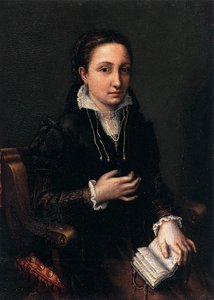
Lucia Anguissola
1536 - 1565 , Italy
Quick Facts
- Birth Date: 1536
- Birth Place: Cremona, Italy
- Death Date: c. 1565
- Influenced By: Sofonisba Anguissola
- Movement: Mannerism, Renaissance
- Name: Lucia Anguissola
- Nationality: Italian
- Notable Works:
- Portrait of Pietro Maria
- Self-Portrait
Related Articles
Mannerism: Bridging Renaissance Harmony & Baroque Drama – A Study of Style & Affectation
Explore the fascinating world of Mannerism! Discover its key characteristics, pioneering artists like Pontormo & Bronzino, and its pivotal role in bridging Renaissance harmony to Baroque drama. A comprehensive guide for art enthusiasts.
Evolving Portraits: Personalized Art as a Chronicle of Family Life Across Generations
Create a timeless family legacy with custom portraits! ArtsDot connects you with skilled artists for heirloom-quality paintings & prints. Explore styles, commission your unique artwork today.
The Enduring Legacy of Family Portraiture: A Historical & Artistic Exploration
Explore the rich history of family portraiture with ArtsDot. Discover artistic styles, symbolism & collecting insights. Commission a custom oil painting or appraise your existing artwork today!

Preserving Generations: The Enduring Significance of Family Portraits as Legacy
Discover the enduring power of family portraits. Explore how commissioning a custom oil painting preserves your legacy for generations. Expert artists & heirloom quality.
Civic Virtue and Artistic Rivalry: Patronage and Innovation in the Italian Renaissance Republics, 1400–1600
Explore the Italian Renaissance! Discover how competitive patronage & humanist ideals fueled artistic innovation in republics like Florence & Venice. Expert insights for art lovers and collectors.