 Preview
 Send
Send Share
Share
 Details

 Download
 Similars
 X-Ray
X-Ray Diaporama
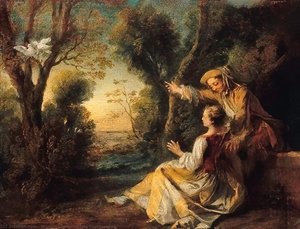
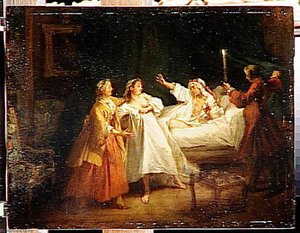
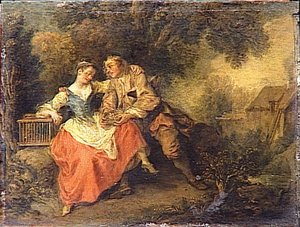
'With a tender little song…'
 Acrylic On Canvas
- WallArt
- Rococo
 27.0 x 19.0 cm
 Fitzwilliam College
 Read More
Giclée / Art Print
Museum-quality giclée or canvas print with fast production and flexible finish options. ( Buy Hand Made Painting Buy Image)




P118B $10

P118H $10

P118W $10

P438Z $10

P508JH $12

P508YH $12

P805H $10

P805Z $10

P919BZ $10

P919G $10

P919XJ $10

P959ZH $10

P968JZ $12

W106C $8

W218G $10

W218JH $8

W218Y $10

W307PJ $10

W316G $10

W316PJ $8

W316Y $10

W398PJ $8

W4111J $10

W500HY $15

W500JH $15

W692G $12

W849H $8

W940BG $15

W953PJ $8




Pick from our preset sizes that match the artwork's original proportions.

You may enter your own dimensions to fit a specific frame or space. If your selected size does not match the original image's proportions, we will either crop the artwork or extend the image with a mirrored or solid-fill edge. A digital mockup will be sent for your approval before production begins.
Please note that the on-screen preview does not reflect the actual cropping or extension. Only the mockup will accurately show the final composition.
While custom sizes are available, we recommend selecting a dimension from the predefined list to preserve the original proportions.
Worldwide Delivery () in 2 weeks instead of standard 4/5 weeks. (16 August)

Free Worldwide Express Shipping

High-Quality Linen Canvas

Full Shipping Insurance

Customs Tax Refund Guarantee

True Color Matching Guarantee

60-Day Return Policy (Defects Only)

100% Money-Back Guarantee

Bulk Discount Offer
 Glass option is only available in size under 110 CM

'With a tender little song…'
Giclée / Art Print
Reproduction Size
-


Total Price
$ 63
Collectible Description
A Tender Echo of Parisian Life
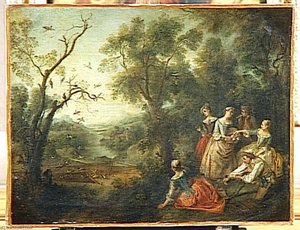
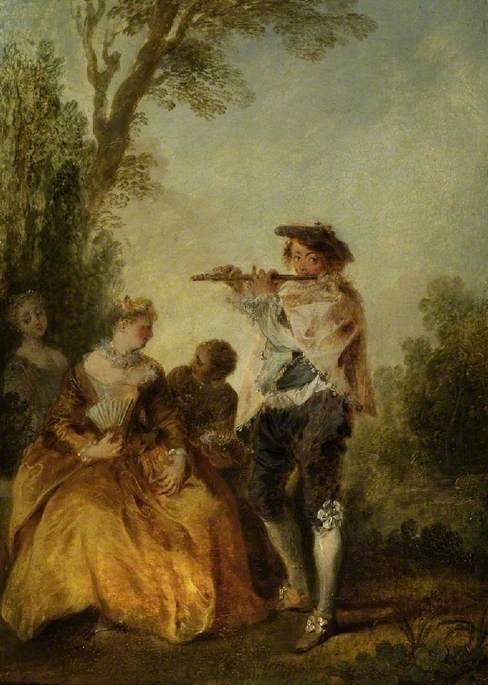
Nicolas Lancret’s “With a tender little song…” is more than just a painting; it's a fleeting moment captured in time, a whisper from the vibrant heart of 18th-century Paris. Completed around 1730, this exquisite work transports us to a *fête galante*, a refined outdoor celebration favored by the aristocracy – a world of leisurely picnics, musical performances, and exquisitely dressed figures bathed in the golden light of late afternoon. The scene unfolds within a meticulously rendered park setting, hinting at the manicured beauty that defined the gardens of Versailles and other grand estates.
Lancret’s style is distinctly Rococo, characterized by its delicate brushwork, pastel palette, and an emphasis on capturing fleeting emotions and social interactions. Unlike the dramatic narratives often found in history paintings, Lancret focuses on a seemingly simple tableau – a man playing his violin while elegantly dressed couples stroll nearby. Yet, within this apparent ease lies a subtle complexity. The figures are not merely posed; they seem to be caught in an intimate exchange, their gazes and gestures suggesting unspoken connections and shared enjoyment. Lancret’s skill lies in his ability to imbue ordinary moments with a sense of grace and charm.
The Language of *Fêtes Galantes*
To fully appreciate “With a tender little song…”, it's crucial to understand the context of *fêtes galantes*. These gatherings were carefully orchestrated spectacles designed to showcase the refined tastes and social graces of the French court. They weren’t about grand battles or historical events; instead, they celebrated beauty, pleasure, and the art of living well. Lancret expertly captures this atmosphere, depicting a scene that feels both idyllic and subtly artificial – a world constructed for aesthetic enjoyment.
Notice the careful attention to detail: the richly embroidered fabrics, the delicate floral arrangements, the precise positioning of the figures. These elements contribute to an overall sense of elegance and refinement. The violin player, positioned slightly off-center, draws our eye immediately, suggesting a focal point for the scene. The couple seated on the bench appear lost in their own world, while others observe with quiet amusement – a typical dynamic within these gatherings.
A Masterful Blend of Technique
Lancret’s technical prowess is evident throughout the painting. His use of *sfumato*, a technique borrowed from Leonardo da Vinci, creates soft transitions between colors and forms, lending the scene an ethereal quality. The light seems to diffuse gently, casting subtle shadows and highlighting the figures' delicate features. The artist skillfully employs broken brushstrokes – small, individual marks that coalesce into larger shapes – to create a sense of movement and vibrancy.
Furthermore, Lancret’s ability to render textures is remarkable. The velvet upholstery of the bench, the silk ribbons adorning the figures' clothing, and the foliage of the trees are all depicted with astonishing realism. This meticulous attention to detail elevates the painting beyond a simple depiction of a social gathering; it becomes a celebration of craftsmanship and artistic skill.
Symbolism and Emotional Resonance
Beyond its technical merits, “With a tender little song…” is rich in symbolism. The violin itself represents music, harmony, and pleasure – elements central to the *fête galante* experience. The couple’s interaction suggests romance and intimacy, while the onlookers convey a sense of shared amusement and camaraderie. The painting isn't simply about depicting a scene; it's about conveying an emotional state—a feeling of gentle joy and refined social connection.
Ultimately, Lancret’s masterpiece invites us to step back in time and experience the pleasures of 18th-century Parisian society. It is a testament to the artist’s skill, his understanding of Rococo aesthetics, and his ability to capture the fleeting beauty of everyday life. A reproduction of this work offers a window into a world of elegance, grace, and understated charm – a reminder that even in the most carefully constructed scenes, genuine emotion can still be found.
Related Artworks
Artist Biography
Nicolas Lancret: A Life in Rococo Charm
- Born: Paris, France (January 22, 1690)
- Died: Paris, France (September 14, 1743)
Early Life and Training
Nicolas Lancret's artistic journey began in Paris, where he was born in 1690. While detailed records of his early life are scarce, it is known that he received initial training under Pierre d’Ulin, a respected history painter. A pivotal moment arrived when he encountered the work of Antoine Watteau, whose influence profoundly shaped Lancret's artistic direction. He subsequently studied with Jean-Baptiste Gillot, who himself had been a student of Watteau, further solidifying his connection to this influential artistic lineage. This period of training laid the foundation for Lancret’s distinctive style, characterized by its lighthearted depictions of Parisian society and celebrations of *fêtes galantes*.Artistic Style and Notable Works
Lancret became renowned as a brilliant portrayer of everyday life within French society during the Regency of the Duke of Orleans and the early reign of King Louis XV. His artistic style is marked by charming scenes of balls, fairs, village weddings, and other social gatherings, reflecting the tastes and manners of his time. He excelled at capturing the spirit of Rococo elegance and frivolity.- Notable Works:
- *Le Déjeuner de Jambon* (Chantilly, Musée Condé, 1735): A quintessential example of his genre scenes, depicting a convivial ham breakfast with lively figures.
- *La Servante Justifiée* (1735-1740): Showcases Lancret's ability to portray domestic scenes with wit and charm.
- *Le Jeu des Quatre-Coins*: A playful depiction of a popular game, capturing the energy and amusement of social interaction.
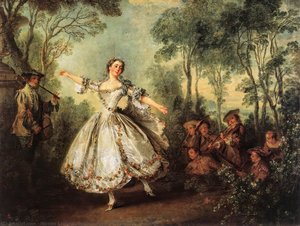
- *Marie-Anne de Camargo* (1730): A portrait demonstrating his skill in depicting fashionable figures.
Influences and Legacy
Lancret’s artistic style bears a clear resemblance to that of Watteau, often leading art historians to compare the two. While some critics have considered Lancret's work to be somewhat less profound than Watteau's, his ability to capture the essence of French society in the 18th century has secured him a significant place in art history. His paintings are celebrated for their lightheartedness and charm, offering valuable insights into the social customs and aesthetics of the Rococo period. Lancret’s influence can be seen in later artists like François Boucher. His works reside in prestigious collections worldwide, including the National Gallery and the Musée d'Orsay, ensuring his legacy continues to inspire appreciation for French Rococo art.Development and Historical Significance
Throughout his career, Lancret demonstrated a gradual evolution in his artistic approach. While initially heavily influenced by Watteau, he developed a more distinctive style characterized by livelier colors and a greater sense of harmony between figures and their surroundings. His later works, such as *Montreir de lanterne magique* and *Family in a Garden*, are considered to represent the peak of his artistic achievement, showcasing an increasing ability to create depth and intimacy within his compositions. Lancret’s historical significance lies in his contribution to the Rococo movement and his ability to document the social life and cultural values of 18th-century France through his charming and accessible paintings.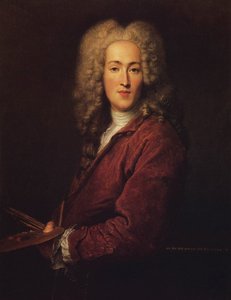
Nicolas Lancret
1690 - 1743 , France
Quick Facts
- Artistic Movement Or Style: Rococo
- Artists Or Movements Influenced By This Artist: ['François Boucher']
- Artists Who Influenced This Artist:
- Pierre d'Ulin
- Jean-Baptiste Gillot
- Antoine Watteau
- Date Of Birth: January 22, 1690
- Date Of Death: September 14, 1743
- Full Name: Nicolas Lancret
- Nationality: French
- Notable Artworks:
- Le déjeuner de jambon
- La servante justifiée
- Le jeu des quatre-coins
- Marie-anne de Camargo
- Place Of Birth: Paris, France
Related Articles

The Rococo Aesthetic: Opulence, Rebellion & the Pursuit of Pleasure in 18th-Century Art
Explore the opulent world of Rococo art! Discover its origins, key artists like Watteau & Boucher, and lasting influence on design. Expert insights for collectors & enthusiasts.
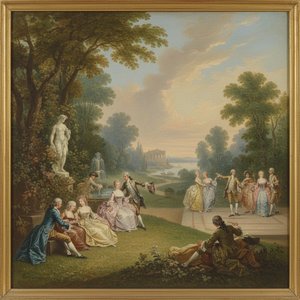
The Fête Galante & Beyond: Exploring the Artistic World of Jean-Antoine Watteau
Discover the captivating world of Jean-Antoine Watteau, master of the Fête Galante! Explore his iconic paintings, symbolism, and lasting influence on Rococo art. A deep dive for classic art enthusiasts.

Rococo's Radiant Legacy: 10 Masterpieces for Your Home |
Indulge in the elegance of Rococo! Explore 10 masterpieces by Fragonard, Boucher & Watteau. Discover the stories behind these iconic paintings and bring timeless art to your home with museum-quality reproductions from .

The Allure of Elegance in Art: A Historical & Aesthetic Exploration of Refinement & Grace
Explore the exquisite world of Rococo art! Discover its history, masters (Watteau, Boucher & more), and defining elegance. Expert insights for collectors seeking museum-quality reproductions & custom portraits.
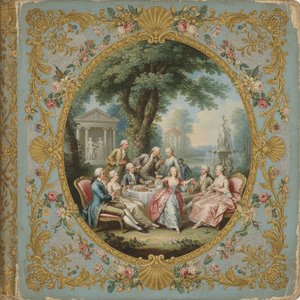
The Rococo Style: Aristocratic Leisure & the Pursuit of Delight in 18th-Century Art
Explore the opulent world of Rococo art! Discover Watteau, Boucher & Nattier's masterpieces. Expert insights for collectors seeking museum-quality reproductions and custom portraits at ArtsDot.