 Preview
 Send
Send Share
Share
 Details

 Download
 Similars
 X-Ray
X-Ray Diaporama
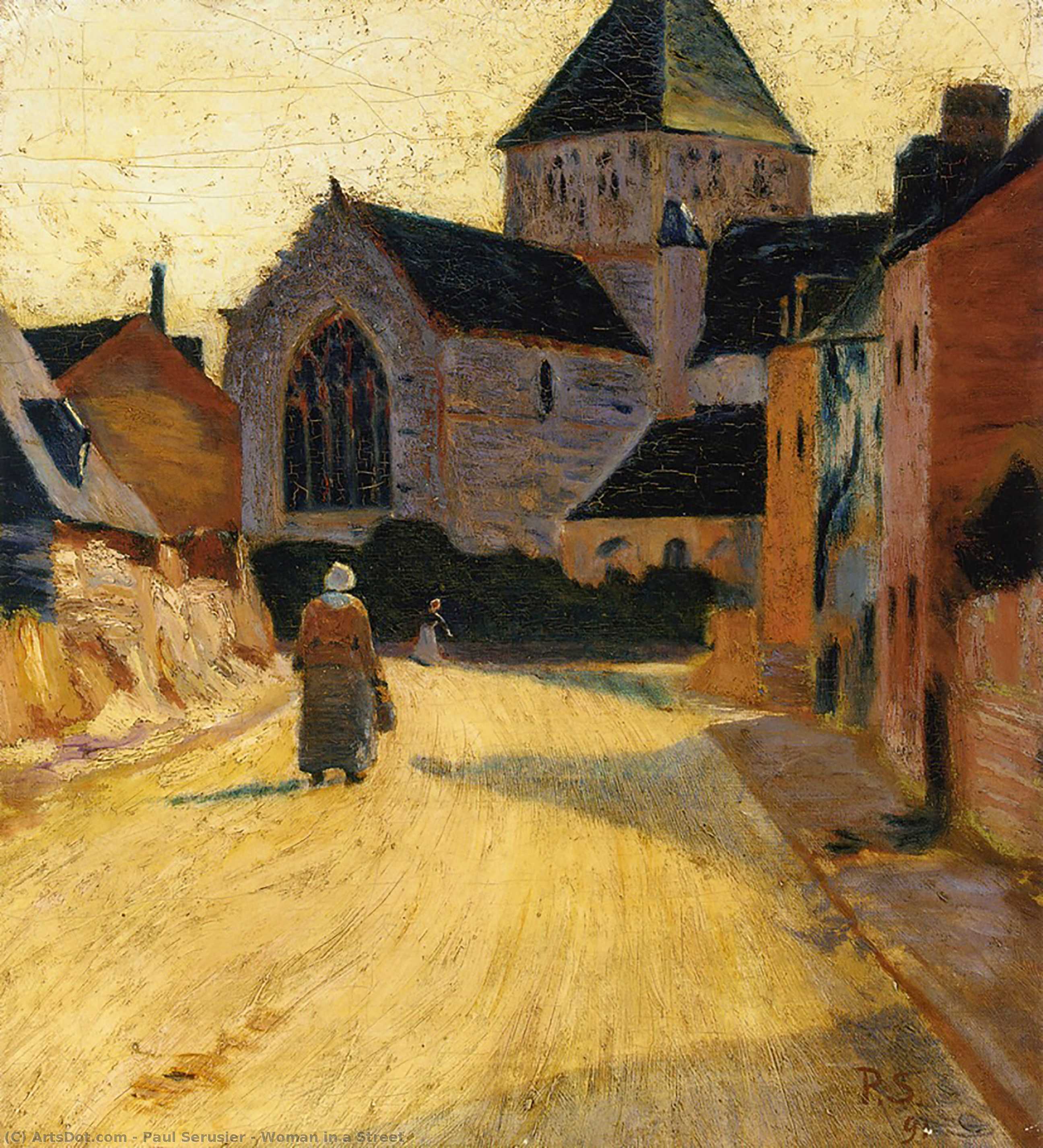
Woman in a Street
 Oil
Oil- WallArt
- Post-Impressionism
 1891
1891- 19th Century
 46.0 x 41.0 cm
 Read More
Giclée / Art Print
Museum-quality giclée or canvas print with fast production and flexible finish options. ( Buy Hand Made Painting Buy Image)




P118B $10

P118H $10

P118W $10

P438Z $10

P508JH $12

P508YH $12

P805H $10

P805Z $10

P919BZ $10

P919G $10

P919XJ $10

P959ZH $10

P968JZ $12

W106C $8

W218G $10

W218JH $8

W218Y $10

W307PJ $10

W316G $10

W316PJ $8

W316Y $10

W398PJ $8

W4111J $10

W500HY $15

W500JH $15

W692G $12

W849H $8

W940BG $15

W953PJ $8




Pick from our preset sizes that match the artwork's original proportions.

You may enter your own dimensions to fit a specific frame or space. If your selected size does not match the original image's proportions, we will either crop the artwork or extend the image with a mirrored or solid-fill edge. A digital mockup will be sent for your approval before production begins.
Please note that the on-screen preview does not reflect the actual cropping or extension. Only the mockup will accurately show the final composition.
While custom sizes are available, we recommend selecting a dimension from the predefined list to preserve the original proportions.
Worldwide Delivery () in 2 weeks instead of standard 4/5 weeks. (22 August)

Free Worldwide Express Shipping

High-Quality Linen Canvas

Full Shipping Insurance

Customs Tax Refund Guarantee

True Color Matching Guarantee

60-Day Return Policy (Defects Only)

100% Money-Back Guarantee

Bulk Discount Offer
 Glass option is only available in size under 110 CM

Woman in a Street
Giclée / Art Print
Reproduction Size
-


Total Price
$ 63
Collectible Description
A Quiet Moment in Time: The Soul of Post-Impressionism
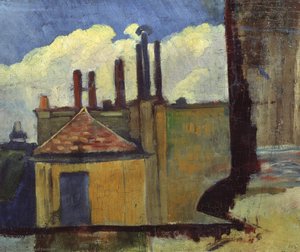
In the gentle strokes of Paul Sérusier’s 1891 masterpiece, "Woman in a Street," we are invited to step into a world where the mundane becomes monumental. This evocative piece captures a fleeting moment of daily life, transporting the viewer to a serene village setting where time seems to slow its frantic pace. A solitary woman wanders through the street, her presence anchored by the weight of a handbag and the quiet rhythm of her stride. As she moves past the looming silhouette of a church, the towering steeple serves as more than just an architectural feat; it acts as a spiritual sentinel, watching over the rhythmic pulse of the town. The scene is populated by subtle, distant figures that add layers of depth and life, creating a composition that feels both intimate and expansive.
The atmosphere of the painting is one of profound peace, a hallmark of Sérusier’s ability to find the extraordinary within the ordinary. There is a certain nostalgia embedded in the way the light interacts with the streetscape, evoking a sense of longing for a simpler, more contemplative era. For the collector or interior designer, this work offers a window into a tranquil past, providing a focal point that radiates calm and sophistication. It is not merely a depiction of a street; it is an invitation to breathe, to observe, and to find beauty in the stillness of a passing afternoon.
The Mastery of Color and Form
Technically, "Woman in a Street" stands as a testament to the evolving language of Post-Impressionism. Sérusier, a pivotal figure in the development of modern art, utilizes a technique that hints at the burgeoning movement of Cloisonnism. Through the use of bold outlines and flattened planes of color, he moves away from the fleeting light effects of Impressionism toward a more structured, symbolic reality. The way the colors are applied suggests a deliberate, thoughtful approach to composition, where every shade contributes to the overall emotional resonance of the piece.
The interplay between the dark, grounded tones of the street and the lighter, ethereal heights of the church steeple creates a visual tension that keeps the eye moving across the canvas. This balance of weight and lightness is essential for any space where this artwork might reside, as it brings a dynamic yet harmonious energy to a room. The painting’s ability to command attention through subtle shifts in hue and shape makes it an ideal selection for those looking to add a layer of intellectual depth and artistic prestige to their curated collections.
A Legacy of Innovation
To understand this work is to understand the very foundations of 20th-century abstraction. As a founding member of Les Nabis, Sérusier was part of an avant-garde circle that sought to bridge the gap between the visible world and the spiritual essence of subjects. While "Woman in a Street" retains a recognizable subject matter, one can sense the seeds of abstraction within its structured forms and rhythmic patterns. It is a piece that bridges two worlds: the traditional landscape and the experimental future.
For those seeking to adorn their homes or galleries with a high-quality reproduction, this painting offers more than just aesthetic pleasure; it offers a connection to art history's most transformative era. Owning a piece that echoes the spirit of Sérusier is an opportunity to surround oneself with the quiet strength of the Post-Impressionist movement—a movement that taught us that color and form could speak directly to the human soul, long after the subject itself has passed from view.
Related Artworks

Artist Biography
early life and education
paul sérusier, a french painter, was born on november 9, 1864, in paris. he studied at the académie julian, where he became a monitor in the mid-1880s. this marked the beginning of his artistic journey, which would eventually lead him to pioneer abstract art and inspire the avant-garde nabis movement, synthetism, and cloisonnism.artistic career
in the summer of 1888, sérusier traveled to pont-aven, where he joined a small group of artists centered around paul gauguin. under gauguin's close supervision, sérusier painted "the talisman," an extreme exercise in cloisonnism that approximated pure abstraction. this piece showcased his innovative style and willingness to experiment with new techniques. as a post-impressionist painter, sérusier was part of the group les nabis, alongside pierre bonnard, édouard vuillard, and maurice denis. although not as widely recognized as some of his peers, sérusier's contributions to the development of abstract art are undeniable.notable works and legacy
some of sérusier's notable works include:- l'averse (1893), musée d'orsay, paris
- portrait of paul ranson (1890), musée d'orsay, paris
- melancholy (1890)
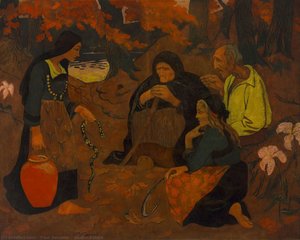
- the snake eaters (1894), muzeum narodowe, warsaw
artistic movement and influence
sérusier's work was influenced by cloisonnism, a style characterized by bold and flat forms separated by dark contours. this movement, which emerged in the late 19th century, played a significant role in shaping the development of modern art.- explore more on cloisonnism: the cloisonnism art movement
- discover sérusier's work: paul serusier | ArtsDot.com
- learn about the nabis movement: the nabis art movement

Paul Sérusier
1864 - 1927 , France
Quick Facts
- Artistic Movement Or Style: Post-Impressionism
- Artists Who Influenced This Artist:
- Paul Gauguin
- Maurice Denis
- Date Of Birth: November 9, 1864
- Full Name: Louis-Paul-Henri Sérusier
- Nationality: French
- Notable Artworks:
- The Talisman
- Landscape at the Bois d’Amour
- Place Of Birth: Paris, France
Related Articles

Cézanne's Masterpieces: 25 Iconic Artworks to Transform Your Space
Journey through 25 iconic artworks by Paul Cézanne – a master of Impressionism and Post-Impressionism. Explore his landscapes, still lifes, and the stories behind these timeless masterpieces. Discover museum-quality reproductions & curated decor at ArtsDot.com.
Paul Klee's Masterpieces: Explore 25 Iconic Paintings & Prints | ArtsDot
Journey through Paul Klee's 25 most iconic paintings & prints. Explore his abstract style, Bauhaus influence, and vibrant color palettes. Find museum-quality art reproductions & decor ideas at ArtsDot.com. Discover all masterpieces online.
Impressionistic Landscapes: 10 Masterpieces That Changed Art & Decor
Journey into the heart of Impressionism! Explore 10 masterpieces by Monet, Renoir & Degas that revolutionized landscape art. Discover their stories, techniques & find museum-quality reproductions to elevate your home decor on ArtsDot.com.
Post-Impressionism's 10 Defining Masterpieces: Art for Your Home |
Journey through Post-Impressionism's 10 defining masterpieces – Van Gogh, Monet & more. Explore iconic paintings, art history & find museum-quality reproductions for your home at . Discover all masterpieces online!

Paul Sérusier: Pioneering Synthetism & The Nabis’ Symbolic Revolution
Discover Paul Sérusier's pivotal role in the Nabis movement & the birth of Synthetism. Explore 'The Talisman,' his influence on modern art, and a deeper understanding of this symbolic revolution. Expert analysis & insights.