 Preview
 Send
Send Share
Share
 Details

 Download
 Similars
 X-Ray
X-Ray Diaporama
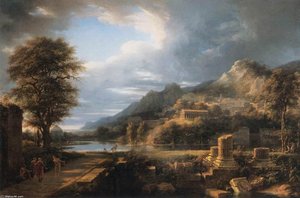
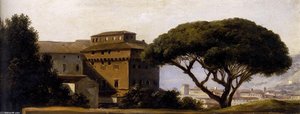
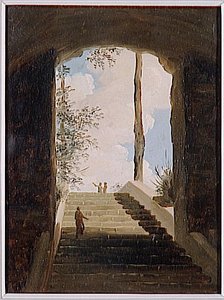
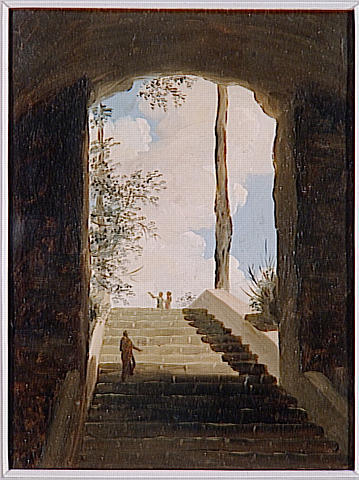
A LA VILLA FARNESE L'ESCALIER


 Read More
Hand Made Oil Reproduction
Hand-painted oil on canvas in your size and frame, made to order by our artists. ( Buy Print Buy Image)




P118B $10

P118H $10

P118W $10

P438Z $10

P508JH $12

P508YH $12

P805H $10

P805Z $10

P919BZ $10

P919G $10

P919XJ $10

P959ZH $10

P968JZ $12

W106C $8

W218G $10

W218JH $8

W218Y $10

W307PJ $10

W316G $10

W316PJ $8

W316Y $10

W398PJ $8

W4111J $10

W500HY $15

W500JH $15

W692G $12

W849H $8

W940BG $15

W953PJ $8




Pick from our preset sizes that match the artwork's original proportions.

You may enter your own dimensions to fit a specific frame or space. If your selected size does not match the original image's proportions, we will either crop the artwork or extend the painting with additional hand-painted elements. A digital mockup will be sent for your approval before production begins.
Please note that the on-screen preview does not reflect the actual cropping or extension. Only the mockup will accurately show the final composition.
While custom sizes are available, we recommend selecting a dimension from the predefined list to preserve the original proportions.
After order, ArtsDot.com team will email client for instructions and provide a mockup preview
Worldwide Delivery () in 3/4 weeks instead of standard 5 weeks. (26 August). No compromise on quality.

Free Worldwide Express Shipping

High-Quality Linen Canvas

Full Shipping Insurance

Customs Tax Refund Guarantee

True Color Matching Guarantee

60-Day Return Policy (Defects Only)

100% Money-Back Guarantee

Bulk Discount Offer
 Glass option is only available in size under 110 CM

A LA VILLA FARNESE L'ESCALIER
Reproduction Medium
Reproduction Size
-


Total Price
$ 288
Artwork Description
The Grand Ascent: Capturing Classical Romance
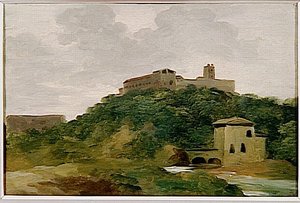
To gaze upon this depiction of A La Villa Farnese L'Escalier is to step directly into the idealized grandeur of classical antiquity. It is more than a mere rendering of stone steps; it is an invitation, a visual journey up through time and toward a sublime vista. The composition immediately arrests the eye with its sweeping staircase, which dominates the foreground like a monumental gesture. This architectural centerpiece, framed beautifully by what appears to be an encompassing archway, masterfully employs linear perspective. One feels the very pull of the lines converging into the distance, drawing the viewer's gaze past the immediate embrace of foliage and toward the distant figures enjoying the open air. The overall effect is one of profound depth, a carefully orchestrated illusion that speaks volumes about the art of landscape painting.
A Study in Earth Tones and Diffused Light
The painter has achieved a remarkable harmony through his handling of color. The palette is richly subdued, dominated by the warm, grounding tones of browns, tans, and muted greens—the very essence of aged stone and mature foliage. This restraint prevents the scene from becoming overly saccharine, lending it instead an air of timeless dignity. Notice how the light interacts with the materials; it is diffused, suggesting a day veiled in soft cloud cover. This gentle illumination falls unevenly across the steps, creating subtle gradations of shadow that give the stone its palpable texture—a contrast to the softer, more organic shapes of the surrounding trees. The technique suggests an oil medium applied with considerable skill, allowing for both the smooth finish required for architectural rendering and the delicate touch needed to capture the whisper of light on a leaf.
Neoclassical Echoes and Human Connection
Stylistically, this work resonates deeply with Neoclassicism. The emphasis is placed squarely on idealized forms, monumental architecture, and the harmonious relationship between man's creation and nature’s enduring beauty. Historically, such scenes were immensely popular among those who admired the ruins and perfected aesthetics of Roman life. The presence of the distant figures at the summit adds a vital human element. They are not merely decorative; they provide scale, suggesting that this grand passage was once trod by lives full of conversation and contemplation. This interplay between the enduring structure—the staircase—and the fleeting moment of human gathering imbues the piece with a quiet narrative weight.
Symbolism of Progress and Tranquility
Beyond its technical brilliance, the painting whispers profound symbolism. The very act of ascending stairs has long been interpreted as a metaphor for progress, aspiration, or spiritual ascent. To look up is to contemplate reaching a higher plane, whether literal or metaphorical. Yet, this sense of striving is tempered by an overwhelming feeling of tranquility. The muted colors and the enveloping natural setting suggest that true progress is not achieved through struggle alone, but through a peaceful integration with one's environment. For the collector or designer, owning such a piece means acquiring not just art, but a mood—a sophisticated, contemplative sanctuary for any room.
Related Artworks
Artist Biography
early life and training
pierre-henri de valenciennes, a french painter, was born on december 6, 1750. his birthplace is not specified in available records, but his contributions to the art world are well-documented. de valenciennes' early training and education are not extensively recorded, but it is known that he worked in rome from 1778 to 1782, where he made a number of landscape studies directly from nature.contributions to en plein air painting
de valenciennes was influential in elevating the status of en plein air (open-air painting). his work in rome led to the development of his theory, which he outlined in his 1800 treatise reflections and advice to a student on painting, particularly on landscape. this concept introduced the idea of a 'landscape portrait,' where an artist paints a landscape directly while looking upon it, capturing its particular details. this approach allowed de valenciennes to capture the fleeting changes of a landscape due to light and weather.notable students and influence
among his notable students were jean-victor bertin, achille etna michallon, louis étienne watelet, louis-françois lejeune, and the first french panorama painter pierre prévost. de valenciennes' influence on these artists and his contributions to the development of en plein air painting have left a lasting impact on the art world.later life and death
de valenciennes passed away in paris on february 16, 1819. he is buried in the père lachaise cemetery, a famous cemetery in paris known for its notable residents.- view pierre-henri de valenciennes's artwork on ArtsDot.com
- explore the musée des beaux-arts valence, a museum featuring european paintings and sculptures, on ArtsDot.com
- discover more about french art and its history on wikipedia
legacy
pierre-henri de valenciennes's legacy in the art world is undeniable. his pioneering work in en plein air painting has inspired generations of artists, and his influence can still be seen today. through his treatise and his students, de valenciennes has left an indelible mark on the world of art.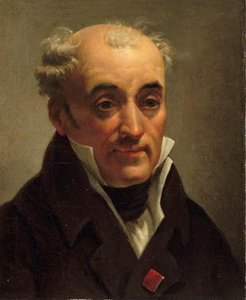
Pierre-Henri de Valenciennes
1750 - 1819 , France
Quick Facts
- Artistic Movement Or Style: En plein air painting
- Artists Or Movements Influenced By This Artist: ['Pierre Chauvin']
- Artists Who Influenced This Artist:
- Jean Victor Bertin
- Achille Etna Michallon
- Date Of Birth: December 6, 1750
- Date Of Death: February 16, 1819
- Full Name: Pierre Henri de Valenciennes
- Nationality: French
- Notable Artworks:
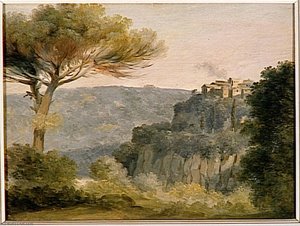
- Village de Nemi
- A LA Villa Borghese Chemin borde d'arbres
- Place Of Birth: Toulouse, France
Related Articles
Henri Matisse's Masterpieces: Explore 25 Iconic Paintings & Art Decor Ideas
Journey through Henri Matisse's 25 most iconic paintings! Explore Fauvism, vibrant colors & the stories behind masterpieces like 'The Dance'. Find museum-quality art reproductions and curated decor ideas to elevate your space. Discover all masterpieces on ArtsDot.com.

Renoir's Masterpieces: Explore 25 Iconic Paintings & Bring Art Home | ArtsDot
Explore 25 iconic Pierre-Auguste Renoir paintings! Discover the stories behind Impressionist masterpieces like 'Dance at Le Moulin de la Galette' & 'Luncheon of the Boating Party'. Find museum-quality art reproductions and elevate your home decor with ArtsDot.com.

Georges Seurat's Masterpieces: 25 Paintings That Defined Pointillism | ArtsDot
Explore 25 iconic Georges Seurat paintings & discover the brilliance of Pointillism. From 'La Grande Jatte' to his harbor scenes, delve into art history with ArtsDot.com. Find museum-quality reproductions for your home decor. Explore the full collection online!

Echoes of the Azure Coast: Art Selection Strategies for Mediterranean Villa Interiors – Harmonizing Space, Light, and Legacy
Discover art selection strategies for stunning Mediterranean villa interiors. Expert guidance on harmonizing space, light & legacy. Elevate your home with timeless elegance – curated collections & bespoke solutions.
Fauvism's Boldest Visions: 10 Masterpieces That Revolutionized Modern Art | ArtsDot
Explore 10 Fauvist masterpieces by Matisse, Derain & Vlaminck that ignited Modern Art! Discover bold colors, expressionist landscapes & the history of this revolutionary movement. Find museum-quality prints at ArtsDot.com.