 Preview
 Send
Send Share
Share
 Details

 Download
 Similars
 X-Ray
X-Ray Diaporama
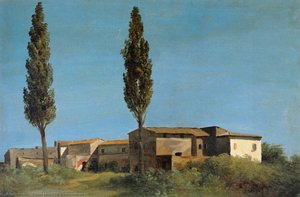
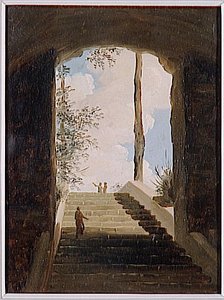
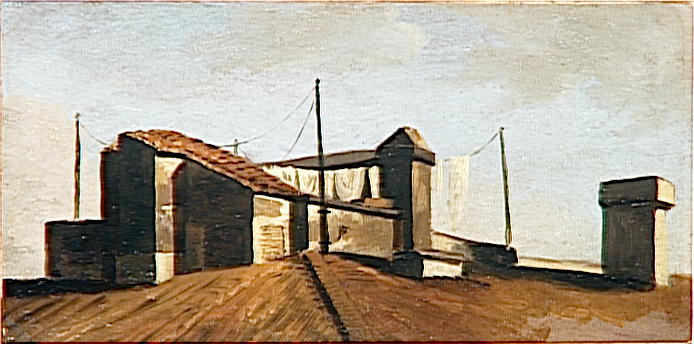
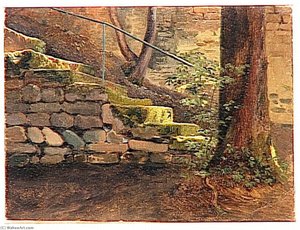
LOGGIA A ROME LE TOIT AU SOLEIL


 Read More
Hand Made Oil Reproduction
Hand-painted oil on canvas in your size and frame, made to order by our artists. ( Buy Print Buy Image)




P118B $10

P118H $10

P118W $10

P438Z $10

P508JH $12

P508YH $12

P805H $10

P805Z $10

P919BZ $10

P919G $10

P919XJ $10

P959ZH $10

P968JZ $12

W106C $8

W218G $10

W218JH $8

W218Y $10

W307PJ $10

W316G $10

W316PJ $8

W316Y $10

W398PJ $8

W4111J $10

W500HY $15

W500JH $15

W692G $12

W849H $8

W940BG $15

W953PJ $8




Pick from our preset sizes that match the artwork's original proportions.

You may enter your own dimensions to fit a specific frame or space. If your selected size does not match the original image's proportions, we will either crop the artwork or extend the painting with additional hand-painted elements. A digital mockup will be sent for your approval before production begins.
Please note that the on-screen preview does not reflect the actual cropping or extension. Only the mockup will accurately show the final composition.
While custom sizes are available, we recommend selecting a dimension from the predefined list to preserve the original proportions.
After order, ArtsDot.com team will email client for instructions and provide a mockup preview
Worldwide Delivery () in 3/4 weeks instead of standard 5 weeks. (30 August). No compromise on quality.

Free Worldwide Express Shipping

High-Quality Linen Canvas

Full Shipping Insurance

Customs Tax Refund Guarantee

True Color Matching Guarantee

60-Day Return Policy (Defects Only)

100% Money-Back Guarantee

Bulk Discount Offer
 Glass option is only available in size under 110 CM

LOGGIA A ROME LE TOIT AU SOLEIL
Reproduction Medium
Reproduction Size
-


Total Price
$ 263
A Roman Reverie: Valenciennes’ “Loggia à Rome, le toit au soleil”
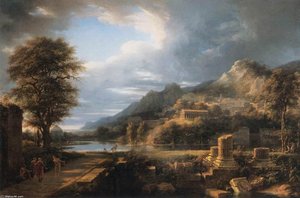
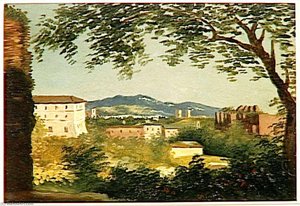
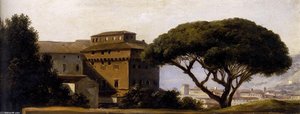
Pierre-Henri de Valenciennes' "Loggia à Rome, le toit au soleil" isn’t merely a depiction of an Italian architectural fragment; it’s a carefully constructed evocation of light, atmosphere, and the quiet contemplation inherent in observing the world. Painted around 1782-1784, this oil on canvas offers a glimpse into Valenciennes' pioneering approach to landscape painting – his embrace of “en plein air,” or working directly from nature—a revolutionary concept at the time. The scene unfolds within a Roman loggia, its weathered stone walls and supporting pillars framing a pale, almost ethereal sky. The composition is dominated by horizontal lines, mirroring the stability and grandeur of the architecture, yet softened by the artist’s loose, expressive brushstrokes.
Valenciennes wasn't interested in photographic realism; instead, he sought to capture the *feeling* of a place – its light, its mood. The muted palette—a blend of ochres, grays, and subtle blues—contributes significantly to this effect. Notice how the light seems diffused, as if filtering through a hazy afternoon sky, casting long shadows that subtly define the loggia’s form. This deliberate lack of stark contrast creates a sense of serenity and timelessness, inviting the viewer into a moment of peaceful observation. The artist's technique is remarkably quick and confident; the visible brushstrokes suggest an immediacy, as if he were capturing the scene before it shifted again.
The Rise of “Landscape Portraits”
Valenciennes’ work represents a pivotal shift in artistic practice. Prior to his theories, landscape painting was often confined to idealized representations of idyllic scenery. Valenciennes, however, championed the idea of the "landscape portrait," a genre where the artist directly observed and painted a scene while experiencing it firsthand. This approach wasn't simply about recording appearances; it was about capturing the *essence* of a place – its light, its atmosphere, and even the subtle shifts in color that occur throughout the day. His treatise, “Reflections and Advice to a Student on Painting, Particularly on Landscape,” outlined this philosophy, arguing for the importance of direct observation and the recording of specific details.
This painting exemplifies Valenciennes’ commitment to this new approach. The slightly skewed perspective, the emphasis on architectural detail, and the palpable sense of light all point to a deliberate effort to capture not just what the loggia *looked* like, but how it *felt* to be there – bathed in the Roman sun, observing its quiet beauty.
Symbolism and Context
The “Loggia à Rome” is more than just a picturesque view; it’s imbued with symbolic resonance. The loggia itself represents a space of refuge, a place for contemplation and respite from the bustling city. The title, "le toit au soleil," – “the roof to the sun” – suggests an appreciation for the simple pleasures of light and warmth, a theme central to Valenciennes’ artistic vision. Considering the historical context—the late 18th century, a period marked by intellectual ferment and a growing interest in empirical observation—this painting can be seen as a reflection of broader cultural shifts.
The work aligns with the Rococo and early Romantic movements, characterized by an emphasis on emotion, subjective experience, and the beauty of nature. Valenciennes’ focus on capturing atmospheric conditions and his willingness to prioritize feeling over strict representation anticipate many of the developments in landscape painting that would follow. His influence extended beyond his own paintings, shaping the work of subsequent generations of artists.
A Timeless Masterpiece for Your Space
Reproductions of “Loggia à Rome, le toit au soleil” offer a remarkable opportunity to bring this evocative scene into your home or office. The painting’s serene atmosphere and subtle color palette make it an ideal choice for creating a calming and contemplative space. Its timeless appeal—a celebration of light, architecture, and the beauty of the natural world—will undoubtedly enhance any interior design scheme. Consider how the painting's horizontal lines and muted tones can complement both modern and traditional décor styles.
Related Artworks
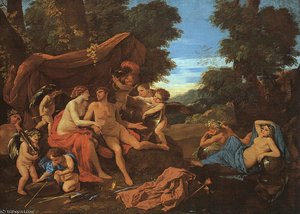
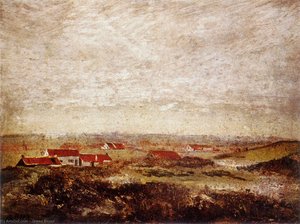
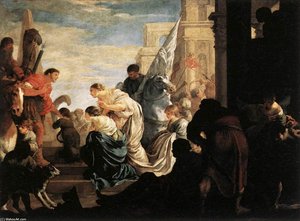
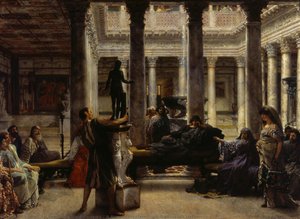
Artist Biography
early life and training
pierre-henri de valenciennes, a french painter, was born on december 6, 1750. his birthplace is not specified in available records, but his contributions to the art world are well-documented. de valenciennes' early training and education are not extensively recorded, but it is known that he worked in rome from 1778 to 1782, where he made a number of landscape studies directly from nature.contributions to en plein air painting
de valenciennes was influential in elevating the status of en plein air (open-air painting). his work in rome led to the development of his theory, which he outlined in his 1800 treatise reflections and advice to a student on painting, particularly on landscape. this concept introduced the idea of a 'landscape portrait,' where an artist paints a landscape directly while looking upon it, capturing its particular details. this approach allowed de valenciennes to capture the fleeting changes of a landscape due to light and weather.notable students and influence
among his notable students were jean-victor bertin, achille etna michallon, louis étienne watelet, louis-françois lejeune, and the first french panorama painter pierre prévost. de valenciennes' influence on these artists and his contributions to the development of en plein air painting have left a lasting impact on the art world.later life and death
de valenciennes passed away in paris on february 16, 1819. he is buried in the père lachaise cemetery, a famous cemetery in paris known for its notable residents.- view pierre-henri de valenciennes's artwork on ArtsDot.com
- explore the musée des beaux-arts valence, a museum featuring european paintings and sculptures, on ArtsDot.com
- discover more about french art and its history on wikipedia
legacy
pierre-henri de valenciennes's legacy in the art world is undeniable. his pioneering work in en plein air painting has inspired generations of artists, and his influence can still be seen today. through his treatise and his students, de valenciennes has left an indelible mark on the world of art.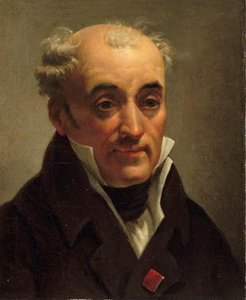
Pierre-Henri de Valenciennes
1750 - 1819 , France
Quick Facts
- Artistic Movement Or Style: En plein air painting
- Artists Or Movements Influenced By This Artist: ['Pierre Chauvin']
- Artists Who Influenced This Artist:
- Jean Victor Bertin
- Achille Etna Michallon
- Date Of Birth: December 6, 1750
- Date Of Death: February 16, 1819
- Full Name: Pierre Henri de Valenciennes
- Nationality: French
- Notable Artworks:
- Village de Nemi
- A LA Villa Borghese Chemin borde d'arbres
- Place Of Birth: Toulouse, France
Related Articles
Renoir's Masterpieces: Explore 25 Iconic Paintings & Bring Art Home | ArtsDot
Explore 25 iconic Pierre-Auguste Renoir paintings! Discover the stories behind Impressionist masterpieces like 'Dance at Le Moulin de la Galette' & 'Luncheon of the Boating Party'. Find museum-quality art reproductions and elevate your home decor with ArtsDot.com.
The Art of Italian Living: Transform Your Home with Timeless Landscapes and Renaissance Masterpieces
Elevate your home with the timeless romance of Italy. Discover expert-curated, hand-painted Italian landscapes and Renaissance-inspired masterpieces. From bespoke oil reproductions to custom portraits from photos, transform your space with elegance and artistic passion.

Evocations of Place: A Historical Journey Through Landscape Art
Explore the rich history of landscape art with ArtsDot. Discover renowned artists, movements like Impressionism & Romanticism, and expert guidance for collecting timeless pieces. Find your perfect serene escape today!

Romantic Landscapes: 10 Masterpieces for Your Home | ArtsDot
Journey through 10 Romantic landscape masterpieces by Friedrich, Turner & Cole. Explore emotional art, sublime nature scenes & iconic 19th-century paintings. Find museum-quality reproductions for your home at ArtsDot.com – discover the full collection online!
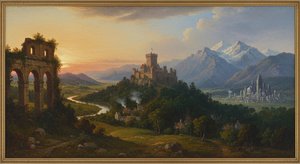
Evocations of Place: A Historical Journey Through Landscape Art
Explore the rich history of landscape art with ArtsDot. Discover renowned artists, movements like Impressionism & tonalism, and expert guidance for collecting timeless pieces. Find your perfect serene escape today!