 Preview
 Send
Send Share
Share
 Details

 Download
 Similars
 X-Ray
X-Ray Diaporama
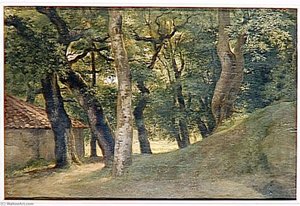
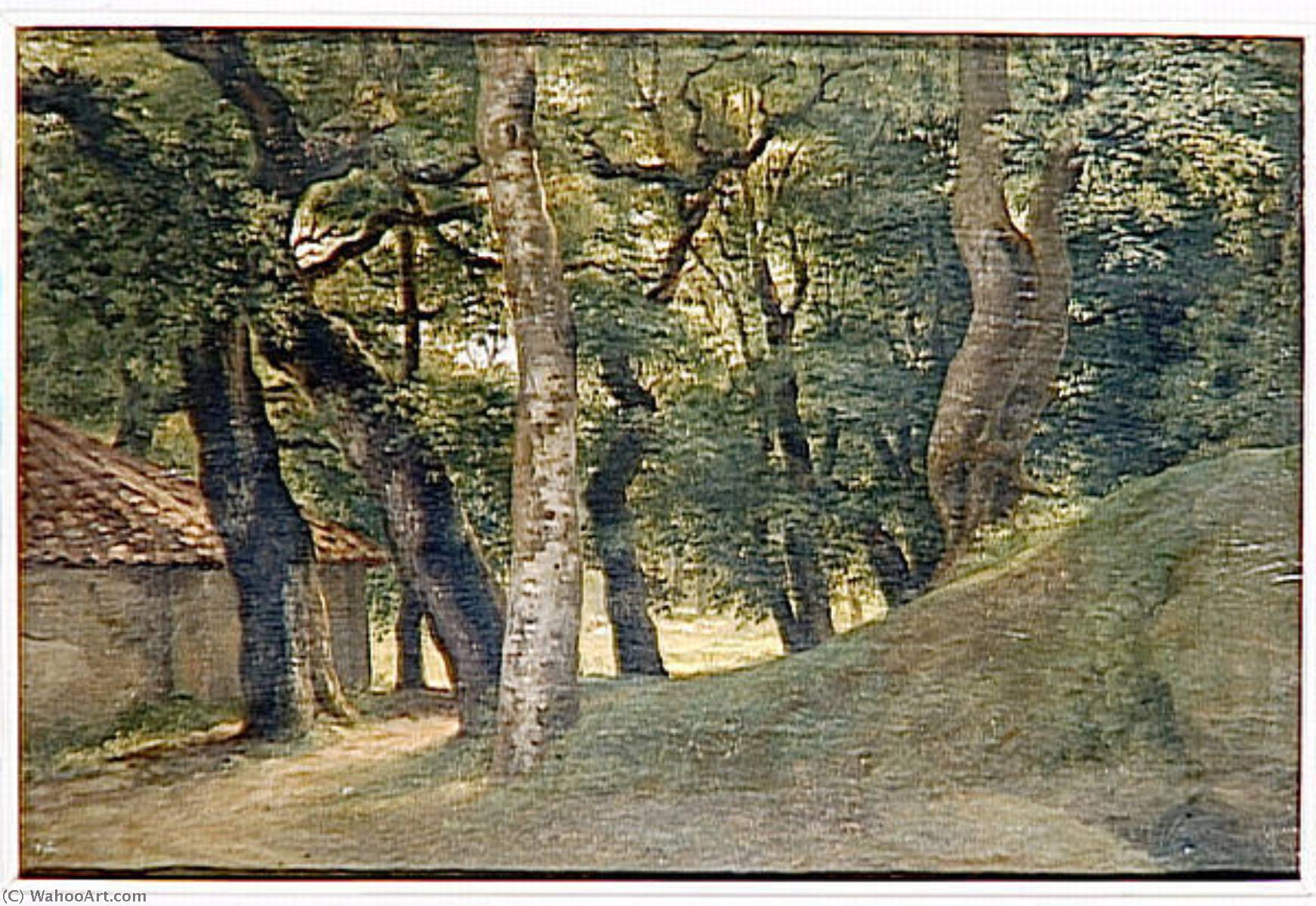
FORET DE LA VILLA BORGHESE


 Read More
Hand Made Oil Reproduction
Hand-painted oil on canvas in your size and frame, made to order by our artists. ( Buy Print Buy Image)




P118B $10

P118H $10

P118W $10

P438Z $10

P508JH $12

P508YH $12

P805H $10

P805Z $10

P919BZ $10

P919G $10

P919XJ $10

P959ZH $10

P968JZ $12

W106C $8

W218G $10

W218JH $8

W218Y $10

W307PJ $10

W316G $10

W316PJ $8

W316Y $10

W398PJ $8

W4111J $10

W500HY $15

W500JH $15

W692G $12

W849H $8

W940BG $15

W953PJ $8




Pick from our preset sizes that match the artwork's original proportions.

You may enter your own dimensions to fit a specific frame or space. If your selected size does not match the original image's proportions, we will either crop the artwork or extend the painting with additional hand-painted elements. A digital mockup will be sent for your approval before production begins.
Please note that the on-screen preview does not reflect the actual cropping or extension. Only the mockup will accurately show the final composition.
While custom sizes are available, we recommend selecting a dimension from the predefined list to preserve the original proportions.
After order, ArtsDot.com team will email client for instructions and provide a mockup preview
Worldwide Delivery () in 3/4 weeks instead of standard 5 weeks. (17 August). No compromise on quality.

Free Worldwide Express Shipping

High-Quality Linen Canvas

Full Shipping Insurance

Customs Tax Refund Guarantee

True Color Matching Guarantee

60-Day Return Policy (Defects Only)

100% Money-Back Guarantee

Bulk Discount Offer
 Glass option is only available in size under 110 CM

FORET DE LA VILLA BORGHESE
Reproduction Medium
Reproduction Size
-


Total Price
$ 263
Artwork Description
A Forest’s Quiet Majesty: Exploring Valenciennes' "Foret de la Villa Borghese"
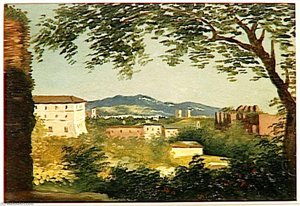
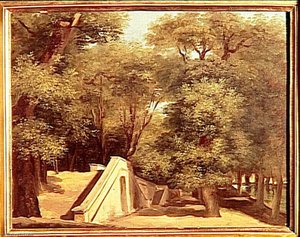
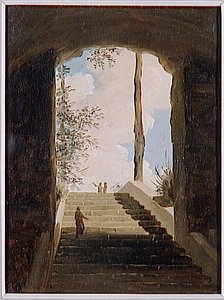
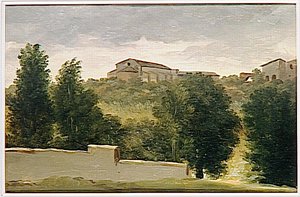
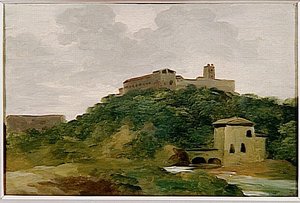
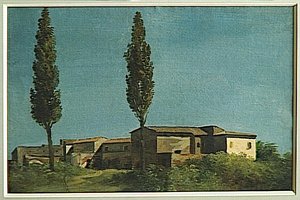
Pierre-Henri de Valenciennes’ “Foret de la Villa Borghese” isn’t merely a depiction of a woodland; it’s an invitation to stillness, a captured moment of serene contemplation within the heart of Rome’s famed Villa Borghese. Painted around 1782-1784, this work stands as a pivotal example of Valenciennes' innovative approach to landscape painting – a burgeoning movement he himself championed: the “landscape portrait.” Rather than striving for photographic realism, Valenciennes sought to distill the *feeling* of a place, imbuing his canvases with an atmosphere that transcends simple representation. The piece speaks volumes about the Romantic sensibility taking root in France at the time, prioritizing emotional response and subjective experience over strict academic rules.
The composition immediately draws the eye into the depths of the forest. A subtle linear perspective guides us through a carefully arranged series of trees – predominantly slender birches and towering pines – creating an illusion of vastness and receding distance. The placement of the small, red-tiled structure on the left edge acts as a grounding element, a tiny human intrusion within this otherwise wild expanse, subtly reminding us of our own presence while simultaneously emphasizing the forest’s enduring power. Notice how Valenciennes doesn't rigidly define the edges of the scene; instead, he allows the foliage to gently blur and soften, contributing to the overall sense of atmospheric depth.
The Language of Light and Color
Valenciennes masterfully employs a muted yet vibrant color palette. The dominant greens – ranging from deep forest hues to lighter, sun-dappled shades – are expertly layered, creating a rich tapestry of texture and tone. Earthy browns and tans ground the composition, while the subtle red of the building’s roof provides a delicate focal point. Crucially, he utilizes diffused light, avoiding harsh shadows or direct sunlight. This creates an ethereal quality, suggesting a perpetual twilight within the forest – a mood that evokes both tranquility and a hint of melancholy. The brushstrokes themselves are loose and impressionistic; they aren't meticulously detailed but rather convey the *impression* of texture and form, mirroring the fleeting effects of light filtering through the leaves.
A Revolutionary Approach to Landscape
“Foret de la Villa Borghese” is a testament to Valenciennes’ groundbreaking theories on landscape painting. He believed that artists should paint directly from nature, capturing not just what they *saw*, but also what they *felt*. This approach, known as “en plein air,” was revolutionary at the time, challenging the established academic tradition of studio-based work. Valenciennes' insistence on observing and recording details – the texture of bark, the patterns in foliage, the subtle shifts in light – led him to develop the concept of the "landscape portrait," a genre that prioritized capturing the essence of a place rather than simply replicating its appearance. This emphasis on subjective experience and emotional resonance would profoundly influence subsequent generations of landscape artists.
Symbolism and Emotional Resonance
Beyond its technical brilliance, “Foret de la Villa Borghese” resonates with deeper symbolic meaning. The dense forest can be interpreted as a metaphor for the mysteries of nature, a place of both beauty and potential danger. The solitary structure hints at human vulnerability within this vast wilderness, prompting reflection on our relationship to the natural world. There’s an undeniable sense of solitude and introspection evoked by the scene – a quiet invitation to pause, breathe, and connect with the stillness of the forest. The painting's enduring appeal lies in its ability to transport us to another time and place, allowing us to experience the profound beauty and emotional power of nature.
Technical Details & Reproduction Considerations
The work is believed to be executed in oil on canvas or panel, utilizing a technique characterized by loose brushstrokes and an emphasis on capturing the overall impression. The artist’s deliberate use of atmospheric perspective – the subtle blurring of details with distance – further enhances the sense of depth and realism. When considering reproductions, it's important to note that faithfully replicating Valenciennes’ nuanced color palette and delicate brushwork requires exceptional skill and attention to detail. High-quality prints or hand-painted reproductions are essential to truly appreciate the artistry and emotional impact of this remarkable landscape.
Related Artworks
Artist Biography
early life and training
pierre-henri de valenciennes, a french painter, was born on december 6, 1750. his birthplace is not specified in available records, but his contributions to the art world are well-documented. de valenciennes' early training and education are not extensively recorded, but it is known that he worked in rome from 1778 to 1782, where he made a number of landscape studies directly from nature.contributions to en plein air painting
de valenciennes was influential in elevating the status of en plein air (open-air painting). his work in rome led to the development of his theory, which he outlined in his 1800 treatise reflections and advice to a student on painting, particularly on landscape. this concept introduced the idea of a 'landscape portrait,' where an artist paints a landscape directly while looking upon it, capturing its particular details. this approach allowed de valenciennes to capture the fleeting changes of a landscape due to light and weather.notable students and influence
among his notable students were jean-victor bertin, achille etna michallon, louis étienne watelet, louis-françois lejeune, and the first french panorama painter pierre prévost. de valenciennes' influence on these artists and his contributions to the development of en plein air painting have left a lasting impact on the art world.later life and death
de valenciennes passed away in paris on february 16, 1819. he is buried in the père lachaise cemetery, a famous cemetery in paris known for its notable residents.- view pierre-henri de valenciennes's artwork on ArtsDot.com
- explore the musée des beaux-arts valence, a museum featuring european paintings and sculptures, on ArtsDot.com
- discover more about french art and its history on wikipedia
legacy
pierre-henri de valenciennes's legacy in the art world is undeniable. his pioneering work in en plein air painting has inspired generations of artists, and his influence can still be seen today. through his treatise and his students, de valenciennes has left an indelible mark on the world of art.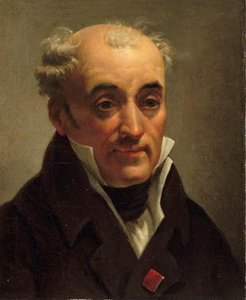
Pierre-Henri de Valenciennes
1750 - 1819 , France
Quick Facts
- Artistic Movement Or Style: En plein air painting
- Artists Or Movements Influenced By This Artist: ['Pierre Chauvin']
- Artists Who Influenced This Artist:
- Jean Victor Bertin
- Achille Etna Michallon
- Date Of Birth: December 6, 1750
- Date Of Death: February 16, 1819
- Full Name: Pierre Henri de Valenciennes
- Nationality: French
- Notable Artworks:
- Village de Nemi
- A LA Villa Borghese Chemin borde d'arbres
- Place Of Birth: Toulouse, France
Related Articles

Beyond the Horizon: 10 Landscape Masterpieces for Your Home Decor
Journey through 10 breathtaking landscape paintings by Monet, Van Gogh & more! Explore iconic artworks, artistic techniques & find inspiration for your home decor. Museum-quality reproductions at ArtsDot.com. Discover all masterpieces on ArtsDot.com

Romantic Landscapes: 10 Masterpieces for Your Home | ArtsDot
Journey through 10 Romantic landscape masterpieces by Friedrich, Turner & Cole. Explore emotional art, sublime nature scenes & iconic 19th-century paintings. Find museum-quality reproductions for your home at ArtsDot.com – discover the full collection online!
Paul Huet: Capturing the Essence of French Romanticism Through Light and Landscape
Explore the captivating world of Paul Huet (1803-1869), a master of French Romantic landscape painting. Discover his influence on Barbizon & Impressionism, and browse high-quality reproductions at ArtsDot.

John Constable's Masterpieces: Explore 25 Iconic Landscapes for Your Home
Journey through John Constable's 25 most celebrated landscapes. Explore Romanticism, Dedham Vale & his masterful use of light in iconic paintings like 'Hay Wain'. Find museum-quality art reproductions and elevate your home decor on ArtsDot.com.

Evocations of Place: A Historical Journey Through Landscape Art
Explore the rich history of landscape art with ArtsDot. Discover renowned artists, movements like Impressionism & Romanticism, and expert guidance for collecting timeless pieces. Find your perfect serene escape today!