

 Preview
 Send
Send Share
Share
 Details

 Download
 Similars
 X-Ray
X-Ray Diaporama
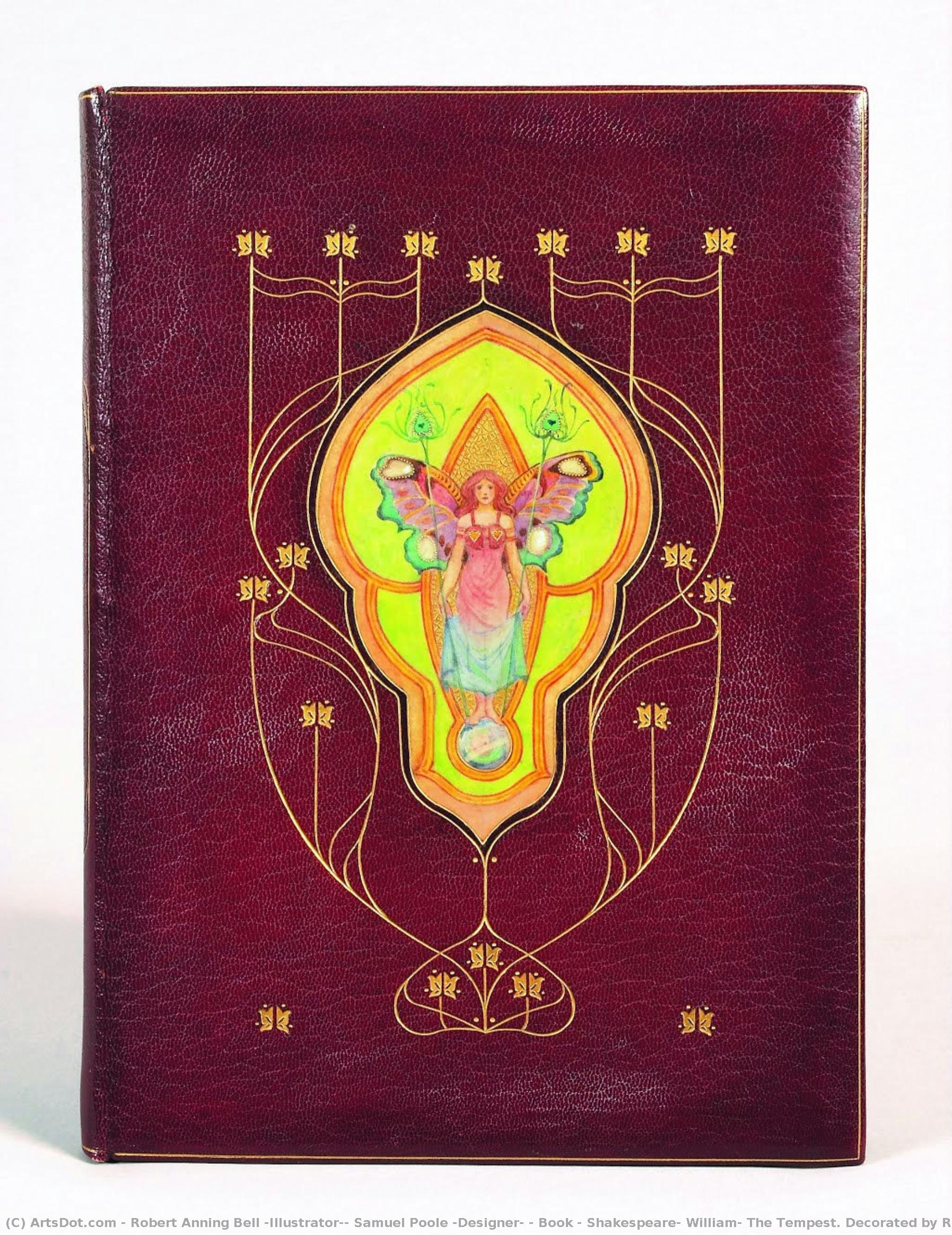
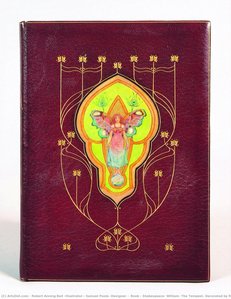
Book - Shakespeare, William: The Tempest. Decorated by Robert Anning Bell
 Art Nouveau
 1902
1902 26.0 x 18.0 cm
 Museum of Applied Arts
 Read More
Giclée / Art Print
Museum-quality giclée or canvas print with fast production and flexible finish options. ( Buy Hand Made Painting Buy Image)




































Pick from our preset sizes that match the artwork's original proportions.

You may enter your own dimensions to fit a specific frame or space. If your selected size does not match the original image's proportions, we will either crop the artwork or extend the image with a mirrored or solid-fill edge. A digital mockup will be sent for your approval before production begins.
Please note that the on-screen preview does not reflect the actual cropping or extension. Only the mockup will accurately show the final composition.
While custom sizes are available, we recommend selecting a dimension from the predefined list to preserve the original proportions.
Worldwide Delivery () in 2 weeks instead of standard 4/5 weeks. (26 August)

Free Worldwide Express Shipping

High-Quality Linen Canvas

Full Shipping Insurance

Customs Tax Refund Guarantee

True Color Matching Guarantee

60-Day Return Policy (Defects Only)

100% Money-Back Guarantee

Bulk Discount Offer
 Glass option is only available in size under 110 CM

Book - Shakespeare, William: The Tempest. Decorated by Robert Anning Bell
Giclée / Art Print
Reproduction Size
-


Total Price
$ 63
Collectible Description
Related Artworks
Artist Biography
The Visionary Synthesis of Bell and Poole
In the twilight of the Victorian era and the dawn of a new, more geometric modernity, the collaborative spirit of Robert Anning Bell and Samuel Poole emerged as a transformative force in British design. Their partnership was far more than a mere professional arrangement; it was a profound aesthetic dialogue that bridged the gap between the romantic, detailed traditions of the nineteenth century and the bold, streamlined elegance of the burgeoning Art Deco movement. As an illustrator, Bell brought a refined realism and a mastery of draughtsmanship nurtured in the prestigious Royal Academy Schools, while Poole, a designer of exceptional vision, infused their shared projects with rhythmic patterns and striking color palettes that anticipated the modern age.
The essence of their work lies in this very tension between the naturalistic and the stylized. To look upon their collaborative masterpieces is to witness a world where organic forms—tendrils of ivy, delicate butterfly wings, and floral motifs—are harmonized with structured, almost architectural ornamentation. This duality allowed them to capture the imagination of a society caught between the nostalgic comforts of the past and the exhilarating possibilities of a new century.
A Journey from London to the Avant-Garde
The foundations of Robert Anning Bell’s artistry were laid in the heart of London, shaped by a rigorous academic journey through University College School and the Westminster School of Art. His time at the Royal Academy Schools provided him with the technical precision that would later define his illustrative work, yet it was his exposure to the vibrant art scenes of Paris that truly expanded his creative horizons. Immersed in the revolutionary currents of Impressionism and Fauvism, Bell learned to see light and color not merely as tools for replication, but as emotional agents capable of transforming a scene.
Before finding his true calling in the pages of fine books, Bell’s early career was marked by an apprenticeship in architecture under his uncle, Samuel Knight. This architectural grounding proved indispensable; it gifted him with a structural understanding of space and composition that would later allow him to integrate Poole's geometric designs seamlessly into narrative illustrations. His early collaborations, such as the altarpiece designs created alongside George Frampton, demonstrated an early mastery of the Arts and Crafts ethos, blending fine art with decorative utility.
The Magic of The Tempest and Lasting Legacies
Perhaps the most luminous chapter in their shared history is found in their breathtakingly decorated edition of William Shakespeare’s “The Tempest.” In this work, the duo achieved a pinnacle of book arts, creating an immersive sensory experience that extended far beyond the printed word. The physical object itself became a piece of art, featuring:
- A front board adorned with a delicate, gilt network of tendrils and maple leaf ornaments.
- Intricate vellucent panels depicting ethereal figures, such as a female character with butterfly wings rendered with mother-of-pearl inlays.
- A masterful use of color, ranging from greenish-yellow backgrounds to rich red endpapers, all framed by the rhythmic precision of Poole’s design.
This achievement served as a blueprint for the future of book illustration, proving that the medium could be both a vessel for literature and a standalone triumph of decorative art. Their influence rippled outward, from the intricate mosaics they designed for Westminster Abbey to their striking contributions to various periodicals and books throughout the early twentieth century.
The legacy of Robert Anning Bell and Samuel Poole remains etched in the history of British design as a testament to the power of collaboration. They did not merely illustrate stories; they built worlds. By synthesizing the lush, narrative depth of the Victorian tradition with the structural innovation of Art Deco, they created a visual language that continues to resonate with a sense of wonder, elegance, and timelessness.
robert anning bell (illustrator), samuel poole (designer)
1863 - 1933 , United Kingdom
Quick Facts
- Artistic Movement Or Style: Victorian Illustration
- Artists Or Movements Influenced By This Artist: ['Arts and Crafts Movement']
- Artists Who Influenced This Artist: ['William Morris']
- Date Of Birth: 1863
- Full Name: Robert Anning Bell
- Nationality: British
- Notable Artworks:
- Book - Shakespeare, William: The Tempest. Decorated by Robert Anning Bell
- Pattern design sb 330
- Dissonance
- Place Of Birth: United Kingdom
Related Articles
The Refined Aesthetic of Victorian Illustration: A Study in Narrative & Technique
Explore the captivating world of Victorian illustration! Discover Pre-Raphaelite influences, key artists like Rossetti & Stephens, and the era's rich narrative detail. A deep dive for art enthusiasts.

David Roberts: A Scottish Pioneer of Topographical Art & Orientalist Vision
Explore the captivating world of David Roberts, a pioneering Scottish painter renowned for his detailed Orientalist scenes & stunning Egyptian landscapes. Discover his legacy and find museum-quality reproductions at ArtsDot.
Robert Lillie: A Study in Victorian Genre Painting and Domestic Narrative
Explore the captivating Victorian genre paintings of Robert Lillie (1867-1949). Discover his serene Scottish landscapes and intimate domestic scenes, reflecting a unique artistic vision. Learn about his life, style & legacy.
Hubert Robert: Picturing Ruins, Preserving Memory – A Study of Romantic Antiquarianism & Artistic Innovation
Explore the captivating world of Hubert Robert, master of Romantic landscape painting & 'capriccio' ruins. Discover his historical context, artistic innovations, and collecting insights with ArtsDot.
William Powell Frith: Narratives of Victorian Society & the Rise of Realist Painting
Explore the life & works of William Powell Frith, the 'greatest British painter of social scenes.' Discover his iconic Victorian genre paintings and learn about his lasting impact on realist art. Hand-painted reproductions available.

