 Preview
 Send
Send Share
Share
 Details

 Download
 Similars
 X-Ray
X-Ray Diaporama
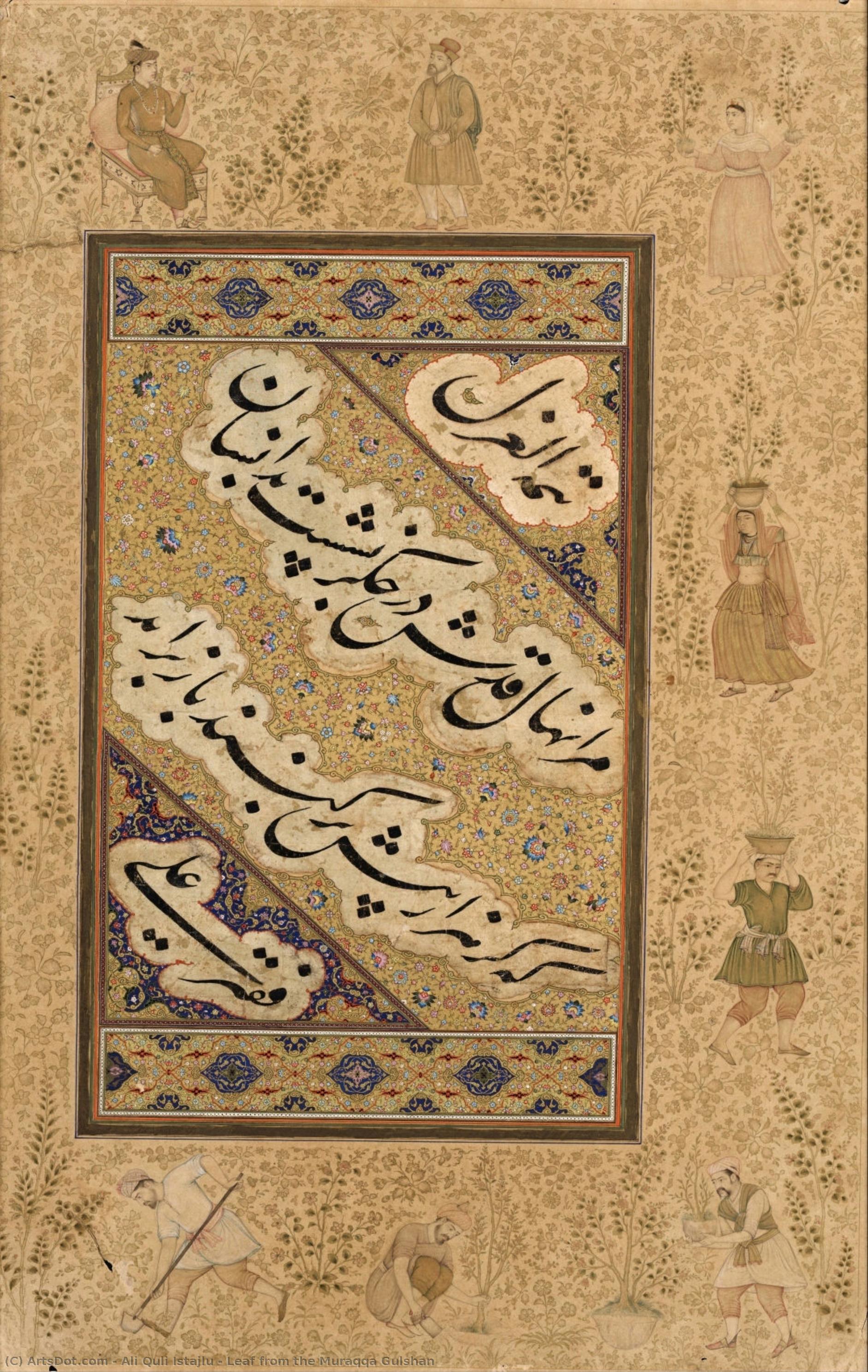
Leaf from the Muraqqa Gulshan
 Painting
- Mughal art
 1597
1597 68.0 x 52.0 cm
 Nelson-Atkins Museum of Art
 Read More
Hand Made Oil Reproduction
Hand-painted oil on canvas in your size and frame, made to order by our artists. ( Buy Print Buy Image)




P118B $10

P118H $10

P118W $10

P438Z $10

P508JH $12

P508YH $12

P805H $10

P805Z $10

P919BZ $10

P919G $10

P919XJ $10

P959ZH $10

P968JZ $12

W106C $8

W218G $10

W218JH $8

W218Y $10

W307PJ $10

W316G $10

W316PJ $8

W316Y $10

W398PJ $8

W4111J $10

W500HY $15

W500JH $15

W692G $12

W849H $8

W940BG $15

W953PJ $8




Pick from our preset sizes that match the artwork's original proportions.

You may enter your own dimensions to fit a specific frame or space. If your selected size does not match the original image's proportions, we will either crop the artwork or extend the painting with additional hand-painted elements. A digital mockup will be sent for your approval before production begins.
Please note that the on-screen preview does not reflect the actual cropping or extension. Only the mockup will accurately show the final composition.
While custom sizes are available, we recommend selecting a dimension from the predefined list to preserve the original proportions.
After order, ArtsDot.com team will email client for instructions and provide a mockup preview
Worldwide Delivery () in 3/4 weeks instead of standard 5 weeks. (18 August). No compromise on quality.

Free Worldwide Express Shipping

High-Quality Linen Canvas

Full Shipping Insurance

Customs Tax Refund Guarantee

True Color Matching Guarantee

60-Day Return Policy (Defects Only)

100% Money-Back Guarantee

Bulk Discount Offer
 Glass option is only available in size under 110 CM

Leaf from the Muraqqa Gulshan
Reproduction Medium
Reproduction Size
-


Total Price
$ 263
Artwork Description
A Glimpse into Mughal Courtly Life
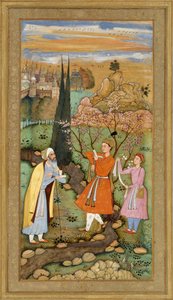
This exquisite folio, titled Leaf from the Muraqqa Gulshan, transports the viewer directly into the opulent and intellectually vibrant world of the late 16th-century Mughal court. It is more than a mere painting; it is a meticulously preserved moment in time, an artifact steeped in the confluence of Persian refinement and Indian naturalism. The scene unfolds with remarkable grace, depicting not just figures, but an entire cultural exchange. We observe young Mughal princes and their attendants conversing amidst the scholarly presence of a Persian Sufi poet or scholar. Their attire, from the distinct turbans to the flowing chola overcoat, speaks volumes about the hierarchical beauty and rich tapestry of life under Emperor Jahangir’s patronage.
Mastery in Miniature: Technique and Detail
The technical brilliance displayed here is breathtaking. The artist, working within the tradition established by masters like Ali Quli Istajlu, achieved a level of naturalism that borders on the magical. Notice the delicate rendering of the foliage, the suggestion of the babbling brook, and the vibrant hues splashed across the late-afternoon sky. While the overall composition is rich with life—featuring at least thirteen distinct individuals interacting in various ways—the technique remains one of supreme refinement. The integration of painted elements with calligraphy, which was considered the zenith of art in Islamic cultures, underscores the holistic nature of Mughal artistry. These albums were designed to be comprehensive treasuries, pairing visual narrative with profound written wisdom.
Symbolism and Scholarly Discourse
The gathering itself is deeply symbolic. The presence of open books suggests a dedication to knowledge, philosophy, and poetry. The conversation taking place near the flowering tree and against the backdrop of stylized rock formations and European-inspired cityscapes hints at the Mughal court's cosmopolitan outlook—a melting pot where diverse influences met under one magnificent roof. Furthermore, the accompanying translation from Faqir ‘Ali—“The sapling of his stature took such root in my heart / That if you were to uproot it 1,000 times, it would still grow”—lends an emotional weight to the scene, suggesting themes of enduring love, deep connection, and intellectual permanence.
A Legacy for the Modern Collector
For the discerning collector or designer seeking a piece that whispers tales of imperial grandeur, this reproduction offers unparalleled depth. The combination of vibrant color, intricate human portraiture, and profound cultural narrative makes it a centerpiece worthy of any sophisticated interior. Owning a representation of this folio means possessing a tangible link to an era when art served not only as decoration but as a vehicle for philosophy, history, and the highest forms of courtly elegance. It invites contemplation, conversation, and an appreciation for the enduring power of human connection.
Related Artworks
![Pierced Screen [jali] — Mughal Dynasty, Mughal Decorative Arts](/media/artworks/images/thumbnails/4d/c1/4dc1324250444fb19fbb22770e75e98d.jpg)
Artist Biography
early life and career
ali quli istajlu, a renowned painter from afghanistan, lived from 1551 to 1605. his life was marked by significant contributions to the mughal art movement, which flourished during the reign of the mughal empire in india. as a young artist, ali quli istajlu was educated under the instructions of shah ismail ii of the safavid dynasty in iran. this exposure to persian art and culture significantly influenced his work. later, he became a mughal courtier and served as the jagirdar of burdwan in west bengal from 1605 to 1607.artistic style and notable works
ali quli istajlu's artistic style was characterized by its unique blend of persian, turkoman, and indian influences. his work featured intricate patterns, vibrant colors, and detailed figures, which were hallmarks of the mughal art movement. some of his notable works include:- the great mongol shahnameh (a famous ilkhanid manuscript)
- mughal miniature paintings (characterized by small size, intricate detail, and vibrant colors)
- portraits of mughal emperors (including akbar, jahangir, and shah jahan)
legacy and impact
ali quli istajlu's contributions to the mughal art movement had a lasting impact on indian culture and society. his work helped spread persian culture and ideas throughout india, contributing to the development of a distinctly indian style of painting. today, ali quli istajlu's artwork can be found in various museums, including:- the metropolitan museum of art (new york)
- the british museum (london)
- the victoria and albert museum (london)
personal life and later years
ali quli istajlu was also known for his personal life, being the first husband of nur jahan (mehrunissa), who later married jahangir and became empress of india. he had a daughter, mihr-un-nissa begum, who married prince shahryar, the fifth and youngest son of jahangir. ali quli istajlu passed away in 1605, leaving behind a legacy that continues to be celebrated in the world of mughal art.- view ali quli istajlu's artwork on ArtsDot.com
- explore the mughal art movement on ArtsDot.com
ali quli istajlu
1551 - 1605 , Afghanistan
Quick Facts
- Artistic Movement Or Style: Mughal Painting
- Artists Or Movements Influenced By This Artist: Persian Art
- Artists Who Influenced This Artist: Shah Ismail II
- Date Of Birth: 1551 Kandahar Afghanistan
- Date Of Death: 1605
- Full Name: Ali Quli Istajlu
- Nationality: Afghan
- Notable Artworks:
- The Great Mongol Shahnameh
- Mughal Miniature Paintings
- Portraits of Mughal Emperors
- Place Of Birth: Kandahar Afghanistan
Related Articles
Raja Ravi Varma: Bridging Tradition & Modernity in 19th-Century Indian Art
Explore the life & art of Raja Ravi Varma, a pioneer who fused European techniques with Indian iconography. Discover his iconic paintings, lasting legacy, and influence on modern Indian art at ArtsDot.
Franz Xaver Winterhalter: Court Painter, Academician & Embodiment of Mid-19th Century Portraiture
Explore the life & art of Franz Xaver Winterhalter, the celebrated court painter of the 19th century. Discover his exquisite portraits of royalty and aristocracy – a symbol of prestige and refined taste.
Agnolo Bronzino: Mastering Courtly Portraiture & the Enigmatic Gaze of Renaissance Florence
Explore the captivating world of Agnolo Bronzino, Renaissance master portraitist. Discover his elegant style, symbolic depth & lasting influence on art history. Expert insights for collectors.
Charles-André van Loo: A Study in Rococo Portraiture & the French Court's Artistic Dynamics
Explore the elegant world of Charles-André van Loo, a master of Rococo portraiture at the French court. Discover his life, techniques, and enduring influence on 18th-century art. Hand-painted reproductions available.
Hans von Aachen: Mannerism's Courtly Visionary & Imperial Portraiture
Explore the captivating world of Hans von Aachen, a leading Mannerist painter renowned for his exquisite imperial portraits & mythological scenes. Discover his legacy and influence on 16th-century European art.