 Preview
 Send
Send Share
Share
 Details

 Download
 Similars
 X-Ray
X-Ray Diaporama
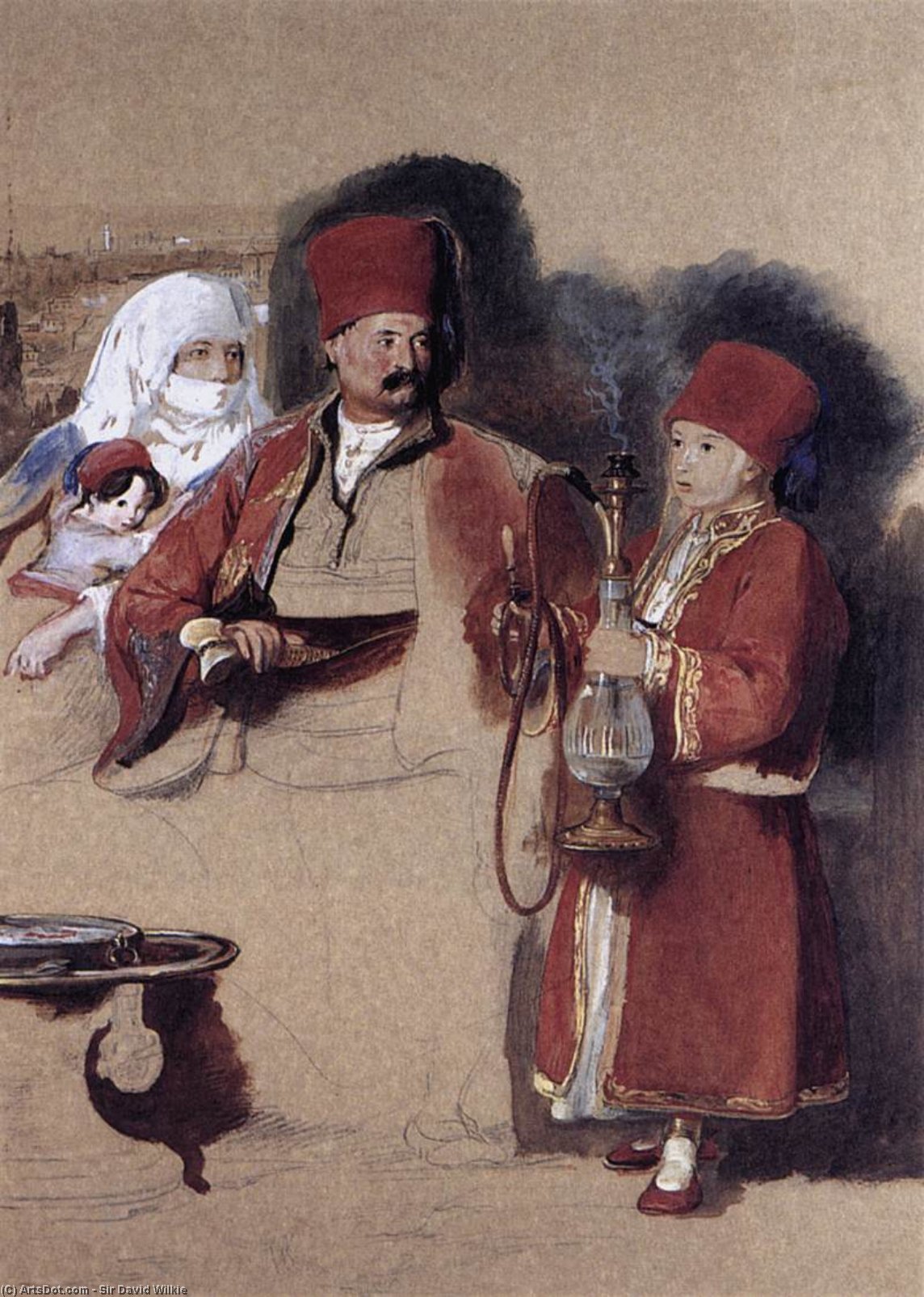
Sotiri, Dragoman of Mr Colquhoun
 Acrylic On Canvas
- WallArt
- Victorian Genre Painting
 1840
1840 475.0 x 328.0 cm
 Ashmolean Museum
 Read More
Hand Made Oil Reproduction
Hand-painted oil on canvas in your size and frame, made to order by our artists. ( Buy Print Buy Image)




P118B $10

P118H $10

P118W $10

P438Z $10

P508JH $12

P508YH $12

P805H $10

P805Z $10

P919BZ $10

P919G $10

P919XJ $10

P959ZH $10

P968JZ $12

W106C $8

W218G $10

W218JH $8

W218Y $10

W307PJ $10

W316G $10

W316PJ $8

W316Y $10

W398PJ $8

W4111J $10

W500HY $15

W500JH $15

W692G $12

W849H $8

W940BG $15

W953PJ $8




Pick from our preset sizes that match the artwork's original proportions.

You may enter your own dimensions to fit a specific frame or space. If your selected size does not match the original image's proportions, we will either crop the artwork or extend the painting with additional hand-painted elements. A digital mockup will be sent for your approval before production begins.
Please note that the on-screen preview does not reflect the actual cropping or extension. Only the mockup will accurately show the final composition.
While custom sizes are available, we recommend selecting a dimension from the predefined list to preserve the original proportions.
After order, ArtsDot.com team will email client for instructions and provide a mockup preview
Worldwide Delivery () in 3/4 weeks instead of standard 5 weeks. (26 August). No compromise on quality.

Free Worldwide Express Shipping

High-Quality Linen Canvas

Full Shipping Insurance

Customs Tax Refund Guarantee

True Color Matching Guarantee

60-Day Return Policy (Defects Only)

100% Money-Back Guarantee

Bulk Discount Offer
 Glass option is only available in size under 110 CM

Sotiri, Dragoman of Mr Colquhoun
Reproduction Medium
Reproduction Size
-


Total Price
$ 263
Artwork Description
The Portrait of a Moment – Sir David Wilkie’s “Sotiri, Dragoman of Mr Colquhoun”
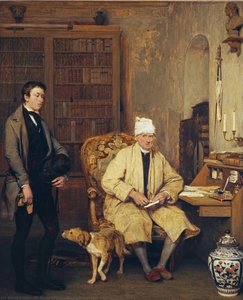
Sir David Wilkie's "Sotiri, Dragoman of Mr Colquhoun," painted in 1840, isn’t merely a portrait; it’s a meticulously crafted snapshot of Victorian society, brimming with subtle social commentary and an undeniable warmth. The painting captures a scene within the bustling environs of a London coffee house, specifically the establishment frequented by Sir John Colquhoun, a prominent figure in Scottish society. At the heart of this tableau stands Sotiri, a Dragoman – essentially a servant or attendant – depicted holding a pipe with a thoughtful expression, radiating an air of quiet dignity amidst the surrounding activity.
Wilkie’s genius lies not just in his technical skill—the delicate rendering of fabrics, the subtle play of light and shadow, and the remarkably lifelike portrayal of each individual—but also in his ability to imbue a seemingly simple scene with profound meaning. The composition is carefully balanced; Sotiri occupies a central position, drawing our attention while simultaneously allowing us to observe the interactions and dynamics unfolding around him. The inclusion of children adds an element of innocence and vulnerability, subtly highlighting the social hierarchy at play.
A Masterclass in Watercolor Technique
Painted entirely in watercolor, “Sotiri” exemplifies Wilkie’s mastery of this challenging medium. He employed a technique known as ‘wet-on-wet,’ layering washes of color to create soft edges and luminous effects. This approach lends the painting an ethereal quality, capturing the hazy atmosphere of the coffee house with remarkable precision. Notice how he builds up layers of pigment to achieve depth and texture – from the sheen on Sotiri’s clothing to the rough surface of the wooden table. The loose brushstrokes contribute to a sense of immediacy and spontaneity, as if we've stumbled upon this intimate scene unexpectedly.
Wilkie’s use of color is particularly noteworthy. He employs a restrained palette—primarily browns, blues, and greens—to create a harmonious and understated effect. The subtle variations in tone and hue contribute to the overall sense of realism and depth. The careful placement of highlights draws our eye to key details, such as Sotiri’s face and the pipe he holds, while the darker shadows define the forms and create a sense of volume.
Historical Context & Social Observation
To fully appreciate “Sotiri,” it's crucial to understand the social context in which it was created. The mid-19th century was a period of rapid industrialization and social change in Britain, marked by growing inequality and shifting class structures. Wilkie’s work reflects these changes, offering a nuanced portrayal of Victorian society—a society grappling with issues of poverty, labor, and social mobility.
The Dragoman figure itself is significant. Historically, Dragomans were Ottoman officials who served as intermediaries between European powers and the Ottoman Empire. In this painting, however, Wilkie uses the role to subtly comment on the complexities of social relationships and the dynamics of power. Sotiri’s position—a servant within a wealthy household—reflects the realities of Victorian society, where opportunities for advancement were limited for those born into lower classes.
Symbolism & Emotional Resonance
Beyond its historical context, “Sotiri” is rich in symbolism. The pipe itself can be interpreted as a symbol of contemplation and quiet dignity—a moment of respite amidst the hustle and bustle of daily life. Sotiri’s gaze, directed slightly off-camera, suggests a sense of introspection and perhaps even melancholy. The painting evokes a feeling of gentle nostalgia, inviting us to reflect on the lives of ordinary people and the complexities of human relationships.
Wilkie's ability to capture such subtle emotions through his masterful technique is what elevates “Sotiri” beyond a simple portrait—it’s a poignant reminder of the humanity that lies beneath the surface of Victorian society. Reproductions of this remarkable work offer a captivating glimpse into a bygone era, inviting viewers to contemplate the enduring themes of social observation and human connection.
Related Artworks
Artist Biography
Sir David Wilkie (1785–1841): The People’s Painter and Romantic Visionary
David Wilkie, born November 18, 1785, in Scotland, stands as a pivotal figure in nineteenth-century British art—a painter celebrated not only for his technical prowess but also for capturing the spirit of everyday life with remarkable empathy. He died June 1, 1841, leaving behind an impressive oeuvre that continues to inspire admiration and scholarly study. Wilkie’s artistic journey began amidst the burgeoning Romantic movement, shaping his distinctive style and thematic concerns.Early Life and Artistic Training
Wilkie's formative years were spent in Edinburgh, where he received a rigorous artistic education under John Ramsay, honing his skills in drawing and painting landscapes and portraits. This foundational training instilled in him a meticulous attention to detail and a profound understanding of tonal gradation—characteristics that would become hallmarks of his mature work. His talent quickly garnered recognition, propelling him towards London’s art scene where he established himself as a respected artist and teacher.Genre Painting: Capturing the Essence of Life
Wilkie distinguished himself primarily through genre painting – scenes depicting ordinary life with an uncommon degree of realism and psychological insight. Unlike many artists of his time who favored grand historical narratives, Wilkie focused on capturing the nuances of human experience—the expressions of emotion, the interactions between individuals, and the subtle details that conveyed atmosphere and character. His masterpiece, “The Chelsea Pensioners Reading the Waterloo Dispatch,” exemplifies this approach perfectly; it’s not merely a depiction of a historical event but an immersive portrayal of the men themselves, conveying their anxieties, hopes, and camaraderie with breathtaking accuracy. This painting is now housed in apsley house.Historical Commissions and Artistic Style
Wilkie's reputation soared when he was appointed Principal Painter in Ordinary to King William IV and Queen Victoria—a prestigious position that secured him commissions for monumental historical paintings and portraits of royalty. He embraced the challenge with characteristic dedication, producing canvases imbued with grandeur and infused with Romantic idealism. His style evolved over time, incorporating influences from Caravaggio and Rembrandt, yet retaining a distinctly Scottish sensibility characterized by luminous color palettes and masterful brushwork. The artist’s niece, sophia wilkie, later mrs james winfield, was an important supporter of his artistic endeavors.Notable Works and Legacy
Wilkie's artistic legacy extends beyond individual paintings; he profoundly impacted the development of British art. His meticulous observation of nature—evident in landscapes like “The Shepherdess Returning from Watering”—established him as a pioneer of topographical painting. Furthermore, his portraits, including those of Queen Victoria and Prince Albert, are considered among the finest of their era, capturing not only physical likeness but also psychological depth. Explore ‘A Bookcase’ by Sir David Wilkie – a stunning neoclassical painting of impeccable detail & masterful technique. Admire its historical significance & timeless beauty. Malcolm Simmons (1946-2014) was a British speedway legend who uniquely transitioned to painting. Explore his art—a testament to adrenaline & creativity—alongside works by Velazquez & Wilkie on ArtsDot. Discover a legacy beyond the track! Charles Shreiff, a deaf Scottish miniaturist renowned for his exquisite portrait miniatures & landscapes. Explore his legacy at ArtsDot!. Sir Alexander Keith is also an important artist of his time. The Fleming Collection: UK’s premier Scottish art collection! Discover 600+ works, from Raeburn to the Colourists & Glasgow Boys, through tours and loans. A ‘museum-without-walls’.Conclusion
David Wilkie's enduring influence on British painting stems from his unwavering commitment to realism combined with Romantic emotion—a synthesis that resulted in images of profound beauty and psychological resonance. His work continues to resonate with audiences today, cementing his place as “the people’s painter” and a true visionary of his time.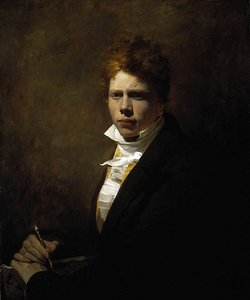
sir david wilkie
1785 - 1841 , Scotland
Quick Facts
- Artistic Movement Or Style: Genre painting
- Artists Or Movements Influenced By This Artist: ['British Art']
- Artists Who Influenced This Artist: ['Romanticism']
- Date Of Birth: November 18, 1785
- Date Of Death: June 1, 1841
- Full Name: David Wilkie
- Nationality: Scottish
- Notable Artworks:
- The Chelsea Pensioners Reading the Waterloo Dispatch
- A Bookcase
- Place Of Birth: Scotland
Related Articles
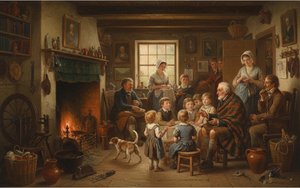
Sir David Wilkie: Narrative Detail & the Rise of Victorian Genre Painting
Explore the life & work of Sir David Wilkie, a pivotal figure in Victorian genre painting. Discover his narrative detail, social commentary, and lasting influence on 19th-century British art. Learn more at ArtsDot.

The Gaze of a Changing World: Victorian Realism & Modern Life
Explore the captivating world of Victorian Realism! Discover genre painting's rise, social commentary in art, & masters like Fedotov and Wilkie. Expert analysis & high-quality reproductions at ArtsDot.
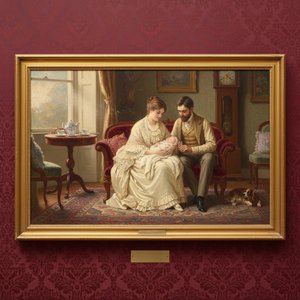
George Goodwin Kilburne: Capturing Victorian Sentimentality Through Genre Painting
Explore the evocative Victorian paintings of George Goodwin Kilburne. Discover his detailed scenes of domestic life, masterful use of light, and lasting impact on British genre painting. Learn more at ArtsDot.
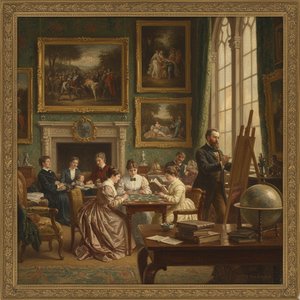
John Gilbert: A Comprehensive Exploration of Technique, Context, and Enduring Legacy in Victorian Genre Painting
Explore the life & art of John Gilbert, a prolific Victorian painter renowned for his captivating genre scenes and Venetian-inspired style. Discover his legacy with ArtsDot.
Robert Lillie: A Study in Victorian Genre Painting and Domestic Narrative
Explore the captivating Victorian genre paintings of Robert Lillie (1867-1949). Discover his serene Scottish landscapes and intimate domestic scenes, reflecting a unique artistic vision. Learn about his life, style & legacy.