 Preview
 Send
Send Share
Share
 Details

 Download
 Similars
 X-Ray
X-Ray Diaporama
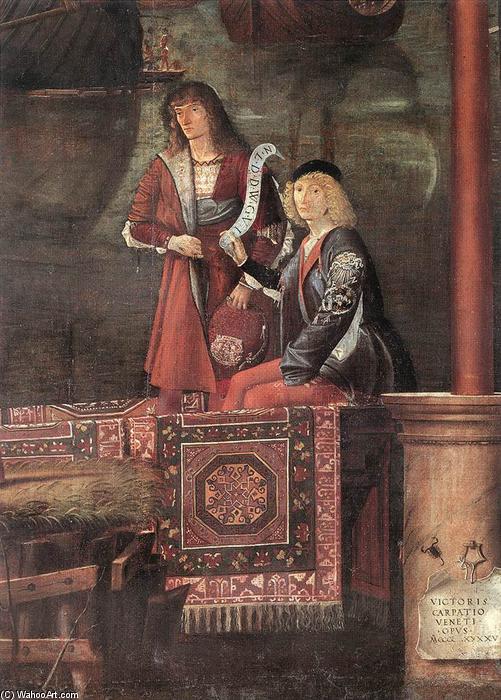
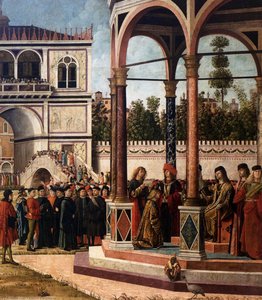
Departure of the Pilgrims (detail)


 Read More
Hand Made Oil Reproduction
Hand-painted oil on canvas in your size and frame, made to order by our artists. ( Buy Print Buy Image)




P118B $10

P118H $10

P118W $10

P438Z $10

P508JH $12

P508YH $12

P805H $10

P805Z $10

P919BZ $10

P919G $10

P919XJ $10

P959ZH $10

P968JZ $12

W106C $8

W218G $10

W218JH $8

W218Y $10

W307PJ $10

W316G $10

W316PJ $8

W316Y $10

W398PJ $8

W4111J $10

W500HY $15

W500JH $15

W692G $12

W849H $8

W940BG $15

W953PJ $8




Pick from our preset sizes that match the artwork's original proportions.

You may enter your own dimensions to fit a specific frame or space. If your selected size does not match the original image's proportions, we will either crop the artwork or extend the painting with additional hand-painted elements. A digital mockup will be sent for your approval before production begins.
Please note that the on-screen preview does not reflect the actual cropping or extension. Only the mockup will accurately show the final composition.
While custom sizes are available, we recommend selecting a dimension from the predefined list to preserve the original proportions.
After order, ArtsDot.com team will email client for instructions and provide a mockup preview
Worldwide Delivery () in 3/4 weeks instead of standard 5 weeks. (3 September). No compromise on quality.

Free Worldwide Express Shipping

High-Quality Linen Canvas

Full Shipping Insurance

Customs Tax Refund Guarantee

True Color Matching Guarantee

60-Day Return Policy (Defects Only)

100% Money-Back Guarantee

Bulk Discount Offer
 Glass option is only available in size under 110 CM

Departure of the Pilgrims (detail)
Reproduction Medium
Reproduction Size
-


Total Price
$ 263
A Window into Venetian Life: The Intricate World of Vittore Carpaccio’s “Departure of the Pilgrims”
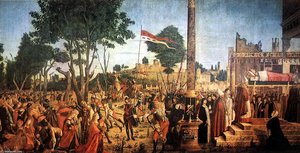
Vittore Carpaccio, a pivotal figure in the late 15th and early 16th centuries Venetian school of painting, offers us not merely a depiction of a scene, but a meticulously crafted window into the vibrant world of his time. His “Departure of the Pilgrims (Detail),” a fragment from his monumental cycle depicting the legend of Saint Ursula, is a testament to his unique artistic vision – a blend of early Netherlandish precision and Venetian warmth, imbued with a profound sense of narrative depth. Far removed from the bold, humanist styles that dominated Florentine painting during this period, Carpaccio’s work possesses a quiet dignity and an almost obsessive attention to detail, drawing viewers into a world of intricate social interactions and symbolic resonance.
The scene itself is deceptively simple: a bustling departure point for a pilgrimage. Yet, within this seemingly straightforward composition lies a wealth of observation and storytelling. Two men, rendered with remarkable realism – one seated in contemplative repose, the other standing with an air of urgency – dominate the foreground. Their opulent attire, rich fabrics, and carefully arranged accessories immediately establish their status as members of Venetian society’s elite. The backdrop is equally compelling; a richly decorated chamber, likely a throne room or study, hints at royal patronage or significant historical importance, evidenced by the fragment of a crown and the inscription “VICTORIS CARPATIO VENETI OPVS” – "Let us be brave for the victory of Venice." This detail underscores Carpaccio’s deep connection to his city and its history.
The Language of Detail: Technique and Composition
Carpaccio's mastery lies in his painstaking technique. He employed a layered approach, building up surfaces with numerous thin brushstrokes – a characteristic often referred to as “impasto” – creating textures that are both tactile and visually arresting. The carpet beneath the figures is rendered with astonishing detail, showcasing intricate patterns and vibrant colors, reflecting the wealth and status of those depicted. The architectural elements—columns, arches, and decorative moldings—are equally precise, demonstrating Carpaccio’s keen eye for perspective and his ability to create a convincing illusion of depth. Notice how he utilizes lines – primarily geometric, defining the structure of the room and the folds of clothing – to establish a sense of order and control within the composition.
The color palette is dominated by reds and browns, lending the scene a warm, almost somber atmosphere. This choice of hues, combined with the careful use of light and shadow, contributes to the painting’s overall mood of formality and authority. The figures are bathed in soft illumination, casting subtle shadows that define their forms and textures, adding to the sense of realism and immediacy. The flattened perspective, a convention common in Renaissance portraiture, is skillfully employed to emphasize the importance of the central figures and create a harmonious balance within the composition.
Symbolism and Context: A Venetian Tapestry
Beyond its surface beauty, “Departure of the Pilgrims” is rich in symbolism. The pilgrimage itself represents a journey of faith and devotion, but also a microcosm of Venetian society – a place where power, wealth, and social status intersect. The figures’ gestures and expressions convey a range of emotions—contemplation, urgency, and perhaps even anxiety—offering glimpses into the inner lives of these individuals. The inclusion of architectural details, such as the crown fragment and the inscription, further reinforces the painting's connection to Venetian history and its aspirations for power and prestige.
Carpaccio’s work is deeply rooted in the artistic traditions of his time. He was heavily influenced by Antonello da Messina, a pioneer of oil painting in Venice, as well as Early Netherlandish artists known for their meticulous detail and narrative storytelling. However, Carpaccio developed his own distinctive style—one characterized by its conservative nature, minimal influence from humanist trends, and a unique blend of orientalist flair. His “Legend of Saint Ursula” cycle is considered one of the most important achievements of the Venetian Renaissance, offering a valuable insight into the social, cultural, and artistic life of 15th-century Venice.
Bringing Carpaccio to Your Space: Reproductions and Artistic Inspiration
ArtsDot offers high-quality reproductions of Vittore Carpaccio’s “Departure of the Pilgrims (Detail),” allowing you to experience the beauty and complexity of this remarkable painting in your own home or office. These meticulously crafted prints capture the essence of Carpaccio's original work, faithfully reproducing his intricate details, rich colors, and evocative atmosphere. Whether you are an art enthusiast, a collector, or simply seeking inspiration for interior design, our reproductions provide a stunning way to bring this masterpiece into your life. Explore the full artwork at here.
Related Artworks

Artist Biography
early life and training
vittore carpaccio, a prominent italian painter, was born in venice around 1465. he studied under the tutelage of gentile bellini, a renowned artist of the venetian school. this apprenticeship laid the foundation for carpaccio's future success.artistic style and influences
carpaccio's style was characterized by its conservative nature, showing minimal influence from the humanist trends that transformed italian renaissance painting during his lifetime. his work was influenced by antonello da messina's style and early netherlandish art. this unique blend of styles resulted in a distinctive approach to venetian painting.notable works
- the legend of saint ursula, a cycle of nine paintings, is carpaccio's most famous work. this series, now housed in the gallerie dell'accademia, showcases his mastery of narrative painting.
- glory of st. ursula altarpiece (1491) demonstrates carpaccio's skill in capturing light and color, reminiscent of giovanni bellini's style.
- miracle of the relic of the cross at the ponte di rialto (1494) highlights carpaccio's ability to balance composition and narrative.
career highlights and legacy
- carpaccio's principal works were executed between 1490 and 1519, ranking him among the early masters of the venetian renaissance.
- his orientalist style, as seen in st. george baptizing the selenites, reflects a new fascination with the levant.
- carpaccio's work has been somewhat overlooked in comparison to his contemporaries, such as giovanni bellini or giorgione.
references and further reading
discover more about vittore carpaccio and the venetian school on ArtsDot.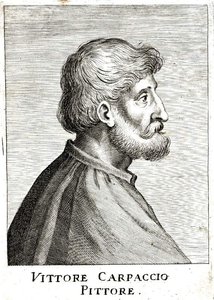
Vittore Carpaccio
1465 - 1526 , Italy
Quick Facts
- Artistic Movement Or Style: Early Venetian Renaissance
- Artists Or Movements Influenced By This Artist: ['Early Netherlandish Painting']
- Artists Who Influenced This Artist:
- Antonello da Messina
- Gentile Bellini
- Date Of Birth: Venice, Italy (c. 1465)
- Date Of Death: 1526
- Full Name: Vittore Carpaccio
- Nationality: Italian
- Notable Artworks:
- The Legend of Saint Ursula
- Glory of St. Ursula Altarpiece
- Miracle of the Relic of the Cross at the Ponte di Rialto
- Place Of Birth: Venice
Related Articles
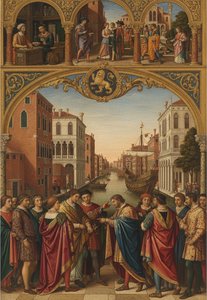
Vittore Carpaccio: Venetian Renaissance Narrative & the Poetics of Detail
Explore the captivating world of Vittore Carpaccio, a master storyteller of the Venetian Renaissance. Discover his intricate details, narrative cycles like 'The Legend of St. Ursula,' and unique artistic style.

Jacopo Tintoretto's Masterpieces: 25 Paintings That Define Venetian Drama | ArtsDot
Explore 25 breathtaking masterpieces by Jacopo Tintoretto, the Venetian master of drama and light. Discover the stories behind iconic Renaissance paintings & find museum-quality art reproductions to elevate your home decor on ArtsDot.com.
The Enduring Legacy of Formal Portraiture: Power, Identity & Artistic Exploration
Explore the rich history of formal portraiture & its enduring power to capture identity and shape perception. Discover investment-worthy artworks, expert appraisals, and custom reproduction services at ArtsDot.
Sebastiano del Piombo: Bridging Venetian Colorism & Roman Grand Manner Portraiture
Explore the captivating art of Sebastiano del Piombo, a Renaissance master bridging Venetian colorism & Roman grandeur. Discover his iconic portraits and lasting influence on art history. Learn more at ArtsDot.
The Golden Light of Innovation: Exploring the Venetian Renaissance Art Movement (1430–1580)
Explore the Golden Age of Venetian art (1430–1580). Discover Giorgione, Titian & Tintoretto's techniques, the 'colorito' revolution, and lasting influence. Expert insights for collectors & enthusiasts.