The Alchemy of Divinity: Gold as the Flesh of the Gods
 The Sacred Glow: Mastering Gold Leaf and Gilding in Byzantine Art
The Alchemy of Divinity: Gold as the Flesh of the Gods The Allure of Gold in Art History: Symbolism, Technique & Cultural Significance The Ancient Roots: Gold as Divine Symbolism Wikipedia: Gold leaf Gold leaf is gold that has been hammered into thin...
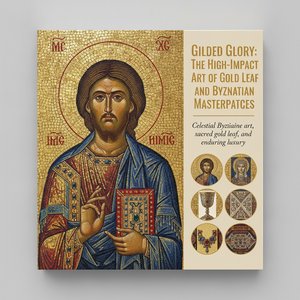
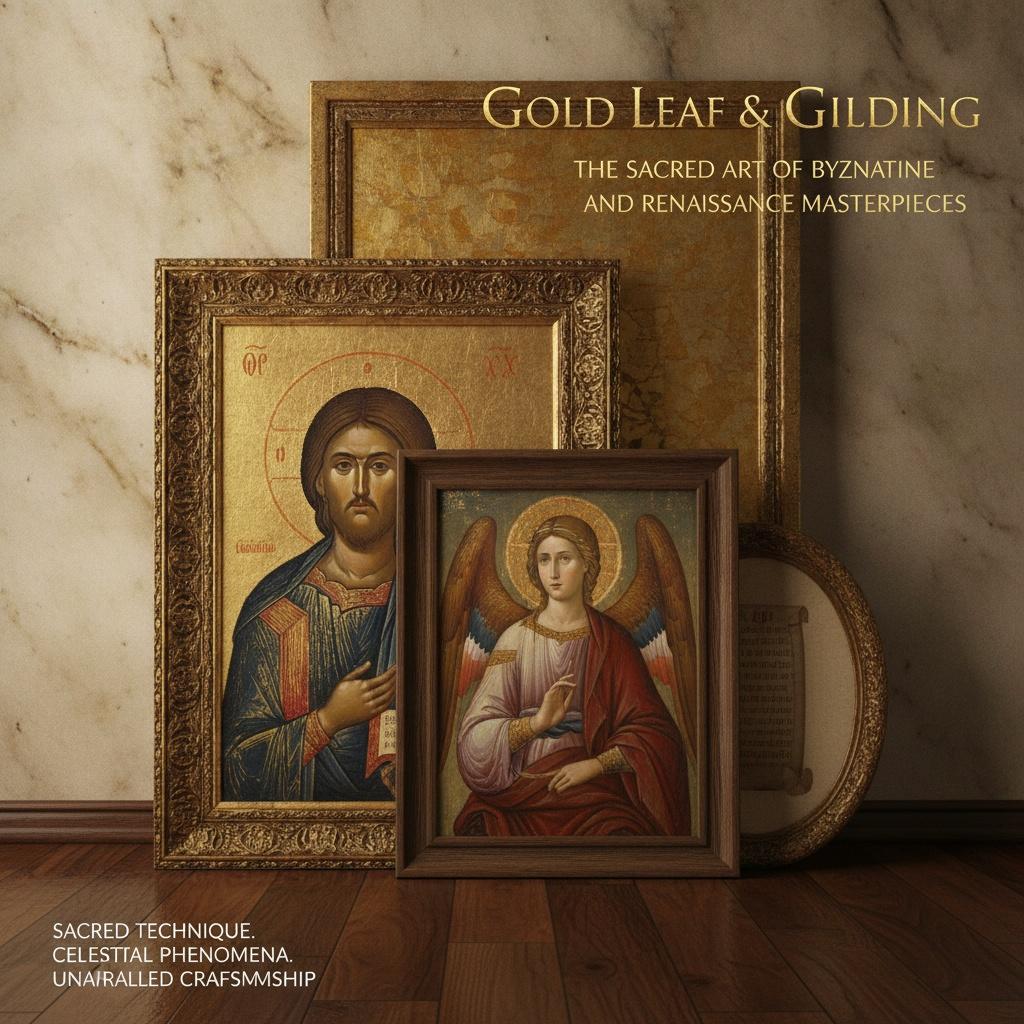
To gaze upon a masterpiece of the Byzantine era is to encounter far more than mere pigment and metal; it is to witness a celestial phenomenon captured in physical form. Throughout the long, shimmering annals of art history, gold has functioned as an alchemical bridge between the terrestrial and the divine. It possesses a unique optical property that transcends the limitations of standard palettes, reflecting light in a way that breathes life into the canvas even in the most dimly lit galleries. This radiance does not simply sit upon the surface; it interacts with the viewer’s movement, shifting and shimmering as if the artwork itself were breathing.
From its earliest civilizations, gold has held a power far exceeding its monetary value. It was never merely a display of wealth, but rather a material imbued with an atmospheric, otherworldly luminescence. In ancient Egypt, gold adorned sarcophagi and masks not just for prestige, but as the essential flesh of the gods, ensuring safe passage to the afterlife through its unchanging brilliance. This association with immortality—the idea that gold, resistant to tarnish and decay, mirrors the eternal nature of the divine—found its most profound expression in the Byzantine Empire. Here, the metal became a theological necessity, a way to represent the uncreated light of heaven within the reach of human sight.
Techniques of Transcendence: The Art of Goldbeating and Gilding
 The Allure of Gold in Art History: Symbolism, Technique & Cultural Significance
The Ancient Roots: Gold as Divine Symbolism Wikipedia: Gold leaf Gold leaf is gold that has been hammered into thin sheets (usually around 0.1 μm thick) by a process known as goldbeating, for use in gilding. Gold leaf is a type of metal leaf, but the...
The creation of such divine radiance required a level of craftsmanship that bordered on the miraculous. The process began with gold leaf, a substance achieved by hammering gold into incredibly thin sheets, often as fine as 0.1 micrometers, through a meticulous process known as goldbeating. This extreme thinness allowed the metal to become almost ethereal, capable of conforming to the textures of the substrate and catching the light from every conceivable angle.
In the creation of gold-ground panel paintings, particularly during the 13th and 14th centuries, the process was a true labor of love involving many specialized artisans. It began with the preparation of the wooden panel, typically poplar, which was layered with gesso to create a surface as smooth as ivory. After the design was sketched in charcoal, the gilding process commenced. The application of gold leaf required steady hands and immense patience, as each sheet had to be laid perfectly to avoid air bubbles or imperfections that would disrupt the continuous glow. This meticulous preparation ensured that when the final layers of tempera or oil were applied, the gold beneath would provide a luminous foundation that no other pigment could replicate.
The Golden Ground: Iconography and the Byzantine Aesthetic
 Gold ground
Gold ground (both a noun and adjective) or gold-ground (adjective) is a term in art history for a style of images with all or most of the background in a solid gold colour. Historically, real gold leaf has normally been used, giving a luxurious appea...
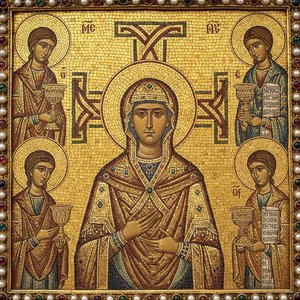
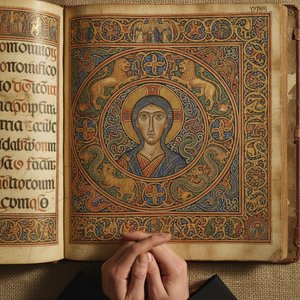
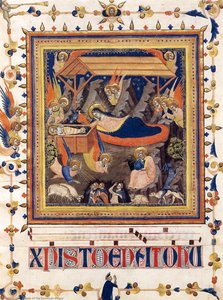
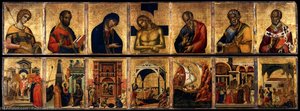
In the realm of Byzantine and medieval art, the term gold ground refers to a style where the background of an image is composed entirely or primarily of solid gold. This was not merely a decorative choice but a fundamental element of iconography—the study and interpretation of religious imagery. In mosaics, illuminated manuscripts, and panel paintings, the gold ground served as a way to decontextualize the sacred figures from the physical world. By replacing a naturalistic landscape with an expanse of shimmering gold, the artist removed the subject from time and space, placing them within a spiritual plane.
This technique was especially prevalent in the creation of icons, where the goal was to facilitate prayer and contemplation. The gold background acted as a window into the divine, providing a glistering, non-specific environment that represented heaven itself. While later Western European painters began to develop more naturalistic landscape backgrounds, the tradition of the gold ground remained a cornerstone of Eastern Orthodox iconography, preserving a sense of timelessness and sacred weight that continues to resonate in the halls of museums like the Byzantine and Christian Museum in Athens.
From Sacred Icons to Renaissance Splendor: The Evolution of Gilded Art
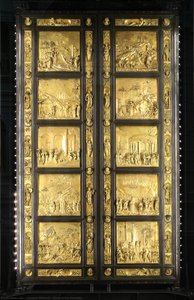 Door of the Paradise
Exquisite Masterpiece of Early Renaissance Art Step into the grandeur of the Italian Renaissance with this stunning gilded altarpiece, crafted by the renowned artist Lorenzo Ghiberti in 1452. Measuring an impressive 520 by 310 centimeters, this work ...
As art transitioned from the rigid, symbolic structures of the Byzantine era into the burgeoning humanism of the Renaissance, the use of gold underwent a profound evolution. While the sacred weight of Byzantine iconography remained an influence, the Renaissance introduced a new level of narrative complexity and physical depth. We see this transition in the works of workshops such as that of Severo da Ravenna, which masterfully blended Gothic traditions with the emerging Renaissance aesthetic, using rich gilding to create altarpieances that were both devotional objects and triumphs of technical skill.
The Italian Renaissance brought about a period where gold was used not just for backgrounds, but for intricate ornamentation and sculptural relief. A magnificent example is Lorenzo Ghiberti’s Door of the Paradise, where gilded surfaces and intricate detailing create a captivating visual experience that elevates the biblical scenes to a state of awe and reverence. This era saw the movement toward more three-dimensional representations, yet the allure of gold remained central to the concept of splendor. Even as painters moved toward more naturalistic light and shadow, the use of gold leaf in frames and decorative elements continued to signify the importance and sanctity of the subject matter.
Light and Symbolism: The Theological Role of the Halo and Aureole
 Halo (religious iconography)
A halo (from Ancient Greek ἅλως, hálōs, 'threshing floor, disk'), also called a nimbus, aureole, glory or gloriole (Latin: gloriola, lit. 'little glory'), is a crown of light rays, circle or disk of light that surrounds a person in works of art. The ...
One of the most enduring symbols within gilded art is the halo, also known as a nimbus, aureole, or glory. In religious iconography, this circular glow or disk of light surrounding a person's head serves as a visual shorthand for holiness or divine favor. The use of gold in the construction of these halos was essential; it allowed the "crown of light" to appear as if it were emanating from the figure itself rather than being painted onto them.
The halo functions as a bridge between the physical person depicted and their spiritual essence. Whether in the form of a simple gold disk or a complex, rayed glory, the technique utilizes the reflective properties of gold leaf to create a sense of movement. As a viewer moves before the painting, the light shifts across the gilded surface, causing the halo to flicker and pulse with life. This interaction between the artwork and the observer reinforces the theological purpose of the art: to make the invisible visible and to bring the presence of the sacred into the immediate, physical experience of the faithful.
Preserving the Radiance: Modern Appreciation and Reproduction of Masterpieces
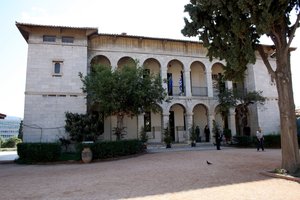 Byzantine and Christian Museum
A Sanctuary of Spiritual Splendor Nestled within the verdant, tranquil embrace of Villa Ilissia, the Byzantine and Christian Museum serves as a profound gateway to a lost world of devotion and artistic mastery. Located in the heart of Athens, this ex...
Today, the legacy of these gilded masterpieces continues to inspire both historians and collectors. While the original works reside in the hallowed halls of museums like the Sacred Art Museum of Funchal or the Byzantine and Christian Museum, the desire to bring this celestial beauty into contemporary spaces remains strong. The study of these techniques allows us to appreciate the sheer scale of human devotion and artistic mastery that went into every gilded surface.
For the modern enthusiast, the challenge lies in finding ways to experience this grandeur without the barriers of distance or museum restrictions. This is where the art of high-quality reproduction becomes vital. At ArtsDot.com, we specialize in bringing these canonical masterpieces back to life through meticulous, hand-painted oil reproductions. Our master artists, holding degrees from prestigious academies, utilize traditional techniques—including the layering of pigments and the careful application of textures—to capture the soul of the original works. Whether it is a large-scale mural designed to recreate a historical ceiling or a fine art print for a private study, our mission is to ensure that the luminous legacy of the Byzantine and Renaissance masters remains accessible, vibrant, and eternally radiant for generations to come.