 Preview
 Send
Send Share
Share
 Details

 Download
 Similars
 X-Ray
X-Ray Diaporama
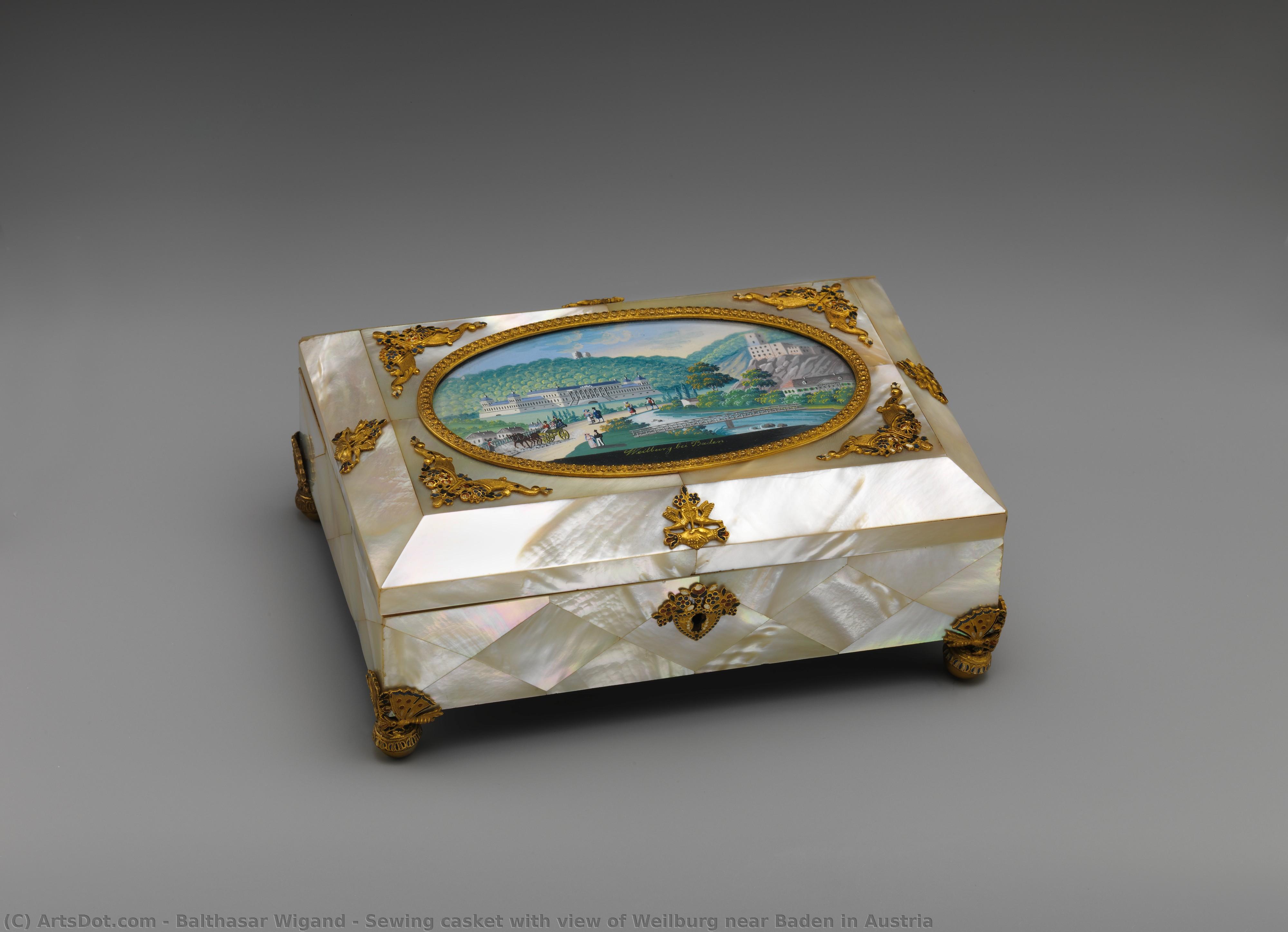
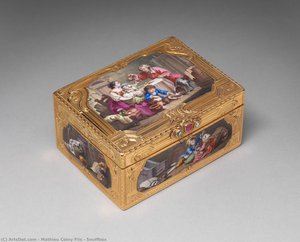
Sewing casket with view of Weilburg near Baden in Austria


 Read More
Giclée / Art Print
Museum-quality giclée or canvas print with fast production and flexible finish options. ( Buy Hand Made Painting Buy Image)




P118B $10

P118H $10

P118W $10

P438Z $10

P508JH $12

P508YH $12

P805H $10

P805Z $10

P919BZ $10

P919G $10

P919XJ $10

P959ZH $10

P968JZ $12

W106C $8

W218G $10

W218JH $8

W218Y $10

W307PJ $10

W316G $10

W316PJ $8

W316Y $10

W398PJ $8

W4111J $10

W500HY $15

W500JH $15

W692G $12

W849H $8

W940BG $15

W953PJ $8




Pick from our preset sizes that match the artwork's original proportions.

You may enter your own dimensions to fit a specific frame or space. If your selected size does not match the original image's proportions, we will either crop the artwork or extend the image with a mirrored or solid-fill edge. A digital mockup will be sent for your approval before production begins.
Please note that the on-screen preview does not reflect the actual cropping or extension. Only the mockup will accurately show the final composition.
While custom sizes are available, we recommend selecting a dimension from the predefined list to preserve the original proportions.
Worldwide Delivery () in 2 weeks instead of standard 4/5 weeks. (6 September)

Free Worldwide Express Shipping

High-Quality Linen Canvas

Full Shipping Insurance

Customs Tax Refund Guarantee

True Color Matching Guarantee

100-Day Return Policy (Defects Only)

100% Money-Back Guarantee

Bulk Discount Offer
 Glass option is only available in size under 110 CM

Sewing casket with view of Weilburg near Baden in Austria
Giclée / Art Print
Reproduction Size
-


Total Price
$ 63
Related Artworks
Artist Biography
John Henning: The Sculptor of Miniature Wonders
John Henning (1771–1851) wasn’t a name etched in the annals of grand historical sculpture, yet his legacy resides in an astonishing feat of artistic dedication and meticulous detail. Born in Paisley, Scotland, into a family rooted in carpentry, Henning’s journey from craftsman to miniature master is a testament to his singular vision and unwavering commitment. He didn't seek fame through monumental works; instead, he dedicated twelve years to painstakingly recreating the iconic Parthenon and Bassae friezes – colossal marble panels depicting scenes of ancient Greek life – on a scale that defied belief: tiny replicas just two inches high yet stretching over twenty-four feet in length. This remarkable achievement offers a unique window into the artistic sensibilities of early 19th-century Britain, revealing a fascination with classical antiquity and a burgeoning interest in accurate reproduction.
Henning’s early life provided a solid foundation for his future endeavors. Trained by his father, he initially honed his skills as a carpenter, developing an appreciation for the properties of wood and its potential for intricate detail. It was through portraiture that he truly discovered his artistic voice, creating cameos of friends and family that showcased his burgeoning talent for capturing likenesses with remarkable precision. This early success paved the way for him to pursue more ambitious projects, ultimately leading him to the monumental task of replicating the ancient friezes.
The Inspiration: Elgin’s Marbles and a Royal Patron
The catalyst for Henning's extraordinary undertaking was his encounter with the newly arrived Parthenon marbles in Burlington House. Witnessing these fragments of classical history, he became captivated by their beauty and complexity. Crucially, he secured permission from Lord Elgin to study and draw them, an opportunity that proved invaluable. It was during this period that Henning conceived the idea of using his drawings as a basis for creating slate molds – miniature versions capable of producing remarkably detailed replicas. This innovative approach, combined with the patronage of Princess Charlotte, provided him with the resources and encouragement he needed to embark on his ambitious project.
The Princess’s interest in Henning's work stemmed from her own fascination with classical art and literature. She commissioned a medallion portrait of the sculptor himself, an event that not only boosted his confidence but also exposed him to a wider circle of influential figures. This royal connection undoubtedly played a significant role in securing funding and recognition for his extraordinary endeavor.
The Process: A Labor of Love
Henning’s process was nothing short of obsessive. He meticulously studied the original friezes, painstakingly recreating every detail – from the folds of drapery to the expressions on the faces of the figures. He utilized a complex system of slate molds, each requiring countless iterations and adjustments to achieve the desired level of accuracy. The sheer scale of the project demanded immense patience and unwavering dedication; it was a labor of love that consumed his life for twelve years. His work wasn’t simply copying; he aimed to recreate the essence of the originals, capturing their spirit and grandeur in miniature.
Interestingly, Henning didn't attempt to copyright his creations, recognizing the impossibility of protecting the work of long-dead artists. This reflects a broader attitude towards artistic ownership during that era, where inspiration and imitation were often seen as integral parts of the creative process. The Bassae frieze, added later to the project, further extended this period of intense dedication.
Legacy and Significance
John Henning’s miniature replicas of the Parthenon and Bassae friezes represent a remarkable achievement in the history of art reproduction. They demonstrate not only his exceptional technical skill but also his deep appreciation for classical antiquity. His work influenced subsequent generations of artists and craftsmen, contributing to the development of techniques for accurate reproduction and inspiring a renewed interest in ancient Greek culture. While he may not be as widely celebrated as some of his contemporaries, Henning’s legacy endures through these exquisite miniature masterpieces – tangible testaments to his dedication, ingenuity, and profound respect for the past.
Today, fragments of these remarkable creations can be viewed at the Musée du Louvre in Paris. They stand as a poignant reminder of a solitary artist who dedicated his life to capturing the beauty and grandeur of ancient Greece on a scale that defied imagination.
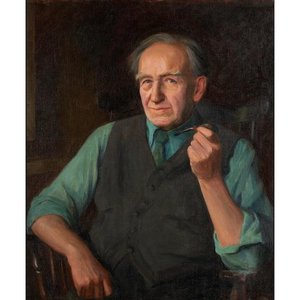
balthasar wigand
1771 - 1846 , Austria
Quick Facts
- Artistic Movement Or Style: Sculpture, Miniatures
- Artists Who Influenced This Artist: ['None],\n "Artists or movements influenced by this artist": [None']
- Date Of Birth: 1771
- Date Of Death: 1851
- Full Name: John Henning
- Nationality: Scottish
- Notable Artworks:
- Parthenon frieze
- Bassae frieze
- Place Of Birth: Paisley, Scotland
Related Articles

Victor Vasarely: Pioneering Op Art & Democratizing Visual Experience
Explore the revolutionary world of Victor Vasarely, father of Op Art. Discover his geometric masterpieces, artistic system, & lasting impact on modern design. A guide for discerning art collectors.
Carl Eduard Schuch: Bridging Realism & Symbolism in Late 19th-Century Austrian Painting
Explore the captivating landscapes & still lifes of Carl Eduard Schuch (1846-1903), a pivotal Austrian painter bridging realism and modernism. Discover his influences, unique style, and lasting legacy with ArtsDot.
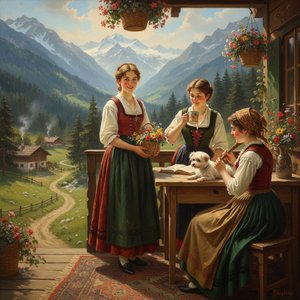
Eugen von Blaas: Capturing Alpine Life & Sentiment in 19th-Century Austrian Painting
Discover the captivating world of Eugen von Blaas! Explore his exquisite 19th-century paintings capturing Venetian life & Alpine beauty. Learn about his Academic Classicism style and find museum-quality reproductions at ArtsDot.
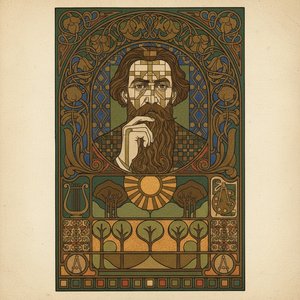
Koloman Moser: A Synthesis of Art Nouveau, Secessionism & the Gesamtkunstwerk Ideal
Explore the life & work of Koloman Moser, a pivotal figure in the Vienna Secession & Wiener Werkstätte. Discover his stunning graphic design, architecture, and applied arts – a true pioneer of Viennese Art Nouveau. Learn more at ArtsDot.
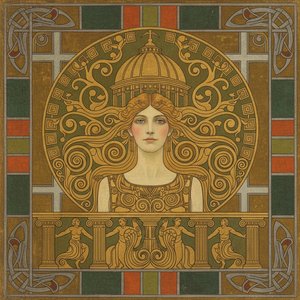
The Vienna Secession: A Rebellion of Form & Spirit in Fin-de-Siècle Art
Discover the revolutionary Vienna Secession art movement! Explore Klimt, Olbrich & more. Learn about its history, characteristics & lasting influence on modern art. High-quality reproductions available.