 Preview
 Send
Send Share
Share
 Details

 Download
 Similars
 X-Ray
X-Ray Diaporama
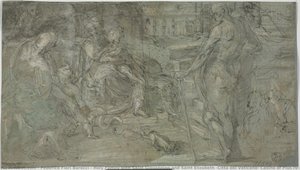
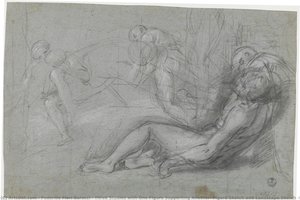
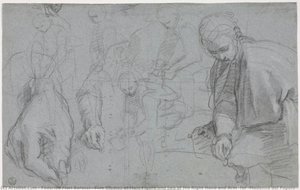
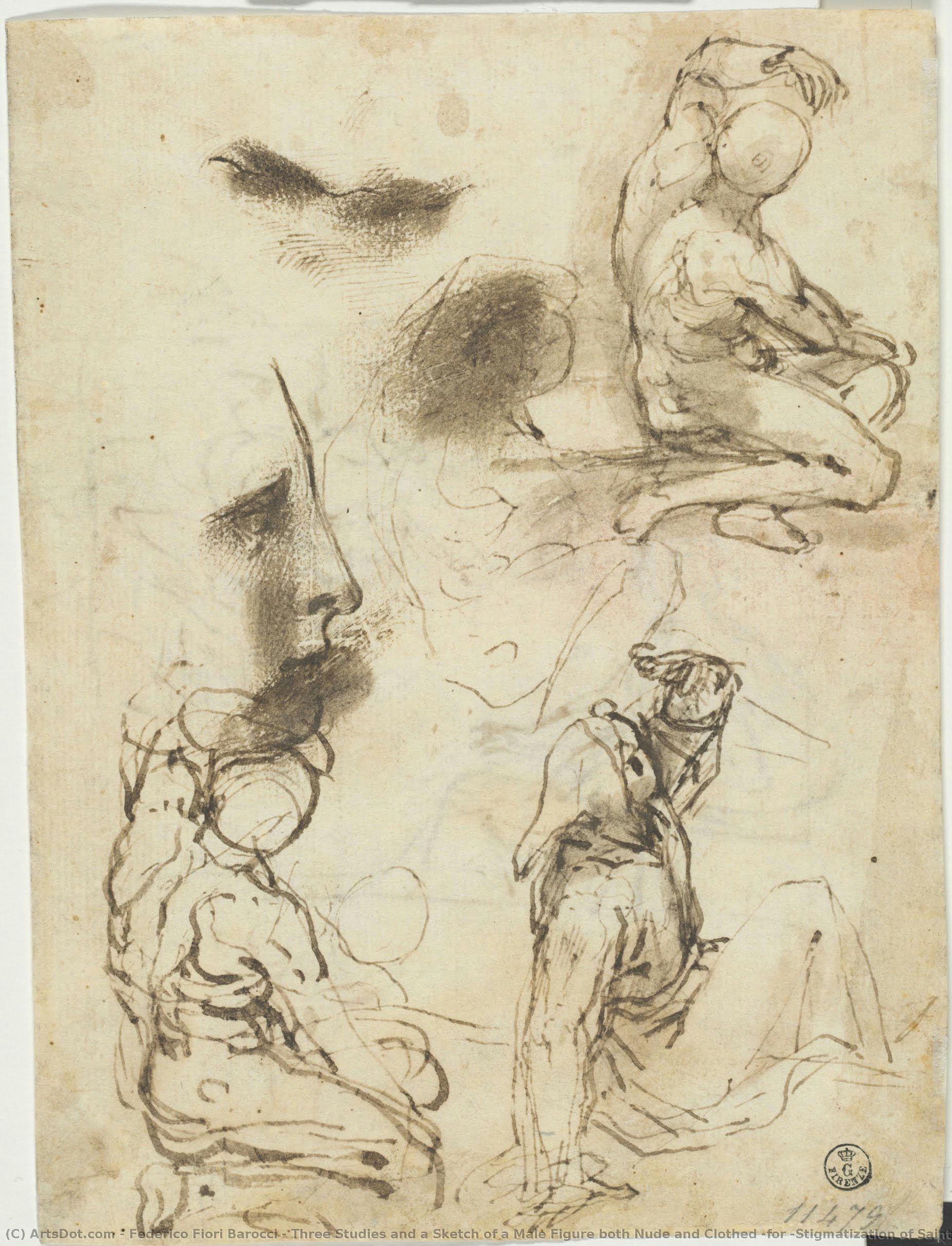
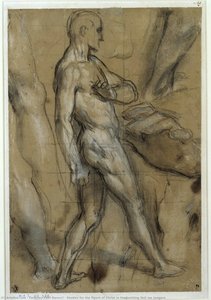
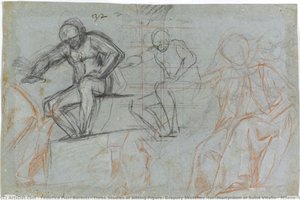
Three Studies and a Sketch of a Male Figure both Nude and Clothed (for “Stigmatization of Saint Francis”, Urbino, Galleria Nazionale delle Marche); Profile
 Acrylic On Canvas
- WallArt
- Baroque Mannerism
 1595
1595 22.0 x 17.0 cm
 Galleria degli Uffizi
 Read More
Hand Made Oil Reproduction
Hand-painted oil on canvas in your size and frame, made to order by our artists. ( Buy Print Buy Image)




P118B $10

P118H $10

P118W $10

P438Z $10

P508JH $12

P508YH $12

P805H $10

P805Z $10

P919BZ $10

P919G $10

P919XJ $10

P959ZH $10

P968JZ $12

W106C $8

W218G $10

W218JH $8

W218Y $10

W307PJ $10

W316G $10

W316PJ $8

W316Y $10

W398PJ $8

W4111J $10

W500HY $15

W500JH $15

W692G $12

W849H $8

W940BG $15

W953PJ $8




Pick from our preset sizes that match the artwork's original proportions.

You may enter your own dimensions to fit a specific frame or space. If your selected size does not match the original image's proportions, we will either crop the artwork or extend the painting with additional hand-painted elements. A digital mockup will be sent for your approval before production begins.
Please note that the on-screen preview does not reflect the actual cropping or extension. Only the mockup will accurately show the final composition.
While custom sizes are available, we recommend selecting a dimension from the predefined list to preserve the original proportions.
After order, ArtsDot.com team will email client for instructions and provide a mockup preview
Worldwide Delivery () in 3/4 weeks instead of standard 5 weeks. (1 September). No compromise on quality.

Free Worldwide Express Shipping

High-Quality Linen Canvas

Full Shipping Insurance

Customs Tax Refund Guarantee

True Color Matching Guarantee

60-Day Return Policy (Defects Only)

100% Money-Back Guarantee

Bulk Discount Offer
 Glass option is only available in size under 110 CM

Three Studies and a Sketch of a Male Figure both Nude and Clothed (for “Stigmatization of Saint Francis”, Urbino, Galleria Nazionale delle Marche); Profile
Reproduction Medium
Reproduction Size
-


Total Price
$ 263
A Study in Human Form and Spiritual Contemplation
Federico Fiori Barocci's "Three Studies of a Male Figure both Nude and Clothed (for ‘Stigmatization of Saint Francis’),” created in 1595, is more than just a depiction of the human form; it’s a profound meditation on vulnerability, faith, and the interplay between earthly existence and divine grace. Executed with charcoal and chalk on paper, this remarkable drawing offers a rare glimpse into Barocci's meticulous artistic process – a testament to his dedication to capturing not merely appearance but also the very essence of his subject.
The composition itself is deceptively simple yet powerfully resonant. A solitary male figure, seated upon a weathered bench beneath a sparse tree, dominates the scene. He’s rendered in exquisite detail, showcasing Barocci's mastery of anatomy and his ability to convey both physical strength and profound introspection. The figure is partially clothed, revealing glimpses of skin while simultaneously draped in flowing garments, creating a visual tension that speaks volumes about the duality of human nature – our inherent vulnerability alongside our capacity for resilience and spiritual aspiration. The subtle shifts in light and shadow, achieved through Barocci’s masterful use of charcoal, imbue the scene with an atmospheric quality, suggesting both the harshness of the natural world and the quiet dignity of the subject.
Renaissance Roots and Baroque Foreshadowing
Barocci's work is deeply rooted in the artistic traditions of the Italian Renaissance, particularly the influence of artists like Federico Zuccari. However, he transcends mere imitation, forging a distinctly personal style that anticipates the dramatic intensity and emotional depth characteristic of the emerging Baroque movement. His meticulous preparatory sketches – hundreds of them survive – reveal an extraordinary level of planning and experimentation, reflecting a desire to push the boundaries of artistic representation. The drawing’s genesis lies within the commission for a series depicting Saint Francis, highlighting Barocci's engagement with religious themes and his ability to imbue secular subjects with spiritual significance.
Born in Urbino, a city renowned for its humanist legacy under Federico da Montefeltro, Barocci’s artistic environment fostered an appreciation for both classical ideals and innovative techniques. Urbino itself, as described in the historical context, was a crucible of intellectual and artistic ferment, attracting scholars, artists, and poets who sought to elevate the city to new heights of cultural achievement. This rich heritage undoubtedly shaped Barocci’s artistic sensibilities, encouraging him to explore complex themes and experiment with unconventional approaches.
Symbolism and Emotional Resonance
The figure's posture – slumped slightly, hands clasped together – suggests a state of quiet contemplation or perhaps even melancholy. The setting, with its bare tree and weathered bench, evokes a sense of isolation and vulnerability. While the drawing’s immediate purpose was to serve as a study for a religious commission, it transcends its specific context to offer a universal meditation on the human condition. The partially clothed figure can be interpreted as representing humanity's inherent duality – our physical needs alongside our spiritual aspirations.
Furthermore, Barocci’s use of light and shadow is not merely decorative; it serves to heighten the emotional impact of the image. The subtle gradations of tone create a sense of depth and atmosphere, drawing the viewer into the scene and inviting them to contemplate the figure's inner state. The overall effect is one of quiet intensity – a testament to Barocci’s ability to capture not just the appearance but also the essence of his subject.
A Legacy in Reproduction
Today, Federico Barocci’s “Three Studies of a Male Figure…” stands as a remarkable example of Renaissance drawing. Reproductions offer an accessible way to appreciate the artist's extraordinary skill and profound insights. When selecting a reproduction, consider the quality of materials used – archival paper and pigment are essential for preserving the artwork's integrity over time. This drawing’s enduring appeal lies in its ability to resonate with viewers across centuries, prompting reflection on themes of faith, vulnerability, and the complexities of the human experience.
Related Artworks
Artist Biography
Early Life and Training
- Born: Urbino, Italy (1535)
- Died: 1612
- Federico Fiori Barocci, an Italian Renaissance painter and printmaker, was born in 1535 in Urbino, Italy.
- His original name was Federico Fiori, and he was nicknamed "il Baroccio," which means a two-wheel cart drawn by oxen in northwestern Italian dialects.
- Barocci received his earliest apprenticeship with his father, Ambrogio Barocci, a sculptor of some local eminence.
- He was then apprenticed with the painter Battista Franco in Urbino. This training laid the foundation for his future success.
Artistic Career and Influences
- Barocci's work was highly esteemed and influential, foreshadowing the Baroque style of Peter Paul Rubens.
- He worked in the pre-eminent studio of Taddeo and Federico Zuccari in Rome, where he was exposed to various artistic influences.
- His first notable work was a "St. Margaret" executed for the confraternity of the Holy Sacrament.
- He was invited by Pope Pius IV to assist in the decoration of the Vatican Belvedere Palace at Rome, where he painted the Virgin Mary and infant, with several saints and a ceiling in fresco, representing the Annunciation.
- Barocci's style was characterized by a mix of Mannerism and Baroque elements.
Notable Works and Legacy
- Five Studies of Male Figure and two of His Right Hand and Arm (Uffizi Gallery, Florence, Italy) - A testament to Barocci’s skill in capturing the human form.
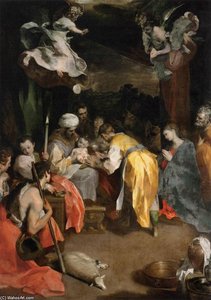
- Composition Study (for “Circumcision”, Paris, Musée du Louvre) – Demonstrates his ability to balance composition and emotion.
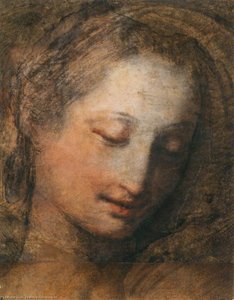
- Man’s Head (for “Calling of Saint Andrew”, Bruxelles, Musées Royaux des Beaux-Arts de Belgique) - Showcases Barocci's attention to detail and expression.
- The Nativity (1597 oil painting at the Prado).
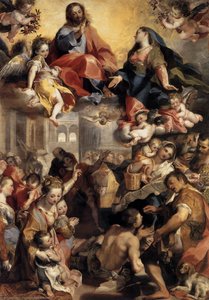
- Madonna del Popolo (Uffizi Gallery, Florence, Italy).
- The Madonna of the Cat (La Madonna del Gatto)
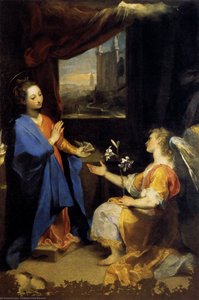
- Annunciation (1582)
Artistic Impact and Followers
- Barocci's influence can be seen in the work of various artists, including Peter Paul Rubens, who was inspired by Barocci’s dramatic and emotive brushwork.
- His legacy continues to be celebrated through his numerous works, now housed in museums such as the Uffizi Gallery (Florence, Italy) and the Musée du Louvre (Paris, France).
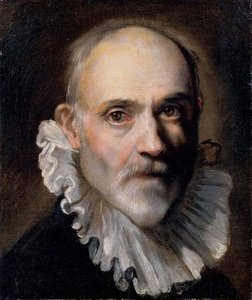
Federico Fiori Barocci
1535 - 1612 , Italy
Quick Facts
- Artistic Movement Or Style: Renaissance, Baroque
- Artists Or Movements Influenced By This Artist: ['Peter Paul Rubens']
- Artists Who Influenced This Artist: ['Battista Franco']
- Date Of Birth: 1535
- Date Of Death: 1612
- Full Name: Federico Fiori Barocci
- Nationality: Italian
- Notable Artworks:
- The Nativity
- Madonna del Popolo
- Annunciation
- Stigmatization of Saint Francis
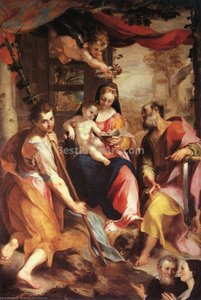
- Rest on the Flight to Egypt
- Place Of Birth: Urbino, Italy
Related Articles
Leonardo da Vinci's Masterpieces: Explore 25 Iconic Artworks for Your Home | ArtsDot
Journey through Leonardo da Vinci's genius with our curated selection of 25 iconic artworks. Explore the stories behind Mona Lisa, The Last Supper & more Renaissance masterpieces. Find museum-quality art reproductions for your home at ArtsDot.com.
The Eloquent Form: A Historical & Aesthetic Exploration of the Nude in Art
Explore the captivating history of the nude in art! From ancient Greece to modern masters, discover its evolving symbolism, techniques & enduring beauty. Expert insights for collectors and enthusiasts.
The Enduring Allure of the Nude: A Historical & Artistic Exploration of the Human Form
Explore the captivating history of nude art! Discover iconic paintings & artists from classical to modern eras. Uncover symbolism, techniques & find museum-quality reproductions at ArtsDot.

The Nuances of Graphite: Exploring Emotional Depth & Technical Mastery in Pencil Drawing
Explore the captivating world of graphite drawing! Discover its rich history, master essential techniques like chiaroscuro, and learn how artists evoke emotion through this timeless medium. Expert insights for art enthusiasts.
Frederick Bridgman: Anatomical Mastery & the Evolution of Figure Drawing Instruction
Explore the anatomical mastery of George B. Bridgman & his revolutionary figure drawing techniques. Discover how his methods transformed art instruction and continue to inspire artists today. Learn more at ArtsDot.