 Preview
 Send
Send Share
Share
 Details

 Download
 Similars
 X-Ray
X-Ray Diaporama
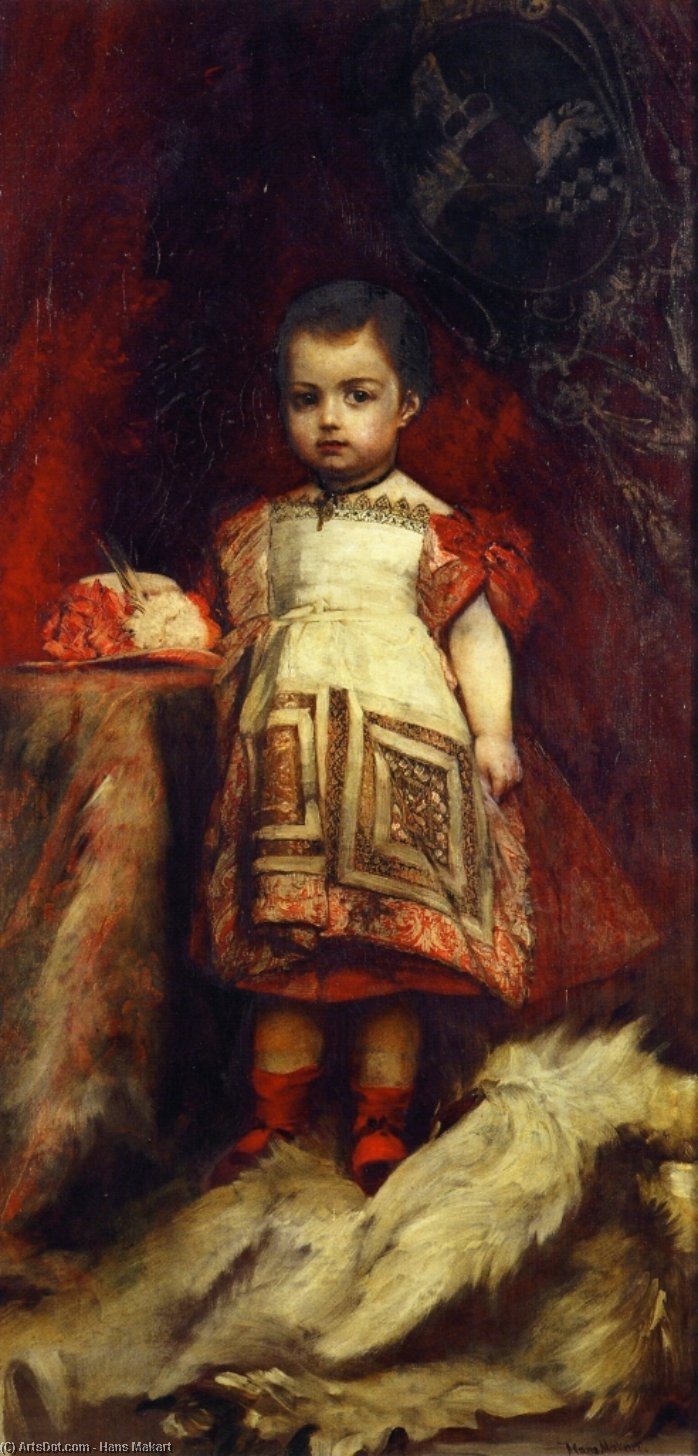
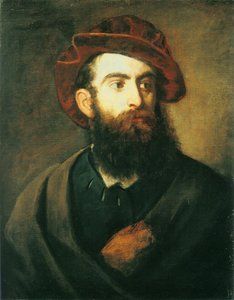
Portrait of Gottfried Prinz zu Hohenlohe Schillingsfurst
 Oil On Canvas
- WallArt
- Academic Art
 1870
1870- 19th Century
 155.0 x 75.0 cm
 Read More
Giclée / Art Print
Museum-quality giclée or canvas print with fast production and flexible finish options. ( Buy Hand Made Painting Buy Image)




P118B $10

P118H $10

P118W $10

P438Z $10

P508JH $12

P508YH $12

P805H $10

P805Z $10

P919BZ $10

P919G $10

P919XJ $10

P959ZH $10

P968JZ $12

W106C $8

W218G $10

W218JH $8

W218Y $10

W307PJ $10

W316G $10

W316PJ $8

W316Y $10

W398PJ $8

W4111J $10

W500HY $15

W500JH $15

W692G $12

W849H $8

W940BG $15

W953PJ $8




Pick from our preset sizes that match the artwork's original proportions.

You may enter your own dimensions to fit a specific frame or space. If your selected size does not match the original image's proportions, we will either crop the artwork or extend the image with a mirrored or solid-fill edge. A digital mockup will be sent for your approval before production begins.
Please note that the on-screen preview does not reflect the actual cropping or extension. Only the mockup will accurately show the final composition.
While custom sizes are available, we recommend selecting a dimension from the predefined list to preserve the original proportions.
Worldwide Delivery () in 2 weeks instead of standard 4/5 weeks. (4 September)

Free Worldwide Express Shipping

High-Quality Linen Canvas

Full Shipping Insurance

Customs Tax Refund Guarantee

True Color Matching Guarantee

60-Day Return Policy (Defects Only)

100% Money-Back Guarantee

Bulk Discount Offer
 Glass option is only available in size under 110 CM

Portrait of Gottfried Prinz zu Hohenlohe Schillingsfurst
Giclée / Art Print
Reproduction Size
-


Total Price
$ 63
A Glimpse into Aristocratic Elegance
In the grand tapestry of nineteenth-century European portraiture, few works capture the intersection of individual character and social prestige as exquisitely as Hans Makart’s Portrait of Gottfried Prinz zu Hohenlohe Schillingsfurst. Painted in 1870, this oil on canvas serves as a profound window into the opulent world of the Austrian aristocracy during a period of immense cultural refinement. The portrait does more than merely record the likeness of a young nobleman; it breathes life into the very essence of the era's splendor. Through Makart’s masterful hand, we encounter a subject defined by an air of quiet dignity and effortless grace, set within a composition that speaks to the stability and sophistication of his station.
The painting is a masterclass in the Makartstil, a signature style developed by the artist that would come to define the aesthetic of Vienna. This approach is characterized by a lush, theatrical use of color and a dramatic interplay of light and shadow. As the viewer’s eye wanders across the canvas, one is immediately struck by the vibrant hues and bold brushstrokes that animate the scene. Makart possessed an uncanny ability to manipulate pigments to create textures that feel almost tactile—from the heavy, luxurious fabrics of the formal attire to the subtle, luminous glow of the skin. This technique does not merely depict a person; it constructs an atmosphere of palpable richness, making the portrait an immersive experience for anyone standing before it.
The Artistry of Light and Legacy
Beyond the technical brilliance, the emotional resonance of this work lies in its ability to bridge the gap between history and the present. The composition is meticulously balanced, utilizing light to guide the observer toward the focal point: the noble subject himself. There is a certain psychological depth achieved through Makart’s use of chiaroscuro, where the soft transitions from shadow to light suggest a complex inner life beneath the polished exterior of the Prince. For the discerning collector or interior designer, this piece offers more than just visual beauty; it provides a sense of historical weight and timeless sophistication that can anchor a room with unparalleled prestige.
To possess a reproduction of this masterpiece is to invite the spirit of the 19th-century Viennese salon into one's own home. Whether placed in a grand library, a formal dining hall, or a contemporary living space, the Portrait of Gottfried Prinz zu Hohenlohe Schillingsfurst acts as a conversation piece that celebrates the enduring power of Academic Art. It serves as a reminder of a time when art was used to immortalize not just faces, but the very soul of an age. For those seeking to surround themselves with works that evoke emotion, history, and a sense of profound luxury, Makart’s creation remains an incomparable choice.
Related Artworks


Artist Biography
Hans Makart: A Life in Opulence and Influence
- Born: May 28, 1840, Salzburg, Austria
- Died: October 3, 1884, Vienna, Austria
- Nationality: Austrian
- Movement: Academic Art, Makartstil
Early Life and Training
- Hans Makart's artistic journey began in Salzburg, where he was born into a family with connections to the Habsburg court. Initially showing promise, he enrolled at the Vienna Academy between 1850 and 1851. However, his struggles with draughtsmanship led to his departure from the academy.
- Recognizing his passion for color, Makart studied under Karl Theodor von Piloty in Munich from 1861 to 1865. This period was crucial in shaping his artistic style and developing his distinctive use of vibrant hues.
- Further travels to London, Paris, and Rome broadened his exposure to European art movements and techniques, enriching his artistic perspective.
Artistic Style and Major Works
- Makartstil: Makart's signature style, known as "Makartstil," was characterized by opulent decoration, vibrant colors, and a theatrical flair. It significantly influenced the visual arts in Austria-Hungary and beyond.
- Early Recognition: His early works like Lavoisier in Prison demonstrated his emerging sense of color, while The Knight and the Water Nymphs showcased his decorative talents.
- Rise to Fame: Paintings such as Modern Amoretti and The Plague in Florence solidified his reputation as a leading artist. The purchase of Romeo and Juliet by the Austrian Emperor for the Vienna Museum further cemented his status.
- Notable Works:
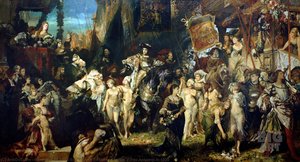
- The Entrance of Emperor Charles V into Antwerp in 1520
- Modern Amoretti
- The Plague in Florence
- Romeo and Juliet
Influence, Legacy, and the Makart Parade
- Influences: Makart drew inspiration from Karl Theodor von Piloty, European art movements (including Symbolism and Art Nouveau), and masters like Peter Paul Rubens.
- Social Figure: His luxurious studio in Vienna became a prominent social hub, attracting royalty, politicians, artists, and writers.
- The Makart Parade: A defining moment in his career was the design of the pageant for the silver wedding anniversary of Emperor Franz Joseph I and Empress Elisabeth of Bavaria (Sisi) in 1879. This elaborate spectacle, known as the "Makart Parade," showcased his talent for costume and set design and captivated the public.
- Professor at the Vienna Academy: In 1879, Makart was appointed a professor at the Vienna Academy, solidifying his position within the artistic establishment.
- Influence on Klimt: He profoundly influenced Gustav Klimt, who would later become a leading figure in the Vienna Secession movement and Art Nouveau.
Later Life and Historical Significance
- Makart's untimely death in 1884 at the age of 44 marked the end of an era. His extensive collection of antiques and art was auctioned off, dispersing his legacy across various collections.
- Despite criticisms from some academic circles regarding historical accuracy, Makart’s impact on Viennese culture and artistic trends remains undeniable. He embodied a period of opulent grandeur and aesthetic innovation.
- His work continues to be appreciated for its vibrant colors, decorative richness, and the unique atmosphere he created, solidifying his place as a significant figure in 19th-century Austrian art.
Hans Makart
1840 - 1884 , Austria
Quick Facts
- Artistic Movement Or Style: Academic history painting
- Artists Or Movements Influenced By This Artist:
- Gustav Klimt
- Art Nouveau
- Artists Who Influenced This Artist:
- Karl Theodor von Piloty
- Johann Fischbach
- Date Of Birth: May 28, 1840
- Date Of Death: October 3, 1884
- Full Name: Hans Makart
- Nationality: Austrian
- Notable Artworks:
- Lavoisier in Prison
- Modern Amoretti
- The Plague in Florence
- Romeo and Juliet
- Place Of Birth: Salzburg, Austria
Related Articles
Hans Makart: Opulence, Symbolism & the Viennese Aesthetic Movement
Explore the opulent world of Hans Makart, a pivotal figure in Austrian art history. Discover his influence on Klimt & the Vienna Secession, signature style, and investment potential. Expert insights for collectors.
Academic Art: Tradition, Technique & the Pursuit of Ideal Form in the 19th Century
Explore the world of Academic Art! Discover its history, key artists like Ingres & Bouguereau, defining techniques, and lasting influence on 19th-century painting. Learn about the Salon system and its legacy.
19th Century Masterpieces: 10 Paintings That Defined an Era | ArtsDot
Journey through 19th century art with ArtsDot! Explore 10 iconic paintings – from Monet & Renoir to Courbet – and discover the stories behind Romanticism, Realism & Impressionism. Find museum-quality reproductions for your home decor. Explore the full collection online!
Academic Realism's Finest: 10 Masterpieces for Art Lovers & Home Decor
Explore 10 defining Academic Realism masterpieces by Bouguereau, Gérôme & Cabanel. Discover the stories behind these iconic paintings and bring timeless art into your home with museum-quality reproductions from ArtsDot.com. Explore the full collection online!
Academic Art: Tradition, Technique & the Rise of Modernism
Explore the rich history of Academic Art – its techniques, key masters like Bouguereau & Ingres, and influence on 19th-century painting. Discover this enduring tradition.