 Preview
 Send
Send Share
Share
 Details

 Download
 Similars
 X-Ray
X-Ray Diaporama
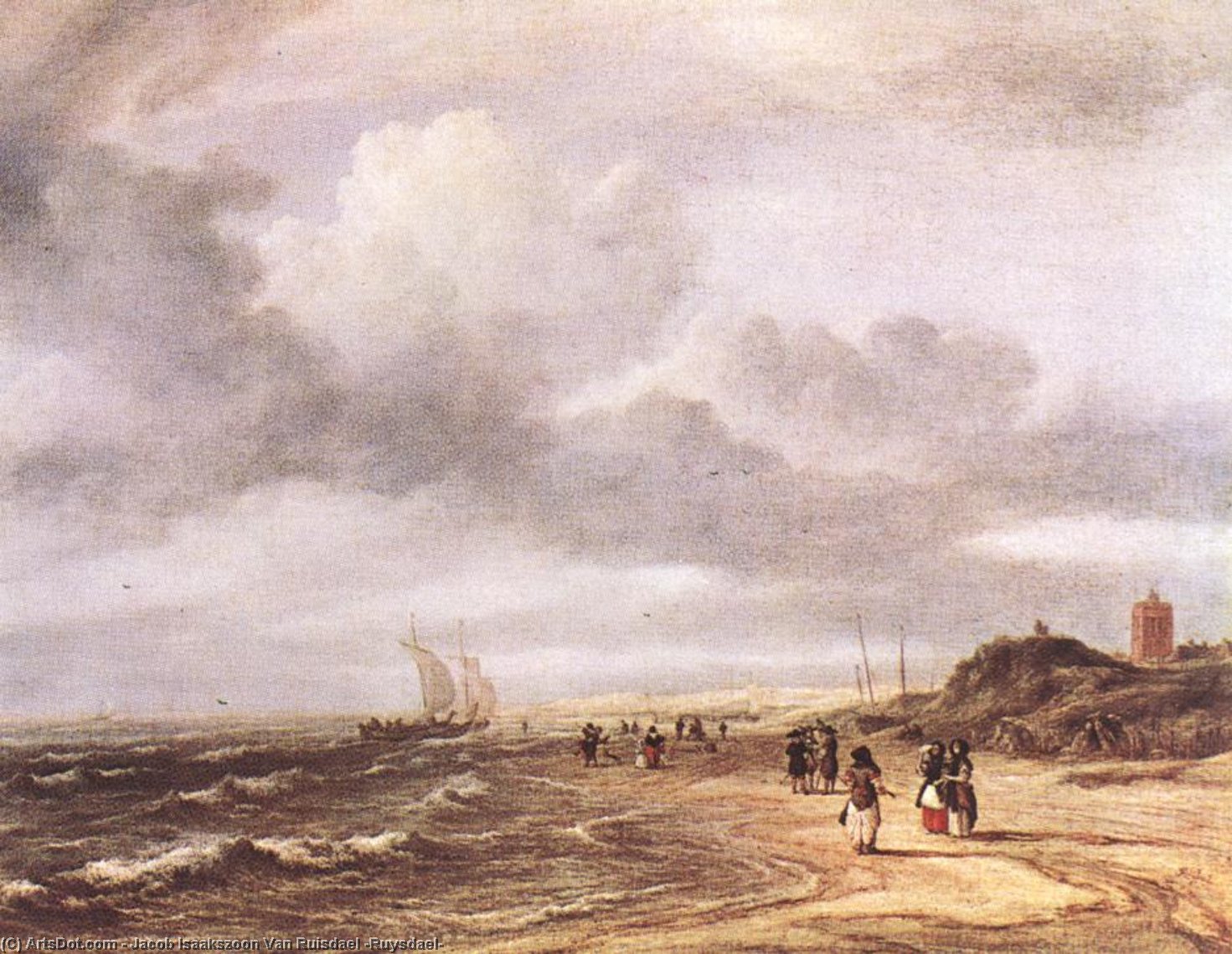
The Shore at Egmond-an-Zee
 Acrylic On Canvas
- WallArt
- Dutch Golden Age Landscape
 1675
1675 53.0 x 66.0 cm
 National Gallery
 Read More
Hand Made Oil Reproduction
Hand-painted oil on canvas in your size and frame, made to order by our artists. ( Buy Print Buy Image)




P118B $10

P118H $10

P118W $10

P438Z $10

P508JH $12

P508YH $12

P805H $10

P805Z $10

P919BZ $10

P919G $10

P919XJ $10

P959ZH $10

P968JZ $12

W106C $8

W218G $10

W218JH $8

W218Y $10

W307PJ $10

W316G $10

W316PJ $8

W316Y $10

W398PJ $8

W4111J $10

W500HY $15

W500JH $15

W692G $12

W849H $8

W940BG $15

W953PJ $8




Pick from our preset sizes that match the artwork's original proportions.

You may enter your own dimensions to fit a specific frame or space. If your selected size does not match the original image's proportions, we will either crop the artwork or extend the painting with additional hand-painted elements. A digital mockup will be sent for your approval before production begins.
Please note that the on-screen preview does not reflect the actual cropping or extension. Only the mockup will accurately show the final composition.
While custom sizes are available, we recommend selecting a dimension from the predefined list to preserve the original proportions.
After order, ArtsDot.com team will email client for instructions and provide a mockup preview
Worldwide Delivery () in 3/4 weeks instead of standard 5 weeks. (23 August). No compromise on quality.

Free Worldwide Express Shipping

High-Quality Linen Canvas

Full Shipping Insurance

Customs Tax Refund Guarantee

True Color Matching Guarantee

60-Day Return Policy (Defects Only)

100% Money-Back Guarantee

Bulk Discount Offer
 Glass option is only available in size under 110 CM

The Shore at Egmond-an-Zee
Reproduction Medium
Reproduction Size
-


Total Price
$ 263
Artwork Description
A Moment Frozen in Time: Jacob Isaackszoon van Ruisdael’s “The Shore at Egmond-an-Zee”
Jacob Isaackszoon van Ruisdael, born in Haarlem in 1628, stands as a titan amongst Dutch landscape painters of the Golden Age—a period brimming with artistic fervor and economic prosperity. His prolific output cemented his reputation as arguably the foremost practitioner of atmospheric realism, capturing the essence of the Dutch countryside with unparalleled sensitivity to light and color. This remarkable painting, “The Shore at Egmond-an-Zee,” completed in 1675, exemplifies Ruisdael’s distinctive approach and offers a captivating glimpse into the visual culture of his era.Capturing the Essence of Coastal Life
The scene depicted is deceptively simple: a beach bathed in soft sunlight overlooking the North Sea at Egmond-an-Zee. Yet, within this tranquil vista lies a masterful orchestration of observation and artistic skill. Ruisdael meticulously portrays a gathering of figures—approximately twelve individuals—engaged in leisurely activities along the shoreline. These figures are rendered with subtle detail, conveying movement and life without resorting to dramatic poses. Notably, a horse stands prominently near the center, adding an element of dynamism and hinting at the rural traditions prevalent in the region. The artist’s keen eye captures not just the physical landscape but also the palpable atmosphere of a summer day.The Language of Light and Color: Ruisdael's Technique
Ruisdael’s technique is characterized by its masterful manipulation of light—a cornerstone of his artistic vision. He employs a layered approach, utilizing thin glazes over underdrawings to achieve an ethereal luminosity that imbues the canvas with depth and realism. The sky dominates approximately two-thirds of the composition, rendered in shades of pale blue and gray, creating a sense of vastness and conveying the prevailing weather conditions—a hallmark of Ruisdael’s style. Careful attention is paid to tonal gradations, subtly shifting hues to simulate the effects of sunlight filtering through clouds. This technique elevates the painting beyond mere representation; it strives to evoke an emotional response in the viewer by immersing them in the sensory experience of the coastal landscape.Historical Context and Artistic Influences
“The Shore at Egmond-an-Zee” reflects the broader artistic trends of Ruisdael’s time—a period marked by a fascination with scientific observation and a desire to depict nature accurately. Inspired by Caravaggio's dramatic chiaroscuro, Ruisdael skillfully employs contrasting light and shadow to heighten visual impact and create a sense of drama within the serene setting. Furthermore, Ruisdael’s journey to Germany in 1650 broadened his artistic horizons, exposing him to influences from German landscape painters who championed atmospheric perspective—a technique that convincingly simulates depth by diminishing color intensity with distance.Symbolism Beyond Surface Beauty
While aesthetically pleasing, “The Shore at Egmond-an-Zee” transcends mere visual beauty. The beach itself symbolizes tranquility and respite from urban life—values highly esteemed during the Dutch Golden Age. The presence of figures engaged in everyday activities speaks to the importance of human connection within the natural world. Moreover, Ruisdael’s depiction of the horse embodies strength and vitality, representing both the pastoral traditions of the region and the artist's own unwavering commitment to capturing the sublime qualities of nature.A Legacy Enduring Through Reproduction
Today, a high-quality reproduction of “The Shore at Egmond-an-Zee” offers an opportunity to appreciate Ruisdael’s artistic genius and immerse oneself in the spirit of Dutch landscape painting during its zenith. ArtsDot.com presents exceptional reproductions that faithfully capture the nuances of color and texture—allowing collectors and interior designers alike to bring this iconic artwork into their homes and inspire contemplation on the beauty and grandeur of the natural world.Related Artworks
Artist Biography
early life and career
jacob isaackszoon van ruisdael, a prominent dutch painter, draughtsman, and etcher, was born in 1628 in the netherlands. he is widely regarded as the pre-eminent landscape painter of the dutch golden age, a period marked by great wealth and cultural achievement.
artistic style and contributions
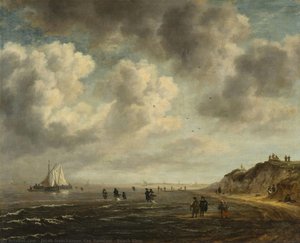
van ruisdael's work is characterized by its versatility and prolific nature, depicting a wide variety of landscape subjects. from 1646, he painted remarkable dutch countryside scenes, which later took on a more heroic character after his trip to germany in 1650. his late work, produced while living and working in amsterdam, featured city panoramas and seascapes, often with the sky occupying two-thirds of the canvas.
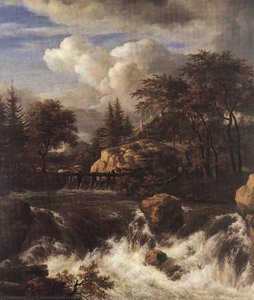
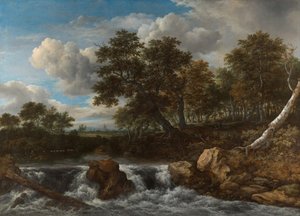
- waterfall in a rocky and mountainous landscape, showcasing his mastery of light and composition.
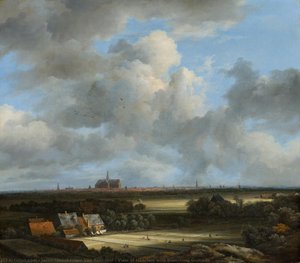
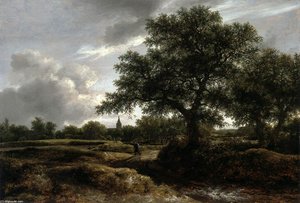
- view of haarlem with bleaching grounds, exemplifying his ability to capture the essence of the dutch landscape.
- view of the dam and the damrak in amsterdam, highlighting his skill in cityscape painting.
museums and collections
van ruisdael's work is spread across private and institutional collections worldwide, with notable holdings at:
- the national gallery in london
- the rijksmuseum in amsterdam
- the hermitage museum in st. petersburg
influence and legacy
van ruisdael's influence on landscape painting traditions is profound, shaping the english romantics, the barbizon school in france, and the hudson river school in the us. he also inspired generations of dutch landscape artists. notable works:
- view of haarlem with bleaching grounds
- waterfall in a rocky and mountainous landscape
- view of the dam and the damrak in amsterdam
artist's profile on ArtsDot: jacob isaackszoon van ruisdael
jacob isaackszoon van ruisdael
1628 - 1682 , Netherlands
Quick Facts
- Artistic Movement Or Style: Dutch Golden Age, Baroque
- Artists Or Movements Influenced By This Artist:
- English Romantics
- Barbizon School
- Artists Who Influenced This Artist: ['Hendrick Vroom']
- Date Of Birth: 1628/1629, Haarlem
- Date Of Death: 1682, Amsterdam
- Full Name: Jacob Isaackszoon van Ruisdael
- Nationality: Dutch
- Notable Artworks:
- View of Haarlem
- Waterfall landscape
- Amsterdam cityscape
- Place Of Birth: Haarlem, Netherlands
Related Articles
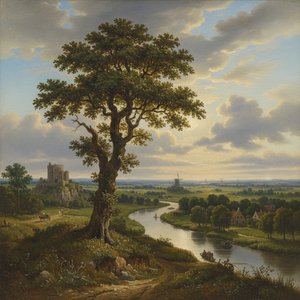
Jacob van Ruisdael: Master of Dutch Landscape & the Evocation of National Identity
Explore the life & work of Jacob van Ruisdael, the preeminent Dutch landscape painter. Discover his technical brilliance, symbolic depth, and lasting influence on art history. Learn about collecting Ruisdael's masterpieces.
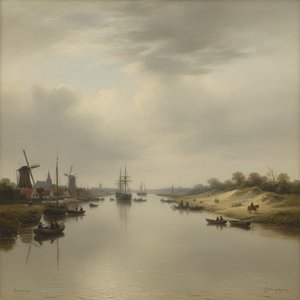
Jan van Goyen: Master of Dutch Landscape & Atmospheric Perspective
Discover Jan van Goyen, the master of Dutch landscape painting. Explore his subtle technique, atmospheric realism & lasting influence on art history. Learn about this 17th-century pioneer at ArtsDot.

Rembrandt's Masterpieces: Explore 25 Iconic Paintings & Prints | ArtsDot
Journey through Rembrandt van Rijn's 25 most iconic paintings & etchings. Explore Dutch Golden Age masterpieces, dramatic chiaroscuro, and timeless portraits. Find museum-quality art reproductions to elevate your home decor on ArtsDot.com.
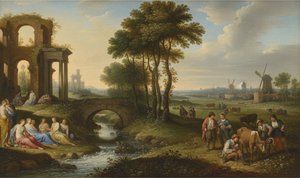
Cornelis van Poelenburch: Bridging Mannerism & the Dutch Baroque Landscape
Discover Cornelis van Poelenburch, a pivotal Dutch Baroque landscape painter bridging Mannerism & Italianate styles. Explore his life, key works, and lasting influence on 17th-century art with ArtsDot.
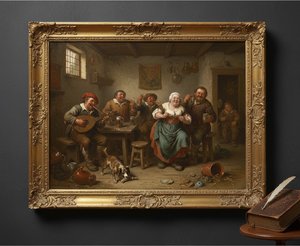
Adriaen van Ostade: A Master of Dutch Genre Painting & Social Commentary
Explore the life & work of Adriaen van Ostade, a leading Dutch Golden Age painter. Discover his realistic genre scenes, social commentary, and lasting influence on art history. Learn more at ArtsDot.