 Preview
 Send
Send Share
Share
 Details

 Download
 Similars
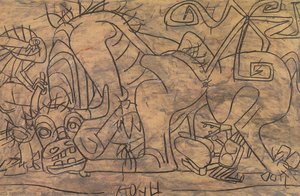
 X-Ray
X-Ray Diaporama
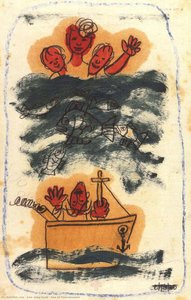
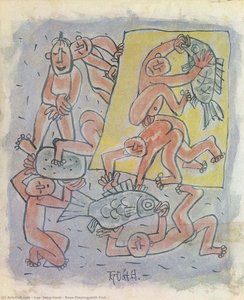
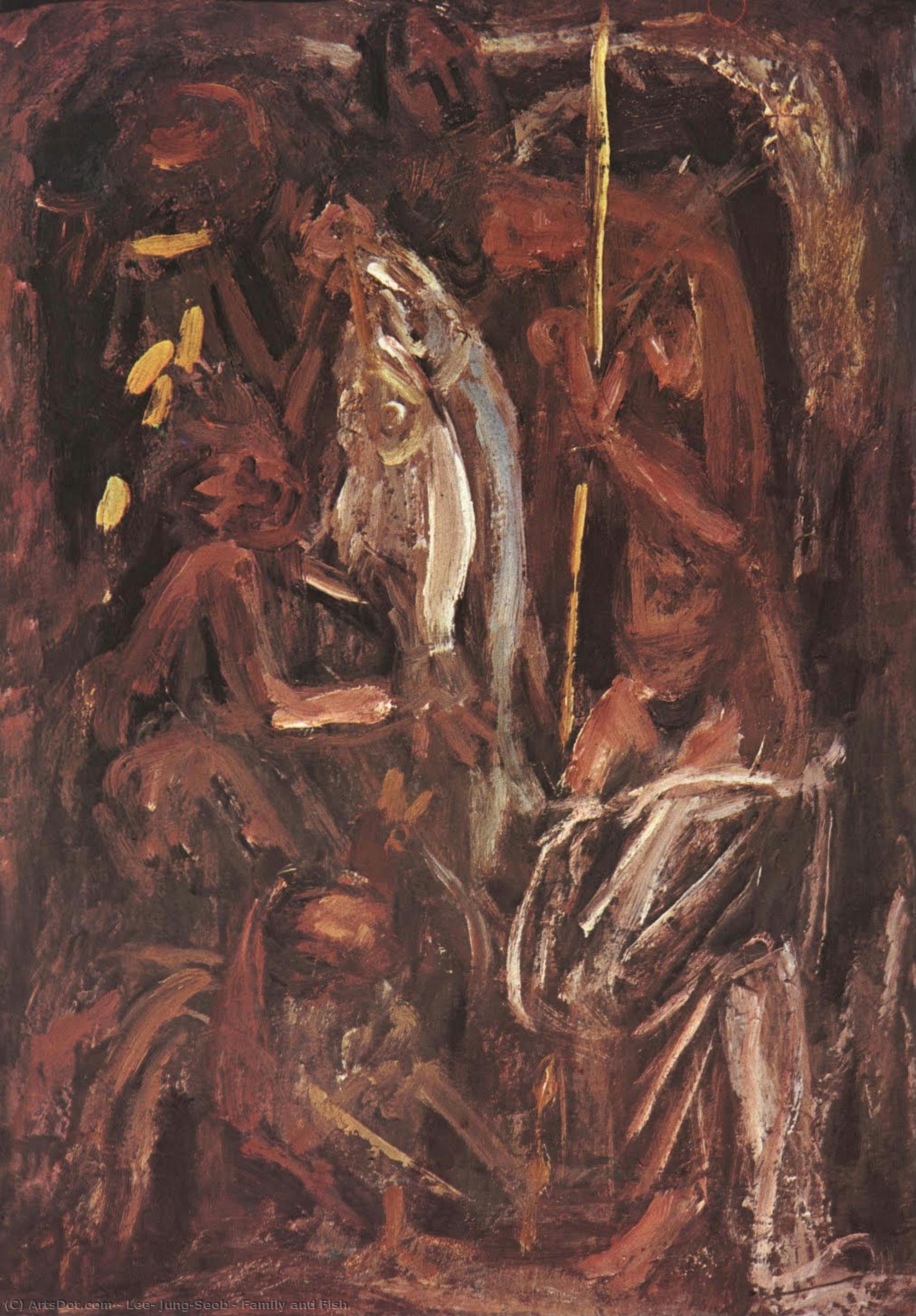
Family and Fish
 Acrylic On Canvas
- WallArt
- Impressionistic Realism
 41.0 x 28.0 cm
 National Museum of Korea
 Read More
Hand Made Oil Reproduction
Hand-painted oil on canvas in your size and frame, made to order by our artists. ( Buy Print Buy Image)




P118B $10

P118H $10

P118W $10

P438Z $10

P508JH $12

P508YH $12

P805H $10

P805Z $10

P919BZ $10

P919G $10

P919XJ $10

P959ZH $10

P968JZ $12

W106C $8

W218G $10

W218JH $8

W218Y $10

W307PJ $10

W316G $10

W316PJ $8

W316Y $10

W398PJ $8

W4111J $10

W500HY $15

W500JH $15

W692G $12

W849H $8

W940BG $15

W953PJ $8




Pick from our preset sizes that match the artwork's original proportions.

You may enter your own dimensions to fit a specific frame or space. If your selected size does not match the original image's proportions, we will either crop the artwork or extend the painting with additional hand-painted elements. A digital mockup will be sent for your approval before production begins.
Please note that the on-screen preview does not reflect the actual cropping or extension. Only the mockup will accurately show the final composition.
While custom sizes are available, we recommend selecting a dimension from the predefined list to preserve the original proportions.
After order, ArtsDot.com team will email client for instructions and provide a mockup preview
Worldwide Delivery () in 3/4 weeks instead of standard 5 weeks. (17 August). No compromise on quality.

Free Worldwide Express Shipping

High-Quality Linen Canvas

Full Shipping Insurance

Customs Tax Refund Guarantee

True Color Matching Guarantee

60-Day Return Policy (Defects Only)

100% Money-Back Guarantee

Bulk Discount Offer
 Glass option is only available in size under 110 CM

Family and Fish
Reproduction Medium
Reproduction Size
-


Total Price
$ 263
Artwork Description
A Moment Frozen in Time: Exploring Lee Jung-seob’s “Family and Fish”
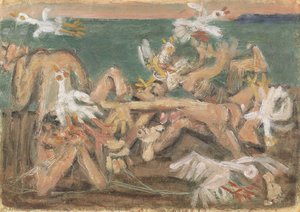
Lee Jung-seob's "Family and Fish," painted circa 1956, stands as a poignant testament to Korean artistic sensibilities during the mid-20th century. Created in Gyeongnam Province, South Korea, this watercolor captures a familial tableau imbued with subtle symbolism that speaks volumes about Korean culture and its relationship with nature. The painting’s enduring appeal lies not merely in its aesthetic beauty but also in its ability to evoke feelings of warmth, tranquility, and contemplation—qualities highly valued within Korean artistic tradition.Style and Technique: Watercolor Mastery
Lee Jung-seob's distinctive style is characterized by a masterful command of watercolor technique. Unlike oil paints which offer rich textures and bold colors, watercolor relies on translucent washes to achieve luminosity and depth. This approach allowed Lee to capture the delicate interplay of light and shadow within the scene—particularly evident in the depiction of the fish swimming beneath the surface of the water. The artist’s meticulous attention to detail is palpable; observe how he renders individual strands of hair and folds of clothing with remarkable precision, demonstrating a dedication to capturing realistic representation alongside expressive artistry.Historical Context: Korea Under Pressure
“Family and Fish” was produced during a period of significant upheaval in Korean history—the aftermath of the Korean War (1950-1953). While outwardly serene, the painting subtly reflects anxieties about survival and resilience inherent in Korean culture. The presence of fish symbolizes abundance and prosperity – crucial elements for sustaining life amidst hardship – yet their depiction beneath the surface underscores the vulnerability of the family unit facing external challenges. This duality is skillfully conveyed through Lee Jung-seob’s understated palette and compositional choices, reflecting a broader artistic preoccupation with conveying emotion without resorting to overt melodrama.Symbolism: Harmony Between Humanity and Nature
The composition itself contributes significantly to the painting's symbolic resonance. The central figure—a man holding a stick—represents strength and protection, while his gaze directs attention towards the family members below. This positioning emphasizes the importance of familial bonds and underscores Korean beliefs about honoring ancestors and safeguarding tradition. Simultaneously, the fish symbolize harmony between humanity and nature – a core concept within Korean philosophy. Their tranquil movement contrasts with the stillness of the human figures, suggesting an aspiration for balance and serenity amidst turbulent times.Emotional Impact: A Legacy of Quiet Reflection
Ultimately, “Family and Fish” transcends mere visual representation; it communicates profound emotional depth. The painting’s muted tones evoke a sense of nostalgia and introspection—encouraging viewers to contemplate themes of family, heritage, and the enduring beauty of the natural world. It exemplifies Lee Jung-seob's ability to distill complex ideas into simple yet powerfully evocative imagery—a hallmark of Korean watercolor art that continues to inspire admiration and appreciation today. Its inclusion in the National Museum of Korea solidifies its place as a cornerstone of Korean artistic history, inviting audiences worldwide to engage with this timeless masterpiece.Related Artworks



Artist Biography
a korean master of oil paintings
lee, jung-seob, a prominent south korean artist, left an indelible mark on the art world with his captivating oil paintings. born in pyeongannamdo, south korea in 1916, lee's artistic journey was marked by innovation and a deep connection with his heritage.artistic contributions
lee jung-seob is best known for his iconic piece 'white ox', a testament to his skillful use of oil paints. this masterpiece, among others, showcases his unique style that blends traditional korean elements with modern techniques.- key works:
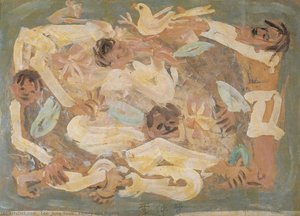
- family and pigeon (national museum of korea, seoul, south korea) - a poignant oil on paper piece.
- boys, fish, and crab (national museum of korea, seoul, south korea) - a watercolor showcasing lee's versatility.
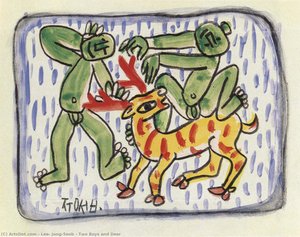
- two boys and deer (national museum of korea, seoul, south korea) - another example of his watercolor prowess.
- museums featuring his work:
- national museum of korea (seoul, south korea)
legacy and influence
lee jung-seob's passing in seoul in 1956 marked the end of an era but also paved the way for future generations of korean artists. his influence can be seen in the works of many contemporary korean painters. explore more of lee jung-seob's art: [https://ArtsDot.com/@/lee-jung-seob](https://ArtsDot.com/@/lee-jung-seob) | discover an extensive collection of his paintings on ArtsDot. learn about other renowned artists: /en/art/list/ | browse through the list of greatest artists at ArtsDot.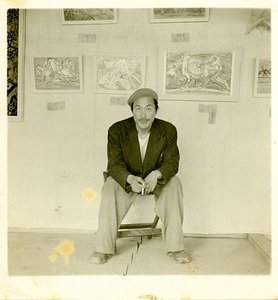
lee, jung-seob
1916 - 1956 , South Korea
Quick Facts
- Artistic Movement Or Style: Modern Korean Art
- Artists Or Movements Influenced By This Artist: ['Fauvism']
- Artists Who Influenced This Artist: ['Goguryeo tomb murals']
- Date Of Birth: April 10, 1916
- Date Of Death: September 6, 1956
- Full Name: Lee Jung-seob
- Nationality: Korean
- Notable Artworks:
- White Ox
- Family & Pigeon
- Boys, fish, crab
- Place Of Birth: Pyeongannamdo, Korea
Related Articles

Watercolor Wonders: 10 Masterpieces That Redefined Art History | ArtsDot
Journey through 10 legendary watercolor masterpieces by Sargent, Turner & Homer! Explore iconic landscapes, portraits & floral art that redefined history. Find museum-quality reproductions and curated decor ideas at ArtsDot.com.

Ephemeral Visions: Exploring the Artistic Legacy & Contemporary Practice of Watercolor Painting
Explore the captivating world of watercolor painting! Discover its rich history, essential techniques, influential artists & collecting tips. A comprehensive guide for art enthusiasts from ArtsDot.

Ephemeral Visions: Exploring the History & Emotional Resonance of Watercolor Painting
Explore the captivating history of watercolor painting, from ancient techniques to modern masters like Kandinsky & Blake. Discover essential artists, collecting tips & the emotional power of this luminous medium. Expert insights for art enthusiasts.

Ephemeral Visions: Exploring the Artistic Legacy & Nuances of Watercolor Painting
Explore the captivating world of watercolor painting! Discover its rich history, essential techniques, influential artists & collecting tips from art experts. A comprehensive guide for enthusiasts.
The Enduring Appeal of Watercolor: History, Techniques & Contemporary Practice
Explore the captivating world of watercolor painting! Discover its rich history, essential techniques, influential artists, and collecting tips. A comprehensive guide for art enthusiasts.