 Preview
 Send
Send Share
Share
 Details

 Download
 Similars
 X-Ray
X-Ray Diaporama
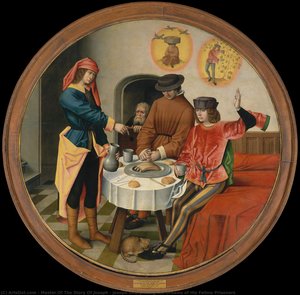
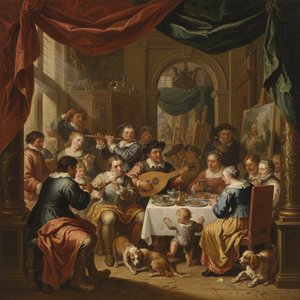
Joseph Interpreting the Dreams of His Fellow Prisoners


 Read More
Giclée / Art Print
Museum-quality giclée or canvas print with fast production and flexible finish options. ( Buy Hand Made Painting Buy Image)




P118B $10

P118H $10

P118W $10

P438Z $10

P508JH $12

P508YH $12

P805H $10

P805Z $10

P919BZ $10

P919G $10

P919XJ $10

P959ZH $10

P968JZ $12

W106C $8

W218G $10

W218JH $8

W218Y $10

W307PJ $10

W316G $10

W316PJ $8

W316Y $10

W398PJ $8

W4111J $10

W500HY $15

W500JH $15

W692G $12

W849H $8

W940BG $15

W953PJ $8




Pick from our preset sizes that match the artwork's original proportions.

You may enter your own dimensions to fit a specific frame or space. If your selected size does not match the original image's proportions, we will either crop the artwork or extend the image with a mirrored or solid-fill edge. A digital mockup will be sent for your approval before production begins.
Please note that the on-screen preview does not reflect the actual cropping or extension. Only the mockup will accurately show the final composition.
While custom sizes are available, we recommend selecting a dimension from the predefined list to preserve the original proportions.
Worldwide Delivery () in 2 weeks instead of standard 4/5 weeks. (4 September)

Free Worldwide Express Shipping

High-Quality Linen Canvas

Full Shipping Insurance

Customs Tax Refund Guarantee

True Color Matching Guarantee

60-Day Return Policy (Defects Only)

100% Money-Back Guarantee

Bulk Discount Offer
 Glass option is only available in size under 110 CM

Joseph Interpreting the Dreams of His Fellow Prisoners
Giclée / Art Print
Reproduction Size
-


Total Price
$ 63
A Vision of Divine Interpretation
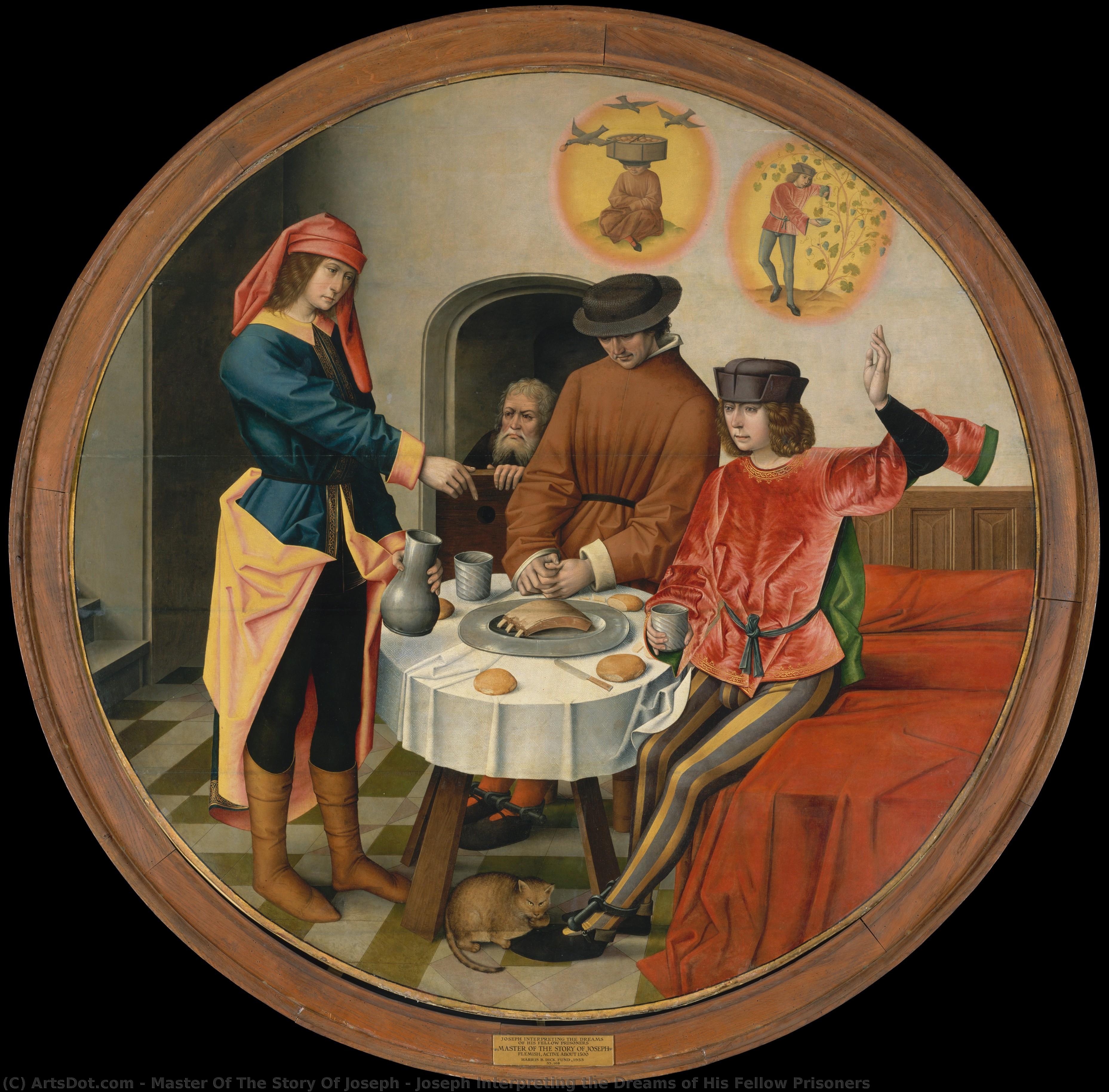
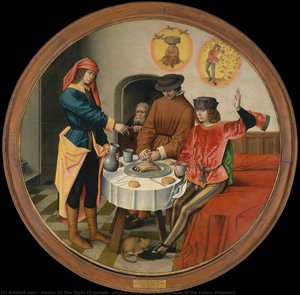
The scene unfolds with an arresting intimacy, drawing the viewer directly into the hushed drama of ancient prophecy meeting everyday life. This magnificent panel captures the biblical narrative of Joseph interpreting the dreams of his fellow prisoners—a moment charged with divine intervention and human vulnerability. The composition is rich with figures gathered around a table laden with objects suggesting both sustenance and ceremony: cups, bowls, and implements of daily ritual. Yet, what elevates this work beyond mere illustration is the artist's remarkable ability to ground the miraculous in the tangible reality of the period, creating a tableau that feels both timelessly sacred and startlingly immediate.
The Masterful Blend of Genre and Scripture
Attributed to the enigmatic Master of the Story of Joseph, this piece stands as a profound testament to the early Flemish tradition. The artist, active during the flourishing period around 1470–1500, possessed an unparalleled gift for weaving high religious narrative with the minutiae of contemporary genre life. Observe the details: the fashionably striped hose worn by one figure, or the casual repose of a grumpy cat curled near the foreground—these elements are not mere decoration; they are deliberate artistic choices that anchor the divine story within the recognizable world of the viewer. This fusion allowed patrons to contemplate profound theological truths while admiring the exquisite craftsmanship applied to relatable human moments.
Symbolism Woven into Daily Objects
The narrative itself is a rich tapestry of symbolism. Joseph’s wisdom acts as the conduit for understanding fate, transforming unsettling dreams—the blossoming vine promising restoration, or the birds consuming from a basket foretelling doom—into clear pronouncements. The objects on the table become symbolic anchors: they speak not only of a meal but of status, hope, and impending change. To own a reproduction of this work is to possess an object steeped in layers of meaning; it invites contemplation on how personal struggles can be interpreted through a lens of greater understanding, transforming anxiety into narrative clarity.
A Legacy for the Modern Collector
For the discerning collector or designer seeking art that speaks volumes without shouting, this panel offers unparalleled depth. Its historical resonance, combined with its vibrant, almost anecdotal quality, allows it to grace both a scholarly library and a richly decorated modern salon. The technique showcases meticulous detail in rendering textiles, skin tones, and the gleam of metalware, hallmarks of the finest Northern Renaissance painting. Choosing a reproduction means bringing home not just an image, but a piece of artistic history—a conversation starter that whispers tales of prophecy, human connection, and the enduring power of interpretation.
Related Artworks

Artist Biography
The Enigma of the Flemish Canvas
In the twilight of the fifteenth century, within the bustling artistic hubs of Brussels and Antwerp, a painter emerged whose identity remains shrouded in the mists of history. Known to scholars only as the Master of the Story of Joseph, this enigmatic figure stands as a pivotal architect of the early Flemish Renaissance. While his true name has eluded centuries of investigation—with debates occasionally swirling around figures such as Lucas van Leyden or even the legendary Pieter Bruegel the Elder—his hand is unmistakable. His work represents a profound moment in art history where the sacred and the secular began to dance in a seamless, breathtaking embrace, marking him as a true pioneer of genre painting.
The Master’s life, much like his paintings, is a tapestry of fragments. Though precise biographical details are scarce, we can discern the vibrant atmosphere of his training. It is widely believed that he operated within the rich tradition of Netherlandish panel painting, likely honing his craft under masters who specialized in monumental altarpieces. This formative period instilled in him a reverence for meticulous detail and a capacity to render the physical world with startling clarity. His era was one of great transition, where the spiritual weight of the Middle Ages began to meet the observational curiosity of a new age, and the Master stood at the very heart of this evolution.
A Symphony of Realism and Symbolism
To gaze upon a work by the Master is to enter a world where every thread of fabric and every glint of light carries a dual purpose. His technique was characterized by an astonishingly precise observation of contemporary life, yet he never allowed the material world to overshadow the divine. He possessed a singular ability to ground biblical narratives in the tangible reality of his own time. In his hands, a scene from the Old Testament is not merely a distant myth but a living event occurring amidst the recognizable textures of fifteenth-century Flanders.
His mastery is perhaps most evident in his use of symbolic realism. Consider his approach to composition and detail:
- Texture and Materiality: He rendered the heavy folds of velvet, the sheen of polished metal, and the intricate patterns of striped hose with such accuracy that the viewer can almost feel the weight of the objects.
- The Sacred in the Mundane: By placing biblical figures within settings filled with everyday items—cups, bowls, and ritualistic implements—he bridged the gap between the heavenly and the earthly.
- A Muted Palette: His preference for harmonious, earthy tones, such as deep ochres and somber browns, created a contemplative atmosphere that invited the viewer to linger on the deeper theological truths hidden within the scene.
The Legacy of Divine Interpretation
One of his most profound achievements lies in his ability to capture human vulnerability through the lens of prophecy. In celebrated works such as Joseph Interpreting the Dreams of His Fellow Prisoners, the Master demonstrates a remarkable command of psychological depth. The scene is charged with an intimate drama; the hushed tension of the prisoners awaiting their fate is palpable. Here, the artist uses the physical presence of figures gathered around a table to anchor the miraculous interpretation of dreams within a relatable human struggle.
The historical significance of the Master of the Story of Joseph cannot be overstated. By weaving high religious narrative with the minutiae of daily life—often including subtle, unexpected details like a resting animal or a specific piece of period fashion—he laid the groundwork for the genre painting movement that would flourish in the centuries to follow. He taught subsequent generations that the divine could be found in the smallest corner of a room and that the most profound spiritual truths are often reflected in the very textures of our everyday existence. His legacy remains a testament to the power of art to make the eternal feel immediate, tactile, and profoundly human.
master of the story of joseph
Netherlands
Quick Facts
- Artistic Movement Or Style: Early Netherlandish Painting
- Artists Or Movements Influenced By This Artist: ['Rembrandt Workshop']
- Artists Who Influenced This Artist:
- Luca Signorelli
- Tintoretto
- Full Name: Master of the Story of Joseph
- Nationality: Dutch
- Notable Artworks:
- Joseph Accused by Potiphar's Wife
- St Joseph Chapel
- Place Of Birth: Netherlands
Related Articles
The Subconscious Canvas: Exploring Dream Imagery in Art History & Contemporary Practice
Explore the captivating world of dream imagery in art history & contemporary practice. Discover key artists, symbolism, investment potential & expert insights for collectors at ArtsDot.
David Teniers II: Master of Flemish Genre & Social Commentary
Explore the captivating world of David Teniers II, a leading Flemish Baroque painter renowned for his lively genre scenes & insightful social commentary. Discover his masterpieces and legacy with ArtsDot.
Scenes of Daily Life: A Comprehensive Exploration of Genre Painting Through History
Explore the rich history of genre painting! Discover Dutch Masters & European artists who captured everyday life with stunning realism. Learn about symbolism, techniques & lasting influence.
David Teniers the Younger: Genre Painting & Social Commentary in Baroque Flanders
Explore the captivating world of David Teniers the Younger, a leading Flemish Baroque painter. Discover his genre scenes, social commentary, and lasting influence on 17th-century art. Learn about his life, techniques & legacy.
Jacob Jordaens: Baroque Dynamism & Genre Innovation of the Antwerp School
Discover Jacob Jordaens, a leading Flemish Baroque painter renowned for his dynamic compositions & realistic genre scenes. Explore his life, art, and lasting influence with ArtsDot.