 Preview
 Send
Send Share
Share
 Details

 Download
 Similars
 X-Ray
X-Ray Diaporama
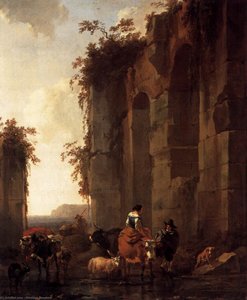
Ruins in Italy
 Acrylic On Canvas
- WallArt
- Dutch Golden Age Landscape
 1658
1658 52.0 x 42.0 cm
 Центральний музей
 Read More
Giclée / Art Print
Museum-quality giclée or canvas print with fast production and flexible finish options. ( Buy Hand Made Painting Buy Image)




P118B $10

P118H $10

P118W $10

P438Z $10

P508JH $12

P508YH $12

P805H $10

P805Z $10

P919BZ $10

P919G $10

P919XJ $10

P959ZH $10

P968JZ $12

W106C $8

W218G $10

W218JH $8

W218Y $10

W307PJ $10

W316G $10

W316PJ $8

W316Y $10

W398PJ $8

W4111J $10

W500HY $15

W500JH $15

W692G $12

W849H $8

W940BG $15

W953PJ $8




Pick from our preset sizes that match the artwork's original proportions.

You may enter your own dimensions to fit a specific frame or space. If your selected size does not match the original image's proportions, we will either crop the artwork or extend the image with a mirrored or solid-fill edge. A digital mockup will be sent for your approval before production begins.
Please note that the on-screen preview does not reflect the actual cropping or extension. Only the mockup will accurately show the final composition.
While custom sizes are available, we recommend selecting a dimension from the predefined list to preserve the original proportions.
Worldwide Delivery () in 2 weeks instead of standard 4/5 weeks. (16 August)

Free Worldwide Express Shipping

High-Quality Linen Canvas

Full Shipping Insurance

Customs Tax Refund Guarantee

True Color Matching Guarantee

60-Day Return Policy (Defects Only)

100% Money-Back Guarantee

Bulk Discount Offer
 Glass option is only available in size under 110 CM

Ruins in Italy
Giclée / Art Print
Reproduction Size
-


Total Price
$ 63
Collectible Description
Ruins in Italy – A Dream of Antiquity by Nicolaes Berchem
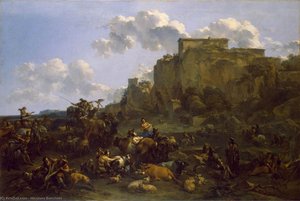
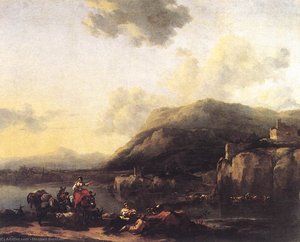
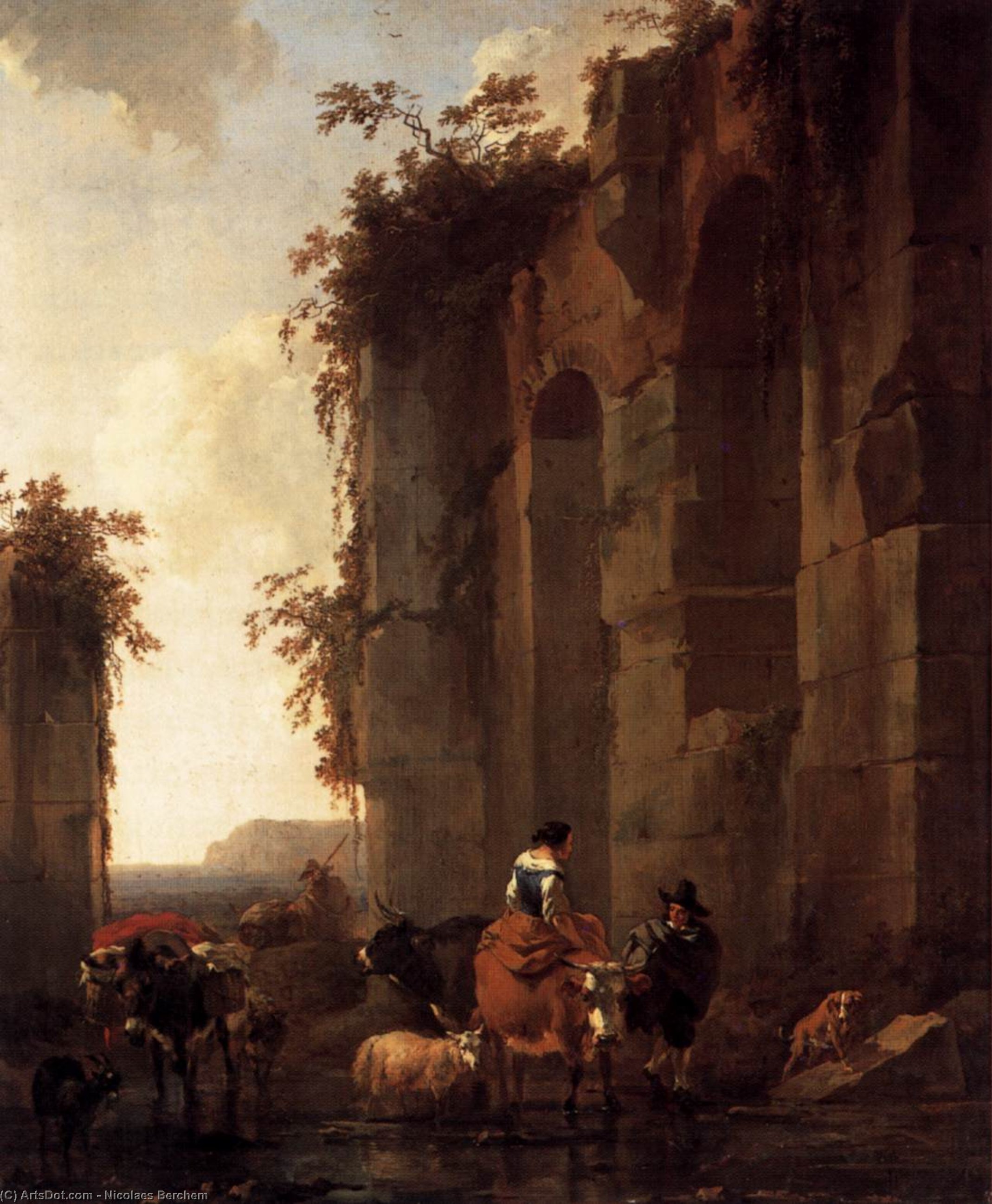
Nicolaes Pietersz. Berchem’s “Ruins in Italy” isn't merely a landscape painting; it’s a meticulously crafted portal to a bygone era, a serene meditation on the passage of time and the enduring allure of classical antiquity. Completed in 1658, this work embodies the spirit of the Dutch Golden Age, specifically its fascination with Italianate landscapes – scenes that sought to capture not just the beauty of Italy, but also its intellectual and artistic heritage. Berchem, a master of atmospheric perspective and subtle detail, transports us to a sun-drenched hillside overlooking a crumbling Roman ruin, a place where myth and reality intertwine.
The composition is deceptively simple yet profoundly effective. A gentle stream meanders through the foreground, reflecting the azure sky above – a technique Berchem employed to heighten the sense of depth and tranquility. A shepherd and his flock graze peacefully nearby, their presence suggesting a timeless connection between humanity and nature. However, it’s the ruins themselves that command our attention. They aren't dramatic or imposing; instead, they are presented with a delicate vulnerability, as if time itself has gently eroded their grandeur. The weathered stones, partially obscured by vegetation, whisper tales of emperors, gladiators, and forgotten empires – remnants of a civilization lost but not entirely erased.
The Language of Light and Atmosphere
Berchem’s mastery lies in his ability to evoke atmosphere through light and color. He utilizes a characteristic “Rembrandt glow,” bathing the scene in a warm, golden light that seems to emanate from an unseen source. This isn't harsh sunlight; it’s diffused and softened, creating a hazy, dreamlike quality. The colors are muted – ochres, browns, greens, and blues – contributing to the painting’s overall sense of serenity and melancholy. Notice how he employs subtle gradations of tone to create a convincing illusion of depth, drawing the eye into the distance and immersing us in the landscape.
The technique itself is remarkably detailed for a painter working within the Dutch style. Berchem meticulously renders every stone, every leaf, every ripple in the water. Yet, he avoids excessive realism, opting instead to suggest rather than explicitly depict. This approach allows the viewer’s imagination to fill in the gaps, creating a more personal and engaging experience.
Symbolism and Historical Context
“Ruins in Italy” is deeply rooted in the intellectual currents of the 17th century. The rediscovery of classical antiquity during the Renaissance had sparked an intense interest in Roman history and culture throughout Europe. Dutch collectors and artists, eager to emulate the wealth and sophistication of their Italian counterparts, began commissioning landscapes depicting idealized versions of the Italian countryside – often incorporating ruins as symbols of lost glory and timeless beauty. Berchem’s painting reflects this trend, but it goes beyond mere imitation. It's imbued with a sense of contemplative melancholy, suggesting that even in the face of decay, there is still an enduring value to memory and tradition.
The shepherd and his flock represent a connection to simpler times, a return to nature – a theme frequently explored by artists during this period as a counterpoint to the complexities of urban life. The ruins themselves can be interpreted as symbols of mortality and the impermanence of earthly power, reminding us that all things eventually crumble.
A Timeless Vision
“Ruins in Italy” is more than just a beautiful landscape; it’s a profound meditation on time, memory, and the enduring legacy of the past. Berchem's ability to capture both the physical beauty of the Italian countryside and its symbolic significance has ensured that this painting remains a beloved masterpiece for centuries. Its quiet elegance and evocative atmosphere continue to resonate with viewers today, inviting us to pause, reflect, and contemplate our own place within the grand sweep of history.
Related Artworks
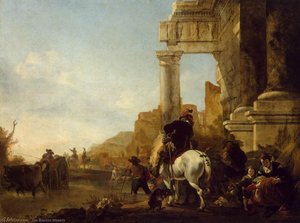
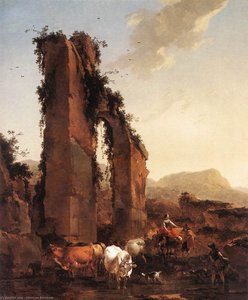
Artist Biography
A Golden Light on Pastoral Dreams: The Life and Art of Nicolaes Pietersz Berchem
Nicolaes Pietersz Berchem, a name that resonates with the idyllic landscapes of the Dutch Golden Age, was more than simply a painter; he was an architect of atmosphere, a weaver of dreams bathed in golden light. Born in Haarlem in 1620, his artistic journey unfolded during a period of remarkable transformation for the Netherlands – a time defined by burgeoning trade, scientific curiosity, and a profound appreciation for the natural world. Berchem didn’t merely depict landscapes; he crafted evocative scenes brimming with classical allusion, gentle narratives, and an enduring sense of tranquility that continues to captivate viewers centuries later. His story is one of artistic apprenticeship, Italian inspiration, and ultimately, a lasting legacy as a master of pastoral beauty. The foundations of his skill were laid within his own family, with his father, Pieter Claesz, being a celebrated still-life painter whose influence undoubtedly shaped Nicolaes’ early eye for detail and composition. However, young Nicolaes sought broader instruction, apprenticing under a remarkable succession of Dutch masters: Jan van Goyen, known for his subtle tonal landscapes; Pieter de Grebber, admired for his dynamic compositions; Jan Baptist Weenix, with whom he would later travel to Italy; Jan Wils, and Claes Cornelisz. Moeyaert. These diverse influences provided the bedrock for Berchem’s versatile style, and earned him the affectionate nickname “Berghem,” a playful twist on his family name originating from anecdotes within Van Goyen's workshop – or perhaps linked to his father’s hometown of Berchem near Antwerp – adding a touch of endearing informality to the esteemed artist.The Italianate Awakening
The pivotal moment in Berchem’s artistic development arrived between 1642 and 1645 when he journeyed to Italy alongside Jan Baptist Weenix. This was not merely a geographical relocation, but an immersion into a world that would profoundly shape his aesthetic vision. The Italian landscape, with its rolling hills, ancient ruins, and sun-drenched vistas, ignited a passion within Berchem. He filled sketchbooks with drawings of classical architecture, pastoral scenes, and the vibrant life he encountered, absorbing the romantic spirit of Italy and preparing to translate it onto canvas upon his return to the Netherlands. This experience marked a turning point, shifting his focus towards what would become known as the “Dutch Italianate” style – a genre characterized by idealized depictions of the Italian countryside infused with Northern European realism and meticulous attention to detail. He wasn’t simply copying; he was internalizing the essence of Italy, its light, its atmosphere, and its sense of timeless beauty, ready to reimagine it through his own unique artistic lens.A Prolific Master of Light and Atmosphere
Upon returning to Haarlem, Berchem quickly established himself as a leading figure in the Dutch Italianate landscape tradition. He produced an astonishing number of paintings – estimates range upwards of 850, though many works have been misattributed over time – demonstrating both his prolific output and enduring popularity. His landscapes are instantly recognizable for their warm, golden light, often bathing scenes in the soft glow of dawn or dusk. This luminosity isn’t merely a technical achievement; it imbues his paintings with a sense of tranquility, nostalgia, and timeless beauty. Berchem didn't simply paint what he *saw*; he painted how he *felt* about what he saw, creating an emotional resonance that draws the viewer into the scene. His compositions are carefully balanced, often featuring classical ruins as evocative reminders of the past, alongside figures engaged in pastoral activities – shepherds tending their flocks, travelers resting by a stream, or mythological scenes unfolding amidst idyllic settings. He was also highly sought after for his skill as a *staffage* painter, adding compelling human and animal figures to the works of other artists like Allaert van Everdingen and Gerrit Dou, enhancing their compositions with life and narrative detail. Notable examples include “Hunters Resting,” “A Peasant playing a Hurdy-Gurdy to a Woman and Child”, “Landscape with a Nymph and Satyr” and "The Ford".Legacy and Enduring Influence
Nicolaes Pietersz Berchem’s influence extended far beyond his own prolific career. He was a dedicated teacher, nurturing the talents of numerous artists including Abraham Begeyn, Johannes van der Bent, his son Nicolaes, Isaack Croonenbergh, Simon Dubois, Karel du Jardin, and even potentially Jan Frans Soolmaker. His artistic vision resonated with subsequent generations, notably impacting French Rococo painter Jean-Baptiste Pillement and the Dutch ‘Cleves Romanticism’ landscape painters like Barend Cornelis Koekkoek. He died in Amsterdam in 1683, leaving behind a legacy that continues to illuminate the world of art with its golden light and pastoral dreams. Berchem's contribution lies in his masterful bridging of Northern realism and Southern romanticism. He didn’t merely imitate Italian landscapes; he reinterpreted them through a distinctly Dutch lens, creating a unique style that celebrated both the beauty of nature and the human connection to it. His paintings continue to be admired for their technical skill, evocative atmosphere, and enduring appeal – a testament to his status as a true master of the Dutch Golden Age. His work remains a poignant reminder of a time when art sought not just to represent the world, but to elevate it.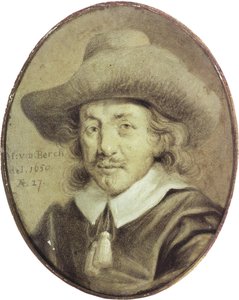
Nicolaes Pietersz Berchem
1620 - 1683 , Netherlands
Quick Facts
- Artistic Movement Or Style: Dutch Italianate
- Artists Or Movements Influenced By This Artist:
- Jean-Baptiste Pillement
- Cleves Romanticism
- Artists Who Influenced This Artist:
- Pieter Claesz
- Jan van Goyen
- Jan Baptist Weenix
- Date Of Birth: 1620
- Date Of Death: 1683
- Full Name: Nicolaes Pietersz Berchem
- Nationality: Dutch
- Notable Artworks:
- Hunters Resting
- A Peasant playing...
- Landscape with a Nymph
- The Ford
- Place Of Birth: Haarlem, Netherlands
Related Articles
Nicolaes Berchem: Dutch Golden Age Pastoralism & the Evolution of Landscape Painting
Explore the captivating world of Nicolaes Berchem, a leading Dutch Golden Age painter. Discover his idyllic landscapes, masterful technique & lasting influence on art history. Learn more at ArtsDot.

Beyond the Horizon: 10 Landscape Masterpieces for Your Home Decor
Journey through 10 breathtaking landscape paintings by Monet, Van Gogh & more! Explore iconic artworks, artistic techniques & find inspiration for your home decor. Museum-quality reproductions at ArtsDot.com. Discover all masterpieces on ArtsDot.com
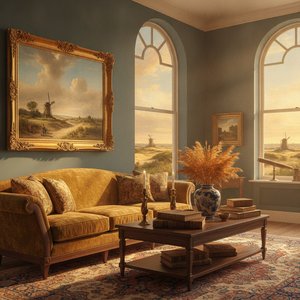
Golden Light & Dutch Skies: Bringing the Magic of Dutch Golden Age Landscapes into Your Home
Transform your home with the breathtaking light of Dutch Golden Age landscapes. Discover how hand-painted oil reproductions of masterworks like Ruisdael and Vermeer bring timeless elegance, atmosphere, and soulful texture to modern interiors. Elevate your space with museum-quality art.
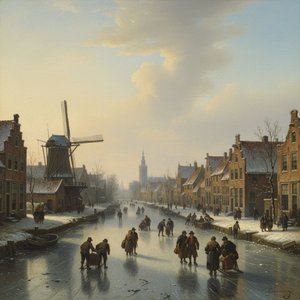
Charles Leickert: Capturing the Dutch Golden Age Light – A Comprehensive Study of Technique, Context, and Legacy
Explore the captivating winter landscapes of Charles Leickert, a master of Dutch Golden Age light & atmosphere. Discover his techniques, symbolism, and lasting legacy – a comprehensive study for art enthusiasts and collectors.
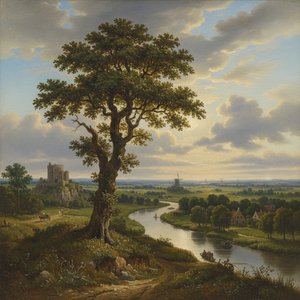
Jacob van Ruisdael: Master of Dutch Landscape & the Evocation of National Identity
Explore the life & work of Jacob van Ruisdael, the preeminent Dutch landscape painter. Discover his technical brilliance, symbolic depth, and lasting influence on art history. Learn about collecting Ruisdael's masterpieces.