Preview
 Send
Send Share
Share
 Details

 Download
 Similars
 X-Ray
X-Ray Diaporama
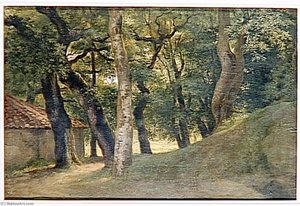
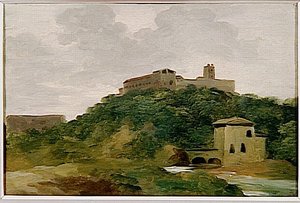
A LA VILLA FARNESE LE MOULIN


 Read More
Giclée / Art Print
Museum-quality giclée or canvas print with fast production and flexible finish options. ( Buy Hand Made Painting Buy Image)




P118B $10

P118H $10

P118W $10

P438Z $10

P508JH $12

P508YH $12

P805H $10

P805Z $10

P919BZ $10

P919G $10

P919XJ $10

P959ZH $10

P968JZ $12

W106C $8

W218G $10

W218JH $8

W218Y $10

W307PJ $10

W316G $10

W316PJ $8

W316Y $10

W398PJ $8

W4111J $10

W500HY $15

W500JH $15

W692G $12

W849H $8

W940BG $15

W953PJ $8




Pick from our preset sizes that match the artwork's original proportions.

You may enter your own dimensions to fit a specific frame or space. If your selected size does not match the original image's proportions, we will either crop the artwork or extend the image with a mirrored or solid-fill edge. A digital mockup will be sent for your approval before production begins.
Please note that the on-screen preview does not reflect the actual cropping or extension. Only the mockup will accurately show the final composition.
While custom sizes are available, we recommend selecting a dimension from the predefined list to preserve the original proportions.
Worldwide Delivery () in 2 weeks instead of standard 4/5 weeks. (30 August)

Free Worldwide Express Shipping

High-Quality Linen Canvas

Full Shipping Insurance

Customs Tax Refund Guarantee

True Color Matching Guarantee

60-Day Return Policy (Defects Only)

100% Money-Back Guarantee

Bulk Discount Offer
 Glass option is only available in size under 110 CM

A LA VILLA FARNESE LE MOULIN
Giclée / Art Print
Reproduction Size
-


Total Price
$ 63
The Essence of a Moment: Picasso’s “A La Villa Farnese Le Moulin”
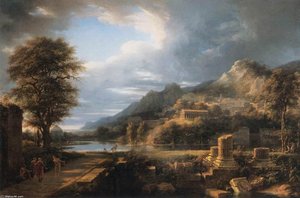
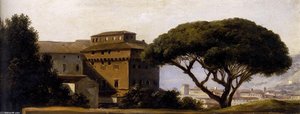
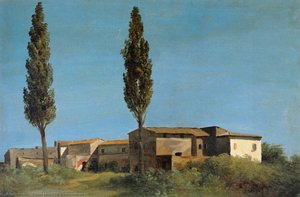
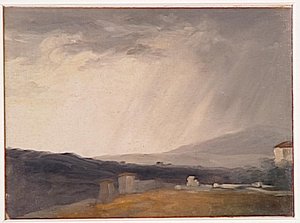
Pierre-Henri de Valenciennes' "A La Villa Farnese Le Moulin" isn’t merely a depiction of a picturesque Italian villa; it’s a carefully constructed meditation on light, space, and the fleeting beauty of nature. Painted around 1782-1784 during his time in Rome, this work embodies the burgeoning spirit of *plein air* painting – a revolutionary approach that prioritized direct observation and capturing the immediate effects of atmospheric conditions. The scene unfolds within a hazy, dreamlike landscape dominated by the imposing silhouette of Villa Farnese, perched dramatically atop a rolling hill overlooking a tranquil body of water. It’s a study in restraint, favoring subtle tonal shifts and suggestive brushstrokes over precise detail, reflecting Valenciennes' commitment to conveying an emotional response rather than a photographic representation.
The painting immediately draws the eye to the villa itself – a monumental structure rendered with a confident yet understated hand. Its rectangular form anchors the composition, while the surrounding landscape—a tapestry of muted greens, browns, and grays—creates a sense of depth and atmospheric perspective. Notice how Valenciennes employs loose, gestural brushstrokes to define the foliage, suggesting movement and vitality without resorting to meticulous rendering. The water’s surface is rendered with shimmering highlights, hinting at reflected light and adding a vital element of dynamism to the scene. The overall effect is one of serene contemplation, inviting the viewer to lose themselves in the tranquility of the Italian countryside.
A Pioneer of *Plein Air* – Valenciennes' Artistic Philosophy
Valenciennes’ work stands as a pivotal moment in art history. He was a key figure in advocating for painting directly from nature, a practice that challenged the established conventions of academic art. His treatise, “Reflections and Advice to a Student on Painting, Particularly on Landscape,” articulated his belief that capturing the *essence* of a scene—its light, color, and atmosphere—was paramount. This philosophy shifted the focus away from idealized representations and towards a more subjective and immediate engagement with the natural world. He wasn’t interested in creating a perfect copy; he sought to distill the feeling of being present within that specific landscape.
The painting's composition subtly reinforces this concept. Valenciennes deliberately avoids overly dramatic contrasts or elaborate details, instead opting for a harmonious balance between form and atmosphere. The villa, while substantial, is presented as part of a larger, interconnected system—a participant in the unfolding drama of light and shadow. This approach reflects Valenciennes’ broader artistic vision: to capture not just what he *saw*, but what he *felt* about what he saw.
Symbolism and Emotional Resonance
Beyond its technical merits, “A La Villa Farnese Le Moulin” resonates with a quiet sense of nostalgia and timeless beauty. The villa itself—a symbol of power, history, and perhaps even aristocratic privilege—stands in stark contrast to the surrounding natural world, suggesting a tension between human ambition and the enduring forces of nature. The hazy atmosphere evokes a feeling of distance and contemplation, inviting the viewer to reflect on the passage of time and the ephemeral nature of beauty.
Furthermore, the painting’s muted color palette contributes significantly to its emotional impact. The earth tones—greens, browns, and grays—create a sense of grounding and stability, while subtle variations in hue suggest the shifting qualities of light and shadow. The overall effect is one of understated elegance and profound serenity – a testament to Valenciennes' ability to capture the soul of a landscape with remarkable sensitivity.
Reproductions: Bringing Valenciennes’ Vision Home
Today, high-quality reproductions of “A La Villa Farnese Le Moulin” offer an accessible way to experience the beauty and artistry of this seminal work. Whether displayed in a grand salon or a cozy study, a faithful reproduction can evoke the same sense of tranquility and contemplation that characterized Valenciennes’ original painting. Consider commissioning a hand-painted replica – a unique piece of art that captures the spirit of this remarkable landscape while preserving its timeless appeal.
Related Artworks
Artist Biography
early life and training
pierre-henri de valenciennes, a french painter, was born on december 6, 1750. his birthplace is not specified in available records, but his contributions to the art world are well-documented. de valenciennes' early training and education are not extensively recorded, but it is known that he worked in rome from 1778 to 1782, where he made a number of landscape studies directly from nature.contributions to en plein air painting
de valenciennes was influential in elevating the status of en plein air (open-air painting). his work in rome led to the development of his theory, which he outlined in his 1800 treatise reflections and advice to a student on painting, particularly on landscape. this concept introduced the idea of a 'landscape portrait,' where an artist paints a landscape directly while looking upon it, capturing its particular details. this approach allowed de valenciennes to capture the fleeting changes of a landscape due to light and weather.notable students and influence
among his notable students were jean-victor bertin, achille etna michallon, louis étienne watelet, louis-françois lejeune, and the first french panorama painter pierre prévost. de valenciennes' influence on these artists and his contributions to the development of en plein air painting have left a lasting impact on the art world.later life and death
de valenciennes passed away in paris on february 16, 1819. he is buried in the père lachaise cemetery, a famous cemetery in paris known for its notable residents.- view pierre-henri de valenciennes's artwork on ArtsDot.com
- explore the musée des beaux-arts valence, a museum featuring european paintings and sculptures, on ArtsDot.com
- discover more about french art and its history on wikipedia
legacy
pierre-henri de valenciennes's legacy in the art world is undeniable. his pioneering work in en plein air painting has inspired generations of artists, and his influence can still be seen today. through his treatise and his students, de valenciennes has left an indelible mark on the world of art.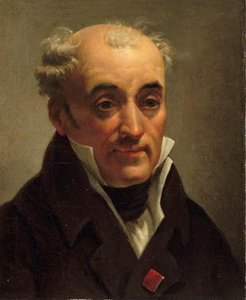
Pierre-Henri de Valenciennes
1750 - 1819 , France
Quick Facts
- Artistic Movement Or Style: En plein air painting
- Artists Or Movements Influenced By This Artist: ['Pierre Chauvin']
- Artists Who Influenced This Artist:
- Jean Victor Bertin
- Achille Etna Michallon
- Date Of Birth: December 6, 1750
- Date Of Death: February 16, 1819
- Full Name: Pierre Henri de Valenciennes
- Nationality: French
- Notable Artworks:
- Village de Nemi
- A LA Villa Borghese Chemin borde d'arbres
- Place Of Birth: Toulouse, France
Related Articles
Simon Vouet: A Baroque Master's Journey from Italian Influence to French Classicism
Explore the life & art of Simon Vouet, a pivotal French Baroque painter who introduced Italian styles to France. Discover his masterpieces and lasting influence on 17th-century art.
Charles Le Brun: Master of French Baroque Classicism & His Enduring Legacy
Explore the life & art of Charles Le Brun, master of French Baroque Classicism. Discover his royal commissions, influence on Versailles, and enduring legacy through detailed analysis & stunning artworks.
Neo-Classicism's Greatest Hits: 10 Masterpieces for Your Home |
Journey through Neo-Classicism's finest! Explore 10 iconic masterpieces by David, Ingres & Canova. Discover art history, techniques & timeless beauty – perfect for inspiring your home decor. Find museum-quality reproductions at
The Enduring Legacy of Classicism: Principles, Evolution & Influence in Western Art
Explore the enduring legacy of Classicism in Western art! Discover its historical context, key principles, iconic masterpieces & lasting influence. Learn about Renaissance and Neoclassical movements with ArtsDot.
Echoes of the Azure Coast: Art Selection Strategies for Mediterranean Villa Interiors – Harmonizing Space, Light, and Legacy
Discover art selection strategies for stunning Mediterranean villa interiors. Expert guidance on harmonizing space, light & legacy. Elevate your home with timeless elegance – curated collections & bespoke solutions.