 Preview
 Send
Send Share
Share
 Details

 Download
 Similars
 X-Ray
X-Ray Diaporama
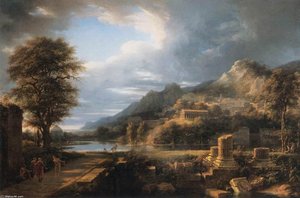
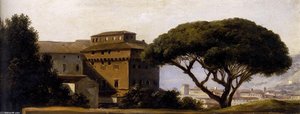
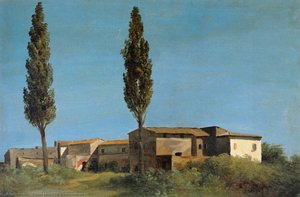
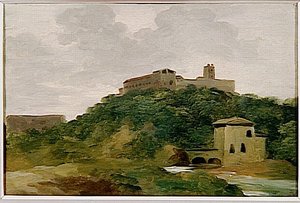
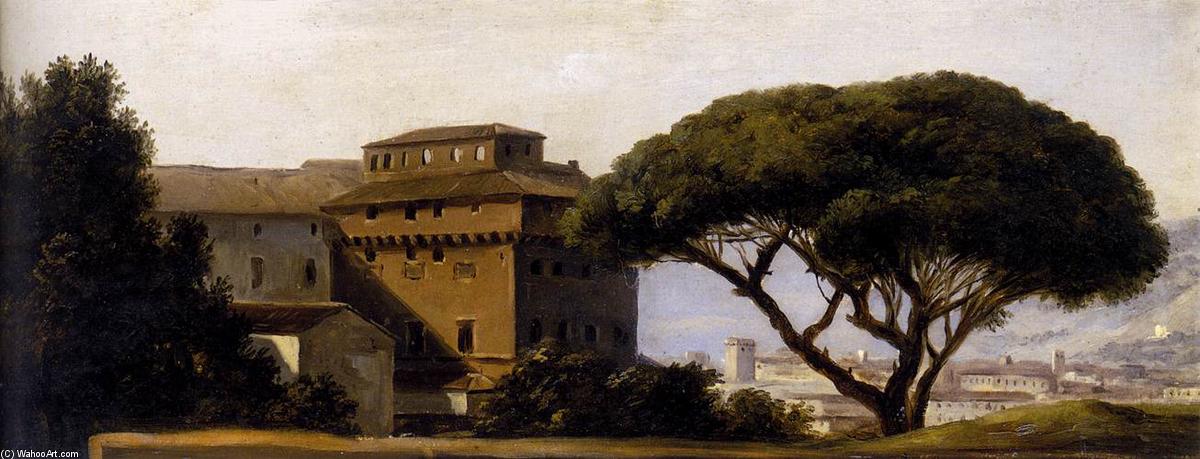
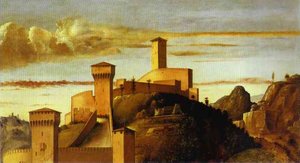
View of the Convent of Ara Coeli with Pines
 Oil On Canvas
- WallArt
- Barbizon School
 1780
1780 17.0 x 26.0 cm
 The Louvre
 Read More
Hand Made Oil Reproduction
Hand-painted oil on canvas in your size and frame, made to order by our artists. ( Buy Print Buy Image)




P118B $10

P118H $10

P118W $10

P438Z $10

P508JH $12

P508YH $12

P805H $10

P805Z $10

P919BZ $10

P919G $10

P919XJ $10

P959ZH $10

P968JZ $12

W106C $8

W218G $10

W218JH $8

W218Y $10

W307PJ $10

W316G $10

W316PJ $8

W316Y $10

W398PJ $8

W4111J $10

W500HY $15

W500JH $15

W692G $12

W849H $8

W940BG $15

W953PJ $8




Pick from our preset sizes that match the artwork's original proportions.

You may enter your own dimensions to fit a specific frame or space. If your selected size does not match the original image's proportions, we will either crop the artwork or extend the painting with additional hand-painted elements. A digital mockup will be sent for your approval before production begins.
Please note that the on-screen preview does not reflect the actual cropping or extension. Only the mockup will accurately show the final composition.
While custom sizes are available, we recommend selecting a dimension from the predefined list to preserve the original proportions.
After order, ArtsDot.com team will email client for instructions and provide a mockup preview
Worldwide Delivery () in 3/4 weeks instead of standard 5 weeks. (4 September). No compromise on quality.

Free Worldwide Express Shipping

High-Quality Linen Canvas

Full Shipping Insurance

Customs Tax Refund Guarantee

True Color Matching Guarantee

60-Day Return Policy (Defects Only)

100% Money-Back Guarantee

Bulk Discount Offer
 Glass option is only available in size under 110 CM

View of the Convent of Ara Coeli with Pines
Reproduction Medium
Reproduction Size
-


Total Price
$ 263
Pierre-Henri de Valenciennes’ “View of the Convent of Ara Coeli with Pines” – A Window into Barbizon Landscape Painting
The artwork presented here is Pierre-Henri de Valenciennes’ “View of the Convent of Ara Coeli with Pines,” completed in 1780. This painting stands as a quintessential example of Barbizon landscape art, embodying the movement's core principles and capturing a serene moment in Italian countryside life. Its enduring appeal lies not only in its visual beauty but also in its profound exploration of artistic innovation and Romantic sentimentality.Subject Matter & Composition
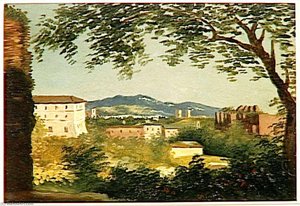
At first glance, the scene depicts a picturesque villa nestled within a lush park setting dominated by towering pine trees. Valenciennes meticulously rendered this landscape with remarkable accuracy, prioritizing detail and capturing the subtle nuances of natural light. The composition is divided into three distinct layers: the foreground showcases dense foliage—shrubs and bushes—creating depth and textural richness; the middle ground focuses on the villa itself, framed by mature trees, establishing a harmonious balance between architectural grandeur and organic beauty; and finally, the background stretches towards distant buildings and a hazy horizon line, conveying atmospheric perspective and suggesting vastness. The artist’s deliberate use of horizontal lines emphasizes stability and grandeur, mirroring the monumental scale of the villas and pines.Style & Technique – Embracing Impressionistic Influences
Valenciennes skillfully employed oil paints on canvas—a technique favored by Barbizon artists—to achieve a soft, diffused light effect characteristic of the era. The artist’s layering process involved applying thin washes of paint to build up form gradually, resulting in blended textures and subtle tonal variations that contribute significantly to the painting's hazy atmosphere. While firmly rooted in Realism, Valenciennes infused his work with Impressionistic influences evident in his treatment of light and color—a departure from academic conventions. This approach allowed him to convey not just what he saw but also how he felt about the scene, reflecting the Romantic preoccupation with emotion and subjective experience.Historical Context & Artistic Significance
“View of the Convent of Ara Coeli” emerged during a pivotal period in European art history—the rise of landscape painting as an independent genre. Valenciennes’s pioneering efforts to depict nature directly from observation challenged established artistic norms, paving the way for subsequent Impressionist artists like Bertin and Michallon. His concept of “landscape portrait,” where an artist paints a landscape while looking upon it, solidified the notion that art could capture fleeting moments of beauty and evoke powerful emotions. This painting serves as a testament to Valenciennes’s contribution to artistic innovation and his enduring legacy within the Barbizon School—a movement celebrated for its commitment to capturing the sublime grandeur of the natural world.Symbolism & Emotional Impact
Beyond its aesthetic qualities, “View of the Convent of Ara Coeli” carries symbolic weight, representing harmony between humanity and nature—a central theme in Romantic art. The villa symbolizes civilization’s aspiration for beauty and tranquility, while the pine trees embody resilience and permanence. Valenciennes's masterful depiction evokes feelings of serenity, nostalgia, and contemplation, inviting viewers to immerse themselves in the tranquil splendor of the Italian countryside. It remains a captivating artwork that continues to inspire admiration for its artistic merit and its ability to convey profound emotional resonance.Related Artworks

Artist Biography
early life and training
pierre-henri de valenciennes, a french painter, was born on december 6, 1750. his birthplace is not specified in available records, but his contributions to the art world are well-documented. de valenciennes' early training and education are not extensively recorded, but it is known that he worked in rome from 1778 to 1782, where he made a number of landscape studies directly from nature.contributions to en plein air painting
de valenciennes was influential in elevating the status of en plein air (open-air painting). his work in rome led to the development of his theory, which he outlined in his 1800 treatise reflections and advice to a student on painting, particularly on landscape. this concept introduced the idea of a 'landscape portrait,' where an artist paints a landscape directly while looking upon it, capturing its particular details. this approach allowed de valenciennes to capture the fleeting changes of a landscape due to light and weather.notable students and influence
among his notable students were jean-victor bertin, achille etna michallon, louis étienne watelet, louis-françois lejeune, and the first french panorama painter pierre prévost. de valenciennes' influence on these artists and his contributions to the development of en plein air painting have left a lasting impact on the art world.later life and death
de valenciennes passed away in paris on february 16, 1819. he is buried in the père lachaise cemetery, a famous cemetery in paris known for its notable residents.- view pierre-henri de valenciennes's artwork on ArtsDot.com
- explore the musée des beaux-arts valence, a museum featuring european paintings and sculptures, on ArtsDot.com
- discover more about french art and its history on wikipedia
legacy
pierre-henri de valenciennes's legacy in the art world is undeniable. his pioneering work in en plein air painting has inspired generations of artists, and his influence can still be seen today. through his treatise and his students, de valenciennes has left an indelible mark on the world of art.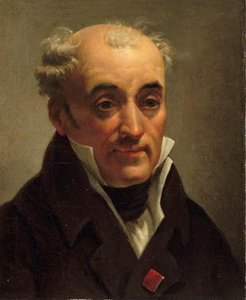
Pierre-Henri de Valenciennes
1750 - 1819 , France
Quick Facts
- Artistic Movement Or Style: En plein air painting
- Artists Or Movements Influenced By This Artist: ['Pierre Chauvin']
- Artists Who Influenced This Artist:
- Jean Victor Bertin
- Achille Etna Michallon
- Date Of Birth: December 6, 1750
- Date Of Death: February 16, 1819
- Full Name: Pierre Henri de Valenciennes
- Nationality: French
- Notable Artworks:
- Village de Nemi
- A LA Villa Borghese Chemin borde d'arbres
- Place Of Birth: Toulouse, France
Related Articles

Evoking Nature's Sublime: A Comprehensive Exploration of 19th-Century Landscape Painting
Explore the captivating world of 19th-century landscape painting! Discover renowned artists like Friedrich & Monet, key movements, and find the perfect artwork to bring nature's serenity into your home. Expert insights at ArtsDot.

Romantic Landscapes: 10 Masterpieces for Your Home | ArtsDot
Journey through 10 Romantic landscape masterpieces by Friedrich, Turner & Cole. Explore emotional art, sublime nature scenes & iconic 19th-century paintings. Find museum-quality reproductions for your home at ArtsDot.com – discover the full collection online!

Evocations of Place: A Historical Journey Through Landscape Art
Explore the rich history of landscape art with ArtsDot. Discover renowned artists, movements like Impressionism & tonalism, and expert guidance for collecting timeless pieces. Find your perfect serene escape today!

The Sublime Landscape: Exploring the Hudson River School Movement
Explore the captivating world of the Hudson River School! Discover the history, artists, and defining characteristics of this iconic American art movement. Learn about Romanticism's influence & find inspiration for your collection.

Evocations of Place: A Historical Journey Through Landscape Art
Explore the rich history of landscape art with ArtsDot. Discover renowned artists, movements like Impressionism & Romanticism, and expert guidance for collecting timeless pieces. Find your perfect serene escape today!