 Preview
 Send
Send Share
Share
 Details

 Download
 Similars
 X-Ray
X-Ray Diaporama
Apotheosis of St Ursula
 Oil On Canvas
- WallArt
- Early Renaissance
 1491
1491 481.0 x 336.0 cm
 Gallerie dell'Accademia
 Read More
Hand Made Oil Reproduction
Hand-painted oil on canvas in your size and frame, made to order by our artists. ( Buy Print Buy Image)




P118B $10

P118H $10

P118W $10

P438Z $10

P508JH $12

P508YH $12

P805H $10

P805Z $10

P919BZ $10

P919G $10

P919XJ $10

P959ZH $10

P968JZ $12

W106C $8

W218G $10

W218JH $8

W218Y $10

W307PJ $10

W316G $10

W316PJ $8

W316Y $10

W398PJ $8

W4111J $10

W500HY $15

W500JH $15

W692G $12

W849H $8

W940BG $15

W953PJ $8




Pick from our preset sizes that match the artwork's original proportions.

You may enter your own dimensions to fit a specific frame or space. If your selected size does not match the original image's proportions, we will either crop the artwork or extend the painting with additional hand-painted elements. A digital mockup will be sent for your approval before production begins.
Please note that the on-screen preview does not reflect the actual cropping or extension. Only the mockup will accurately show the final composition.
While custom sizes are available, we recommend selecting a dimension from the predefined list to preserve the original proportions.
After order, ArtsDot.com team will email client for instructions and provide a mockup preview
Worldwide Delivery () in 3/4 weeks instead of standard 5 weeks. (16 August). No compromise on quality.

Free Worldwide Express Shipping

High-Quality Linen Canvas

Full Shipping Insurance

Customs Tax Refund Guarantee

True Color Matching Guarantee

60-Day Return Policy (Defects Only)

100% Money-Back Guarantee

Bulk Discount Offer
 Glass option is only available in size under 110 CM

Apotheosis of St Ursula
Reproduction Medium
Reproduction Size
-


Total Price
$ 1913
Artwork Description
The Divine Coronation – An Exploration of Vittore Carpaccio’s ‘Apotheosis of St Ursula’
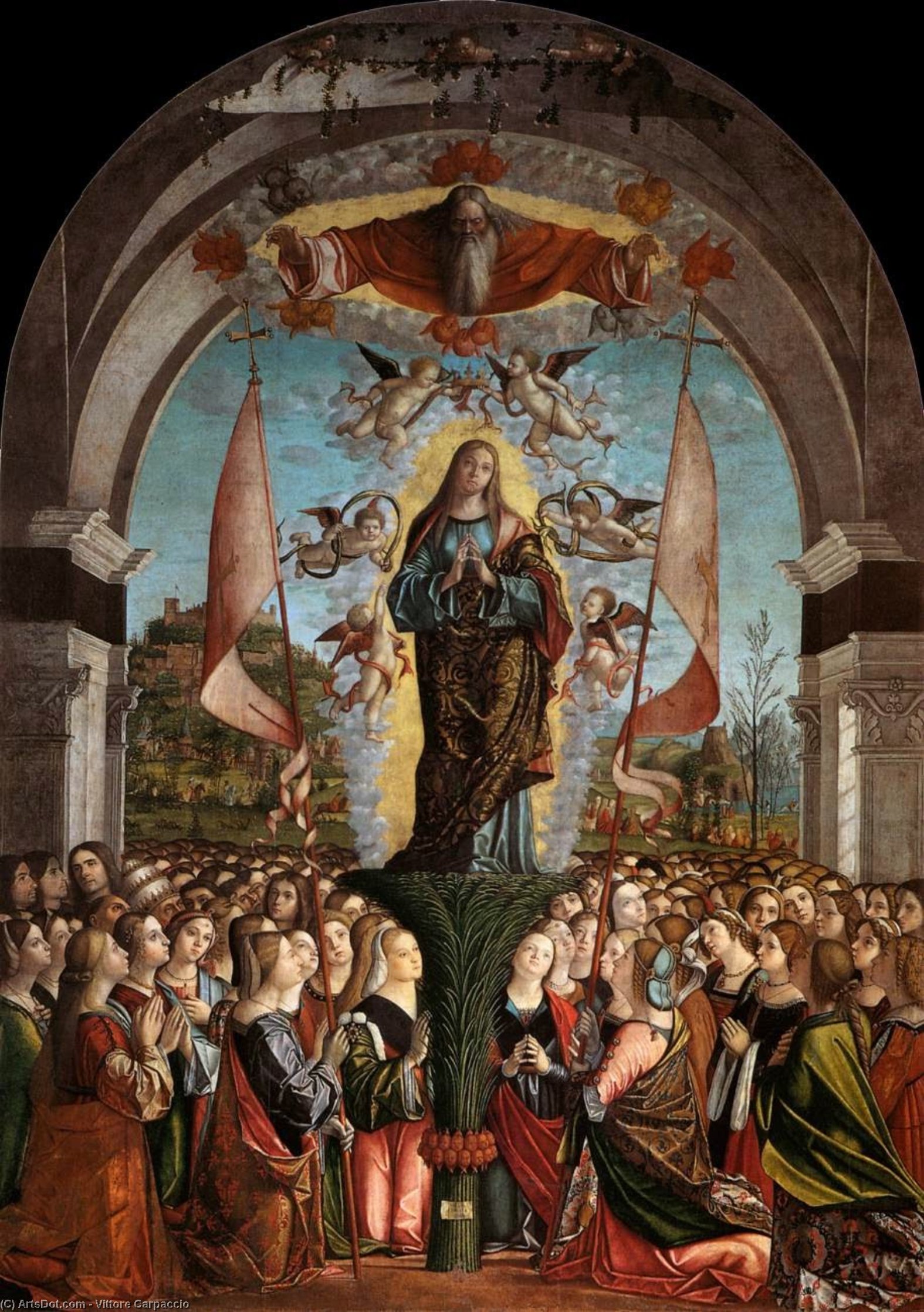
Vittore Carpaccio's “Apotheosis of St. Ursula,” painted in 1491, isn’t merely a religious depiction; it’s a meticulously crafted tableau of faith, power, and the profound beauty of Renaissance artistry. This monumental work, now housed within the Gallerie dell’Accademia in Venice, transports the viewer to a lavishly rendered scene of the Virgin Mary crowning her granddaughter, St. Ursula, amidst an array of angels and kneeling figures – a testament to both Marian devotion and the burgeoning artistic confidence of the Venetian school. Carpaccio, deeply influenced by Antonello da Messina's mastery of light and form, eschewed the prevailing trends of his time, opting instead for a style characterized by a quiet dignity and a remarkable attention to detail that sets this piece apart.
The composition itself is remarkably complex, layered with figures and architectural elements that create a sense of both grandeur and intimacy. The arched niche, reminiscent of a church interior, serves as the stage for this sacred event. Carpaccio’s use of perspective, though not entirely adhering to strict mathematical rules, generates a convincing illusion of depth – achieved through careful layering of forms and overlapping draperies rather than relying solely on linear convergence. Notice how the light, originating primarily from above, dramatically illuminates Mary and Christ at the center, casting intricate shadows that add richness and volume to the scene.
A Master of Narrative Detail: Carpaccio’s Venetian Style
Carpaccio's distinctive style is immediately recognizable through his meticulous rendering of textures and fabrics. The flowing robes of the figures are depicted with an astonishing level of realism, each fold and pleat meticulously rendered to convey weight and movement. This dedication to detail extends to the architectural elements as well – from the intricate carvings on the columns to the delicate patterns adorning the arches. He employs a technique known as *sfumato*, subtly blending colors and softening edges to create an atmosphere of ethereal beauty, characteristic of Venetian painting at this time.
The artist’s choice of color palette is equally noteworthy. Warm tones – golds, reds, and browns – dominate the scene, evoking a sense of reverence and majesty. The halo surrounding Mary's head, rendered in shimmering gold leaf, draws the viewer's eye to the central figure, while the vibrant hues of the robes contribute to the overall richness and splendor of the composition. Symbolism is woven throughout the painting; the cross held by Christ represents his sacrifice, the palm branches signify victory and royalty bestowed upon Mary, and the angels flanking them embody divine grace.
Historical Context & Symbolism
“Apotheosis of St. Ursula” was created during a period of significant religious and artistic transformation in Venice. The city’s thriving merchant class had amassed considerable wealth, fueling a surge in patronage for the arts. Carpaccio's work reflects this prosperity, showcasing the lavishness and grandeur that characterized Venetian society. The painting also aligns with the broader context of Renaissance art, which sought to revive classical ideals while simultaneously exploring new artistic techniques and approaches. The depiction of St. Ursula, a legendary figure revered for her unwavering faith and virtue, served as an inspiration for artists throughout Europe.
Furthermore, Carpaccio’s work is deeply rooted in the tradition of *sacra conversazione*, a popular genre that depicted religious scenes with multiple figures engaged in conversation or prayer. This approach allowed artists to convey complex theological ideas in a visually engaging manner. The inclusion of numerous saints and angels underscores the universality of faith and the interconnectedness of the divine realm.
A Timeless Vision: Reproduction & Artistic Legacy
Today, “Apotheosis of St. Ursula” stands as a testament to Carpaccio’s artistic genius and a remarkable example of Venetian Renaissance painting. Reproductions offer an accessible way to experience the beauty and complexity of this masterpiece, bringing its rich symbolism and evocative atmosphere into any space. Whether adorning a grand salon or a smaller study, a high-quality reproduction can serve as a constant reminder of the enduring power of faith, art, and human creativity.
Related Artworks

Artist Biography
early life and training
vittore carpaccio, a prominent italian painter, was born in venice around 1465. he studied under the tutelage of gentile bellini, a renowned artist of the venetian school. this apprenticeship laid the foundation for carpaccio's future success.artistic style and influences
carpaccio's style was characterized by its conservative nature, showing minimal influence from the humanist trends that transformed italian renaissance painting during his lifetime. his work was influenced by antonello da messina's style and early netherlandish art. this unique blend of styles resulted in a distinctive approach to venetian painting.notable works
- the legend of saint ursula, a cycle of nine paintings, is carpaccio's most famous work. this series, now housed in the gallerie dell'accademia, showcases his mastery of narrative painting.
- glory of st. ursula altarpiece (1491) demonstrates carpaccio's skill in capturing light and color, reminiscent of giovanni bellini's style.
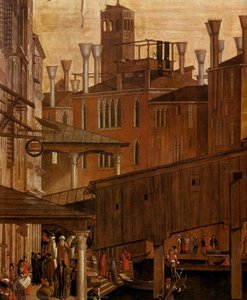
- miracle of the relic of the cross at the ponte di rialto (1494) highlights carpaccio's ability to balance composition and narrative.
career highlights and legacy
- carpaccio's principal works were executed between 1490 and 1519, ranking him among the early masters of the venetian renaissance.
- his orientalist style, as seen in st. george baptizing the selenites, reflects a new fascination with the levant.
- carpaccio's work has been somewhat overlooked in comparison to his contemporaries, such as giovanni bellini or giorgione.
references and further reading
discover more about vittore carpaccio and the venetian school on ArtsDot.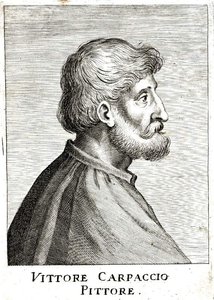
Vittore Carpaccio
1465 - 1526 , Italy
Quick Facts
- Artistic Movement Or Style: Early Venetian Renaissance
- Artists Or Movements Influenced By This Artist: ['Early Netherlandish Painting']
- Artists Who Influenced This Artist:
- Antonello da Messina
- Gentile Bellini
- Date Of Birth: Venice, Italy (c. 1465)
- Date Of Death: 1526
- Full Name: Vittore Carpaccio
- Nationality: Italian
- Notable Artworks:
- The Legend of Saint Ursula
- Glory of St. Ursula Altarpiece
- Miracle of the Relic of the Cross at the Ponte di Rialto
- Place Of Birth: Venice
Related Articles
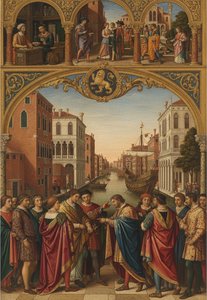
Vittore Carpaccio: Venetian Renaissance Narrative & the Poetics of Detail
Explore the captivating world of Vittore Carpaccio, a master storyteller of the Venetian Renaissance. Discover his intricate details, narrative cycles like 'The Legend of St. Ursula,' and unique artistic style.

Oil on Canvas: A Historical & Technical Exploration of a Timeless Artistic Medium
Explore the rich history & enduring techniques of oil painting on canvas. Discover the science behind its longevity, conservation practices, and contemporary relevance. Expert insights for art enthusiasts.

The Enduring Legacy of Oil on Canvas: Technique, History & Aesthetic Impact
Explore the rich history & techniques of oil painting – from Renaissance masters to Impressionism. Discover pigments, layering methods, and why this timeless medium endures. Expert insights for artists & art enthusiasts.

The Enduring Power of Painting: A Historical & Contemporary Exploration of Form and Emotion
Explore the rich history & enduring techniques of oil painting with ArtsDot. Discover masterpieces, learn about art collecting, and find authentic handmade reproductions crafted by skilled artists.

El Greco's Masterpieces: Explore 25 Iconic Paintings & Spiritual Visions | ArtsDot
Journey through El Greco's 25 most iconic paintings! Explore the spiritual depth & dramatic beauty of this Spanish Renaissance master. Discover art history, techniques & find museum-quality reproductions for your home at ArtsDot.com.