 Preview
 Send
Send Share
Share
 Details

 Download
 Similars
 X-Ray
X-Ray Diaporama
Debate of St. Stephen
 Oil
Oil- WallArt
- Venetian Renaissance
 1514
1514- Renaissance
 147.0 x 172.0 cm
 Read More
Hand Made Oil Reproduction
Hand-painted oil on canvas in your size and frame, made to order by our artists. ( Buy Print Buy Image)




P118B $10

P118H $10

P118W $10

P438Z $10

P508JH $12

P508YH $12

P805H $10

P805Z $10

P919BZ $10

P919G $10

P919XJ $10

P959ZH $10

P968JZ $12

W106C $8

W218G $10

W218JH $8

W218Y $10

W307PJ $10

W316G $10

W316PJ $8

W316Y $10

W398PJ $8

W4111J $10

W500HY $15

W500JH $15

W692G $12

W849H $8

W940BG $15

W953PJ $8




Pick from our preset sizes that match the artwork's original proportions.

You may enter your own dimensions to fit a specific frame or space. If your selected size does not match the original image's proportions, we will either crop the artwork or extend the painting with additional hand-painted elements. A digital mockup will be sent for your approval before production begins.
Please note that the on-screen preview does not reflect the actual cropping or extension. Only the mockup will accurately show the final composition.
While custom sizes are available, we recommend selecting a dimension from the predefined list to preserve the original proportions.
After order, ArtsDot.com team will email client for instructions and provide a mockup preview
Worldwide Delivery () in 3/4 weeks instead of standard 5 weeks. (16 August). No compromise on quality.

Free Worldwide Express Shipping

High-Quality Linen Canvas

Full Shipping Insurance

Customs Tax Refund Guarantee

True Color Matching Guarantee

60-Day Return Policy (Defects Only)

100% Money-Back Guarantee

Bulk Discount Offer
 Glass option is only available in size under 110 CM

Debate of St. Stephen
Reproduction Medium
Reproduction Size
-


Total Price
$ 263
Artwork Description
A Venetian Drama Unfolded
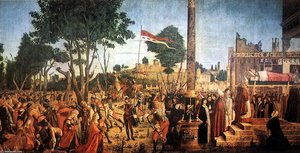
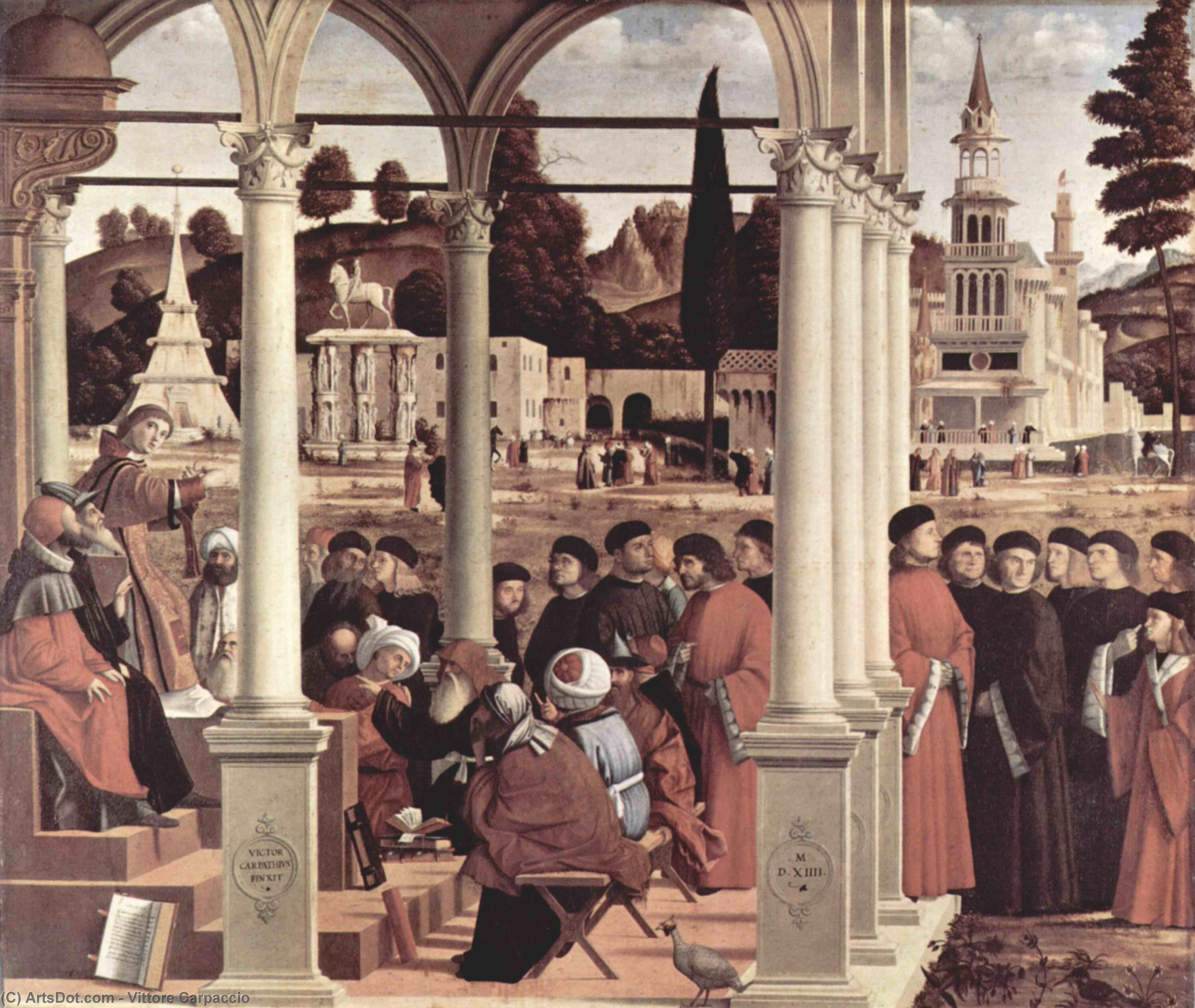
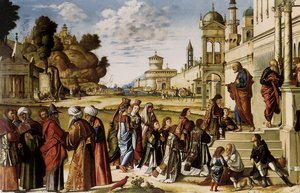
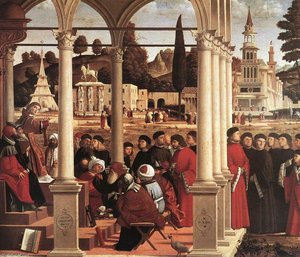
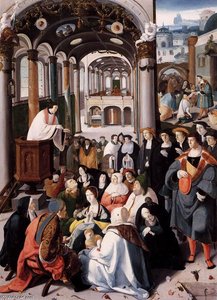
In the quiet intensity of Vittore Carpaccio’s Debate of St. Stephen, painted in 1514, we are transported to a moment of profound spiritual and judicial tension. This masterpiece serves as a window into the heart of the Venetian Renaissance, capturing not just a historical event, but a psychological confrontation. The scene unfolds within a meticulously detailed courtyard, where the air seems thick with the weight of impending judgment. St. Stephen stands as the focal point of this theological struggle, positioned on the left, embodying a serene yet resolute strength amidst a sea of accusers and witnesses. Carpaccio, a master of narrative painting, invites us to step into this assembly, where every figure—from the high-ranking judges in their fine attire to the curious onlookers—contributes to a sense of communal gravity.
The composition is a triumph of storytelling through spatial arrangement. As we gaze upon the gathering, the eye is led through a landscape of human emotion and architectural elegance. The presence of potted plants and the delicate detail of a single bird perched nearby offer a startling contrast to the heavy subject matter of the trial. This juxtaposition of the mundane—the natural beauty of a courtyard—with the monumental significance of the saint's debate creates a layered experience for the viewer. For the collector or interior designer, this painting offers more than mere decoration; it provides a profound narrative anchor that can transform a room into a space of contemplation and historical depth.
Mastery of Light and Venetian Tradition
Carpaccio’s technique in this work reflects his unique position within the Venetian school. Having trained under the legendary Gentile Bellini, he inherited a profound respect for light and color, yet he infused his work with an influence drawn from early Netherlandish art and the precision of Antonello da Messina. This fusion is evident in the way light falls across the fine fabrics of the assembly's clothing and the textured surfaces of the courtyard. The artist employs a conservative yet deeply expressive style, eschewing the more radical humanist shifts of his era to focus on a clear, legible, and emotionally resonant depiction of sacred history.
The technical brilliance lies in the subtle gradations of tone that define the figures' presence within the space. There is a palpable sense of atmosphere—a soft, diffused light that suggests the late afternoon sun filtering through an open sky. This mastery of luminosity does more than illuminate the scene; it breathes life into the characters, making their silent gestures and intense gazes feel immediate and real. To possess a reproduction of such a work is to bring a piece of this luminous Venetian heritage into one's own environment, offering a timeless elegance that complements both classical and contemporary interiors.
Symbolism and Emotional Resonance
Beyond the surface level of a courtroom drama, Debate of St. Stephen is rich with symbolic undertones. The very act of the debate represents the struggle between faith and institutional authority, a theme that has resonated through the centuries. The meticulous detail in the surroundings—the greenery, the architecture, the varied costumes—serves to ground the divine narrative in the tangible world, suggesting that the struggles of the spirit are deeply intertwined with our earthly existence. The stillness of the scene is deceptive; beneath the composed exterior of the figures lies a turbulent energy of conviction and doubt.
For those seeking to curate an art collection that inspires awe and intellectual engagement, this painting offers an inexhaustible well of inspiration. It evokes a sense of dignity, resilience, and the enduring power of truth. Whether placed in a grand library or a sophisticated living space, the Debate of St. Stephen acts as a conversation piece, prompting viewers to reflect on the historical currents of the Renaissance and the universal human experience of standing firm in one's beliefs. It is an investment in beauty, history, and the profound emotional impact that only true masterworks can provide.
Related Artworks
![Legend Of St Francis - [21] - Apparition To Fra Agostino And To Bishop Guido Of Arezzo — Giotto Di Bondone, Proto-renaissance](/media/artworks/images/thumbnails/1f/a3/1fa370e8ba2040d380a682d61260727f.jpg)
![Legend Of St Francis - [11] - St Francis Before The Sultan (trial By Fire) — Giotto Di Bondone, Proto-renaissance](/media/artworks/images/thumbnails/34/e5/34e5f366254d43269d81112c719a6f9f.jpg)

Artist Biography
early life and training
vittore carpaccio, a prominent italian painter, was born in venice around 1465. he studied under the tutelage of gentile bellini, a renowned artist of the venetian school. this apprenticeship laid the foundation for carpaccio's future success.artistic style and influences
carpaccio's style was characterized by its conservative nature, showing minimal influence from the humanist trends that transformed italian renaissance painting during his lifetime. his work was influenced by antonello da messina's style and early netherlandish art. this unique blend of styles resulted in a distinctive approach to venetian painting.notable works
- the legend of saint ursula, a cycle of nine paintings, is carpaccio's most famous work. this series, now housed in the gallerie dell'accademia, showcases his mastery of narrative painting.
- glory of st. ursula altarpiece (1491) demonstrates carpaccio's skill in capturing light and color, reminiscent of giovanni bellini's style.
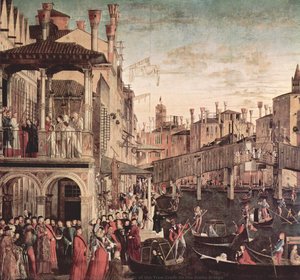
- miracle of the relic of the cross at the ponte di rialto (1494) highlights carpaccio's ability to balance composition and narrative.
career highlights and legacy
- carpaccio's principal works were executed between 1490 and 1519, ranking him among the early masters of the venetian renaissance.
- his orientalist style, as seen in st. george baptizing the selenites, reflects a new fascination with the levant.
- carpaccio's work has been somewhat overlooked in comparison to his contemporaries, such as giovanni bellini or giorgione.
references and further reading
discover more about vittore carpaccio and the venetian school on ArtsDot.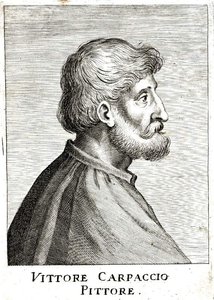
Vittore Carpaccio
1465 - 1526 , Italy
Quick Facts
- Artistic Movement Or Style: Early Venetian Renaissance
- Artists Or Movements Influenced By This Artist: ['Early Netherlandish Painting']
- Artists Who Influenced This Artist:
- Antonello da Messina
- Gentile Bellini
- Date Of Birth: Venice, Italy (c. 1465)
- Date Of Death: 1526
- Full Name: Vittore Carpaccio
- Nationality: Italian
- Notable Artworks:
- The Legend of Saint Ursula
- Glory of St. Ursula Altarpiece
- Miracle of the Relic of the Cross at the Ponte di Rialto
- Place Of Birth: Venice
Related Articles
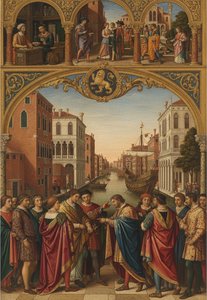
Vittore Carpaccio: Venetian Renaissance Narrative & the Poetics of Detail
Explore the captivating world of Vittore Carpaccio, a master storyteller of the Venetian Renaissance. Discover his intricate details, narrative cycles like 'The Legend of St. Ursula,' and unique artistic style.

Jacopo Tintoretto's Masterpieces: 25 Paintings That Define Venetian Drama | ArtsDot
Explore 25 breathtaking masterpieces by Jacopo Tintoretto, the Venetian master of drama and light. Discover the stories behind iconic Renaissance paintings & find museum-quality art reproductions to elevate your home decor on ArtsDot.com.

El Greco's Masterpieces: Explore 25 Iconic Paintings & Spiritual Visions | ArtsDot
Journey through El Greco's 25 most iconic paintings! Explore the spiritual depth & dramatic beauty of this Spanish Renaissance master. Discover art history, techniques & find museum-quality reproductions for your home at ArtsDot.com.
Jacopo Palma il Giovane: A Venetian Master's Poetic Evolution
Explore the captivating world of Jacopo Palma il Giovane, a pivotal Venetian Renaissance master. Discover his unique style, influenced by Titian & Tintoretto, and learn about key works perfect for discerning collectors.
The Golden Light of Innovation: Exploring the Venetian Renaissance Art Movement (1430–1580)
Explore the Golden Age of Venetian art (1430–1580). Discover Giorgione, Titian & Tintoretto's techniques, the 'colorito' revolution, and lasting influence. Expert insights for collectors & enthusiasts.