 Preview
 Send
Send Share
Share
 Details

 Download
 Similars
 X-Ray
X-Ray Diaporama
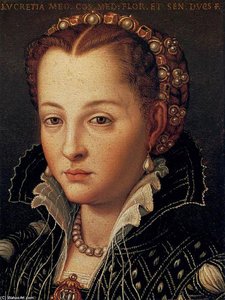
Portrait of a lady


 Read More
Hand Made Oil Reproduction
Hand-painted oil on canvas in your size and frame, made to order by our artists. ( Buy Print Buy Image)




































Pick from our preset sizes that match the artwork's original proportions.

You may enter your own dimensions to fit a specific frame or space. If your selected size does not match the original image's proportions, we will either crop the artwork or extend the painting with additional hand-painted elements. A digital mockup will be sent for your approval before production begins.
Please note that the on-screen preview does not reflect the actual cropping or extension. Only the mockup will accurately show the final composition.
While custom sizes are available, we recommend selecting a dimension from the predefined list to preserve the original proportions.
After order, ArtsDot.com team will email client for instructions and provide a mockup preview
Worldwide Delivery () in 3/4 weeks instead of standard 5 weeks. (17 August). No compromise on quality.

Free Worldwide Express Shipping

High-Quality Linen Canvas

Full Shipping Insurance

Customs Tax Refund Guarantee

True Color Matching Guarantee

60-Day Return Policy (Defects Only)

100% Money-Back Guarantee

Bulk Discount Offer
 Glass option is only available in size under 110 CM

Portrait of a lady
Reproduction Medium
Reproduction Size
-


Total Price
$ 263
Artwork Description
A Glimpse into Renaissance Elegance: Portrait of a Lady
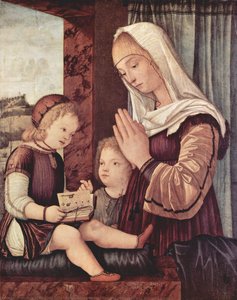
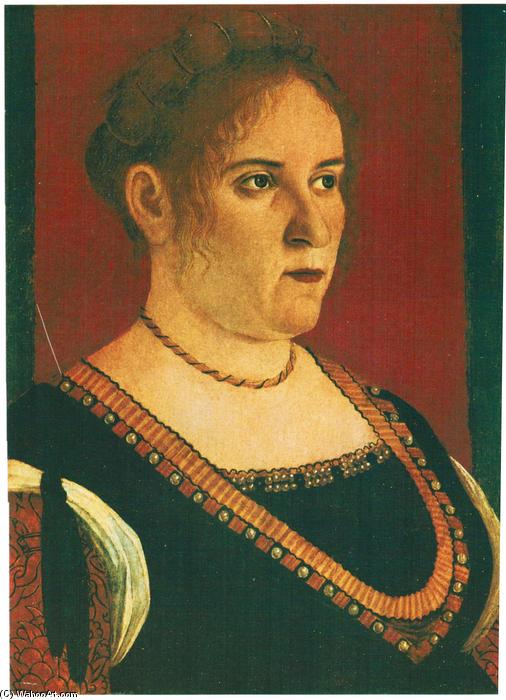
This captivating portrait offers a window into the refined world of 15th-century Venice. Executed around 1495 by Vittore Carpaccio, this close-up depiction focuses intently on a woman of evident status and grace. The pyramidal composition, with her head as the focal point, draws the viewer's eye immediately to her serene expression. The warm color palette—dominated by rich reds, browns, and ochre tones—evokes a sense of timelessness and subtle age, characteristic of Renaissance artistry. More than just a likeness, this painting aims to capture an essence of quiet contemplation and perhaps even a touch of melancholy, inviting viewers to ponder the subject's inner world.Style & Technique: Venetian Realism
Carpaccio’s style, while rooted in early Netherlandish art and influenced by Antonello da Messina, demonstrates a uniquely Venetian approach. This portrait exemplifies that blend, showcasing meticulous attention to detail and a commitment to realistic representation. The artist masterfully employs oil paint on canvas, layering brushstrokes to create depth and texture—noticeable particularly in the folds of her clothing and the subtle nuances of her skin tone. The use of directional lighting from above left emphasizes the contours of her face and adds dimensionality. While perspective is relatively shallow, typical for portraiture of this era, it effectively draws attention to the subject's presence rather than a vast spatial setting. The lines defining her features are deliberate, contributing to the overall sense of realism and capturing a likeness that transcends mere representation.Historical Context & Possible Identity
Dating back to 1495, this portrait places it firmly within the High Renaissance period in Venice—a time of burgeoning artistic innovation and cultural flourishing. Venice was a major trading hub and a center for art patronage, attracting artists from across Europe. While the identity of the sitter remains unconfirmed, her attire – suggesting noble status – hints at a member of Venetian aristocracy or high society. The painting’s commission likely stemmed from a desire to commemorate an individual within this elite circle, reflecting the growing importance of portraiture as a means of documenting social standing and personal legacy during the Renaissance. Interestingly, Carpaccio was commissioned by the Loredan family for other works, suggesting a possible connection between the sitter and this prominent Venetian lineage.Emotional Resonance & Symbolic Elements
Beyond its technical brilliance, the portrait evokes a profound sense of quiet dignity and introspection. The woman’s gaze is direct yet reserved, conveying an air of intelligence and composure. While overt symbolic elements are minimal—a hallmark of Renaissance portraiture focused on capturing individual character—the overall impression is one of understated elegance and timeless beauty. The rich fabrics and carefully rendered details speak to the sitter's status, while her expression invites viewers to contemplate her thoughts and experiences. This painting isn’t merely a depiction; it’s an invitation into the world of Renaissance Venice, offering a glimpse into the life and character of a woman from a bygone era.Related Artworks

Artist Biography
early life and training
vittore carpaccio, a prominent italian painter, was born in venice around 1465. he studied under the tutelage of gentile bellini, a renowned artist of the venetian school. this apprenticeship laid the foundation for carpaccio's future success.artistic style and influences
carpaccio's style was characterized by its conservative nature, showing minimal influence from the humanist trends that transformed italian renaissance painting during his lifetime. his work was influenced by antonello da messina's style and early netherlandish art. this unique blend of styles resulted in a distinctive approach to venetian painting.notable works
- the legend of saint ursula, a cycle of nine paintings, is carpaccio's most famous work. this series, now housed in the gallerie dell'accademia, showcases his mastery of narrative painting.
- glory of st. ursula altarpiece (1491) demonstrates carpaccio's skill in capturing light and color, reminiscent of giovanni bellini's style.
- miracle of the relic of the cross at the ponte di rialto (1494) highlights carpaccio's ability to balance composition and narrative.
career highlights and legacy
- carpaccio's principal works were executed between 1490 and 1519, ranking him among the early masters of the venetian renaissance.
- his orientalist style, as seen in st. george baptizing the selenites, reflects a new fascination with the levant.
- carpaccio's work has been somewhat overlooked in comparison to his contemporaries, such as giovanni bellini or giorgione.
references and further reading
discover more about vittore carpaccio and the venetian school on ArtsDot.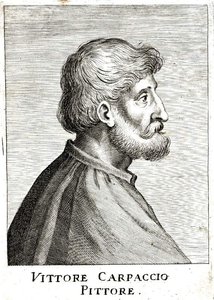
Vittore Carpaccio
1465 - 1526 , Italy
Quick Facts
- Artistic Movement Or Style: Early Venetian Renaissance
- Artists Or Movements Influenced By This Artist: ['Early Netherlandish Painting']
- Artists Who Influenced This Artist:
- Antonello da Messina
- Gentile Bellini
- Date Of Birth: Venice, Italy (c. 1465)
- Date Of Death: 1526
- Full Name: Vittore Carpaccio
- Nationality: Italian
- Notable Artworks:
- The Legend of Saint Ursula
- Glory of St. Ursula Altarpiece
- Miracle of the Relic of the Cross at the Ponte di Rialto
- Place Of Birth: Venice
Related Articles
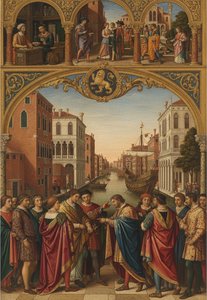
Vittore Carpaccio: Venetian Renaissance Narrative & the Poetics of Detail
Explore the captivating world of Vittore Carpaccio, a master storyteller of the Venetian Renaissance. Discover his intricate details, narrative cycles like 'The Legend of St. Ursula,' and unique artistic style.

The Enduring Legacy of Oil on Canvas: Technique, History & Aesthetic Impact
Explore the rich history & techniques of oil painting – from Renaissance masters to Impressionism. Discover pigments, layering methods, and why this timeless medium endures. Expert insights for artists & art enthusiasts.

Oil on Canvas: A Historical & Technical Exploration of a Timeless Artistic Medium
Explore the rich history & enduring techniques of oil painting on canvas. Discover the science behind its longevity, conservation practices, and contemporary relevance. Expert insights for art enthusiasts.

The Enduring Power of Painting: A Historical & Contemporary Exploration of Form and Emotion
Explore the rich history & enduring techniques of oil painting with ArtsDot. Discover masterpieces, learn about art collecting, and find authentic handmade reproductions crafted by skilled artists.
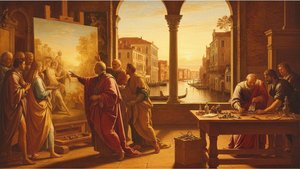
The Golden Light of Innovation: Exploring the Venetian Renaissance Art Movement (1430–1580)
Explore the Golden Age of Venetian art (1430–1580). Discover Giorgione, Titian & Tintoretto's techniques, the 'colorito' revolution, and lasting influence. Expert insights for collectors & enthusiasts.