 Preview
 Send
Send Share
Share
 Details

 Download
 Similars
 X-Ray
X-Ray Diaporama
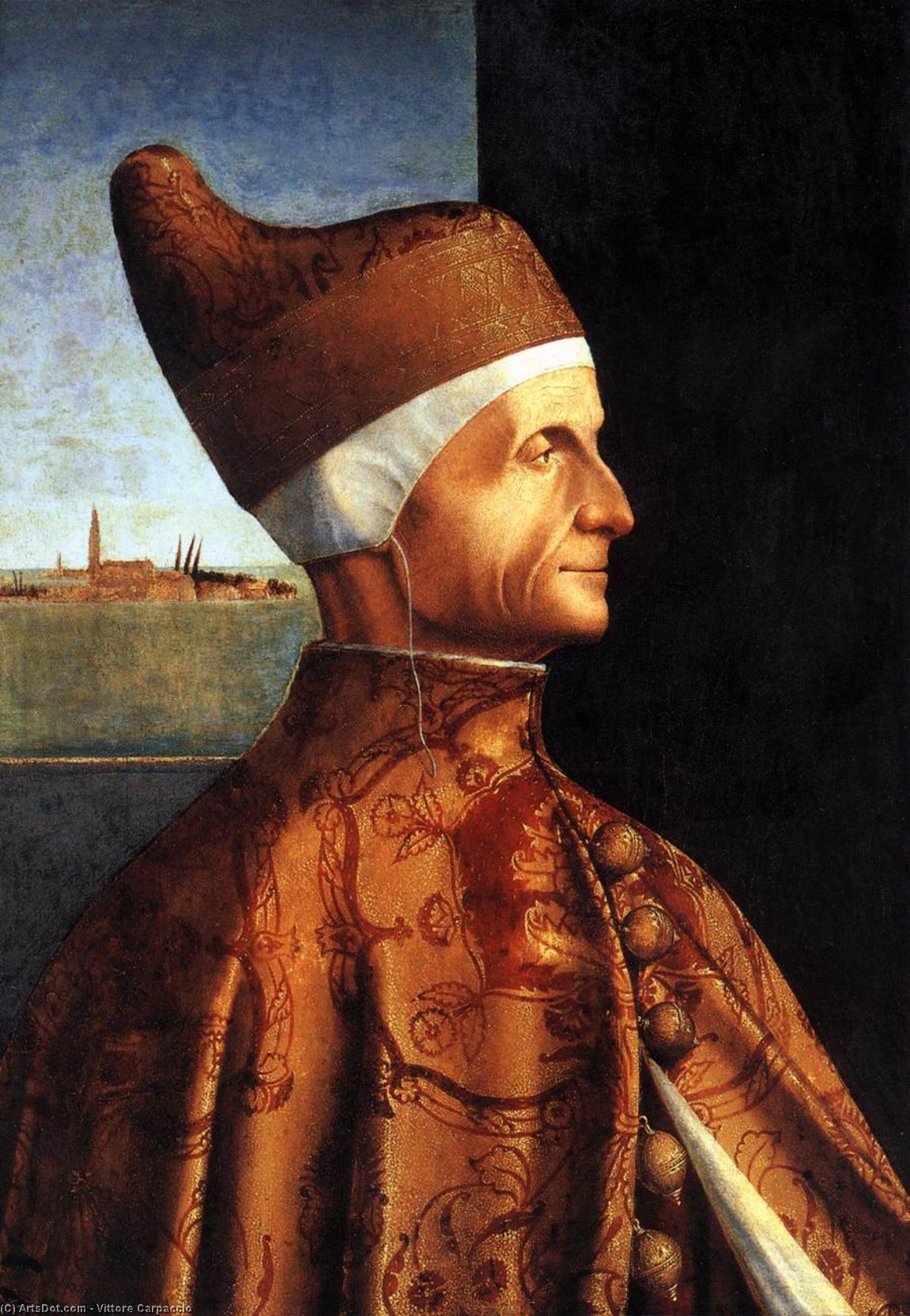
Portrait of the Doge Leonardo Loredan


 Read More
Hand Made Oil Reproduction
Hand-painted oil on canvas in your size and frame, made to order by our artists. ( Buy Print Buy Image)




P118B $10

P118H $10

P118W $10

P438Z $10

P508JH $12

P508YH $12

P805H $10

P805Z $10

P919BZ $10

P919G $10

P919XJ $10

P959ZH $10

P968JZ $12

W106C $8

W218G $10

W218JH $8

W218Y $10

W307PJ $10

W316G $10

W316PJ $8

W316Y $10

W398PJ $8

W4111J $10

W500HY $15

W500JH $15

W692G $12

W849H $8

W940BG $15

W953PJ $8




Pick from our preset sizes that match the artwork's original proportions.

You may enter your own dimensions to fit a specific frame or space. If your selected size does not match the original image's proportions, we will either crop the artwork or extend the painting with additional hand-painted elements. A digital mockup will be sent for your approval before production begins.
Please note that the on-screen preview does not reflect the actual cropping or extension. Only the mockup will accurately show the final composition.
While custom sizes are available, we recommend selecting a dimension from the predefined list to preserve the original proportions.
After order, ArtsDot.com team will email client for instructions and provide a mockup preview
Worldwide Delivery () in 3/4 weeks instead of standard 5 weeks. (16 August). No compromise on quality.

Free Worldwide Express Shipping

High-Quality Linen Canvas

Full Shipping Insurance

Customs Tax Refund Guarantee

True Color Matching Guarantee

60-Day Return Policy (Defects Only)

100% Money-Back Guarantee

Bulk Discount Offer
 Glass option is only available in size under 110 CM

Portrait of the Doge Leonardo Loredan
Reproduction Medium
Reproduction Size
-


Total Price
$ 263
Artwork Description
Portrait of Doge Leonardo Loredan by Vittore Carpaccio
Vittore Carpaccio’s *Portrait of Doge Leonardo Loredan*, painted circa 1501–02, stands as a testament to Venetian Renaissance artistic sensibilities—a masterful blend of observation and idealized representation that captures the essence of its subject and reflects the cultural milieu of Venice during Loredan's reign. More than just a likeness, it’s an emblem of power, piety, and the burgeoning humanist spirit transforming Italian art at the time.- Subject Matter: The painting depicts Leonardo Loredan (1472–1521), Venice’s Doge from 1501 to 1521—a figure of considerable prestige and responsibility within Venetian society. Carpaccio meticulously portrays him seated in a richly decorated interior space, likely the Doge's Palace, emphasizing his formal authority and status as ruler.
- Style & Influences: Carpaccio’s style diverges markedly from the flamboyant Mannerism that dominated artistic circles elsewhere in Italy. Instead, he adheres to a conservative aesthetic rooted in Early Netherlandish painting—particularly the influence of Antonello da Messina—characterized by precise detail and subdued color palettes. This stylistic choice underscores Carpaccio's commitment to portraying reality with unwavering accuracy rather than indulging in expressive distortion.
- Technique: Carpaccio employed oil paint on panel, a technique that allowed for nuanced tonal gradations and exceptional luminosity—a hallmark of Venetian painting during the Renaissance. The artist’s meticulous brushwork captures the textures of Loredan's robes and the architectural backdrop with remarkable fidelity. Notably, Carpaccio utilized glazing techniques to achieve depth and vibrancy, enhancing the overall visual impact of the composition.
- Historical Context: Venice in the early sixteenth century was a maritime republic at its zenith—a center of commerce, culture, and artistic innovation. The Doge’s Palace served as the seat of Venetian governance and symbolized the city's wealth and prestige. Carpaccio’s portrait reflects this cultural pride and celebrates Loredan’s leadership during a period marked by political stability and artistic flourishing.
- Symbolism & Emotional Impact: Beyond its depiction of Loredan, the painting embodies broader symbolic meanings—the Doge’s ceremonial garb, including the corno ducale (doge's horn), signifies his royal authority. The inclusion of architectural elements like St. Giorgio Maggiore and Sant’Antonio di Castello serves as a reminder of Venice’s spiritual heritage and reinforces its position as a prominent European city. Ultimately, Carpaccio’s portrait evokes a sense of solemn dignity and contemplative reflection—a testament to the artist's ability to convey profound emotion through visual representation.
Related Artworks
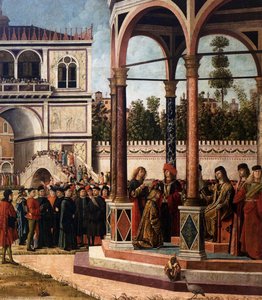
Artist Biography
early life and training
vittore carpaccio, a prominent italian painter, was born in venice around 1465. he studied under the tutelage of gentile bellini, a renowned artist of the venetian school. this apprenticeship laid the foundation for carpaccio's future success.artistic style and influences
carpaccio's style was characterized by its conservative nature, showing minimal influence from the humanist trends that transformed italian renaissance painting during his lifetime. his work was influenced by antonello da messina's style and early netherlandish art. this unique blend of styles resulted in a distinctive approach to venetian painting.notable works
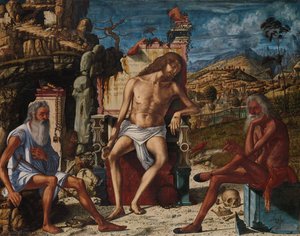
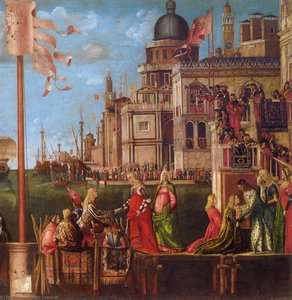
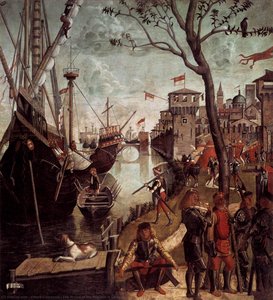
- the legend of saint ursula, a cycle of nine paintings, is carpaccio's most famous work. this series, now housed in the gallerie dell'accademia, showcases his mastery of narrative painting.
- glory of st. ursula altarpiece (1491) demonstrates carpaccio's skill in capturing light and color, reminiscent of giovanni bellini's style.
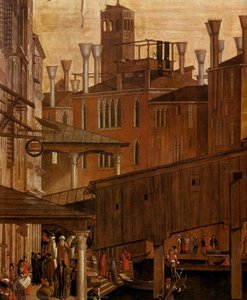
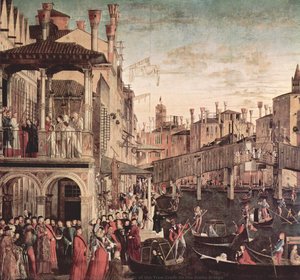
- miracle of the relic of the cross at the ponte di rialto (1494) highlights carpaccio's ability to balance composition and narrative.
career highlights and legacy
- carpaccio's principal works were executed between 1490 and 1519, ranking him among the early masters of the venetian renaissance.
- his orientalist style, as seen in st. george baptizing the selenites, reflects a new fascination with the levant.
- carpaccio's work has been somewhat overlooked in comparison to his contemporaries, such as giovanni bellini or giorgione.
references and further reading
discover more about vittore carpaccio and the venetian school on ArtsDot.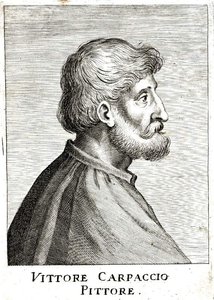
Vittore Carpaccio
1465 - 1526 , Italy
Quick Facts
- Artistic Movement Or Style: Early Venetian Renaissance
- Artists Or Movements Influenced By This Artist: ['Early Netherlandish Painting']
- Artists Who Influenced This Artist:
- Antonello da Messina
- Gentile Bellini
- Date Of Birth: Venice, Italy (c. 1465)
- Date Of Death: 1526
- Full Name: Vittore Carpaccio
- Nationality: Italian
- Notable Artworks:
- The Legend of Saint Ursula
- Glory of St. Ursula Altarpiece
- Miracle of the Relic of the Cross at the Ponte di Rialto
- Place Of Birth: Venice
Related Articles
Leonardo da Vinci's Masterpieces: Explore 25 Iconic Artworks for Your Home | ArtsDot
Journey through Leonardo da Vinci's genius with our curated selection of 25 iconic artworks. Explore the stories behind Mona Lisa, The Last Supper & more Renaissance masterpieces. Find museum-quality art reproductions for your home at ArtsDot.com.
Vittore Carpaccio: Venetian Renaissance Narrative & the Poetics of Detail
Explore the captivating world of Vittore Carpaccio, a master storyteller of the Venetian Renaissance. Discover his intricate details, narrative cycles like 'The Legend of St. Ursula,' and unique artistic style.

Jacopo Tintoretto's Masterpieces: 25 Paintings That Define Venetian Drama | ArtsDot
Explore 25 breathtaking masterpieces by Jacopo Tintoretto, the Venetian master of drama and light. Discover the stories behind iconic Renaissance paintings & find museum-quality art reproductions to elevate your home decor on ArtsDot.com.
Jacopo Palma il Giovane: A Venetian Master's Poetic Evolution
Explore the captivating world of Jacopo Palma il Giovane, a pivotal Venetian Renaissance master. Discover his unique style, influenced by Titian & Tintoretto, and learn about key works perfect for discerning collectors.
The Enduring Legacy of Formal Portraiture: Power, Identity & Artistic Exploration
Explore the rich history of formal portraiture & its enduring power to capture identity and shape perception. Discover investment-worthy artworks, expert appraisals, and custom reproduction services at ArtsDot.