 Preview
 Send
Send Share
Share
 Details

 Download
 Similars
 X-Ray
X-Ray Diaporama
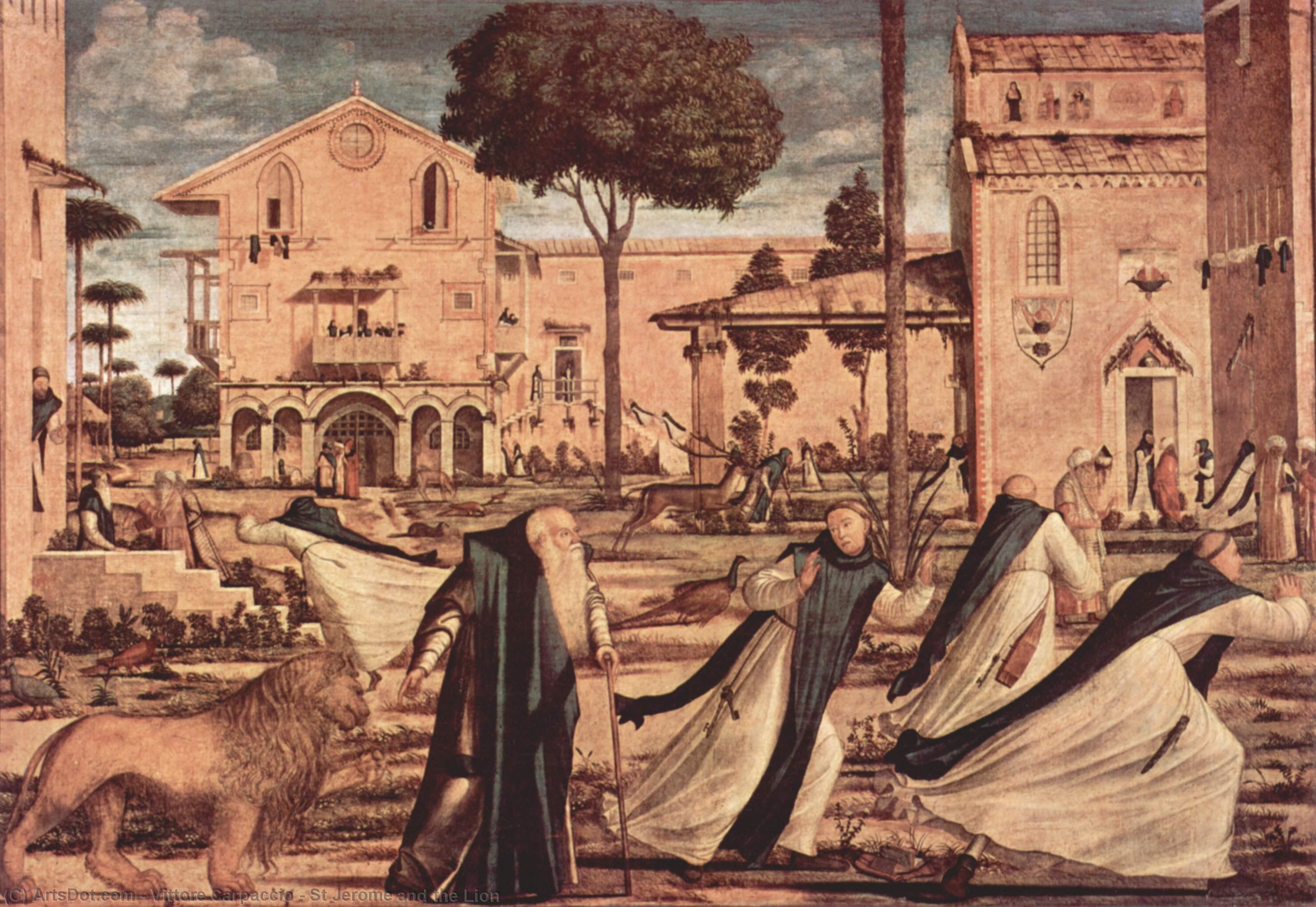
St Jerome and the Lion
 Oil
Oil- WallArt
- Venetian Renaissance
 1502
1502- Renaissance
 141.0 x 211.0 cm
 Scuola di San Giorgio degli Schiavoni
 Read More
Hand Made Oil Reproduction
Hand-painted oil on canvas in your size and frame, made to order by our artists. ( Buy Print Buy Image)




































Pick from our preset sizes that match the artwork's original proportions.

You may enter your own dimensions to fit a specific frame or space. If your selected size does not match the original image's proportions, we will either crop the artwork or extend the painting with additional hand-painted elements. A digital mockup will be sent for your approval before production begins.
Please note that the on-screen preview does not reflect the actual cropping or extension. Only the mockup will accurately show the final composition.
While custom sizes are available, we recommend selecting a dimension from the predefined list to preserve the original proportions.
After order, ArtsDot.com team will email client for instructions and provide a mockup preview
Worldwide Delivery () in 3/4 weeks instead of standard 5 weeks. (17 August). No compromise on quality.

Free Worldwide Express Shipping

High-Quality Linen Canvas

Full Shipping Insurance

Customs Tax Refund Guarantee

True Color Matching Guarantee

60-Day Return Policy (Defects Only)

100% Money-Back Guarantee

Bulk Discount Offer
 Glass option is only available in size under 110 CM

St Jerome and the Lion
Reproduction Medium
Reproduction Size
-


Total Price
$ 263
Artwork Description
A Vision of Devotion: St. Jerome and the Lion
In the quiet, sun-drenched corners of the Venetian Renaissance, few works capture the intersection of spiritual solitude and worldly vitality as masterfully as Vittore Carpaccio’s St. Jerome and the Lion. Painted around 1502, this breathtaking composition invites the viewer into a sprawling, atmospheric landscape where the sacred meets the mundane. At its heart lies St. Jerome, the scholar-saint, depicted not merely as a distant icon of theology, but as a living presence amidst a bustling, textured world. The painting serves as a window into an era where every brushstroke was an act of devotion and every detail a testament to the divine order found within nature.
Carpaccio, a pupil of the legendary Gentile Bellini, brings to this piece a unique stylistic synthesis that distinguishes him from his contemporaries. While much of the Venetian school moved toward the soft, atmospheric sfumato of later years, Carpaccio retained a crisp, narrative clarity influenced by early Netherlandish art and the meticulousness of Antonello da Messina. This technique allows for an extraordinary level of detail; one can almost feel the warmth of the courtyard sun and hear the distant movement of the crowd. The artist’s ability to weave together the monumental figure of the saint with the lively, incidental details of daily life—the wandering dogs, the passing horse, and the rhythmic motion of figures in the background—creates a sense of "living history" that is both immersive and profoundly captivating.
Symbolism and the Tapestry of Life
Beyond its visual splendor, the painting is a rich tapestry of symbolic meaning designed to provoke contemplation. The presence of the lion, traditionally associated with St. Jerome’s legend of healing a wounded beast, serves as a powerful emblem of the triumph of faith over wild, untamed nature. Yet, Carpaccio avoids making this a purely isolated, monastic scene. By surrounding the saint with a dynamic landscape populated by animals and people, he suggests that the divine is present in the very fabric of the everyday. The dogs roaming the periphery and the horse on the far left act as anchors to reality, grounding the spiritual narrative in a recognizable, earthly realm.
For the discerning collector or interior designer, this artwork offers more than just aesthetic beauty; it provides a focal point of intellectual and emotional depth. The composition’s balance between stillness and motion makes it an ideal centerpiece for spaces that require a sense of sophisticated tranquility. Whether placed in a grand library or a contemporary living space, the painting’s rich palette and narrative complexity encourage long periods of observation, making it a piece that grows with its owner. To possess a reproduction of this caliber is to bring a fragment of the Venetian Renaissance into the modern home, fostering an environment of timeless elegance and scholarly grace.
Related Artworks
Artist Biography
early life and training
vittore carpaccio, a prominent italian painter, was born in venice around 1465. he studied under the tutelage of gentile bellini, a renowned artist of the venetian school. this apprenticeship laid the foundation for carpaccio's future success.artistic style and influences
carpaccio's style was characterized by its conservative nature, showing minimal influence from the humanist trends that transformed italian renaissance painting during his lifetime. his work was influenced by antonello da messina's style and early netherlandish art. this unique blend of styles resulted in a distinctive approach to venetian painting.notable works
- the legend of saint ursula, a cycle of nine paintings, is carpaccio's most famous work. this series, now housed in the gallerie dell'accademia, showcases his mastery of narrative painting.
- glory of st. ursula altarpiece (1491) demonstrates carpaccio's skill in capturing light and color, reminiscent of giovanni bellini's style.
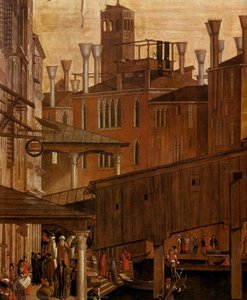
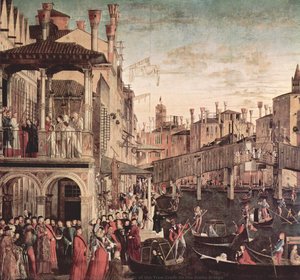
- miracle of the relic of the cross at the ponte di rialto (1494) highlights carpaccio's ability to balance composition and narrative.
career highlights and legacy
- carpaccio's principal works were executed between 1490 and 1519, ranking him among the early masters of the venetian renaissance.
- his orientalist style, as seen in st. george baptizing the selenites, reflects a new fascination with the levant.
- carpaccio's work has been somewhat overlooked in comparison to his contemporaries, such as giovanni bellini or giorgione.
references and further reading
discover more about vittore carpaccio and the venetian school on ArtsDot.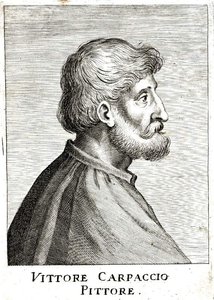
Vittore Carpaccio
1465 - 1526 , Italy
Quick Facts
- Artistic Movement Or Style: Early Venetian Renaissance
- Artists Or Movements Influenced By This Artist: ['Early Netherlandish Painting']
- Artists Who Influenced This Artist:
- Antonello da Messina
- Gentile Bellini
- Date Of Birth: Venice, Italy (c. 1465)
- Date Of Death: 1526
- Full Name: Vittore Carpaccio
- Nationality: Italian
- Notable Artworks:
- The Legend of Saint Ursula
- Glory of St. Ursula Altarpiece
- Miracle of the Relic of the Cross at the Ponte di Rialto
- Place Of Birth: Venice
Related Articles
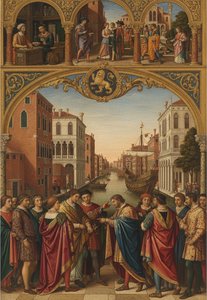
Vittore Carpaccio: Venetian Renaissance Narrative & the Poetics of Detail
Explore the captivating world of Vittore Carpaccio, a master storyteller of the Venetian Renaissance. Discover his intricate details, narrative cycles like 'The Legend of St. Ursula,' and unique artistic style.

Jacopo Tintoretto's Masterpieces: 25 Paintings That Define Venetian Drama | ArtsDot
Explore 25 breathtaking masterpieces by Jacopo Tintoretto, the Venetian master of drama and light. Discover the stories behind iconic Renaissance paintings & find museum-quality art reproductions to elevate your home decor on ArtsDot.com.

Albrecht Dürer's Masterpieces: 25 Iconic Artworks for Your Home | ArtsDot
Explore 25 iconic artworks by Albrecht Dürer, a master of the German Renaissance. Discover the stories behind Melencolia I, Knight Death and Devil & more. Find museum-quality art reproductions for your home at ArtsDot.com.
Hieronymus Bosch's Masterpieces: 25 Visions of Art & Morality | ArtsDot
Delve into the enigmatic world of Hieronymus Bosch! Explore 25 iconic paintings – from 'The Garden of Earthly Delusions' to his haunting triptychs. Discover the symbolism, history & artistry behind these Renaissance masterpieces. Find museum-quality art reproductions at ArtsDot.com.
El Greco's Masterpieces: Explore 25 Iconic Paintings & Spiritual Visions | ArtsDot
Journey through El Greco's 25 most iconic paintings! Explore the spiritual depth & dramatic beauty of this Spanish Renaissance master. Discover art history, techniques & find museum-quality reproductions for your home at ArtsDot.com.