 Preview
 Send
Send Share
Share
 Details

 Download
 Similars
 X-Ray
X-Ray Diaporama
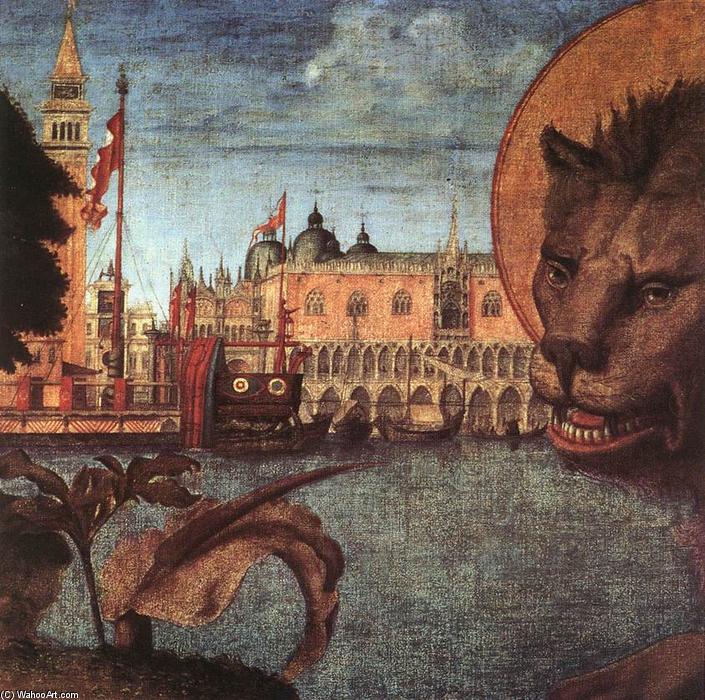
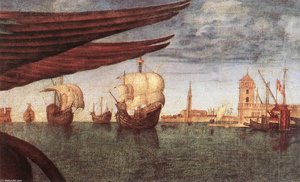
The Lion of St Mark (detail)


 Read More
Hand Made Oil Reproduction
Hand-painted oil on canvas in your size and frame, made to order by our artists. ( Buy Print Buy Image)




P118B $10

P118H $10

P118W $10

P438Z $10

P508JH $12

P508YH $12

P805H $10

P805Z $10

P919BZ $10

P919G $10

P919XJ $10

P959ZH $10

P968JZ $12

W106C $8

W218G $10

W218JH $8

W218Y $10

W307PJ $10

W316G $10

W316PJ $8

W316Y $10

W398PJ $8

W4111J $10

W500HY $15

W500JH $15

W692G $12

W849H $8

W940BG $15

W953PJ $8




Pick from our preset sizes that match the artwork's original proportions.

You may enter your own dimensions to fit a specific frame or space. If your selected size does not match the original image's proportions, we will either crop the artwork or extend the painting with additional hand-painted elements. A digital mockup will be sent for your approval before production begins.
Please note that the on-screen preview does not reflect the actual cropping or extension. Only the mockup will accurately show the final composition.
While custom sizes are available, we recommend selecting a dimension from the predefined list to preserve the original proportions.
After order, ArtsDot.com team will email client for instructions and provide a mockup preview
Worldwide Delivery () in 3/4 weeks instead of standard 5 weeks. (16 August). No compromise on quality.

Free Worldwide Express Shipping

High-Quality Linen Canvas

Full Shipping Insurance

Customs Tax Refund Guarantee

True Color Matching Guarantee

60-Day Return Policy (Defects Only)

100% Money-Back Guarantee

Bulk Discount Offer
 Glass option is only available in size under 110 CM

The Lion of St Mark (detail)
Reproduction Medium
Reproduction Size
-


Total Price
$ 263
Artwork Description
A Glimpse into Venetian Majesty: The Lion of St Mark
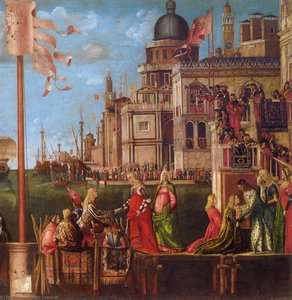
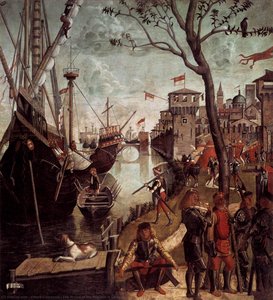
Vittore Carpaccio’s “The Lion of St Mark,” a captivating detail from a larger panel likely intended for an altarpiece, offers a potent window into the vibrant world of 16th-century Venice. Dating to 1516, this work transcends mere representation; it's a carefully constructed tableau brimming with religious narrative, historical allusion, and the distinctive visual language of the Venetian school. The piece immediately commands attention through its dense composition – a bustling harbor scene dominated by a powerfully rendered lion-faced figure, a potent symbol of authority and divine protection, set against the backdrop of an intricately detailed cityscape.
Carpaccio’s style is instantly recognizable: a deliberate conservatism that eschews the radical innovations of the burgeoning Renaissance. He leans heavily on the established conventions of late Gothic and early Renaissance painting, prioritizing clarity of form and symbolic weight over photographic realism. The flattened perspective, a common feature of Venetian art at the time, contributes to an almost theatrical quality, drawing the viewer into this meticulously staged scene. Notice how lines are employed not for precise depiction but rather to delineate architectural elements – the soaring arches of buildings, the sturdy frames of ships – and the lion’s formidable features, creating a sense of both strength and solemnity.
The Lion's Symbolism and Venetian Identity
At the heart of this composition lies the symbolic weight of the lion. In Carpaccio’s depiction, it is inextricably linked to Saint Mark, Venice’s patron saint, and thus embodies the city’s enduring legacy as a maritime power and a bastion of faith. The snarling expression of the lion, coupled with its prominent position, speaks to both vigilance and divine judgment. Beyond its religious significance, the lion also represents Venetian civic pride – a proud emblem reflecting the city's wealth, military prowess, and strategic importance in the Mediterranean world. The inclusion of maritime activity—ships laden with goods, bustling docks—underscores Venice’s role as a vital trading hub, connecting East and West.
Further enriching the scene are subtle details that hint at Venetian history and iconography. The flags fluttering from the buildings, the architectural styles – a blend of Gothic and Renaissance influences – all contribute to a rich tapestry of visual references. Carpaccio’s masterful use of muted earth tones—ochres, browns, and greens—creates a sense of age and materiality, while touches of red and blue in the flags and architectural elements add pops of color that draw the eye.
Craftsmanship and the Venetian Technique
Examining the painting closely reveals Carpaccio’s meticulous technique. The heavy impasto – the thick application of paint – creates a tactile surface, emphasizing the texture of stone, wood, and fabric. Brushstrokes are deliberately visible, lending a sense of immediacy and authenticity to the scene. The artist's choice of oil on panel is evident in the layering of pigments and the subtle gradations of color. The overall effect is one of considerable depth and richness, despite the somewhat flattened perspective. It’s a testament to Carpaccio’s skill that he manages to convey such a complex narrative within this relatively small format.
“The Lion of St Mark” isn't merely a depiction; it’s an invitation to contemplate faith, power, and the enduring spirit of Venice. A hand-painted reproduction captures the essence of this remarkable artwork, allowing you to bring its captivating story into your home or studio.
Related Artworks


Artist Biography
early life and training
vittore carpaccio, a prominent italian painter, was born in venice around 1465. he studied under the tutelage of gentile bellini, a renowned artist of the venetian school. this apprenticeship laid the foundation for carpaccio's future success.artistic style and influences
carpaccio's style was characterized by its conservative nature, showing minimal influence from the humanist trends that transformed italian renaissance painting during his lifetime. his work was influenced by antonello da messina's style and early netherlandish art. this unique blend of styles resulted in a distinctive approach to venetian painting.notable works
- the legend of saint ursula, a cycle of nine paintings, is carpaccio's most famous work. this series, now housed in the gallerie dell'accademia, showcases his mastery of narrative painting.
- glory of st. ursula altarpiece (1491) demonstrates carpaccio's skill in capturing light and color, reminiscent of giovanni bellini's style.
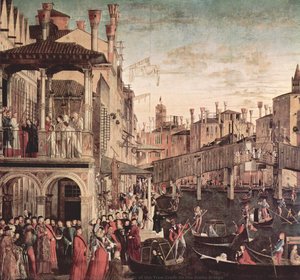
- miracle of the relic of the cross at the ponte di rialto (1494) highlights carpaccio's ability to balance composition and narrative.
career highlights and legacy
- carpaccio's principal works were executed between 1490 and 1519, ranking him among the early masters of the venetian renaissance.
- his orientalist style, as seen in st. george baptizing the selenites, reflects a new fascination with the levant.
- carpaccio's work has been somewhat overlooked in comparison to his contemporaries, such as giovanni bellini or giorgione.
references and further reading
discover more about vittore carpaccio and the venetian school on ArtsDot.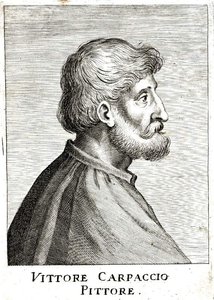
Vittore Carpaccio
1465 - 1526 , Italy
Quick Facts
- Artistic Movement Or Style: Early Venetian Renaissance
- Artists Or Movements Influenced By This Artist: ['Early Netherlandish Painting']
- Artists Who Influenced This Artist:
- Antonello da Messina
- Gentile Bellini
- Date Of Birth: Venice, Italy (c. 1465)
- Date Of Death: 1526
- Full Name: Vittore Carpaccio
- Nationality: Italian
- Notable Artworks:
- The Legend of Saint Ursula
- Glory of St. Ursula Altarpiece
- Miracle of the Relic of the Cross at the Ponte di Rialto
- Place Of Birth: Venice
Related Articles
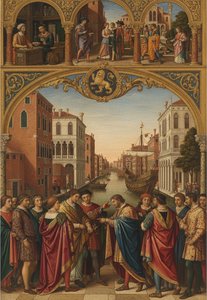
Vittore Carpaccio: Venetian Renaissance Narrative & the Poetics of Detail
Explore the captivating world of Vittore Carpaccio, a master storyteller of the Venetian Renaissance. Discover his intricate details, narrative cycles like 'The Legend of St. Ursula,' and unique artistic style.

Mark Rothko's Masterpieces: 25 Paintings That Define Abstract Expressionism | ArtsDot
Explore 25 iconic Mark Rothko paintings that define Abstract Expressionism. Discover the stories, colors & emotions behind these masterpieces. Find museum-quality art reproductions and curated decor ideas at ArtsDot.com.

Jacopo Tintoretto's Masterpieces: 25 Paintings That Define Venetian Drama | ArtsDot
Explore 25 breathtaking masterpieces by Jacopo Tintoretto, the Venetian master of drama and light. Discover the stories behind iconic Renaissance paintings & find museum-quality art reproductions to elevate your home decor on ArtsDot.com.

El Greco's Masterpieces: Explore 25 Iconic Paintings & Spiritual Visions | ArtsDot
Journey through El Greco's 25 most iconic paintings! Explore the spiritual depth & dramatic beauty of this Spanish Renaissance master. Discover art history, techniques & find museum-quality reproductions for your home at ArtsDot.com.
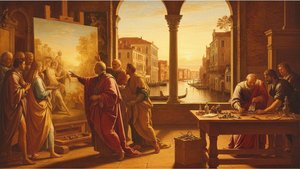
The Golden Light of Innovation: Exploring the Venetian Renaissance Art Movement (1430–1580)
Explore the Golden Age of Venetian art (1430–1580). Discover Giorgione, Titian & Tintoretto's techniques, the 'colorito' revolution, and lasting influence. Expert insights for collectors & enthusiasts.