 Preview
 Send
Send Share
Share
 Details

 Download
 Similars
 X-Ray
X-Ray Diaporama
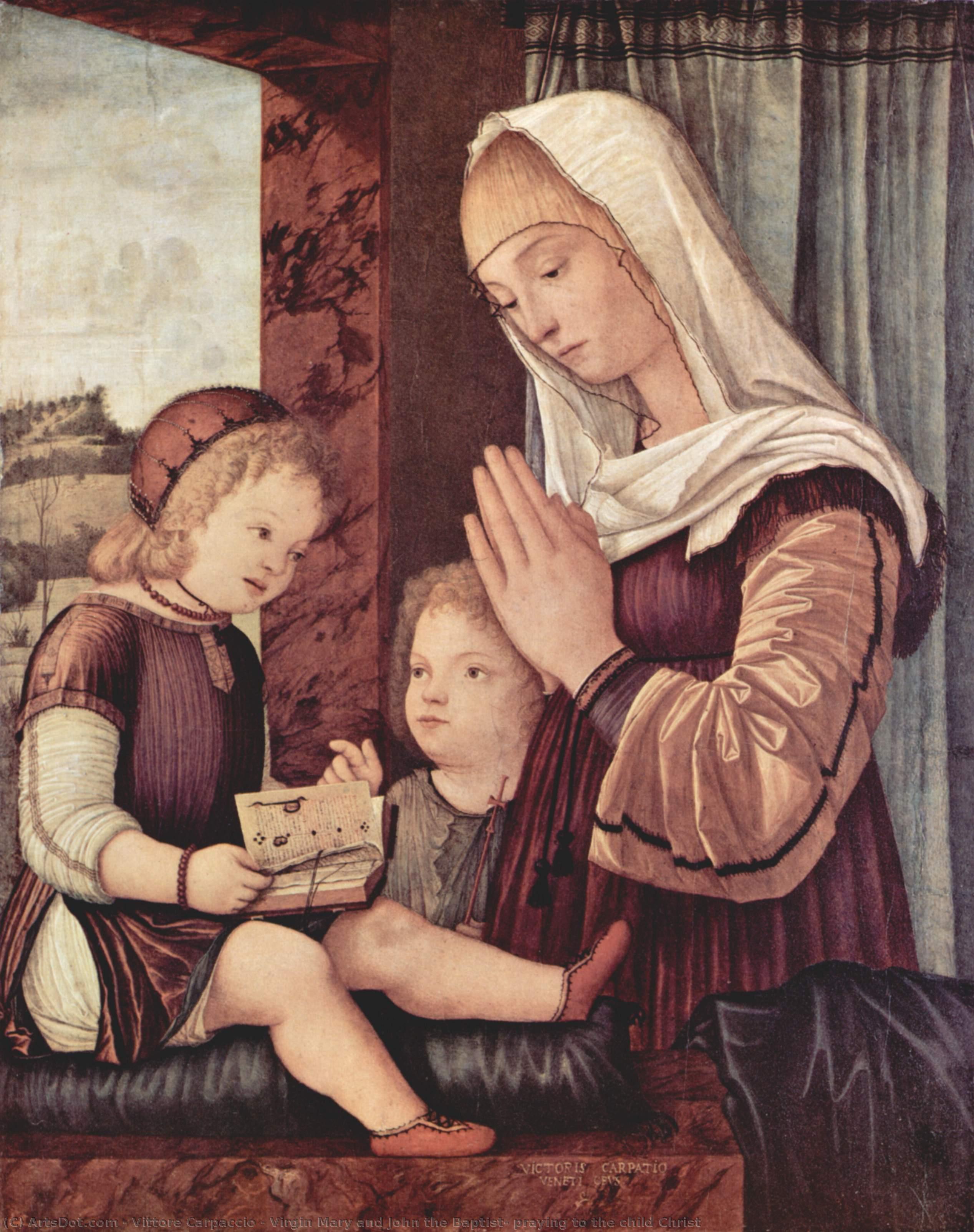
Virgin Mary and John the Baptist, praying to the child Christ
 Oil
Oil- WallArt
- Early Renaissance
 1500
1500- Renaissance
 69.0 x 54.0 cm
 Städel Museum
 Read More
Giclée / Art Print
Museum-quality giclée or canvas print with fast production and flexible finish options. ( Buy Hand Made Painting Buy Image)




P118B $10

P118H $10

P118W $10

P438Z $10

P508JH $12

P508YH $12

P805H $10

P805Z $10

P919BZ $10

P919G $10

P919XJ $10

P959ZH $10

P968JZ $12

W106C $8

W218G $10

W218JH $8

W218Y $10

W307PJ $10

W316G $10

W316PJ $8

W316Y $10

W398PJ $8

W4111J $10

W500HY $15

W500JH $15

W692G $12

W849H $8

W940BG $15

W953PJ $8




Pick from our preset sizes that match the artwork's original proportions.

You may enter your own dimensions to fit a specific frame or space. If your selected size does not match the original image's proportions, we will either crop the artwork or extend the image with a mirrored or solid-fill edge. A digital mockup will be sent for your approval before production begins.
Please note that the on-screen preview does not reflect the actual cropping or extension. Only the mockup will accurately show the final composition.
While custom sizes are available, we recommend selecting a dimension from the predefined list to preserve the original proportions.
Worldwide Delivery () in 2 weeks instead of standard 4/5 weeks. (23 August)

Free Worldwide Express Shipping

High-Quality Linen Canvas

Full Shipping Insurance

Customs Tax Refund Guarantee

True Color Matching Guarantee

60-Day Return Policy (Defects Only)

100% Money-Back Guarantee

Bulk Discount Offer
 Glass option is only available in size under 110 CM

Virgin Mary and John the Baptist, praying to the child Christ
Giclée / Art Print
Reproduction Size
-


Total Price
$ 63
Collectible Description
A Moment of Divine Serenity
In the quietude of a meticulously rendered Venetian interior, Vittore Carpaccio invites us into a sacred space where time seems to suspend itself. His masterpiece, "Virgin Mary and John the Baptist, praying to the child Christ," is far more than a mere religious depiction; it is an intimate window into the soul of the High Renaissance. As we gaze upon the scene, we find the Virgin Mary and Saint John the Baptist kneeling in profound, silent devotion before the Christ Child. The atmosphere is heavy with a sense of peace, yet charged with the spiritual weight of the moment. Soft, ethereal light spills from a window draped in delicate fabric, bathing the holy figures in a luminous glow that seems to emanate from within the divine subjects themselves.
The composition is a masterclass in balance and harmony, reflecting the humanist ideals that flourished in Venice around 1500. Carpaccio does not rely on dramatic, sweeping gestures to convey emotion; instead, he utilizes a subtle, grounded arrangement. In the foreground, two young children are caught in a moment of innocent curiosity, engaged with a book that serves as a poignant symbol of both intellectual awakening and the unfolding of divine wisdom. This juxtaposition of the profound sanctity of the kneeling adults with the playful, scholarly innocence of the children creates a narrative depth that resonates with viewers across centuries, making it an ideal centerpiece for those seeking to bring a sense of contemplative grace into a sophisticated living space.
The Mastery of Venetian Technique
To behold this work is to appreciate the technical brilliance of the Venetian school. Carpaccio, a student of Gentile Bellini, achieved a unique stylistic synthesis that bridged the gap between the meticulous detail of Early Netherlandish painting and the burgeoning atmospheric innovations of his Italian contemporaries. His technique is characterized by an extraordinary precision in brushwork and a sophisticated use of chiarosc_uro. By masterfully manipulating light and shadow, he sculpts the figures within the architectural space, giving them a tangible, three-dimensional presence that feels remarkably lifelike.
The artist’s palette is a testament to the richness of oil painting during this era. He employs subtle gradations of color to create textures that are almost tactile—from the heavy folds of the window drapery to the smooth, porcelain skin of the Christ Child. Unlike the more flamboyant and experimental styles of Giorgione or Bellini, Carpaccio’s approach remains beautifully conservative, favoring a clear, luminous realism that emphasizes clarity and devotion. For the discerning collector or interior designer, this painting offers a timeless aesthetic; its balanced tones and classical structure allow it to integrate seamlessly into both traditional and contemporary decor, providing an anchor of historical elegance.
A Legacy of Devotion and Detail
Beyond its visual splendor, the painting serves as a profound historical document of the Venetian Renaissance. It captures a period when art was deeply intertwined with religious iconography and the burgeoning spirit of humanist scholarship. Every element within the frame—the simple wooden bench, the architectural precision, the symbolic presence of the children—contributes to a larger narrative of spiritual continuity and the sanctity of domestic life. Carpaccio’s ability to weave these complex layers of meaning into a single, cohesive image is what elevates this work from a religious icon to a universal masterpiece of human emotion.
Owning a hand-painted reproduction of this caliber allows one to inhabit this world of serene devotion daily. It is an invitation to pause, to reflect, and to find beauty in the quietest moments of existence. Whether placed in a sunlit study or a grand formal hall, this depiction of the Holy Family serves as a constant reminder of the enduring power of faith, innocence, and the sublime artistry of the Italian masters.
Related Artworks
Artist Biography
early life and training
vittore carpaccio, a prominent italian painter, was born in venice around 1465. he studied under the tutelage of gentile bellini, a renowned artist of the venetian school. this apprenticeship laid the foundation for carpaccio's future success.artistic style and influences
carpaccio's style was characterized by its conservative nature, showing minimal influence from the humanist trends that transformed italian renaissance painting during his lifetime. his work was influenced by antonello da messina's style and early netherlandish art. this unique blend of styles resulted in a distinctive approach to venetian painting.notable works
- the legend of saint ursula, a cycle of nine paintings, is carpaccio's most famous work. this series, now housed in the gallerie dell'accademia, showcases his mastery of narrative painting.
- glory of st. ursula altarpiece (1491) demonstrates carpaccio's skill in capturing light and color, reminiscent of giovanni bellini's style.
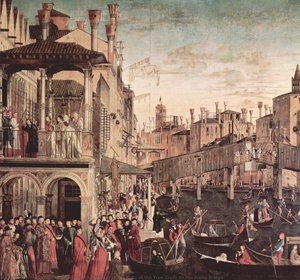
- miracle of the relic of the cross at the ponte di rialto (1494) highlights carpaccio's ability to balance composition and narrative.
career highlights and legacy
- carpaccio's principal works were executed between 1490 and 1519, ranking him among the early masters of the venetian renaissance.
- his orientalist style, as seen in st. george baptizing the selenites, reflects a new fascination with the levant.
- carpaccio's work has been somewhat overlooked in comparison to his contemporaries, such as giovanni bellini or giorgione.
references and further reading
discover more about vittore carpaccio and the venetian school on ArtsDot.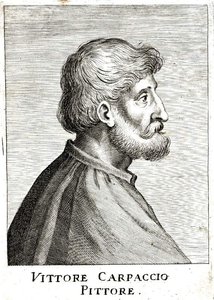
Vittore Carpaccio
1465 - 1526 , Italy
Quick Facts
- Artistic Movement Or Style: Early Venetian Renaissance
- Artists Or Movements Influenced By This Artist: ['Early Netherlandish Painting']
- Artists Who Influenced This Artist:
- Antonello da Messina
- Gentile Bellini
- Date Of Birth: Venice, Italy (c. 1465)
- Date Of Death: 1526
- Full Name: Vittore Carpaccio
- Nationality: Italian
- Notable Artworks:
- The Legend of Saint Ursula
- Glory of St. Ursula Altarpiece
- Miracle of the Relic of the Cross at the Ponte di Rialto
- Place Of Birth: Venice
Related Articles

John Constable's Masterpieces: Explore 25 Iconic Landscapes for Your Home
Journey through John Constable's 25 most celebrated landscapes. Explore Romanticism, Dedham Vale & his masterful use of light in iconic paintings like 'Hay Wain'. Find museum-quality art reproductions and elevate your home decor on ArtsDot.com.

John Singer Sargent's 25 Masterpieces: Portraits & Beyond | ArtsDot
Explore 25 iconic John Singer Sargent paintings – from dazzling portraits to Impressionist landscapes. Discover the stories behind Madame X, El Jaleo & more! Find museum-quality art reproductions and elevate your home decor with ArtsDot.com.
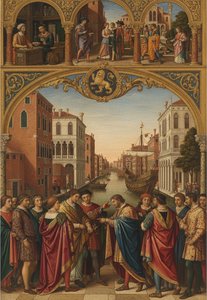
Vittore Carpaccio: Venetian Renaissance Narrative & the Poetics of Detail
Explore the captivating world of Vittore Carpaccio, a master storyteller of the Venetian Renaissance. Discover his intricate details, narrative cycles like 'The Legend of St. Ursula,' and unique artistic style.
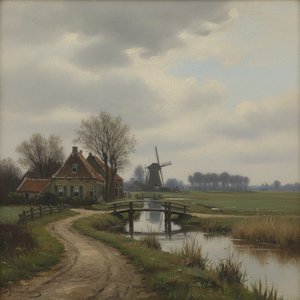
Jacob Henricus Maris: A Master of Dutch Atmospheric Realism & the Intimate Landscape
Explore the captivating world of Jacob Henricus Maris, a leading figure of the Dutch Hague School. Discover his atmospheric landscapes, signature brushstrokes & lasting influence on 19th-century art. Learn more at ArtsDot.
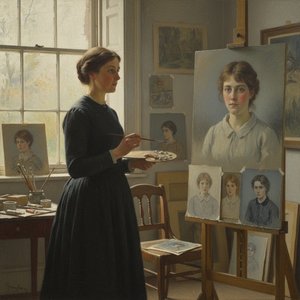
Gwen John: Intimacy, Modernity & the Quiet Power of Welsh Portraiture
Explore the captivating world of Gwen John, a pioneering Welsh artist renowned for her intimate portraits & subtle style. Discover her life, legacy, and how to bring her timeless beauty into your home with ArtsDot.