 Send
Send Share
Share
 Details

 Download
 Similars
 Diaporama
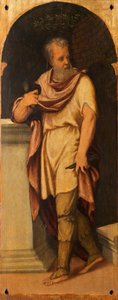
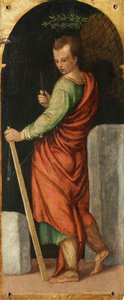
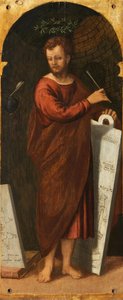
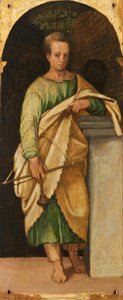
Coffer of the Giusti Family with Stories of Virginia
 Wood
Wood- Sculpture
- Renaissance
 1400
1400- Renaissance
 190.0 x 59.0 cm
 Castelvecchio Museum
 Read More
Hand Made Oil Reproduction
Hand-painted oil on canvas in your size and frame, made to order by our artists. ( Buy Print Buy Image)




































Pick from our preset sizes that match the artwork's original proportions.

You may enter your own dimensions to fit a specific frame or space. If your selected size does not match the original image's proportions, we will either crop the artwork or extend the painting with additional hand-painted elements. A digital mockup will be sent for your approval before production begins.
Please note that the on-screen preview does not reflect the actual cropping or extension. Only the mockup will accurately show the final composition.
While custom sizes are available, we recommend selecting a dimension from the predefined list to preserve the original proportions.
After order, ArtsDot.com team will email client for instructions and provide a mockup preview
Worldwide Delivery () in 3/4 weeks instead of standard 5 weeks. (6 September). No compromise on quality.

Free Worldwide Express Shipping

High-Quality Linen Canvas

Full Shipping Insurance

Customs Tax Refund Guarantee

True Color Matching Guarantee

100-Day Return Policy (Defects Only)

100% Money-Back Guarantee

Bulk Discount Offer
 Glass option is only available in size under 110 CM

Coffer of the Giusti Family with Stories of Virginia
Reproduction Medium
Reproduction Size
-


Total Price
$ 263
A Masterpiece of Narrative Splendor
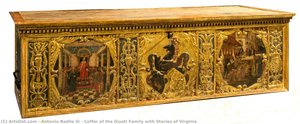
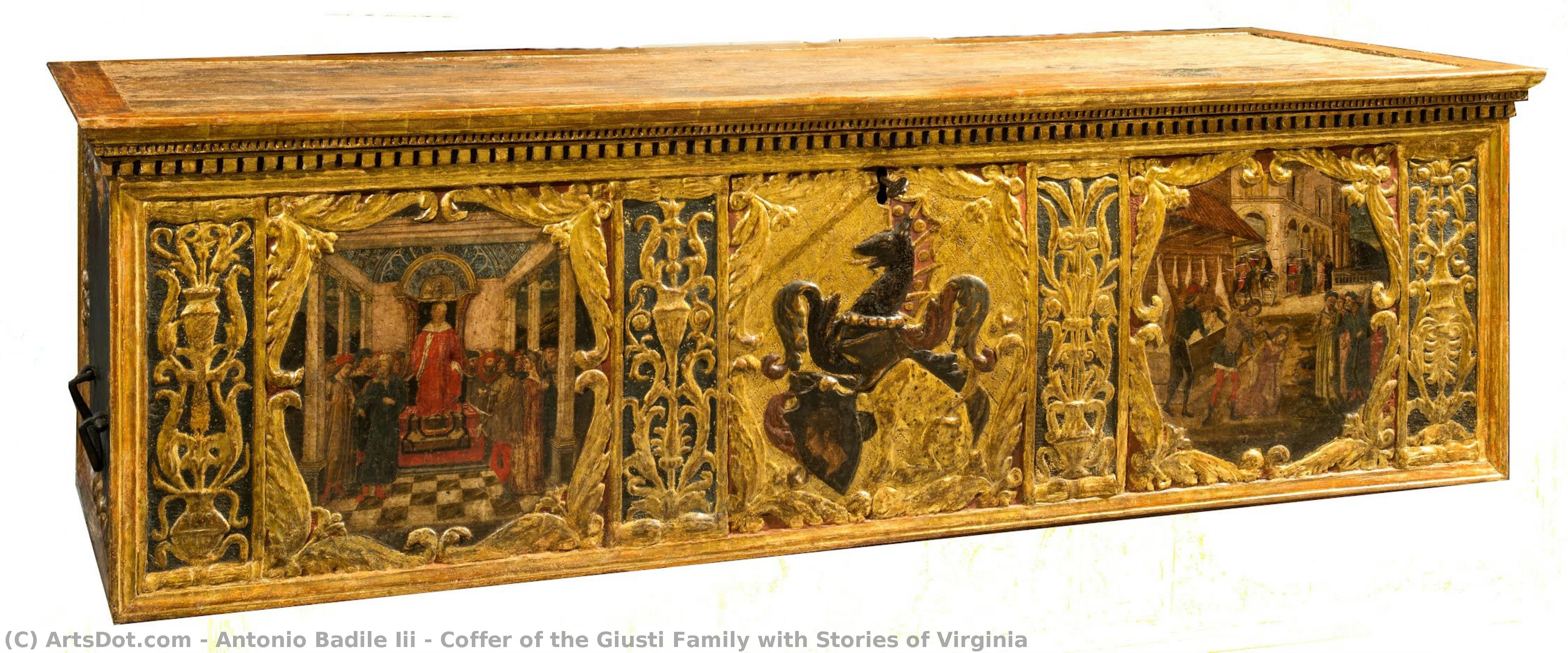
In the realm of Renaissance craftsmanship, few objects command attention quite like the Coffer of the Giusti Family with Stories of Virginia. This exquisite wedding chest, dating back to approximately 1400, serves as a breathtaking intersection of fine woodworking and classical storytelling. Crafted from sturdy fir wood using the meticulous dovetail joint technique, the piece is far more than a mere functional item; it is a portable stage for historical drama. The chest is adorned with a precious denticulated frame and an abundant gilded tablet decoration that catches the light, drawing the eye toward the central panel which proudly displays the arms of the Giusti family. This heraldic centerpiece is flanked by elegant candelabra motifs, creating a sense of architectural grandeur even within the confines of a domestic object.
The artistry extends to the very edges of the composition, where four pairs of knotted leaves anchor the corners, lending an almost circular, organic softness to the three isolated fields on the forehead. This delicate balance between the rigid structure of the wood and the fluid, decorative elements creates a visual rhythm that has captivated observers for centuries. For the discerning collector or interior designer, such a piece represents the pinnacle of period elegance, offering a profound sense of history and a sophisticated focal point for any curated space.
The Drama of Antiquity Unfolded
Beyond its gilded exterior, the coffer serves as a vivid manuscript in paint. The decorated compartments illustrate two pivotal moments from the tragic legend of Virginia and Claudio Appio, as chronicled by ancient historians such as Livy, Dionysius of Halikanassus, and Cicero. These panels do not merely depict scenes; they breathe life into the classical past. One can almost feel the tension in the air as the painted figures navigate the political and personal turmoil of Rome. The second episode is rendered with an extraordinary level of realism and literalism, capturing the harrowing moment when Virginio, brandishing a butcher's knife, takes action to protect his daughter’s honor.
The technique employed here reflects a transition in artistic sensibility, where the narrative clarity required for such complex stories meets a burgeoning interest in human emotion. The use of color and composition within these small, isolated fields allows the viewer to become an active participant in the unfolding tragedy. This ability to weave high-stakes historical drama into the grain of a wooden chest makes the work an unparalleled specimen of late medieval and early Renaissance storytelling, where every brushstroke serves the purpose of moral and historical instruction.
A Legacy of Craftsmanship and Inspiration
The provenance and execution of this piece speak to a time when art was deeply integrated into the fabric of daily life. The preservation of the original lid and handles, alongside the remarkably intact interior, offers a rare window into the domestic luxury of the 15th century. While the work is attributed to the era of Antonio Badile III—a master known for blending the linear elegance of the Gothic style with the burgeoning innovations of the Italian Renaissance—the coffer itself stands as a testament to the enduring power of the Veronese tradition.
For those seeking to bring a piece of this historical majesty into a modern setting, a high-quality reproduction offers an opportunity to celebrate the intersection of fine art and decorative excellence. Whether placed in a grand library or used as a statement piece in a contemporary salon, the Coffer of the Giusti Family evokes a sense of timelessness. It invites contemplation of the virtues of honor, sacrifice, and the enduring strength of family legacy, making it an evocative choice for any space dedicated to the appreciation of true artistic heritage.
Related Artworks



Artist Biography
early life and training
antonio badile iii, an italian painter from verona, was born in 1517. he was the grandson of giovanni badile da verona, a renowned painter of the 15th century. antonio's training under his uncle francesco badile and giovanni francesco caroto laid the foundation for his future success.artistic influences and style
antonio was known for being the master of paul véronèse and giovanni battista zelotti, his beau-frère. his work was also influenced by the brescian painter alessandro bonvicino (il moretto). this eclectic mix of influences resulted in a unique style that blended elements of the italian renaissance with the veronese tradition.notable works and legacy
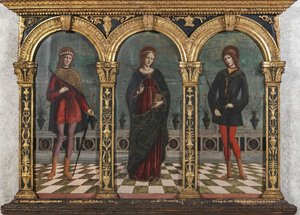
some of antonio's most notable works include:- saints cecilia, tiburtius, valerian (castelvecchio museum, verona, italy), a triptych showcasing his attempt to absorb renaissance innovations within a linear, gothic style.
- retablo of san nazaro, featuring the madonna and saints (1540), demonstrating his mastery of composition and color.
- résurrection de lazare in the chapelle de la sainte-croix, église de san bernardino, showcasing his skill in capturing dramatic scenes.
museums and collections
antonio's works are preserved in various cities across the veneto region. for more information on his art and to explore other notable artists, visit the museum parrocchiale (verolanuova, italy) or browse through ArtsDot's extensive artist profile: antonio badile iii.conclusion
antonio badile iii's contributions to the veronese painting tradition are undeniable. his unique blend of influences and mastery of composition have left a lasting impact on the art world. to delve deeper into his works and those of other renowned artists, explore ArtsDot's comprehensive art database.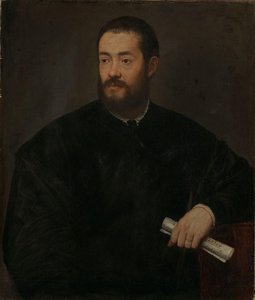
antonio badile iii
1517 - 1560 , Italy
Quick Facts
- Artistic Movement Or Style: High Renaissance
- Artists Or Movements Influenced By This Artist:
- Leonardo da Vinci
- Savonarola’s style
- Artists Who Influenced This Artist:
- Cosimo Rosselli
- Raphael
- Date Of Birth: March 28, 1472
- Date Of Death: October 31, 1517
- Full Name: Fra Bartolomeo”
- Nationality: Italian Renaissance
- Notable Artworks:
- Vision of St Bernard
- Portrait of Savonarola
- Place Of Birth: Savignano di Prato, Tuscany
Related Articles

Evolving Portraits: Personalized Art as a Chronicle of Family Life Across Generations
Create a timeless family legacy with custom portraits! ArtsDot connects you with skilled artists for heirloom-quality paintings & prints. Explore styles, commission your unique artwork today.

The Enduring Legacy of Family Portraiture: A Historical & Artistic Exploration
Explore the rich history of family portraiture with ArtsDot. Discover artistic styles, symbolism & collecting insights. Commission a custom oil painting or appraise your existing artwork today!

Preserving Generations: The Enduring Significance of Family Portraits as Legacy
Discover the enduring power of family portraits. Explore how commissioning a custom oil painting preserves your legacy for generations. Expert artists & heirloom quality.

Depicting Kinship: Family Values Across Artistic Movements & Historical Contexts
Explore the rich history of depicting kinship in art! From Dutch Masters to contemporary artists, discover how family values have been represented across movements & time. Expert insights for collectors at ArtsDot.
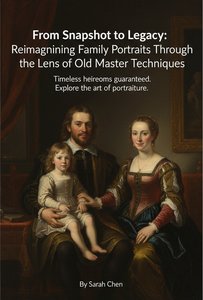
From Snapshot to Legacy: Reimagining Family Portraits Through the Lens of Old Master Techniques
Transform cherished memories into lasting heirlooms with custom family portraits inspired by Old Master techniques. Expert artists, museum-quality craftsmanship & a timeless legacy guaranteed. Explore the art of portraiture.