 Preview
 Send
Send Share
Share
 Details

 Download
 Similars
 X-Ray
X-Ray Diaporama
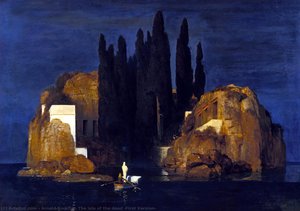
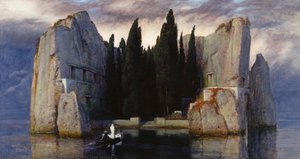
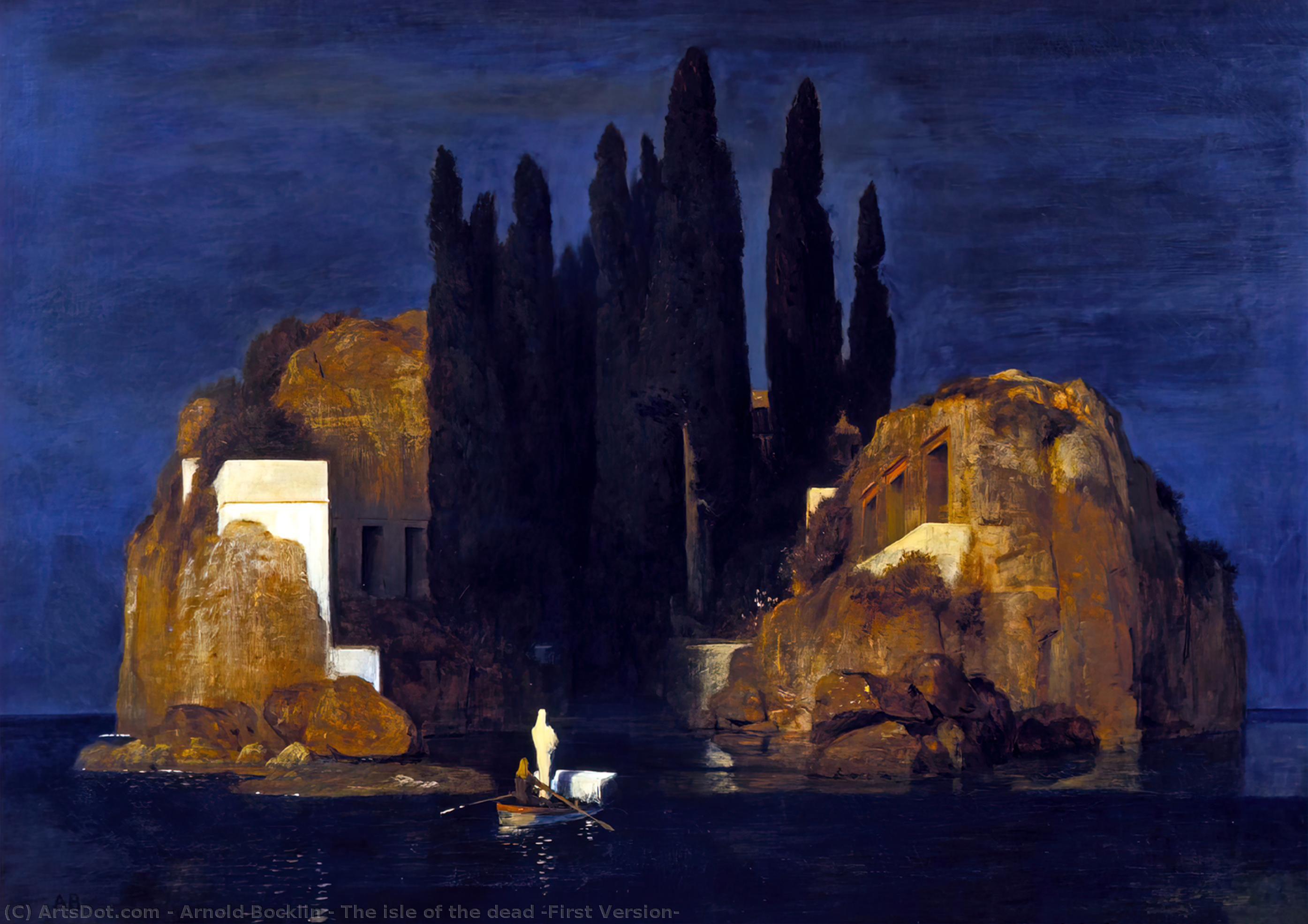
The isle of the dead (First Version)
 Oil On Canvas
- WallArt
- Symbolist Movement
 1880
1880- 19th Century
 111.0 x 155.0 cm
 Öffentliche Kunstsammlung
 Read More
Hand Made Oil Reproduction
Hand-painted oil on canvas in your size and frame, made to order by our artists. ( Buy Print Buy Image)




P118B $10

P118H $10

P118W $10

P438Z $10

P508JH $12

P508YH $12

P805H $10

P805Z $10

P919BZ $10

P919G $10

P919XJ $10

P959ZH $10

P968JZ $12

W106C $8

W218G $10

W218JH $8

W218Y $10

W307PJ $10

W316G $10

W316PJ $8

W316Y $10

W398PJ $8

W4111J $10

W500HY $15

W500JH $15

W692G $12

W849H $8

W940BG $15

W953PJ $8




Pick from our preset sizes that match the artwork's original proportions.

You may enter your own dimensions to fit a specific frame or space. If your selected size does not match the original image's proportions, we will either crop the artwork or extend the painting with additional hand-painted elements. A digital mockup will be sent for your approval before production begins.
Please note that the on-screen preview does not reflect the actual cropping or extension. Only the mockup will accurately show the final composition.
While custom sizes are available, we recommend selecting a dimension from the predefined list to preserve the original proportions.
After order, ArtsDot.com team will email client for instructions and provide a mockup preview
Worldwide Delivery () in 3/4 weeks instead of standard 5 weeks. (22 August). No compromise on quality.

Free Worldwide Express Shipping

High-Quality Linen Canvas

Full Shipping Insurance

Customs Tax Refund Guarantee

True Color Matching Guarantee

60-Day Return Policy (Defects Only)

100% Money-Back Guarantee

Bulk Discount Offer
 Glass option is only available in size under 110 CM

The isle of the dead (First Version)
Reproduction Medium
Reproduction Size
-


Total Price
$ 263
Artwork Description
A Journey into the Sublime: The Enigmatic World of Böcklin
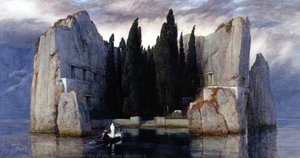
In the quiet, shadowed corridors of art history, few images possess the haunting magnetism of Arnold Böcklin’s The Isle of the Dead (First Version). Completed in the early 1880s, this masterpiece serves as a profound gateway into the Symbolist movement, where the artist’s brush seeks not to mirror reality, but to evoke the intangible whispers of the soul. As one gazes upon this monumental canvas, they are immediately transported to a realm of profound stillness and spectral beauty. The scene is dominated by a desolate, rocky islet, rising sharply from dark, turbulent waters like a monument to the eternal. Towering cypress trees, those ancient sentinels of mourning, pierce the heavy atmosphere, their dark silhouettes anchoring the composition in a state of perpetual twilight. It is an immersive experience that invites the viewer to step away from the clamor of the modern world and enter a space of deep, meditative contemplation.
The emotional resonance of the work lies in its masterful use of chiaroscuro—the dramatic interplay between light and shadow. Böcklin employs a meticulous oil painting technique, utilizing smooth gradations of color to create an atmospheric gloom that feels almost tactile. The water, dark and brooding, seems to swallow the light, while the starkness of the rocks provides a sense of unyielding permanence. This technical precision allows for a palpable sense of mystery; every ripple in the water and every shadow cast by the cypress trees contributes to a narrative of solitude and transition. For the collector or interior designer, this painting offers more than mere decoration; it provides a focal point of immense gravity, capable of anchoring a room with its somber elegance and sophisticated depth.
Symbolism and the Voyage of the Soul
Beyond its striking aesthetic, the painting is a rich tapestry of mythological and folkloric references. The lone rowing boat, approaching the shore with a shrouded figure at its helm, serves as a powerful metaphor for the final journey of the deceased. Scholars often draw parallels to the classical myth of Charon, the ferryman of Hades, suggesting that this islet is a destination within the underworld itself. This interpretation imbues the work with a universal weight, touching upon the shared human experience of mortality and the mystery of what lies beyond the veil. The cypress trees, traditionally associated with cemeteries and grief, reinforce this theme of remembrance and the cyclical nature of life and death.
Böcklin himself remained famously elusive regarding his specific intentions, allowing the painting to remain an open vessel for individual interpretation. This ambiguity is precisely what gives the work its enduring power; it is a mirror for the viewer's own emotions, whether they find peace in its stillness or trepidation in its shadows. To possess a high-quality reproduction of this work is to invite a piece of the sublime into one's personal space—a constant reminder of the beauty found in the ephemeral and the profound strength found in silence. It is an ideal acquisition for those who appreciate art that challenges the intellect while deeply stirring the heart.
Related Artworks
Artist Biography
early life and training
arnold böcklin, a swiss symbolist painter, was born on october 16, 1827, in basel, switzerland. his father, christian frederick böcklin, descended from an old family of schaffhausen and engaged in the silk trade. arnold's mother, ursula lippe, was a native of the same city. he studied at the düsseldorf academy under schirmer, becoming a friend of anselm feuerbach. böcklin is associated with the düsseldorf school of painting.artistic career and symbolism
böcklin's artistic journey took him to various cities, including paris, where he worked at the louvre, and rome, where he was influenced by its sights. his work often featured allegorical and mythological figures in settings involving classical architecture, exploring themes of death and mortality.- great park, one of his earliest works, showcased ancient mythology.
- nymph and satyr (1858) and sappho (1859) were notable works from this period.
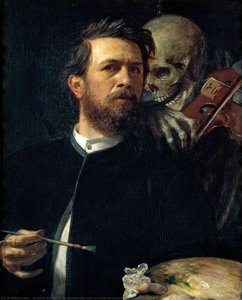
- böcklin's portrait of myself, with death playing a violin (1872) exemplified his unique style.
legacy and influence
böcklin is best known for his five versions of the isle of the dead (1880-1886), which evoked the english cemetery in florence, where his daughter was buried. his work influenced younger artists like hans thoma and inspired several late-romantic composers.- clement greenberg described böcklin's work as "one of the most consummate expressions" of its time.
- böcklin's style overlapped with the pre-raphaelites, emphasizing the world of dreams and mysticism.
museums and collections
böcklin's work can be found in various museums, including:- öffentliche kunstsammlung (basel, switzerland)
- kunstmuseum basel (switzerland)
- museum kunsthaus zürich (zürich, switzerland)
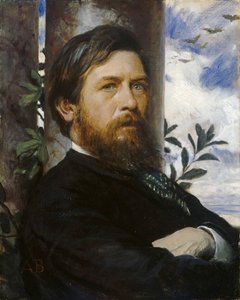
Arnold Böcklin
1827 - 1901 , Switzerland
Quick Facts
- Artistic Movement Or Style: Symbolism
- Artists Or Movements Influenced By This Artist:
- Hans Thoma
- Pre-Raphaelites
- Artists Who Influenced This Artist:
- Schirmer
- Feuerbach
- Date Of Birth: October 16, 1827
- Date Of Death: January 16, 1901
- Full Name: Arnold Böcklin
- Nationality: Swiss
- Notable Artworks:
- Isle of the Dead
- Nymph and Satyr
- Sappho
- Portrait of Myself
- Place Of Birth: Basel, Switzerland
Related Articles
Echoes of Absence: Loss & Grief in Visual Art Through the Ages
Explore the profound history of grief in art, from Renaissance masterpieces to contemporary expressions. Discover how artists have captured loss, mourning, and mortality through powerful imagery & symbolism. ArtsDot offers expert insights.
Symbolism's Soul: 10 Masterpieces That Transformed Art & Decor
Delve into the dreamlike world of Symbolism with 10 iconic masterpieces by Moreau, Munch & Redon. Explore the movement’s emotional depth and artistic techniques. Find museum-quality reproductions & curated decor ideas at ArtsDot.com.
Hieronymus Bosch's Masterpieces: 25 Visions of Art & Morality | ArtsDot
Delve into the enigmatic world of Hieronymus Bosch! Explore 25 iconic paintings – from 'The Garden of Earthly Delusions' to his haunting triptychs. Discover the symbolism, history & artistry behind these Renaissance masterpieces. Find museum-quality art reproductions at ArtsDot.com.
Iconic Art of the 18th & 19th Centuries: Masterpieces for Your Home | ArtsDot
Journey through 18th & 19th century art! Explore iconic masterpieces by Monet, Van Gogh & more. Discover the stories behind these timeless paintings and find museum-quality reproductions for your home at ArtsDot.com.
Thomas Barker of Bath: Landscape Painting & Societal Reflection in Early 19th-Century England
Explore the life & work of Thomas Barker of Bath, a key figure in 19th-century English Romanticism. Discover his Parisian success, iconic paintings like 'The Bride of Death', and lasting artistic legacy. Learn more at ArtsDot.