 Preview
 Send
Send Share
Share
 Details

 Download
 Similars
 X-Ray
X-Ray Diaporama
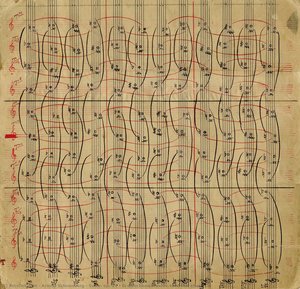
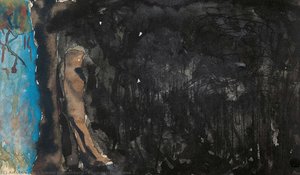
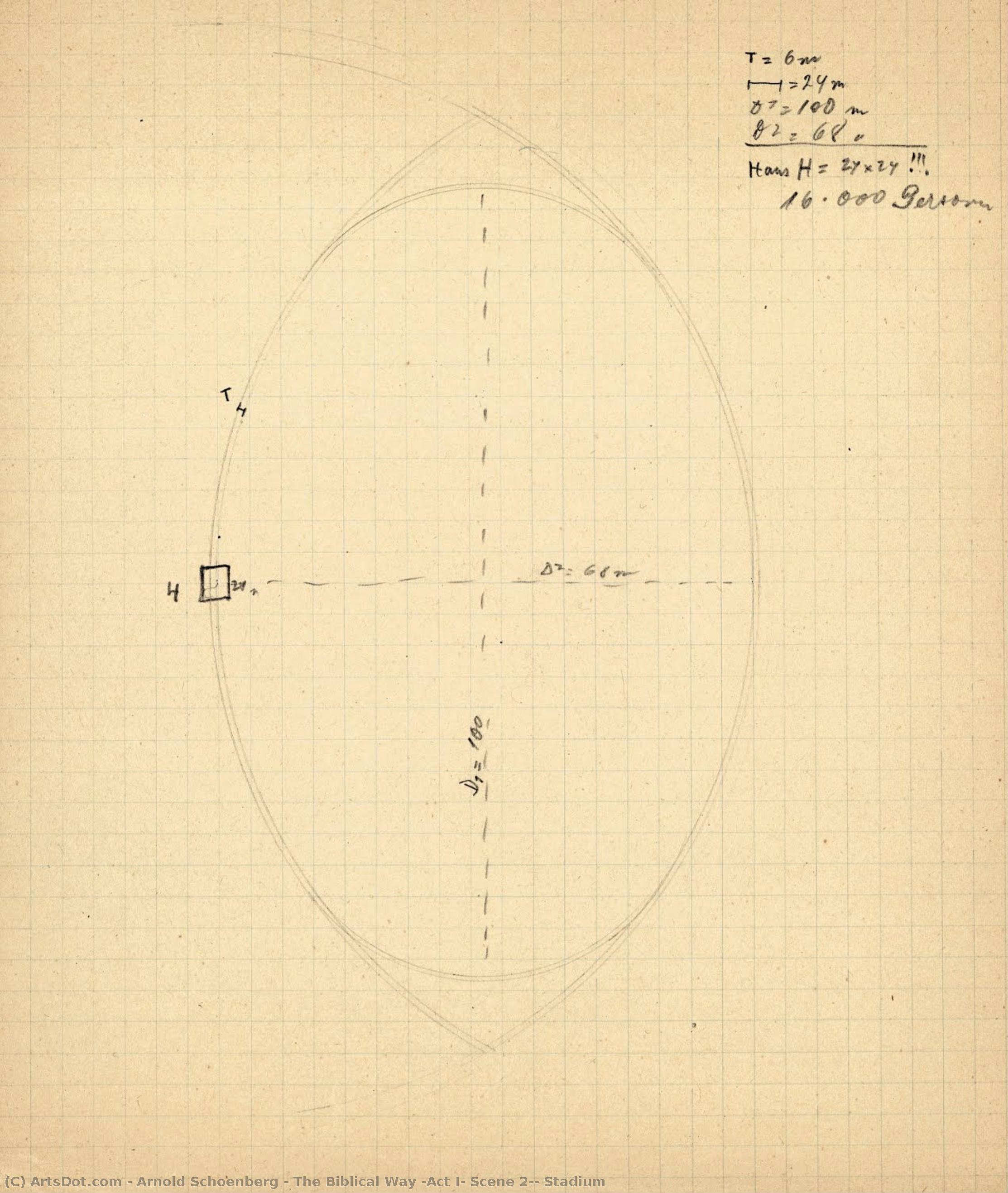
The Biblical Way (Act I, Scene 2), Stadium
 Drawing
- WallArt
- Expressionism
 1927
1927- Modern
 16.0 x 19.0 cm
 Arnold Schönberg Center
 Read More
Hand Made Oil Reproduction
Hand-painted oil on canvas in your size and frame, made to order by our artists. ( Buy Print Buy Image)




P118B $10

P118H $10

P118W $10

P438Z $10

P508JH $12

P508YH $12

P805H $10

P805Z $10

P919BZ $10

P919G $10

P919XJ $10

P959ZH $10

P968JZ $12

W106C $8

W218G $10

W218JH $8

W218Y $10

W307PJ $10

W316G $10

W316PJ $8

W316Y $10

W398PJ $8

W4111J $10

W500HY $15

W500JH $15

W692G $12

W849H $8

W940BG $15

W953PJ $8




Pick from our preset sizes that match the artwork's original proportions.

You may enter your own dimensions to fit a specific frame or space. If your selected size does not match the original image's proportions, we will either crop the artwork or extend the painting with additional hand-painted elements. A digital mockup will be sent for your approval before production begins.
Please note that the on-screen preview does not reflect the actual cropping or extension. Only the mockup will accurately show the final composition.
While custom sizes are available, we recommend selecting a dimension from the predefined list to preserve the original proportions.
After order, ArtsDot.com team will email client for instructions and provide a mockup preview
Worldwide Delivery () in 3/4 weeks instead of standard 5 weeks. (17 August). No compromise on quality.

Free Worldwide Express Shipping

High-Quality Linen Canvas

Full Shipping Insurance

Customs Tax Refund Guarantee

True Color Matching Guarantee

60-Day Return Policy (Defects Only)

100% Money-Back Guarantee

Bulk Discount Offer
 Glass option is only available in size under 110 CM

The Biblical Way (Act I, Scene 2), Stadium
Reproduction Medium
Reproduction Size
-


Total Price
$ 263
Artwork Description
A Geometric Vision
The drawing unfolds on a modest 16 by 19‑centimeter canvas, yet its impact is anything but small. At the heart of the composition sits a single circle, rendered with precise lines that seem to pulse with quiet authority. Surrounding it, smaller circles echo its form, each positioned as if in careful dialogue with the central shape. Numbers—measured distances and perhaps symbolic ratios—are etched around the main circle, inviting the viewer into an intimate conversation between geometry and meaning. The composition feels like a blueprint, a map of possibility drawn by hand, where every line is deliberate and every space charged with potential.The Composer's Brushstroke
Arnold Schoenberg, celebrated for his revolutionary atonal music, steps onto the visual field in this work with the same daring spirit that defined his scores. Though primarily known as a composer, here he translates musical structure into visual form: the circle becomes a motif of unity and continuity, while the surrounding smaller circles suggest variations—much like leitmotifs in an orchestral movement. The technique is meticulous; the lines are clean yet expressive, hinting at the precision of an engineer and the fluidity of a composer’s hand. In 1927, amid a world still reeling from war and on the cusp of modernist upheaval, Schoenberg's drawing stands as a testament to interdisciplinary exploration.Symbolism in Circles
Circles have long been symbols of eternity, wholeness, and the cyclical nature of existence. In this piece, the central circle may represent the core of an idea—perhaps the nucleus of a nation or the heart of faith that Schoenberg so passionately explored in his writings about Judaism and the Jewish people’s quest for a homeland. The surrounding circles could signify the diaspora, the scattered communities, each orbiting around a shared destiny. The measured distances etched around the main circle suggest a deliberate mapping of this journey: how far one must travel to reach unity, how many steps separate the present from the promised land. The drawing becomes an allegory for collective aspiration and individual contribution.Emotional Resonance
When viewers encounter this work, they are drawn into its quiet intensity. The precise geometry invites contemplation; the subtle interplay of numbers and shapes evokes a sense of order amid uncertainty. For collectors, it offers a rare glimpse into Schoenberg’s visual imagination—a bridge between his musical innovations and architectural precision. Interior designers may find in it a focal point that sparks conversation about heritage, ambition, and the enduring power of symbols. The piece does not merely depict circles; it invites us to imagine the spaces they occupy—both physical and metaphysical—and to feel the pulse of hope that has guided generations toward their own promised lands.Related Artworks
Artist Biography
early life and musical beginnings
arnold schoenberg, an austrian-american composer, was born on september 13, 1874, in vienna, austria. his early life was marked by a humble beginning, with his father being a shoe-shopkeeper. despite this, schoenberg's innate passion for music led him to largely self-educate himself in the field.- schoenberg explored film music and wrote more tonal music, completing his chamber symphony no. 2 in 1939.
- he satirized fascist tyrants in ode to napoleon (1942), after byron.
- post-war vienna offered him honorary citizenship, but he was ill, as depicted in his string trio (1946).
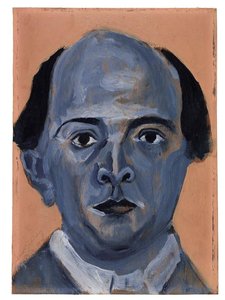
arnold schoenberg
1874 - 1951 , Austria
Quick Facts
- Artistic Movement Or Style: Twelve-tone technique; Expressionism
- Artists Or Movements Influenced By This Artist:
- Anton Webern
- Alban Berg
- Artists Who Influenced This Artist:
- Johannes Brahms
- Richard Wagner
- Date Of Birth: September 13, 1874
- Date Of Death: 1951
- Full Name: Arnold Schoenberg
- Nationality: Austrian-American
- Notable Artworks:
- Suite, op. 29
- Music Typewriter
- Staffliner
- Place Of Birth: Vienna, Austria
Related Articles
The Eloquent Line: Exploring the Artistic Significance of Sketches Across Movements and Media
Explore the profound artistic significance of sketches throughout history. From Renaissance masters to modern innovators like Van Gogh & Guston, discover how these foundational works reveal technique, emotion, and vision. Learn more at ArtsDot.

The Nuances of Graphite: Exploring Emotional Depth & Technical Mastery in Pencil Drawing
Explore the captivating world of graphite drawing! Discover its rich history, master essential techniques like chiaroscuro, and learn how artists evoke emotion through this timeless medium. Expert insights for art enthusiasts.

Geometric Abstraction's 10 Defining Masterpieces | Art for Your Home - ArtsDot
Explore 10 defining masterpieces of Geometric Abstraction! Discover Kandinsky, Mondrian & Malevich’s iconic works. Find museum-quality art reproductions and curated decor ideas to elevate your home at ArtsDot.com.

Roaring '20s Art: 10 Masterpieces of Jazz Age Style | ArtsDot
Step back into the glamour of the Roaring '20s! Explore 10 iconic artworks by artists like Tamara de Lempicka & Edward Hopper. Discover Art Deco, Jazz Age style & museum-quality reproductions at ArtsDot.com. Explore the full collection online.

The Enduring Power of Line: Exploring Themes & Techniques in Drawing Across Art History
Explore the rich history of drawing! Discover key techniques like linear perspective & iconic artists from the Renaissance to modern times. Enhance your art appreciation with ArtsDot.