 Preview
 Send
Send Share
Share
 Details

 Download
 Similars
 X-Ray
X-Ray Diaporama
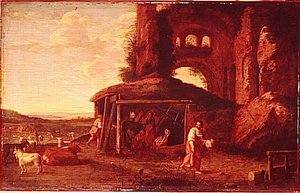
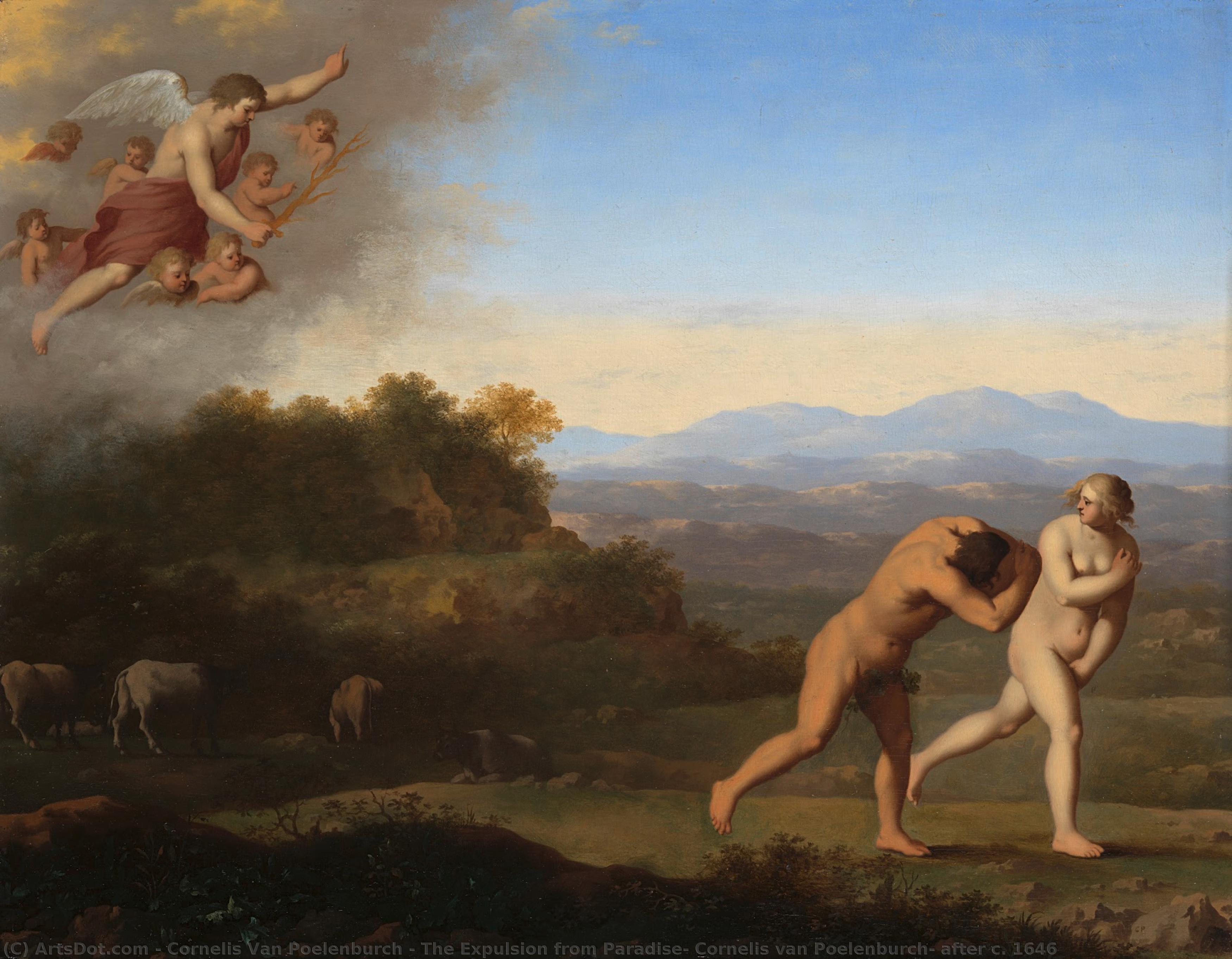
The Expulsion from Paradise, Cornelis van Poelenburch, after c. 1646
 Oil On Panel
- Baroque
 1646
1646- Early Modern
 30.0 x 38.0 cm
 Read More
Hand Made Oil Reproduction
Hand-painted oil on canvas in your size and frame, made to order by our artists. ( Buy Print Buy Image)




P118B $10

P118H $10

P118W $10

P438Z $10

P508JH $12

P508YH $12

P805H $10

P805Z $10

P919BZ $10

P919G $10

P919XJ $10

P959ZH $10

P968JZ $12

W106C $8

W218G $10

W218JH $8

W218Y $10

W307PJ $10

W316G $10

W316PJ $8

W316Y $10

W398PJ $8

W4111J $10

W500HY $15

W500JH $15

W692G $12

W849H $8

W940BG $15

W953PJ $8




Pick from our preset sizes that match the artwork's original proportions.

You may enter your own dimensions to fit a specific frame or space. If your selected size does not match the original image's proportions, we will either crop the artwork or extend the painting with additional hand-painted elements. A digital mockup will be sent for your approval before production begins.
Please note that the on-screen preview does not reflect the actual cropping or extension. Only the mockup will accurately show the final composition.
While custom sizes are available, we recommend selecting a dimension from the predefined list to preserve the original proportions.
After order, ArtsDot.com team will email client for instructions and provide a mockup preview
Worldwide Delivery () in 3/4 weeks instead of standard 5 weeks. (22 August). No compromise on quality.

Free Worldwide Express Shipping

High-Quality Linen Canvas

Full Shipping Insurance

Customs Tax Refund Guarantee

True Color Matching Guarantee

60-Day Return Policy (Defects Only)

100% Money-Back Guarantee

Bulk Discount Offer
 Glass option is only available in size under 110 CM

The Expulsion from Paradise, Cornelis van Poelenburch, after c. 1646
Reproduction Medium
Reproduction Size
-


Total Price
$ 263
Artwork Description
A Divine Departure: The Drama of Exile
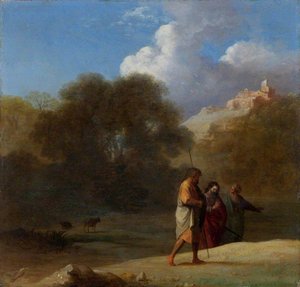
In the delicate, intimate scale of this masterwork, Cornelis van Poelenburch captures one of humanity's most profound and sorrowful transitions. The Expulsion from Paradise is not merely a depiction of a biblical event; it is a poignant study of loss, shame, and the sudden severance of innocence. The scene unfolds within an Italianate landscape that serves as a breathtakingly beautiful yet tragic stage. As Adam and Eve are driven from the lush, fertile hills of Eden into a more barren, uncertain world, the viewer is invited to witness the precise moment where divine grace meets human fallibility. The composition is masterfully dynamic, utilizing the movement of celestial beings to guide the eye through a narrative of profound emotional weight.
The figures of Adam and Eve, rendered with the soft contours and plump, fleshy textures characteristic of Van Poelenburch’s mature style, embody a sense of vulnerability. There is a striking tension in their physical relationship; though they stand together, their bodies are turned away from one another, reflecting the fractured unity caused by their transgression. The way Eve instinctively covers herself—a motif that echoes through the artist's broader oeuvre—speaks to the sudden onset of self-consciousness and shame. This emotional depth is heightened by the presence of the angels, whose intervention marks the irreversible boundary between the sacred garden and the mortal realm.
Mastery of Light and Italianate Grace
Van Poelenburch was a pioneer of the Dutch Italianate style, a movement that sought to infuse Northern European precision with the warmth and idealized light of the Mediterranean. In this piece, we see his exceptional ability to blend these two worlds. The technique is characterized by subdued, harmonious colors and a soft, almost atmospheric light that bathes the landscape in a nostalgic glow. This luminosity does more than just illuminate the scene; it creates a sense of a fading dream, as if the golden light of paradise is literally receding from the protagonists. The artist’s use of fine detail—from the grazing livestock to the subtle musculature of the figures—demonstrates a level of craftsmanship that makes this cabinet piece feel much larger than its modest 30 x 38 cm dimensions.
For the discerning collector or interior designer, this painting offers a sophisticated focal point that marries classical storytelling with an exquisite aesthetic. The contrast between the verdant, peaceful hills and the encroaching shadows of the outer world provides a rich visual texture that complements both traditional and contemporary settings. Whether placed in a curated gallery or as a centerpiece in a refined living space, the work serves as a conversation piece, inviting contemplation on themes of nature, divinity, and the human condition. Owning a high-quality reproduction of such a significant historical moment allows one to bring the quiet, contemplative power of the Dutch Golden Age into the modern home.
Related Artworks
Artist Biography
early life and training
cornelis van poelenburgh, a prominent dutch landscape painter, was born in utrecht, netherlands in 1594. he initially trained with abraham bloemaert, a renowned artist of the time. this foundational training laid the groundwork for van poelenburch's future success.artistic career and influences
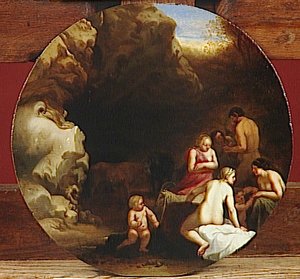
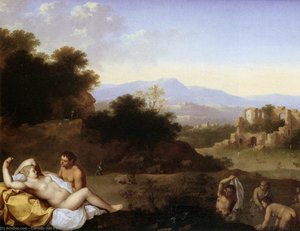
van poelenburch's travels to rome in the early 17th century significantly influenced his work, making him a leading representative of the first generation of dutch landscape painters active in italy. his small-scale paintings, often featuring italianate landscapes with small figures enacting biblical or mythological scenes, showcased his unique style. notable works:- satyrs spying on nymphs (after 1627), a characteristic example of van poelenburch's work, featuring archaic landscapes with figures bathing. (view on ArtsDot)
- council of the gods (c. 1630), a painting showcasing van poelenburch's idealized hilly landscape and roman-inspired goddesses, now housed in the mauritshuis (the hague, netherlands). (view on ArtsDot)
legacy and later life
van poelenburch's work was highly regarded by his contemporaries, including the grand duke of tuscany and the dutch stadholder. he later returned to utrecht, where he passed away in 1667, just a few years after his old teacher abraham bloemaert. key points:- born in utrecht, netherlands in 1594
- trained with abraham bloemaert
- influenced by his time in rome
- known for small-scale italianate landscapes with figures
- died in utrecht in 1667 view cornelis van poelenburch's artworks on ArtsDot learn more about cornelis van poelenburgh on wikipedia
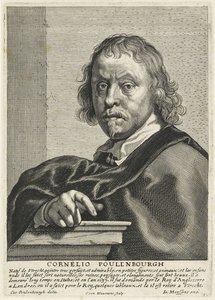
cornelis van poelenburch
1594 - 1667 , Netherlands
Quick Facts
- Artistic Movement Or Style: Dutch Landscape, Romanate
- Artists Or Movements Influenced By This Artist: ['Claude Lorraine']
- Artists Who Influenced This Artist: ['Abraham Bloemaert']
- Date Of Birth: 1594, Utrecht, Netherlands
- Date Of Death: 1667, Utrecht, Netherlands
- Full Name: Cornelis van Poelenburgh
- Nationality: Dutch
- Notable Artworks:
- Satyrs spying on nymphs
- Council of the gods
- Place Of Birth: Utrecht, Netherlands
Related Articles
Celestial Messengers: Angels in Painting – A Historical & Artistic Exploration
Explore the captivating history of angels in painting! Discover symbolism, iconic Renaissance & Byzantine masterpieces, and renowned artists. Expert insights for art lovers & collectors at ArtsDot.
Celestial Messengers: A Comprehensive Exploration of Angelic Representation in Art History
Explore the captivating history of angels in art! Discover symbolism, iconic Renaissance masterpieces & renowned artists. Expert insights for art lovers & collectors at ArtsDot.
John Ottis Adams: Capturing Rural Indiana's Luminist Spirit
Explore the serene landscapes of John Ottis Adams, a key American Impressionist of the Hoosier Group. Discover his Luminist style & forgotten legacy with ArtsDot.
Reginald Grenville Eves: Bridging Portraiture & Modern British Landscape Painting
Explore the life & work of Reginald Grenville Eves, a leading British portraitist who transitioned to captivating landscape painting. Discover his legacy and prominent works at ArtsDot.
Michelangelo's Masterpieces: Explore 25 Iconic Artworks for Your Home | ArtsDot
Journey through Michelangelo's 25 greatest artworks – from David’s strength to the Sistine Chapel’s beauty. Explore Renaissance masterpieces, art history & find museum-quality reproductions for your home at ArtsDot.com.