 Preview
 Send
Send Share
Share
 Details

 Download
 Similars
 X-Ray
X-Ray Diaporama
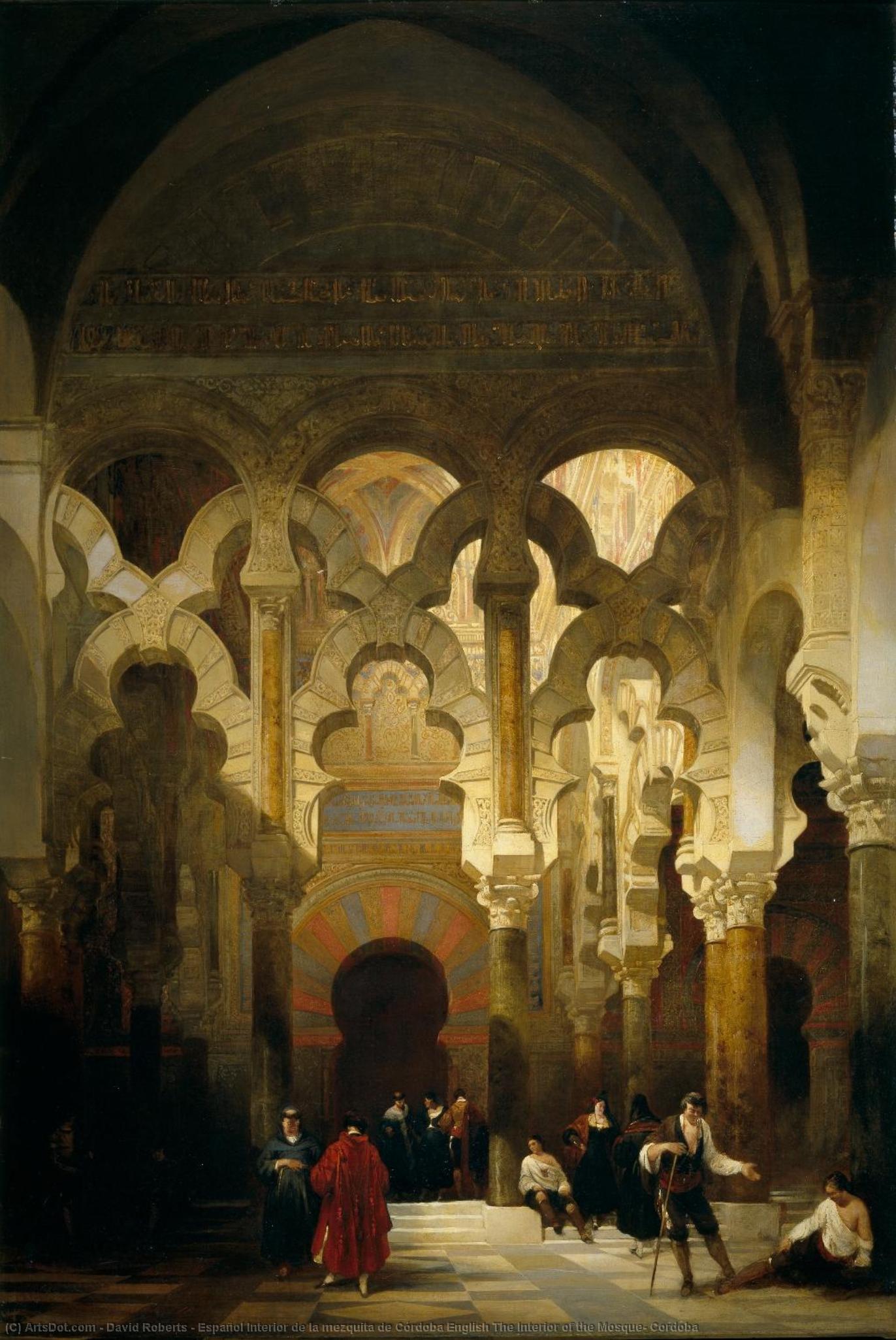
Español Interior de la mezquita de Córdoba English The Interior of the Mosque, Cordoba
 Watercolor
- WallArt
- Orientalist Romanticism
 1838
1838- 19th Century
 138.0 x 93.0 cm
 Prado Museum
 Read More
Hand Made Oil Reproduction
Hand-painted oil on canvas in your size and frame, made to order by our artists. ( Buy Print Buy Image)




P118B $10

P118H $10

P118W $10

P438Z $10

P508JH $12

P508YH $12

P805H $10

P805Z $10

P919BZ $10

P919G $10

P919XJ $10

P959ZH $10

P968JZ $12

W106C $8

W218G $10

W218JH $8

W218Y $10

W307PJ $10

W316G $10

W316PJ $8

W316Y $10

W398PJ $8

W4111J $10

W500HY $15

W500JH $15

W692G $12

W849H $8

W940BG $15

W953PJ $8




Pick from our preset sizes that match the artwork's original proportions.

You may enter your own dimensions to fit a specific frame or space. If your selected size does not match the original image's proportions, we will either crop the artwork or extend the painting with additional hand-painted elements. A digital mockup will be sent for your approval before production begins.
Please note that the on-screen preview does not reflect the actual cropping or extension. Only the mockup will accurately show the final composition.
While custom sizes are available, we recommend selecting a dimension from the predefined list to preserve the original proportions.
After order, ArtsDot.com team will email client for instructions and provide a mockup preview
Worldwide Delivery () in 3/4 weeks instead of standard 5 weeks. (31 August). No compromise on quality.

Free Worldwide Express Shipping

High-Quality Linen Canvas

Full Shipping Insurance

Customs Tax Refund Guarantee

True Color Matching Guarantee

60-Day Return Policy (Defects Only)

100% Money-Back Guarantee

Bulk Discount Offer
 Glass option is only available in size under 110 CM

Español Interior de la mezquita de Córdoba English The Interior of the Mosque, Cordoba
Reproduction Medium
Reproduction Size
-


Total Price
$ 263
A Portal to the Past: The Architectural Grandeur of Córdoba
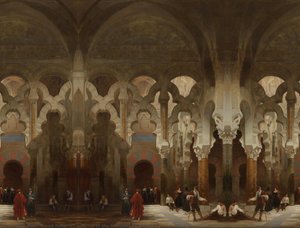
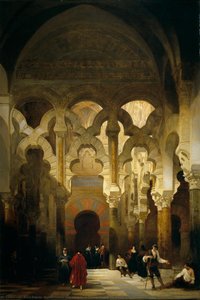
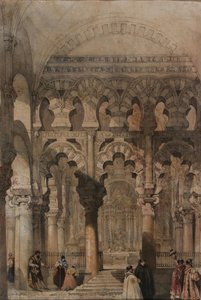
In the heart of his 1838 masterpiece, “The Interior of the Mosque, Córdoba,” David Roberts invites us to step through a threshold of time. This breathtaking work serves as more than just a depiction of a sacred space; it is a profound window into the era of Victorian Orientalism, capturing the awe-inspiring majesty of one of history's most significant architectural wonders. As the eye wanders through the vast, rhythmic expanse of the cathedral’s interior, one is immediately struck by the sheer scale of the arches that seem to stretch toward infinity. Roberts does not merely document a building; he orchestrates an encounter with the sublime, where the heavy weight of history meets the ethereal play of light.
The scene is alive with a quiet, contemplative energy. Amidst the monumental stone pillars, small figures move through the space—some draped in vibrant red garments that provide striking focal points against the more muted, earthy tones of the masonry. The presence of horses, resting near the center and edges of the composition, adds a layer of narrative depth, suggesting a moment of respite within a bustling, lived-in sanctuary. This infusion of daily life into such a grand setting creates a captivating tension between the eternal nature of the architecture and the fleeting moments of human existence.
Mastery of Light and the Art of Observation
To behold this work is to witness Roberts’s unparalleled command over watercolor and gouache. His technique is a delicate dance of precision and atmosphere, characterized by meticulous layering that builds a sense of tangible texture upon the paper. He employs chiaroscuro with masterful intent, manipulating deep shadows and brilliant highlights to sculpt the architectural forms. This interplay of light does more than define shape; it breathes life into the stone, creating a sense of depth that pulls the viewer into the very center of the nave.
The artist’s background in scene painting for the theater is evident in his ability to create immersive environments. Every wash of color and every fine line serves the purpose of atmospheric storytelling. The way light filters through the upper reaches of the arches creates a soft, diffused glow that evokes a sense of reverence and peace. For the collector or interior designer, this piece offers a sophisticated interplay of tonal complexity, making it an ideal centerpiece for spaces that require a touch of historical elegance and dramatic flair.
A Legacy of Cultural Fascination
Historically, this painting stands as a testament to the 19th-century European fascination with the Orient—a period defined by a romanticized yet deeply curious gaze toward the East. Roberts, a chronicler of the Middle East, utilized his travels to bridge the gap between distant lands and the Victorian imagination. Through his lens, the intricate Moorish influences of Córdoba are presented with an accuracy that honors the original craftsmanship while imbuing it with a sense of romantic mystery.
For those seeking to adorn a home or gallery with art that inspires conversation, this reproduction offers much more than aesthetic beauty. It provides a connection to a bygone era of exploration and discovery. The emotional impact of the work—a blend of tranquility, wonder, and respect for human heritage—makes it a timeless addition to any curated collection. It is an invitation to pause, to reflect, and to lose oneself in the magnificent, shadowed corridors of history.
Related Artworks
Artist Biography
David Roberts: A Life in Art
David Roberts (1796-1864) was a Scottish painter celebrated for his detailed Orientalist scenes and meticulous lithographs. His work provides invaluable visual documentation of the Middle East during the 19th century, bridging artistic representation with historical record.
Early Life and Career
Born on October 24, 1796, in Stockbridge near Edinburgh, Roberts’s early life was marked by practical training. At the age of ten, he began an apprenticeship with house painter and decorator Gavin Beugo. This foundational experience instilled a strong technical skill set, which he supplemented through evening art studies.
His initial professional work included redecorating Scone Palace in 1815. He then transitioned to scene painting for James Bannister’s circus, honing his skills in creating immersive environments. These early experiences laid the groundwork for his later success as a prominent Orientalist painter.
Artistic Journey and Influences
Roberts' artistic development was shaped by a growing fascination with different cultures and landscapes. While initially focused on theatrical scenery, he gradually shifted towards more independent artistic pursuits. His travels to Spain in 1832 were formative, sparking an interest in architectural detail and exotic locales.
However, it was his extensive tours of Egypt and the Near East (1838-1840) that truly defined his career. These journeys provided him with a wealth of sketches and observations which he later translated into his most famous works. His style wasn’t heavily influenced by any single artist, but rather developed from careful observation and technical mastery.
Notable Works and Achievements
Roberts is best known for The Holy Land, Syria, Idumea, Arabia, Egypt, and Nubia – a series of meticulously detailed lithograph prints. These images captured the grandeur of ancient sites and the vibrancy of contemporary life in the region.
- Lithographs: His lithographs were widely circulated and became highly influential in shaping European perceptions of the Middle East.
- Paintings: He also produced numerous oil paintings, often large-scale works depicting expansive landscapes and architectural marvels.
In 1841, Roberts was elected as a Royal Academician – a significant recognition of his contributions to the art world.
Artistic Style and Characteristics
Roberts’s artistic style is characterized by:
- Orientalism: A strong focus on depicting scenes from the Middle East, reflecting the European fascination with “the Orient.”
- Attention to Detail: His work is renowned for its precision and accuracy in rendering architectural details, costumes, and landscapes.
- Landscaping & Townscapes: He skillfully combined romantic sensibilities with detailed observation, creating evocative depictions of both natural environments and urban settings.
Legacy and Historical Significance
David Roberts’s work played a crucial role in popularizing the Middle East among European audiences. His images provided a visual window into a region that was largely unknown to many, influencing travel, scholarship, and artistic representation.
His lithographs served as important historical documents, preserving images of sites that have since changed or been lost. He left an indelible mark on the art world, inspiring subsequent generations of artists and continuing to captivate viewers today.
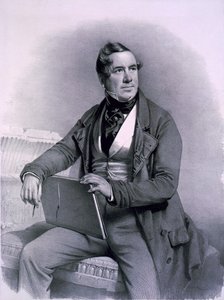
David Roberts
1796 - 1864 , United Kingdom
Quick Facts
- Birth Date: October 24, 1796
- Birth Place: Stockbridge, United Kingdom
- Death Date: 1864
- Influenced: Jenaro Pérez Villaamil, Alexander Nasmyth
- Movement: Orientalism
- Name: David Roberts
- Nationality: Scottish
- Notable Works: The Holy Land, Syria, Idumea, Arabia, Egypt, and Nubia
Related Articles

David Roberts: A Scottish Pioneer of Topographical Art & Orientalist Vision
Explore the captivating world of David Roberts, a pioneering Scottish painter renowned for his detailed Orientalist scenes & stunning Egyptian landscapes. Discover his legacy and find museum-quality reproductions at ArtsDot.

Top 10 Lithographs That Revolutionized Art | ArtsDot
Explore 10 legendary lithographs by Toulouse-Lautrec, Munch & Picasso that redefined art! Discover the stories behind these iconic prints and find museum-quality reproductions for your home decor at ArtsDot.com. Explore the full collection online.
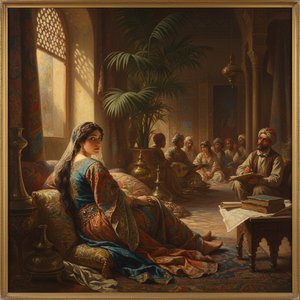
The Alluring Gaze: Orientalism in 19th-Century Art – Representation, Reception & Construction of the 'Orient'
Explore the complex history of Orientalism in 19th-century art. Discover how Western artists depicted the 'Orient,' its cultural impact, and Edward Said's critical analysis. A deep dive for art lovers & historians.
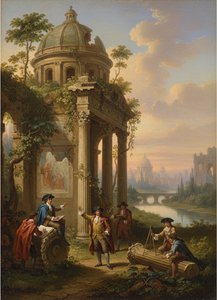
Hubert Robert: Picturing Ruins, Preserving Memory – A Study of Romantic Antiquarianism & Artistic Innovation
Explore the captivating world of Hubert Robert, master of Romantic landscape painting & 'capriccio' ruins. Discover his historical context, artistic innovations, and collecting insights with ArtsDot.
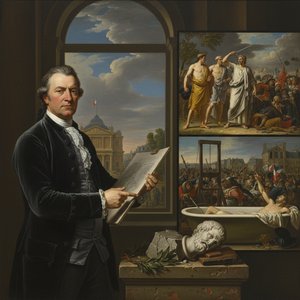
Jacques-Louis David: Neoclassical Ideals & Revolutionary Witness
Explore the life & art of Jacques-Louis David, leading Neoclassical painter of the French Revolution. Discover iconic works like 'The Death of Marat' and his lasting impact on art history. Expert analysis & high-quality reproductions at ArtsDot.