 Preview
 Send
Send Share
Share
 Details

 Download
 Similars
 X-Ray
X-Ray Diaporama
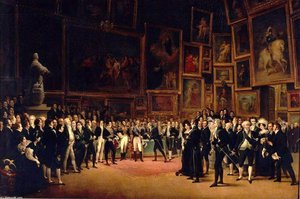
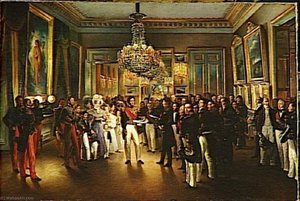
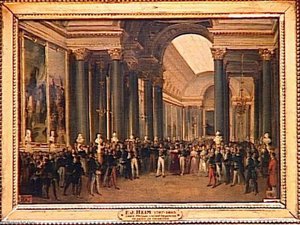
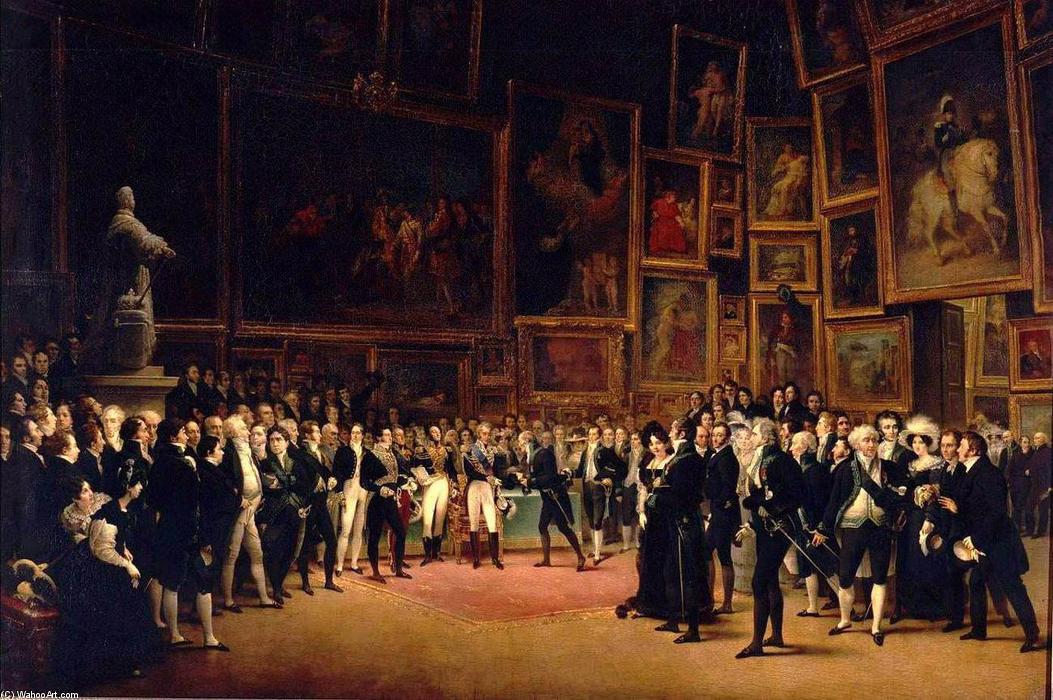
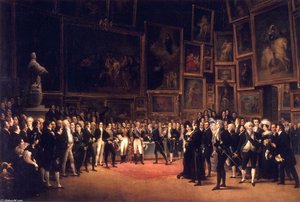
Charles V Distributing Awards to the Artists at the Close of the Salon of 1824
 Acrylic On Canvas
- WallArt
- Romantic History Painting
 1827
1827 173.0 x 256.0 cm
 The Louvre
 Read More
Giclée / Art Print
Museum-quality giclée or canvas print with fast production and flexible finish options. ( Buy Hand Made Painting Buy Image)




P118B $10

P118H $10

P118W $10

P438Z $10

P508JH $12

P508YH $12

P805H $10

P805Z $10

P919BZ $10

P919G $10

P919XJ $10

P959ZH $10

P968JZ $12

W106C $8

W218G $10

W218JH $8

W218Y $10

W307PJ $10

W316G $10

W316PJ $8

W316Y $10

W398PJ $8

W4111J $10

W500HY $15

W500JH $15

W692G $12

W849H $8

W940BG $15

W953PJ $8




Pick from our preset sizes that match the artwork's original proportions.

You may enter your own dimensions to fit a specific frame or space. If your selected size does not match the original image's proportions, we will either crop the artwork or extend the image with a mirrored or solid-fill edge. A digital mockup will be sent for your approval before production begins.
Please note that the on-screen preview does not reflect the actual cropping or extension. Only the mockup will accurately show the final composition.
While custom sizes are available, we recommend selecting a dimension from the predefined list to preserve the original proportions.
Worldwide Delivery () in 2 weeks instead of standard 4/5 weeks. (25 August)

Free Worldwide Express Shipping

High-Quality Linen Canvas

Full Shipping Insurance

Customs Tax Refund Guarantee

True Color Matching Guarantee

60-Day Return Policy (Defects Only)

100% Money-Back Guarantee

Bulk Discount Offer
 Glass option is only available in size under 110 CM

Charles V Distributing Awards to the Artists at the Close of the Salon of 1824
Giclée / Art Print
Reproduction Size
-


Total Price
$ 63
Collectible Description
A Royal Tableau: Charles V Distributing Awards at the Salon of 1824
François Joseph Heim’s “Charles V Distributing Awards to the Artists at the Close of the Salon of 1824” is more than just a historical portrait; it's a meticulously crafted tableau vivant, a frozen moment brimming with courtly grandeur and subtle social commentary. Painted in 1827, this monumental canvas transports us to the opulent heart of post-revolutionary France, capturing the complex dynamics between monarchy, artistic patronage, and the burgeoning Romantic movement. The scene unfolds within a richly appointed chamber – details like the elaborate tapestries, the heavy velvet drapery, and the gleaming chandeliers all speak to the wealth and power of the Bourbon Restoration under King Charles X. Yet, beneath this veneer of regal splendor lies a carefully orchestrated narrative of recognition, obligation, and perhaps, a touch of veiled critique.The Scene Unfolds: Composition and Figures
At the center of the composition stands Charles X himself, depicted in the uniform of the National Guard – a deliberate choice that underscores his role as both sovereign and military leader. He’s not portrayed as a benevolent benefactor, however; rather, he's presented as an active participant in the distribution of honors, his hand outstretched to bestow medals upon the assembled artists. The arrangement is remarkably complex, a carefully constructed pyramid of figures. To his right, Ambroise-Polycarpe de La Rochefoucauld, the King’s official representative, extends his own hand, symbolizing the formal transfer of recognition. The artist, François Joseph Heim, masterfully captures the diverse expressions and postures of the assembled group – from the expectant gazes of the painters to the slightly awkward poses of the courtiers. Note the inclusion of Louis Nicolas Philippe Auguste de Forbin, the director of the Louvre, a key figure in managing the Salon’s operations and ensuring the King's satisfaction. The composition isn’t merely observational; it’s designed to convey a specific hierarchy and relationship between power and artistic merit.A Romantic Masterpiece: Technique and Style
Heim’s style is firmly rooted in the academic traditions of the 18th century, yet infused with the dramatic intensity characteristic of the Romantic era. His brushwork is remarkably detailed, particularly evident in the rendering of fabrics, textures, and the intricate folds of the clothing. The use of chiaroscuro – the interplay of light and shadow – creates a sense of depth and drama, drawing the viewer’s eye to key figures within the scene. The color palette is rich and warm, dominated by deep reds, golds, and browns, reflecting the opulence of the royal court. However, Heim subtly employs cooler tones in the background, creating a visual separation between the foreground action and the more distant figures. This technique enhances the sense of space and contributes to the overall feeling of grandeur. The painting’s scale – measuring 173 x 256 cm – further emphasizes its monumental quality, immersing the viewer within the scene.Symbolism and Context: Beyond a Royal Ceremony
The “Charles V Distributing Awards” is not simply a record of a formal event; it's laden with symbolic meaning. The act of awarding medals represents recognition for artistic achievement, but also highlights the King’s role as a patron of the arts – a crucial function in maintaining social stability and legitimizing his rule after the tumultuous years of the Revolution. The presence of numerous artists underscores the importance of art to the monarchy, while their varied expressions hint at the complex relationship between artist and court. The inclusion of figures like La Rochefoucauld and de Forbin suggests the administrative machinery that facilitated this patronage system. Furthermore, the painting can be interpreted as a subtle commentary on the limitations of artistic freedom within a restrictive political environment. While celebrating artistic talent, it also subtly acknowledges the constraints imposed by royal authority.A Legacy of Grandeur: Reproduction and Display
Today, “Charles V Distributing Awards to the Artists at the Close of the Salon of 1824” resides in the Louvre Museum, a testament to its enduring artistic merit. Reproductions offer an accessible way to experience the painting’s grandeur and complexity. When selecting a reproduction, consider the quality of the print – archival inks and high-resolution paper are essential for capturing the nuances of Heim's masterful brushwork. This artwork would be a stunning addition to any grand salon or study, evoking the atmosphere of 19th-century French courtly life while serving as a reminder of the enduring power of art and patronage.Related Artworks


Artist Biography
The Grandeur of a Romantic Visionary
François Joseph Heim stands as a monumental figure in the tapestry of French art history, embodying the dramatic fervor of the Romantic era while remaining firmly anchored in the rigorous discipline of academic tradition. Born in 1787 in Belfort, within the Alsace-Lorraine region, Heim’s early life was shaped by the shifting borders and Napoleonic influences of his homeland. His artistic journey began with a profound fascination for disegno, a passion nurtured during his formative studies at the École Centrale de Strassburg. It was here that he first demonstrated an exceptional talent that would eventually lead him to the heart of the Parisian art world, establishing a foundation of technical precision that would define his entire oeuvre.
The trajectory of Heim’s career was irrevocably altered by his encounter with the legendary Horace Vernet. This relationship was far more than a mere acquaintance; it was a pivotal artistic apprenticeship that forged deep bonds and shared stylistic ambitions. Together, they navigated the competitive landscape of French neoclassicism and burgeoning Romanticism. Under the subtle guidance of Vernet, Heim learned to master the art of narrative painting, discovering how to infuse large-scale compositions with palpable emotion, atmospheric depth, and meticulous detail. This period of mentorship was essential in preparing him for the intense scrutiny of the Paris Salons, where his ability to blend classical structure with dramatic storytelling would soon earn him international renown.
Triumph at the Salon and the Mastery of History
Heim’s ascent within the prestigious French artistic hierarchy was nothing short of meteoric. The Second Salon of 1807 served as his grand introduction to the public, where he secured first prize for his breathtaking work, The Arrival of Jacob in Mesopotamia. This monumental canvas, commissioned by the influential Vivant Denon, showcased Heim’s ability to handle complex biblical narratives with a sense of epic scale and spiritual gravity. By depicting Moses leading the Israelites through the desert, Heim tapped into the era's fascination with grand historical and religious themes, establishing himself as a premier chronicler of the past.
His success was not a singular event but a sustained period of excellence. The gold medal awarded to him at the Salon of 1812 further solidified his reputation, recognizing his unique ability to convey profound spiritual truths through masterful technique. His works often featured:
- Dramatic Narrative: A focus on pivotal moments in biblical and historical chronicles that captured the imagination of the 19th-century public.
- Technical Precision: An unwavering commitment to the academic standards of anatomy, light, and texture.
- Emotional Resonance: The use of atmosphere and composition to evoke feelings of awe, tragedy, or triumph.
Legacy and Historical Significance
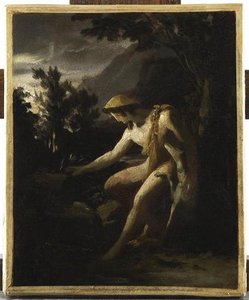
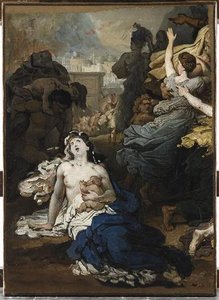
As his career progressed, Heim became a fixture of the French art establishment, known for his ability to satisfy both the intellectual demands of critics and the aesthetic desires of collectors. His depictions of religious figures, such as his celebrated work Saint John, demonstrated a capacity for intimacy that contrasted beautifully with his larger, more turbulent historical compositions like The Massacre of the Jews. This versatility allowed him to navigate the shifting tastes of a century caught between the fading echoes of Neoclassicism and the rising tide of Romanticism.
Ultimately, the significance of François Joseph Heim lies in his role as a bridge between eras. He did not merely follow trends; he synthesized the structural integrity of the old masters with the emotional intensity of his contemporaries. Through his grand Salon paintings and evocative portraits, he helped define the visual language of 19th-century France, leaving behind a legacy of works that continue to command respect for their technical brilliance and their profound ability to transport the viewer into the heart of history.
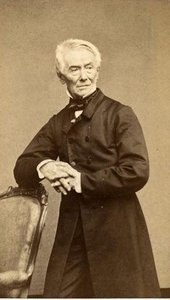
françois joseph heim
1787 - 1865 , France
Quick Facts
- Artistic Movement Or Style: Academic Art
- Artists Who Influenced This Artist: ['Vincent']
- Date Of Birth: 1787 Belfort France
- Date Of Death: 1865
- Full Name: François Joseph Heim
- Nationality: French
- Notable Artworks:
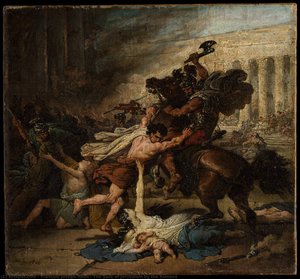
- The Sack of Jerusalem by the Romans
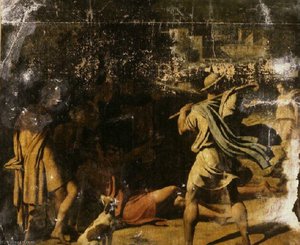
- LA ROBE ENSANGLANTE DE JOSEPH APPORTEE A JACOB
- La Prise de Troie
- Place Of Birth: Belfort France
Related Articles

Secrets Beneath the Surface: How X-Rays Reveal the True Story of Masterpiece Paintings
Explore the hidden history of fine art through X-ray imaging. Discover how radiography reveals pentimento, secret layers, and the chemical alchemy of Old Master paintings, uncovering the untold stories beneath the surface of the world's most beloved masterpieces.
Charles-André van Loo: A Study in Rococo Portraiture & the French Court's Artistic Dynamics
Explore the elegant world of Charles-André van Loo, a master of Rococo portraiture at the French court. Discover his life, techniques, and enduring influence on 18th-century art. Hand-painted reproductions available.

Charles Fraser: A Life Immersed in Light and Landscape – Exploring the Scottish Colourist's Vision
Discover the captivating world of Charles Fraser (1782-1860), a leading American artist renowned for his serene landscapes and detailed portraits of Southern life. Explore his legacy & find museum-quality reproductions at ArtsDot.
Charles Haslewood Shannon: A Study in Aestheticism, Symbolism & Fin-de-Siècle Portraiture
Explore the captivating portraits of Charles Haslewood Shannon, a leading figure of Aestheticism & Symbolism. Discover his classic style, influences, and lasting legacy in British art. View artworks & learn more.
Alexandre Cabanel: Sensuality, Tradition & the Salon's Embrace of Academic Realism
Explore the captivating world of Alexandre Cabanel, master of French Academic painting. Discover his iconic works, Salon success & lasting influence on art history. High-quality reproductions available at ArtsDot.