 Preview
 Send
Send Share
Share
 Details

 Download
 Similars
 X-Ray
X-Ray Diaporama
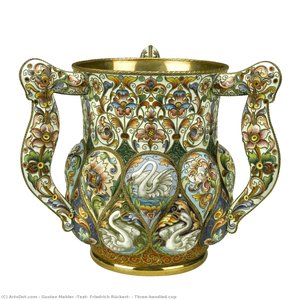
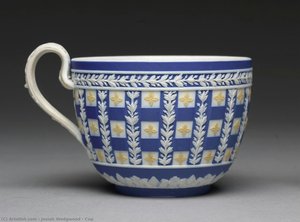
Three-handled cup


 Read More
Hand Made Oil Reproduction
Hand-painted oil on canvas in your size and frame, made to order by our artists. ( Buy Print Buy Image)




P118B $10

P118H $10

P118W $10

P438Z $10

P508JH $12

P508YH $12

P805H $10

P805Z $10

P919BZ $10

P919G $10

P919XJ $10

P959ZH $10

P968JZ $12

W106C $8

W218G $10

W218JH $8

W218Y $10

W307PJ $10

W316G $10

W316PJ $8

W316Y $10

W398PJ $8

W4111J $10

W500HY $15

W500JH $15

W692G $12

W849H $8

W940BG $15

W953PJ $8




Pick from our preset sizes that match the artwork's original proportions.

You may enter your own dimensions to fit a specific frame or space. If your selected size does not match the original image's proportions, we will either crop the artwork or extend the painting with additional hand-painted elements. A digital mockup will be sent for your approval before production begins.
Please note that the on-screen preview does not reflect the actual cropping or extension. Only the mockup will accurately show the final composition.
While custom sizes are available, we recommend selecting a dimension from the predefined list to preserve the original proportions.
After order, ArtsDot.com team will email client for instructions and provide a mockup preview
Worldwide Delivery () in 3/4 weeks instead of standard 5 weeks. (21 August). No compromise on quality.

Free Worldwide Express Shipping

High-Quality Linen Canvas

Full Shipping Insurance

Customs Tax Refund Guarantee

True Color Matching Guarantee

60-Day Return Policy (Defects Only)

100% Money-Back Guarantee

Bulk Discount Offer
 Glass option is only available in size under 110 CM

Three-handled cup
Reproduction Medium
Reproduction Size
-


Total Price
$ 263
Artwork Description
A Vessel of Gold and Sorrow: Gustav Mahler’s “Three-Handled Cup”
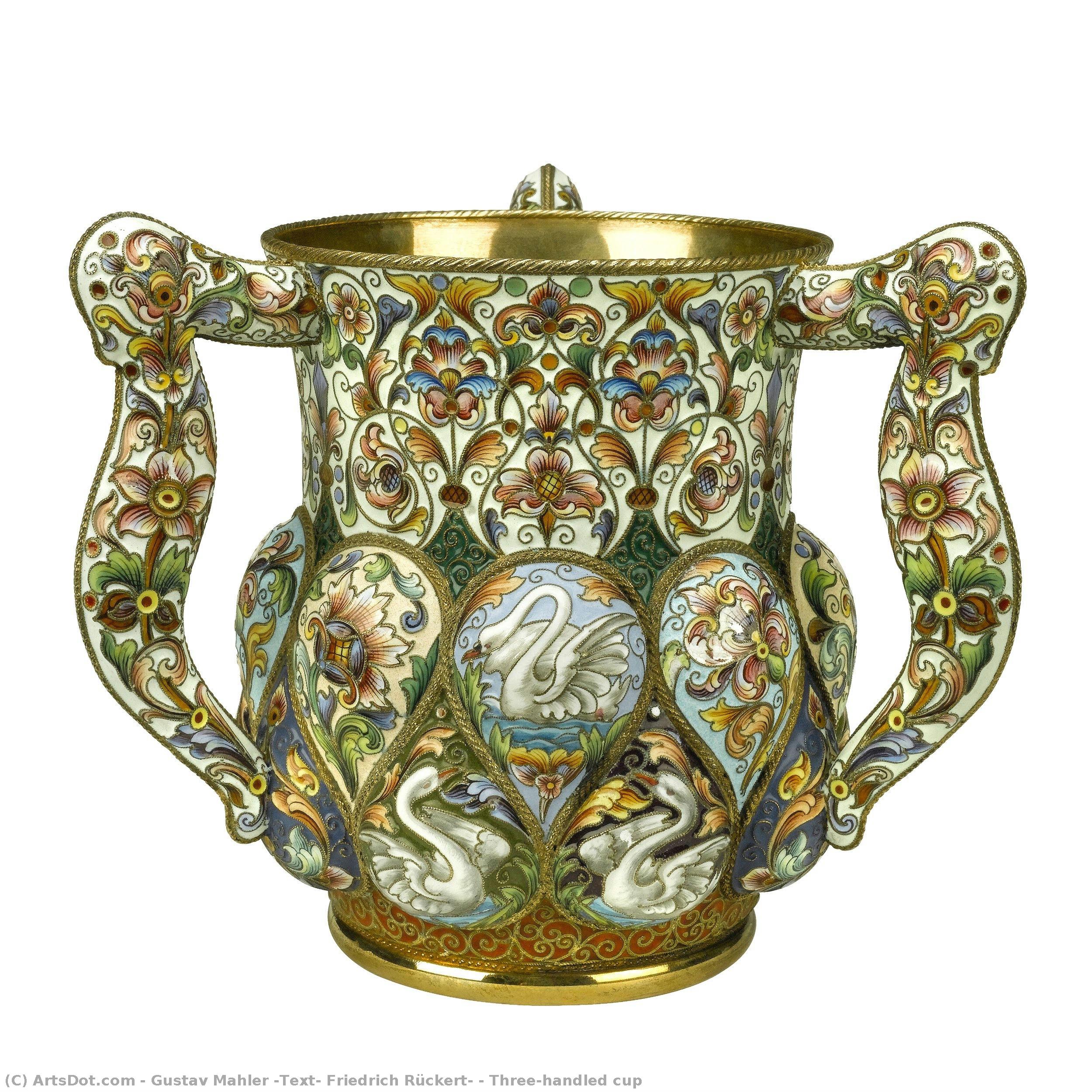
Gustav Mahler's "Three-Handled Cup," rendered in exquisite detail by the skilled hands of his student, Friedrich Rückert, is more than a mere depiction of an ornate vessel; it’s a poignant meditation on loss, memory, and the bittersweet beauty of fleeting moments. Painted with a meticulous realism characteristic of late Romanticism, this artwork transcends its subject matter to become a window into the composer's deeply felt emotional landscape. The image itself—a close-up capturing the cup’s intricate gold trim and swirling decorative motifs—is deceptively simple, yet brimming with layers of meaning.
The piece belongs to a pivotal period in Mahler’s artistic development, following his near-fatal hemorrhage in 1901. This harrowing experience profoundly shaped his work, imbuing it with an undercurrent of melancholy and introspection. The Rückert-Lieder, composed during this intensely personal time, reflect the composer's grappling with mortality and the fragility of human existence. The “Three-Handled Cup” serves as a visual embodiment of these themes – each handle representing a potential path, a lost connection, or a cherished memory reaching out from the past.
Technique and Materials: A Symphony in Detail
Mahler’s choice of medium—likely porcelain or ceramic—is crucial to understanding the artwork's impact. The smooth, cool surface of the material contrasts sharply with the shimmering gold accents, creating a visual tension that mirrors the emotional complexity within the piece. Rückert’s masterful execution is evident in every delicate curve and precisely rendered detail. Notice the painstaking attention paid to the swirling patterns—likely inspired by Byzantine mosaics or the intricate designs found in medieval illuminated manuscripts – these aren't merely decorative; they represent the labyrinthine nature of memory, constantly shifting and reforming with each recollection.
The gold trim itself is not simply applied; it’s meticulously built up through layers of glaze, creating a tactile richness that invites the viewer to almost reach out and touch its surface. This technique, combined with Rückert's exceptional draftsmanship, elevates the artwork beyond a simple representation, transforming it into a three-dimensional experience.
Symbolism and Narrative Resonance
The “Three-Handled Cup” is laden with symbolic weight. The cup itself represents containment—holding within it both precious memories and the sorrow of their loss. Each handle can be interpreted as a different facet of remembrance: one might symbolize familial bonds, another, lost loves, and yet another, the fleeting beauty of youth. The swans adorning the surface are particularly significant; often associated with grace, purity, and melancholy in European art, they serve as poignant reminders of transience and the inevitable passage of time.
Furthermore, the artwork’s quiet intimacy—the close-up perspective—suggests a personal, almost private moment. It's as if we are granted access to a cherished memory, carefully guarded and revealed only in this intimate detail. The overall effect is profoundly moving, evoking a sense of nostalgia and a recognition of the enduring power of human emotion.
A Legacy of Emotion: Reproductions and Artistic Inspiration
Today, reproductions of Mahler’s “Three-Handled Cup” offer art enthusiasts and collectors a unique opportunity to experience the depth and beauty of this remarkable artwork. ArtsDot's faithful recreations capture not only the visual details but also the emotional essence that made the original so compelling. This piece is an ideal addition to any collection, serving as both a stunning decorative object and a poignant reminder of the complexities of human experience.
Beyond its aesthetic appeal, “Three-Handled Cup” stands as a testament to Mahler’s genius—a profound exploration of memory, loss, and the enduring power of art to capture the essence of our shared humanity. Consider it not just a painting, but a portal into the soul of one of music's greatest composers.
Related Artworks

Artist Biography
Gustav Mahler: A Titan of Late Romantic Expression
Gustav Mahler (1860-1911) stands as one of the most influential composers of the late Romantic era, a figure whose music continues to resonate with audiences worldwide. Born in Kalisz, Austria—now Poznań, Poland—into a family of modest means rooted in Bohemian Jewish tradition, Mahler’s early life instilled within him an enduring sense of displacement and exile, shaping his artistic vision profoundly. From the outset, he possessed exceptional musical talent, nurtured by his father's encouragement and honed through rigorous study at Vienna Conservatory where he forged friendships with luminaries like Arnold Schoenberg—a connection that would prove pivotal in shaping the trajectory of 20th-century music.- Early Influences & Musical Development: Mahler’s formative years were marked by exposure to diverse musical traditions, including folk melodies and operatic grandeur. His fascination with Wagnerian drama fueled his ambition to explore grand orchestral narratives, while simultaneously cultivating a sensitivity for the subtleties of vocal expression—a duality that would characterize his compositional style throughout his career.
- The Wunderhorn Cycle & Symphonic Breakthroughs: Mahler’s breakthrough came with his masterful adaptation of Achim von Arnim and Clemens Brentano's *Des Knaben Wunderhorn*, a collection of German folk poems imbued with mythic grandeur and psychological depth. This project solidified Mahler’s stylistic signature—a fusion of orchestral power and lyrical introspection—and established him as a leading voice in the burgeoning symphonic movement. His Second Symphony, premiered in 1895, exemplifies this approach, blending dramatic intensity with moments of exquisite beauty.
Musical Style & Philosophical Vision
Mahler’s musical style is instantly recognizable for its monumental scale and emotional complexity. Unlike many composers of his time who favored formal conventions, Mahler championed a bold aesthetic that prioritized expressive nuance over rigid adherence to tradition. His symphonies—particularly Nos. 5, 6 and 8—are characterized by their sprawling structures, incorporating choral passages alongside instrumental solos, creating immersive sonic landscapes that convey profound psychological states. He deliberately eschewed the prevailing pessimism of his era, instead articulating a belief in the enduring power of human spirit—a conviction reflected in the thematic core of his Eighth Symphony, which premiered to rapturous acclaim in 1910.- The Influence of Rückert Poetry: Mahler’s artistic inspiration stemmed largely from the poetry of Friedrich Rückert, whose melancholic verses explored themes of loss, longing and existential contemplation. The Rückert-Lieder cycle—a series of five songs based on Rückert's poems—represents a cornerstone of Mahler’s oeuvre, demonstrating his ability to transform poetic imagery into musical form with unparalleled sensitivity.
- Formal Innovation & Orchestral Mastery: Mahler pushed the boundaries of orchestral technique, experimenting with innovative instrumentation and harmonic progressions that anticipated developments in modernist music. His masterful orchestration—marked by a distinctive blend of tonal color and rhythmic dynamism—continues to inspire composers today.
Legacy & Recognition
Despite initial resistance from critics and audiences alike, Mahler’s music gained widespread acclaim posthumously, securing his place as one of the most frequently performed and recorded composers of the 20th century. His symphonies—particularly Nos. 5, 6 and 8—remain staples of orchestral repertoire, captivating listeners with their emotional depth and intellectual rigor. Furthermore, Mahler’s influence extends beyond the concert hall, inspiring artists across disciplines—literature, film and visual arts—who recognize in his music a profound articulation of human experience. The Gustav Mahler Society continues to champion his legacy, ensuring that his groundbreaking contributions to musical history are remembered for generations to come.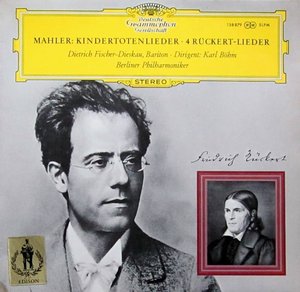
gustav mahler (text: friedrich rückert)
1860 - 1911 , Austria
Quick Facts
- Artistic Movement Or Style: Late Romantic
- Artists Who Influenced This Artist:
- Arnold Schoenberg
- Ludwig van Beethoven
- Date Of Birth: July 7, 1860
- Date Of Death: May 18, 1911
- Full Name: Gustav Mahler
- Nationality: Austrian
- Notable Artworks:
- Symphony No. 5
- Kindertotenlieder
- Des Knaben Wunderhorn
- Place Of Birth: Kalisz, Austria
Related Articles
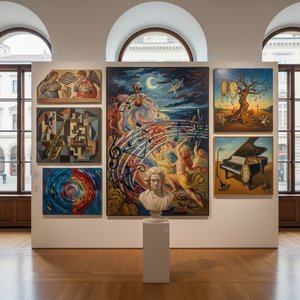
Harmonies on Canvas: Exploring the Visual Representation of Music in Art History
Explore the fascinating history of music's visual representation in art! From ancient symbolism to modern abstraction, discover how artists have captured sound and emotion on canvas. Expert insights & stunning examples.

The Alchemy of Clay: A Collector's Guide to the Mastery, Texture, and Timeless Form of Ceramic Art
Discover the profound beauty of ceramic art. Our expert guide explores the alchemy of clay, texture, and glaze, offering collectors deep insights into mastering earth and fire to create timeless, sculptural masterpieces for any curated collection.
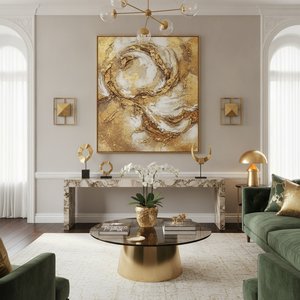
Golden Glow: How to Use Metallic Gold Artworks to Elevate Your Home Decor with Timeless Luxury
Discover how to elevate your home with the timeless elegance of metallic gold artworks. From sculptural metal pieces to gilded oil paintings, learn expert interior design tips for integrating luxurious gold accents into your space with sophistication and grace.
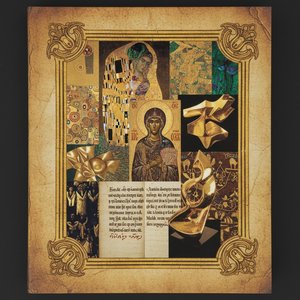
The Allure of Gold in Art History: Symbolism, Technique & Cultural Significance
Explore the rich history of gold in art! Discover symbolism, techniques & cultural significance from ancient civilizations to Klimt's masterpieces. Expert insights for collectors at ArtsDot.

Golden Masterpieces: 10 Paintings That Define Art History | ArtsDot
Explore 10 breathtaking paintings where gold leaf shines! From Klimt to Byzantine icons, discover art history’s most gilded masterpieces. Find museum-quality reproductions & elevate your home decor with ArtsDot. Explore the full collection online.