 Preview
 Send
Send Share
Share
 Details

 Download
 Similars
 X-Ray
X-Ray Diaporama
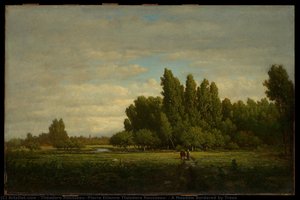
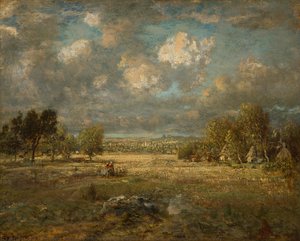
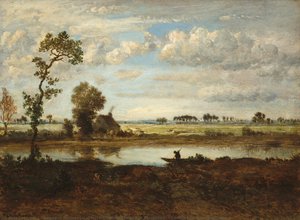
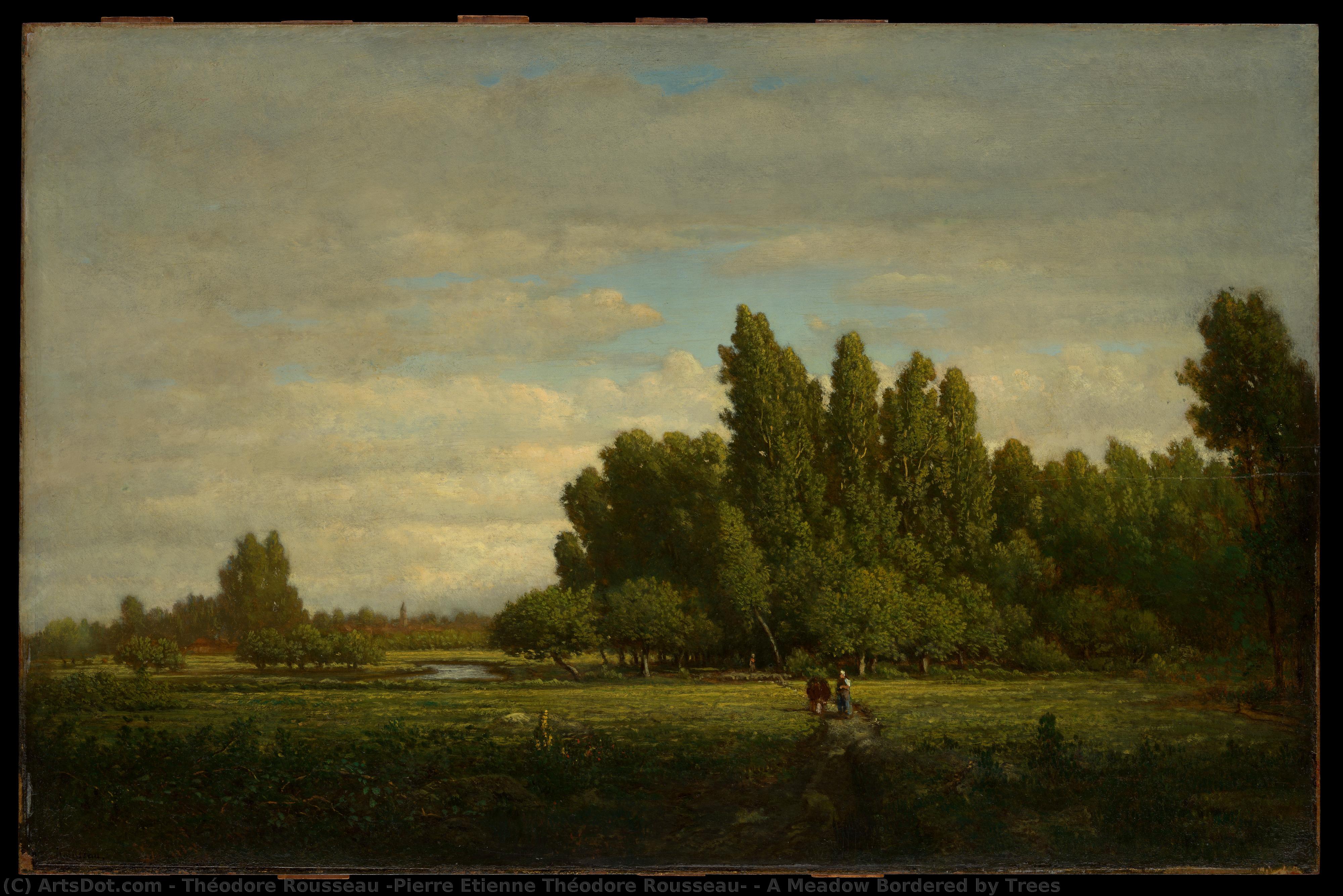
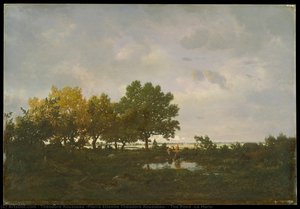
A Meadow Bordered by Trees
 Acrylic On Canvas
- WallArt
- Barbizon School
 1845
1845 42.0 x 62.0 cm
 Metropolitan Museum of Art
 Read More
Hand Made Oil Reproduction
Hand-painted oil on canvas in your size and frame, made to order by our artists. ( Buy Print Buy Image)




P118B $10

P118H $10

P118W $10

P438Z $10

P508JH $12

P508YH $12

P805H $10

P805Z $10

P919BZ $10

P919G $10

P919XJ $10

P959ZH $10

P968JZ $12

W106C $8

W218G $10

W218JH $8

W218Y $10

W307PJ $10

W316G $10

W316PJ $8

W316Y $10

W398PJ $8

W4111J $10

W500HY $15

W500JH $15

W692G $12

W849H $8

W940BG $15

W953PJ $8




Pick from our preset sizes that match the artwork's original proportions.

You may enter your own dimensions to fit a specific frame or space. If your selected size does not match the original image's proportions, we will either crop the artwork or extend the painting with additional hand-painted elements. A digital mockup will be sent for your approval before production begins.
Please note that the on-screen preview does not reflect the actual cropping or extension. Only the mockup will accurately show the final composition.
While custom sizes are available, we recommend selecting a dimension from the predefined list to preserve the original proportions.
After order, ArtsDot.com team will email client for instructions and provide a mockup preview
Worldwide Delivery () in 3/4 weeks instead of standard 5 weeks. (17 August). No compromise on quality.

Free Worldwide Express Shipping

High-Quality Linen Canvas

Full Shipping Insurance

Customs Tax Refund Guarantee

True Color Matching Guarantee

60-Day Return Policy (Defects Only)

100% Money-Back Guarantee

Bulk Discount Offer
 Glass option is only available in size under 110 CM

A Meadow Bordered by Trees
Reproduction Medium
Reproduction Size
-


Total Price
$ 263
Artwork Description
A Window Into Rousseau’s Vision of Rural Tranquility
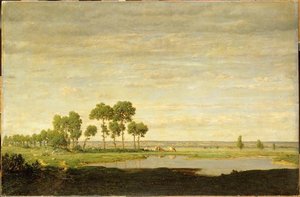
Théodore Rousseau (1812-1867), arguably the most influential figure in the Barbizon School, didn't merely depict landscapes; he sought to capture their soul. “A Meadow Bordered by Trees,” housed at The Metropolitan Museum of Art, exemplifies this ambition with remarkable precision and a profound connection to the natural world—a connection deeply rooted in Rousseau’s philosophical convictions. Painted around 1845-1850, this canvas transcends mere representation, presenting an immersive experience for the viewer that echoes the artist's unwavering belief in the restorative power of nature.Compositional Mastery: The Planimetric Technique
Rousseau’s distinctive approach to landscape painting stemmed from a revolutionary technique he termed “planimetric.” Observing the scene from a shaded position—likely beneath a canopy of trees—he skillfully employed parallel strips of color to create an illusion of depth and atmospheric perspective. This method, meticulously executed, isn't simply about accurate depiction; it’s about conveying a feeling – a palpable stillness and serenity that invites contemplation. The artist deliberately positioned himself to capture the diffused light filtering through the foliage, mirroring the mood he wished to evoke in his artwork.Subject Matter & Symbolism: Embracing Imperfection
The meadow itself is rendered with painstaking detail, showcasing Rousseau’s dedication to capturing the subtle nuances of organic forms. Scattered figures—a man and a horse—are subtly integrated into the landscape, emphasizing humanity's harmonious coexistence with its surroundings. Importantly, Rousseau deliberately avoided idealized beauty; instead, he embraced imperfection – dappled sunlight, uneven textures, and muted tones – mirroring the realities of rural life and reflecting his humanist philosophy. These elements serve as reminders that true grandeur resides not in flawless perfection but in accepting the inherent beauty of the natural world.Historical Context: The Barbizon School’s Reaction Against Romantic Excess
“A Meadow Bordered by Trees” emerged during a pivotal moment in artistic history—the waning years of Romanticism and the ascendance of Realism. Artists like Rousseau vehemently opposed the theatrical grandeur and emotional melodrama favored by their predecessors, advocating for an honest portrayal of everyday life and prioritizing observation over imagination. The Barbizon School’s rejection of Romantic idealism represented a significant shift towards valuing empirical experience and capturing the essence of the natural world with uncompromising realism. This painting stands as a testament to this movement's enduring legacy.Emotional Resonance: Finding Peace Amidst Nature’s Embrace
Ultimately, Rousseau’s masterpiece succeeds in transporting the viewer into a realm of tranquility and contemplation. The muted palette—dominated by greens, browns, and blues—creates an atmosphere of profound peace, mirroring the artist’s own spiritual convictions. Viewing “A Meadow Bordered by Trees” is akin to stepping into a sanctuary – a space where one can reconnect with the rhythms of nature and find solace in its enduring beauty. It remains a powerful reminder that art can serve as a conduit for emotional experience and inspire us to appreciate the profound connections between humanity and the environment.Related Artworks
Artist Biography
Théodore Rousseau: The Soul of the Forest
Étienne Pierre Théodore Rousseau (1812-1867) stands as a cornerstone of French Barbizon School painting, an artistic movement that championed realism and celebrated the grandeur of rural landscapes. Born in Paris to a bourgeois family, Rousseau’s early life was marked by a father who initially resisted his son's passion for art – a sentiment that ultimately softened as he witnessed Rousseau’s unwavering dedication to his craft. This familial support proved crucial as Rousseau navigated the turbulent waters of Parisian artistic circles and faced repeated rebuffs from the Salon authorities, institutions notoriously resistant to avant-garde ideas.- Early Training & Influences: Rousseau's initial artistic education was modest, yet he quickly demonstrated exceptional talent. Recognizing his aptitude, his father encouraged him to pursue painting seriously, prioritizing it over business ventures. He absorbed influences from artists like Jean-François Millet and Eugène Delacroix, whose depictions of peasant life and dramatic landscapes respectively instilled in him a profound appreciation for capturing the essence of nature.
- The Barbizon School & Artistic Philosophy: Rousseau’s artistic vision centered on portraying the natural world with uncompromising accuracy. Rejecting idealized representations favored by Romanticism, he embraced the Barbizon aesthetic – characterized by muted colors, sketchy brushwork, and a focus on atmospheric perspective—to convey the emotional impact of landscapes. He believed that art should serve as a conduit for observing and understanding nature, mirroring its sublime beauty.
- Notable Paintings: Rousseau achieved considerable fame during his lifetime, securing commissions from prominent patrons and exhibiting regularly at the Salon. Among his most celebrated paintings are “The Great Oaks of the Vieux Bas-Breau,” a monumental depiction of ancient trees bathed in golden light; "View of the Puy de Dome and Royat," showcasing a breathtaking sunset over the volcanic peaks of France; and “La Grenouillère” – a poignant portrayal of a picnic scene on the Loire River, imbued with melancholic beauty.
- Influence on Impressionism: Rousseau’s unwavering commitment to realism profoundly impacted subsequent artistic movements. Although he predated Impressionism, his pioneering approach to landscape painting paved the way for artists like Claude Monet and Pierre-Auguste Renoir who sought to capture fleeting moments of light and color—a departure from Rousseau's meticulous observation of natural phenomena.
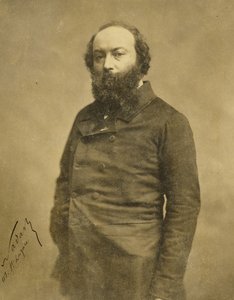
théodore rousseau (pierre etienne théodore rousseau)
1812 - 1867 , France
Quick Facts
- Artistic Movement Or Style: Barbizon School
- Artists Or Movements Influenced By This Artist: ['Impressionism']
- Artists Who Influenced This Artist: ['Jean-François Millet']
- Date Of Birth: April 15, 1812
- Date Of Death: December 22, 1867
- Full Name: Étienne Pierre Théodore Rousseau
- Nationality: French
- Notable Artworks:
- Les Chênes d'Apremont
- The Great Oaks of the Vieux Bas-Breau
- Place Of Birth: Paris, France
Related Articles
The Barbizon School: Pioneering Realism & the Pastoral Vision in 19th-Century French Painting
Explore the Barbizon School's pivotal role in 19th-century French painting. Discover how these artists revolutionized landscape art with their commitment to Realism and a profound connection to nature. Learn about key figures like Rousseau, Millet & Corot.
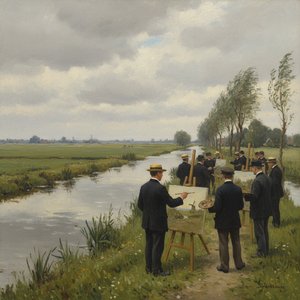
The Hague School: Realism, Atmosphere & the Dawn of Dutch Impressionism
Explore the Hague School's pivotal role in Dutch art history. Discover realism, atmospheric landscapes & its influence on Impressionism. Learn about key artists like Mauve & Maris with ArtsDot.
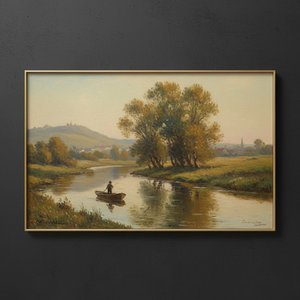
Jean-Baptiste-Camille Corot: A Poetic Realism – Bridging the Barbizon School and Early Impressionism
Explore the life & art of Camille Corot, a pivotal figure bridging the Barbizon School & Impressionism. Discover his poetic realism, signature style, and lasting influence on landscape painting. Learn more at ArtsDot.
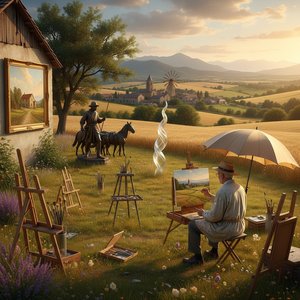
Echoes of Rural Life: Art's Enduring Representations of the Countryside
Explore the rich history of rural life in art! Discover masterpieces from Millet to Mauve & beyond. Learn about Realism, Barbizon School & find inspiration for your home with ArtsDot.
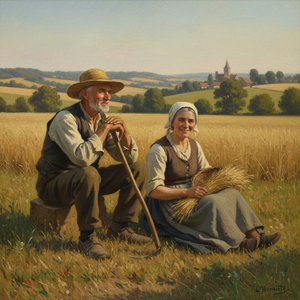
Léon Augustin L'Hermitte: Capturing the Soul of French Rural Life
Discover the captivating realist paintings of Léon Augustin L'Hermitte, masterfully depicting French rural life. Explore his technique, influences & legacy – a cornerstone of 19th-century art.