 Preview
 Send
Send Share
Share
 Details

 Download
 Similars
 X-Ray
X-Ray Diaporama
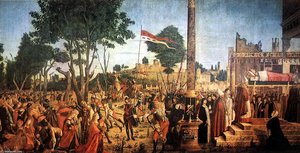
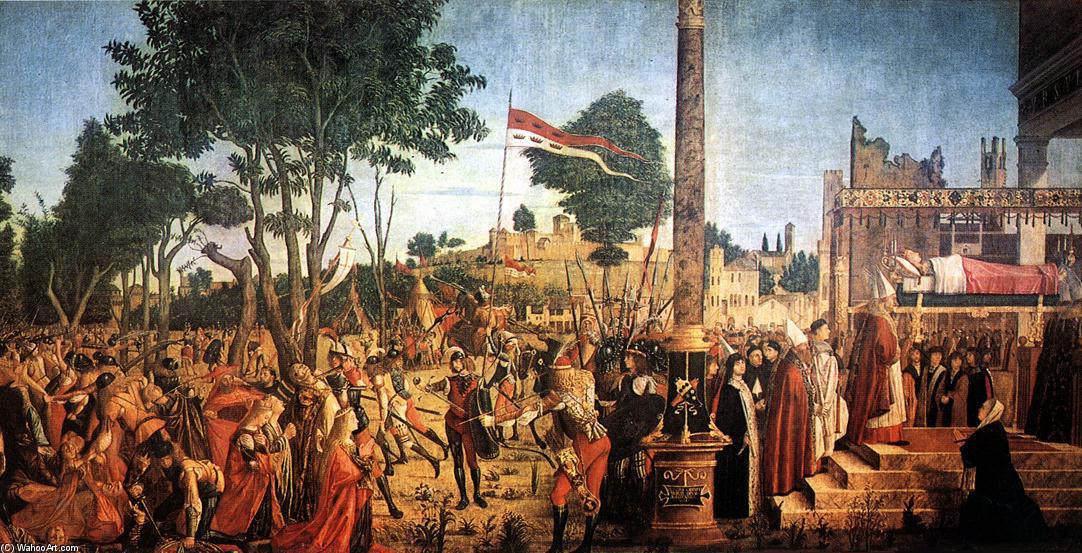
Martyrdom of the Pilgrims and the Funeral of St Ursula
 Oil On Panel
- Early Netherlandish
 1493
1493 271.0 x 561.0 cm
 Gallerie dell'Accademia
 Read More
Giclée / Art Print
Museum-quality giclée or canvas print with fast production and flexible finish options. ( Buy Hand Made Painting Buy Image)




P118B $10

P118H $10

P118W $10

P438Z $10

P508JH $12

P508YH $12

P805H $10

P805Z $10

P919BZ $10

P919G $10

P919XJ $10

P959ZH $10

P968JZ $12

W106C $8

W218G $10

W218JH $8

W218Y $10

W307PJ $10

W316G $10

W316PJ $8

W316Y $10

W398PJ $8

W4111J $10

W500HY $15

W500JH $15

W692G $12

W849H $8

W940BG $15

W953PJ $8




Pick from our preset sizes that match the artwork's original proportions.

You may enter your own dimensions to fit a specific frame or space. If your selected size does not match the original image's proportions, we will either crop the artwork or extend the image with a mirrored or solid-fill edge. A digital mockup will be sent for your approval before production begins.
Please note that the on-screen preview does not reflect the actual cropping or extension. Only the mockup will accurately show the final composition.
While custom sizes are available, we recommend selecting a dimension from the predefined list to preserve the original proportions.
Worldwide Delivery () in 2 weeks instead of standard 4/5 weeks. (6 September)

Free Worldwide Express Shipping

High-Quality Linen Canvas

Full Shipping Insurance

Customs Tax Refund Guarantee

True Color Matching Guarantee

100-Day Return Policy (Defects Only)

100% Money-Back Guarantee

Bulk Discount Offer
 Glass option is only available in size under 110 CM

Martyrdom of the Pilgrims and the Funeral of St Ursula
Giclée / Art Print
Reproduction Size
-


Total Price
$ 63
The Martyrdom’s Echoes: Carpaccio's Dramatic Depiction of St. Ursula
Vittore Carpaccio’s “Martyrdom of the Pilgrims and the Funeral of St. Ursula,” painted in 1493, isn’t merely a historical scene; it’s a meticulously crafted tableau brimming with narrative power and Venetian artistic sensibilities. Measuring an impressive 271 x 561 cm, this large-scale panel transports viewers to a pivotal moment in the legend of St. Ursula, a figure revered for her unwavering faith and tragic demise alongside eleven thousand virgins on their pilgrimage to Rome. More than just recounting a story, Carpaccio masterfully employs Early Netherlandish techniques—a style he absorbed from masters like Antonello da Messina—to create an intensely emotional and visually arresting experience.
The painting unfolds across a vast urban landscape, dominated by a towering column that serves as both a symbolic anchor and a structural element defining the composition. Buildings rise in the background, rendered with a deliberate flatness characteristic of the period, while foreground figures are depicted with remarkable realism – their clothing intricately detailed, their expressions conveying a spectrum of emotions from grief to solemnity. The use of linear perspective, though not entirely adhering to Renaissance ideals, establishes a clear sense of depth and spatial arrangement, guiding the viewer’s eye through the complex narrative.
A Symphony of Color and Texture
Carpaccio's mastery lies in his ability to imbue the scene with atmosphere and emotion through color and texture. The palette is predominantly rich and earthy – deep reds, browns, and greens— punctuated by touches of gold and white that highlight key figures and architectural details. He achieves texture not through meticulous brushwork alone, but through layering paint, creating a subtly rough surface, particularly noticeable in the folds of clothing and the weathered facades of buildings. This tactile quality invites close inspection, revealing the artist’s deliberate attention to detail.
The lighting is diffused, suggesting an overcast day or perhaps the illumination of an interior space, casting soft shadows that sculpt form and define volume. The use of chiaroscuro—the dramatic contrast between light and dark—intensifies the emotional impact, drawing attention to moments of heightened drama, such as the spear thrust into St. Ursula’s body. The overall effect is one of profound solemnity, reflecting the gravity of the event depicted.
Symbolism Woven into the Narrative
Beyond its immediate depiction of a tragic event, “Martyrdom of the Pilgrims” is rich in symbolic meaning. The column, a recurring motif in Carpaccio’s work, represents authority and divine power—a visual reminder of the sanctity of St. Ursula's faith. The procession itself, with its diverse array of figures, symbolizes the universality of Christian devotion. The flags and banners fluttering in the wind add to the festive yet mournful atmosphere, suggesting both celebration and lament.
Furthermore, the inclusion of a didascalos – a narrator figure often depicted as an angel – reinforces the painting’s narrative function, guiding the viewer through the complex sequence of events. The presence of Venetian civic figures within the scene underscores the importance of this legend to the city's identity and its patron, the Loredan family.
A Legacy in Reproduction
Created using oil on panel, “Martyrdom of the Pilgrims” stands as a testament to Carpaccio’s skill and artistic vision. Today, reproductions of this powerful work offer an exceptional opportunity to experience its grandeur and emotional depth. Whether adorning a grand salon or a more intimate space, a high-quality reproduction captures the essence of Carpaccio's masterpiece—a poignant reminder of faith, sacrifice, and the enduring power of storytelling.
Further research into this captivating artwork can be found at The Web Gallery of Art, and detailed information about the artist is available on Wikipedia.
Related Artworks
Artist Biography
early life and training
vittore carpaccio, a prominent italian painter, was born in venice around 1465. he studied under the tutelage of gentile bellini, a renowned artist of the venetian school. this apprenticeship laid the foundation for carpaccio's future success.artistic style and influences
carpaccio's style was characterized by its conservative nature, showing minimal influence from the humanist trends that transformed italian renaissance painting during his lifetime. his work was influenced by antonello da messina's style and early netherlandish art. this unique blend of styles resulted in a distinctive approach to venetian painting.notable works
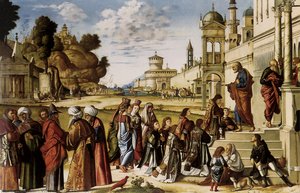
- the legend of saint ursula, a cycle of nine paintings, is carpaccio's most famous work. this series, now housed in the gallerie dell'accademia, showcases his mastery of narrative painting.
- glory of st. ursula altarpiece (1491) demonstrates carpaccio's skill in capturing light and color, reminiscent of giovanni bellini's style.
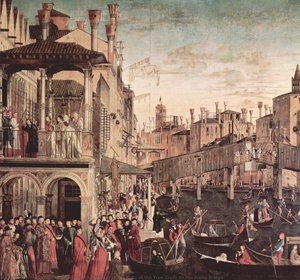
- miracle of the relic of the cross at the ponte di rialto (1494) highlights carpaccio's ability to balance composition and narrative.
career highlights and legacy
- carpaccio's principal works were executed between 1490 and 1519, ranking him among the early masters of the venetian renaissance.
- his orientalist style, as seen in st. george baptizing the selenites, reflects a new fascination with the levant.
- carpaccio's work has been somewhat overlooked in comparison to his contemporaries, such as giovanni bellini or giorgione.
references and further reading
discover more about vittore carpaccio and the venetian school on ArtsDot.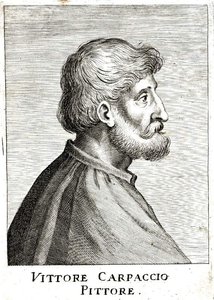
Vittore Carpaccio
1465 - 1526 , Italy
Quick Facts
- Artistic Movement Or Style: Early Venetian Renaissance
- Artists Or Movements Influenced By This Artist: ['Early Netherlandish Painting']
- Artists Who Influenced This Artist:
- Antonello da Messina
- Gentile Bellini
- Date Of Birth: Venice, Italy (c. 1465)
- Date Of Death: 1526
- Full Name: Vittore Carpaccio
- Nationality: Italian
- Notable Artworks:
- The Legend of Saint Ursula
- Glory of St. Ursula Altarpiece
- Miracle of the Relic of the Cross at the Ponte di Rialto
- Place Of Birth: Venice
Related Articles
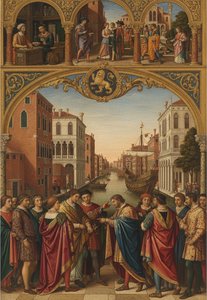
Vittore Carpaccio: Venetian Renaissance Narrative & the Poetics of Detail
Explore the captivating world of Vittore Carpaccio, a master storyteller of the Venetian Renaissance. Discover his intricate details, narrative cycles like 'The Legend of St. Ursula,' and unique artistic style.
High Medieval Art: 10 Masterpieces That Shaped an Era | ArtsDot
Journey through High Medieval Art! Explore 10 iconic masterpieces – from Giotto's frescoes to stunning Gothic cathedrals. Discover the stories behind these timeless paintings, sculptures & illuminated manuscripts. Find museum-quality art reproductions at ArtsDot.com.
Late Medieval Masterpieces: 10 Artworks That Defined an Era | ArtsDot
Journey through 10 defining Late Medieval masterpieces – from Giotto's frescoes to Jan van Eyck’s realism. Explore the stories, techniques & vibrant colors of Gothic art. Find museum-quality reproductions and elevate your home decor with ArtsDot.com! Discover all masterpieces on ArtsDot.com
Oil on Panel: A Historical Survey of Technique, Support, and Aesthetic Impact
Explore the rich history of oil on panel painting! Discover Renaissance techniques, support construction, & the enduring legacy of this masterful art form. Expert insights for collectors and enthusiasts.
Hieronymus Bosch's Masterpieces: 25 Visions of Art & Morality | ArtsDot
Delve into the enigmatic world of Hieronymus Bosch! Explore 25 iconic paintings – from 'The Garden of Earthly Delusions' to his haunting triptychs. Discover the symbolism, history & artistry behind these Renaissance masterpieces. Find museum-quality art reproductions at ArtsDot.com.