 Send
Send Share
Share
 Details

 Download
 Similars
 Diaporama
Piano Concerto, op. 42 - Programmatic keywords
 Photography
- Photo
 1942
1942- Early Modern
 34.0 x 27.0 cm
 Arnold Schönberg Center
 Read More
Hand Made Oil Reproduction
Hand-painted oil on canvas in your size and frame, made to order by our artists. ( Buy Print Buy Image)




































Pick from our preset sizes that match the artwork's original proportions.

You may enter your own dimensions to fit a specific frame or space. If your selected size does not match the original image's proportions, we will either crop the artwork or extend the painting with additional hand-painted elements. A digital mockup will be sent for your approval before production begins.
Please note that the on-screen preview does not reflect the actual cropping or extension. Only the mockup will accurately show the final composition.
While custom sizes are available, we recommend selecting a dimension from the predefined list to preserve the original proportions.
After order, ArtsDot.com team will email client for instructions and provide a mockup preview
Worldwide Delivery () in 3/4 weeks instead of standard 5 weeks. (17 August). No compromise on quality.

Free Worldwide Express Shipping

High-Quality Linen Canvas

Full Shipping Insurance

Customs Tax Refund Guarantee

True Color Matching Guarantee

60-Day Return Policy (Defects Only)

100% Money-Back Guarantee

Bulk Discount Offer
 Glass option is only available in size under 110 CM

Piano Concerto, op. 42 - Programmatic keywords
Reproduction Medium
Reproduction Size
-


Total Price
$ 263
Artwork Description
Unveiling a Hidden Dialogue Between Music and Paper
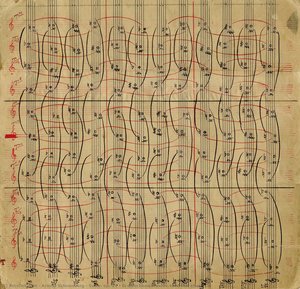
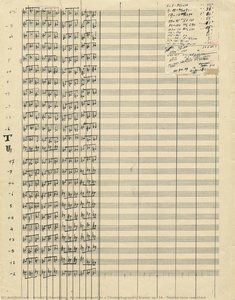
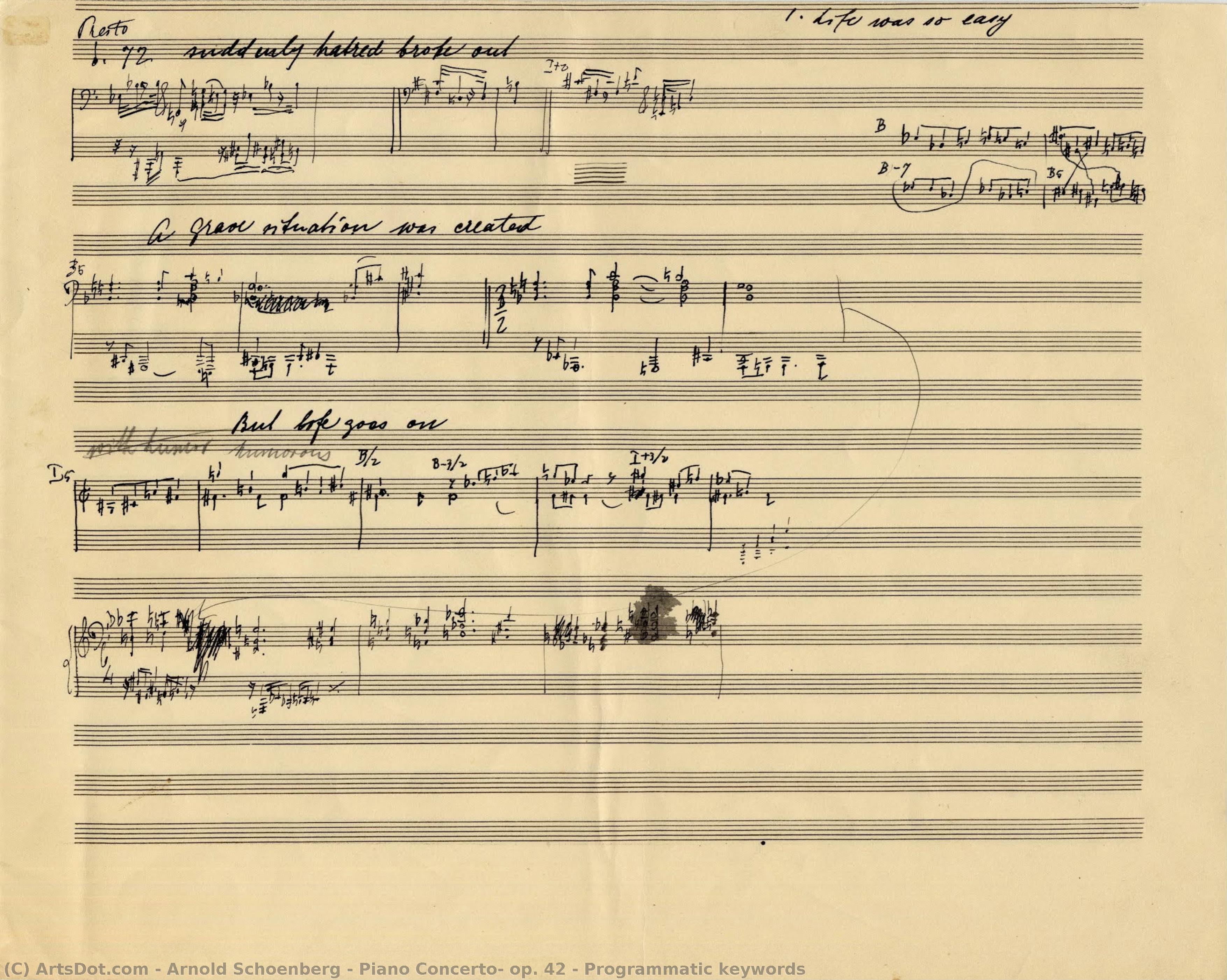
The black‑and‑white photograph before us is more than a mere snapshot of ink on paper; it is an intimate conversation between Arnold Schoenberg and the world, captured in 1942 when the composer was already a towering figure of modernism. The page, measuring thirty‑four by twenty‑seven centimeters, holds a single movement of his Piano Concerto, Op. 42, but within its cramped staves lies a programmatic narrative that unfolds like a miniature opera on paper. Each line of notation is accompanied by terse, evocative phrases—“Life was so easy,” “Suddenly hatred broke out,” “A grave situation was created,” and “But life goes on”—that serve as both guideposts for performers and signposts for the viewer’s imagination.
Historical Context: A Composer in Transition
Schoenberg, born in Vienna in 1874, had long been a pioneer of atonality, yet by the early 1940s he was navigating new terrain. The Piano Concerto was composed between July and December of that year, a period marked by his exile from Europe after the rise of the Nazis and his subsequent teaching position in Los Angeles. In this climate of displacement and uncertainty, the concerto’s four sections mirror the emotional turbulence of a life uprooted yet resilient. The manuscript itself bears the dates of its creation, anchoring it firmly within the historical moment when Schoenberg was redefining what music could be.
Symbolism and Programmatic Narrative
The sketch is a visual manifesto: each programmatic keyword is paired with a musical fragment that embodies its meaning. The first statement—“Life was so easy”—is rendered by a simple, almost naïve row of notes, suggesting innocence before conflict. When the second phrase appears, “Suddenly hatred broke out,” the notation shifts to a jagged, dissonant cluster, mirroring the sudden eruption of hostility that would later define much of Schoenberg’s own experience in exile. The third line, “A grave situation was created,” is illustrated by three distinct sketches that foreshadow the darker, more complex material of the concerto’s middle section. Finally, “But life goes on” is captured by a lyrical opening motif that reappears in the finale, offering a glimmer of continuity amid upheaval.
Emotional Impact and Reproduction Appeal
For collectors and interior designers alike, this photograph offers more than historical curiosity; it invites an emotional dialogue. The stark contrast between ink and paper evokes the tension between order and chaos that defines Schoenberg’s work. When reproduced in high quality, the texture of the parchment, the delicate slant of the cursive notes, and the faint ghosting of the programmatic words become tactile experiences, turning a wall into an active participant in the narrative. The piece speaks to those who value depth, resilience, and artistic integrity—qualities that resonate with modern audiences seeking meaning beyond aesthetics.
Related Artworks
Artist Biography
early life and musical beginnings
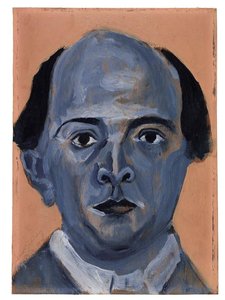
arnold schoenberg, an austrian-american composer, was born on september 13, 1874, in vienna, austria. his early life was marked by a humble beginning, with his father being a shoe-shopkeeper. despite this, schoenberg's innate passion for music led him to largely self-educate himself in the field.- schoenberg explored film music and wrote more tonal music, completing his chamber symphony no. 2 in 1939.
- he satirized fascist tyrants in ode to napoleon (1942), after byron.
- post-war vienna offered him honorary citizenship, but he was ill, as depicted in his string trio (1946).
arnold schoenberg
1874 - 1951 , Austria
Quick Facts
- Artistic Movement Or Style: Twelve-tone technique; Expressionism
- Artists Or Movements Influenced By This Artist:
- Anton Webern
- Alban Berg
- Artists Who Influenced This Artist:
- Johannes Brahms
- Richard Wagner
- Date Of Birth: September 13, 1874
- Date Of Death: 1951
- Full Name: Arnold Schoenberg
- Nationality: Austrian-American
- Notable Artworks:
- Suite, op. 29
- Music Typewriter
- Staffliner
- Place Of Birth: Vienna, Austria
Related Articles

White on Canvas: 10 Masterpieces & Timeless Elegance for Your Home Decor
Explore 10 iconic white paintings by Monet, Whistler & Rothko! Discover the stories behind these serene masterpieces and their impact on art history. Find museum-quality reproductions for your home decor at .

Dark Masterpieces: 10 Iconic Paintings Dominated by Black Tones |
Explore 10 iconic paintings dominated by black tones, from Rembrandt’s chiaroscuro to Goya's dark expressions. Discover the stories behind these masterpieces & find museum-quality art reproductions for your home at .

Monochrome Visions: Exploring the Aesthetic & Historical Significance of Black & White Photography
Explore the rich history & artistic power of black and white photography. From early techniques to iconic masters like Ansel Adams, discover why monochrome continues to captivate art lovers today. Expert insights for collectors.
Mars Black Masterpieces: 10 Iconic Paintings & Timeless Art Decor Ideas
Delve into the power of 'Mars Black' with 10 iconic paintings by masters like Rembrandt & Caravaggio. Explore dramatic chiaroscuro, gothic art, and timeless beauty. Find museum-quality reproductions & elevate your home decor on .

The Subtleties of White: Exploring Absence, Light & Symbolism in Art History
Explore the profound symbolism & history of white in art! From ancient purity to modern abstraction, discover how artists have used absence & light. Expert insights from ArtsDot.