 Send
Send Share
Share
 Details

 Download
 Similars
 Diaporama
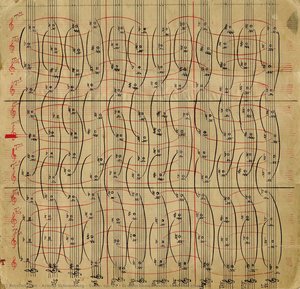
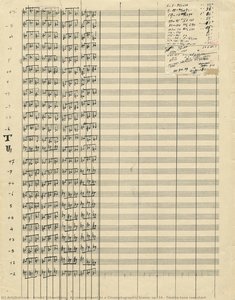
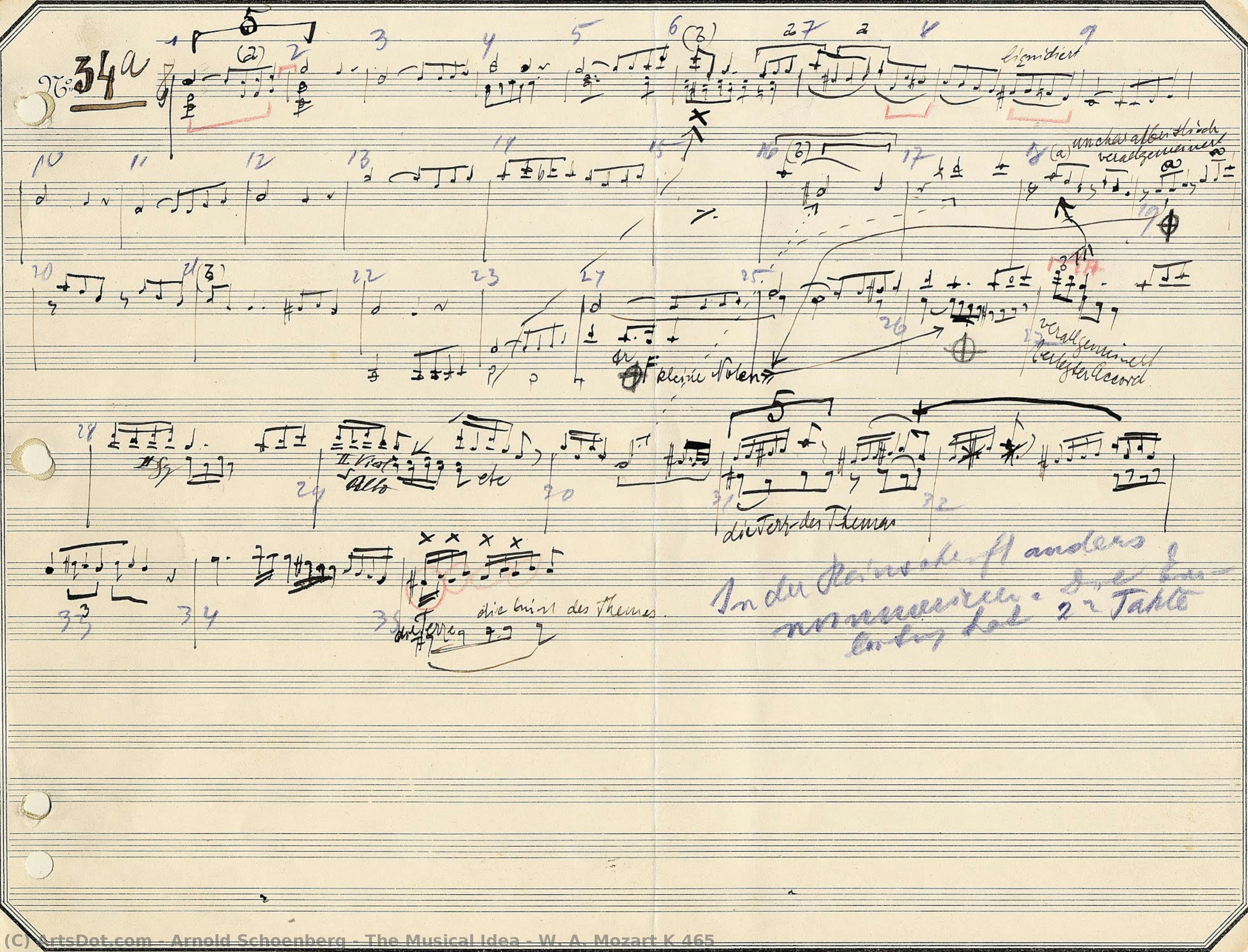
The Musical Idea - W. A. Mozart K 465
 Giclée Print
- Digital
- Modernism
 1934
1934- 19th Century
 25.0 x 19.0 cm
 Arnold Schönberg Center
 Read More
Giclée / Art Print
Museum-quality giclée or canvas print with fast production and flexible finish options. ( Buy Hand Made Painting Buy Image)




































Pick from our preset sizes that match the artwork's original proportions.

You may enter your own dimensions to fit a specific frame or space. If your selected size does not match the original image's proportions, we will either crop the artwork or extend the image with a mirrored or solid-fill edge. A digital mockup will be sent for your approval before production begins.
Please note that the on-screen preview does not reflect the actual cropping or extension. Only the mockup will accurately show the final composition.
While custom sizes are available, we recommend selecting a dimension from the predefined list to preserve the original proportions.
Worldwide Delivery () in 2 weeks instead of standard 4/5 weeks. (26 August)

Free Worldwide Express Shipping

High-Quality Linen Canvas

Full Shipping Insurance

Customs Tax Refund Guarantee

True Color Matching Guarantee

60-Day Return Policy (Defects Only)

100% Money-Back Guarantee

Bulk Discount Offer
 Glass option is only available in size under 110 CM

The Musical Idea - W. A. Mozart K 465
Giclée / Art Print
Reproduction Size
-


Total Price
$ 63
Collectible Description
The Musical Idea - A Study in Atonal Exploration
W.A. Mozart’s K. 465, “The Musical Idea,” takes on an entirely new dimension through the lens of Arnold Schönberg's profound inquiry into musical representation. This isn’t merely a reproduction of a classical score; it’s a visual echo of Schönberg’s seminal work, "Der Musikalische Gedanke," a treatise that fundamentally shifted our understanding of composition and its relationship to logic, technique, and artistic expression. The photograph itself – a meticulously annotated music sheet from 1934 – becomes a tangible manifestation of this intellectual journey, inviting the viewer into the heart of Schönberg’s revolutionary thinking.
- The Sheet as Canvas: The aged paper, stained with ink and bearing numerous handwritten notations, speaks volumes about the process of musical discovery. These aren't random markings; they represent Schönberg’s deliberate attempts to dissect and analyze the very essence of a musical idea – how it is conceived, developed, and ultimately presented.
- Atonality Embodied: The chaotic arrangement of notes, devoid of traditional tonal harmony, mirrors Schönberg’s exploration of atonality, a radical departure from the established conventions of Western music. This visual representation captures the unsettling yet profoundly innovative spirit of his compositional approach.
- Historical Context – A Turning Point: Created in 1934, this image reflects a pivotal moment in musical history. Schönberg’s ideas were challenging the foundations of classical harmony and paving the way for modern music, influencing composers like Schoenberg, Berg, and Webern.
The Artist's Vision – Schönberg and the Logic of Sound
Arnold Schönberg (1874-1951), a towering figure in 20th-century music, was driven by a desire to understand not just *how* music is created, but *why*. His work, particularly "The Musical Idea," sought to move beyond mere technical execution and delve into the underlying logic of musical structure. The annotations on this sheet represent Schönberg’s attempts to articulate this logic – a quest for a system that could capture the intangible qualities of sound and emotion.
Key Concepts:- Serialism: While not explicitly depicted, the meticulous organization of notes hints at Schönberg's later development of serialism, a compositional technique based on ordered series of pitches, rhythms, and dynamics.
- Emotional Resonance: Schönberg believed that music should evoke powerful emotions, and this belief is reflected in the intensity of his compositions and, arguably, in the deliberate disarray of this study sheet.
A Reproduction of Significance – Craftsmanship and Legacy
This 25 x 19 cm reproduction captures not just an image but a moment in musical thought. ArtsDot meticulously recreates the original photograph using archival-quality materials, ensuring that the nuances of the aged paper and handwritten annotations are faithfully preserved. The black and white palette enhances the dramatic effect, emphasizing the stark contrast between order and chaos – a visual representation of Schönberg’s intellectual struggle.
Details:- Hand-Painted Reproduction: Each reproduction is created by skilled artisans using traditional hand-painting techniques, resulting in a unique artwork that possesses an unparalleled depth and richness.
- Premium Materials: Printed on fine art paper with archival inks, this reproduction is designed to last for generations, preserving its beauty and value.
Perfect for Collection & Interior Design
“The Musical Idea” – W.A. Mozart K 465 (Schönberg Edition) offers a compelling addition to any art collection or interior design scheme. Its evocative imagery and historical significance make it a conversation starter, while its timeless aesthetic complements a wide range of styles. This artwork is more than just a reproduction; it’s a window into the mind of a musical revolutionary.
Related Artworks

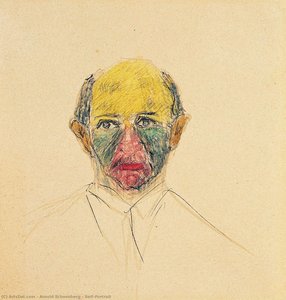
Artist Biography
early life and musical beginnings
arnold schoenberg, an austrian-american composer, was born on september 13, 1874, in vienna, austria. his early life was marked by a humble beginning, with his father being a shoe-shopkeeper. despite this, schoenberg's innate passion for music led him to largely self-educate himself in the field.- schoenberg explored film music and wrote more tonal music, completing his chamber symphony no. 2 in 1939.
- he satirized fascist tyrants in ode to napoleon (1942), after byron.
- post-war vienna offered him honorary citizenship, but he was ill, as depicted in his string trio (1946).
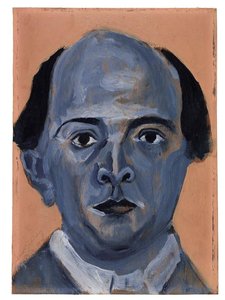
arnold schoenberg
1874 - 1951 , Austria
Quick Facts
- Artistic Movement Or Style: Twelve-tone technique; Expressionism
- Artists Or Movements Influenced By This Artist:
- Anton Webern
- Alban Berg
- Artists Who Influenced This Artist:
- Johannes Brahms
- Richard Wagner
- Date Of Birth: September 13, 1874
- Date Of Death: 1951
- Full Name: Arnold Schoenberg
- Nationality: Austrian-American
- Notable Artworks:
- Suite, op. 29
- Music Typewriter
- Staffliner
- Place Of Birth: Vienna, Austria
Related Articles

Giclée Prints: Archival Quality & Aesthetic Nuances for the Discerning Collector
Explore the world of giclée prints with ArtsDot. Learn about archival quality, aesthetic nuances & investment potential. Expert guidance for discerning art collectors seeking museum-quality reproductions and lasting value.

Echoes of Time: Exploring the Enduring Appeal & Historical Context of Vintage Art Prints
Explore the captivating world of vintage art prints! Discover their history, collecting tips & enduring appeal. Expert insights on chromolithography and building a legacy collection with ArtsDot.

Reproducing Artistry: A Guide to Oil, Canvas & Paper Reproduction Mediums
Explore the world of art reproduction! Learn about oil, canvas & paper options with our expert guide. Discover museum-quality reproductions for your home or collection.

The Enduring Legacy of Fine Art Prints: Technique, History & Aesthetic Impact
Explore the rich history & techniques of fine art prints. Discover investment potential, assess authenticity, and learn how to preserve your collection with expert guidance. Trusted insights for discerning collectors.
Beyond Replication: Sustaining Art Heritage Through Inspired Reproductions in Contemporary Interiors
Discover museum-quality art reproductions & bespoke paintings crafted by skilled artists. Elevate your home with timeless masterpieces – ethically sourced, expertly curated, and guaranteed to inspire. Explore our collection today!