 Preview
 Send
Send Share
Share
 Details

 Download
 Similars
 X-Ray
X-Ray Diaporama
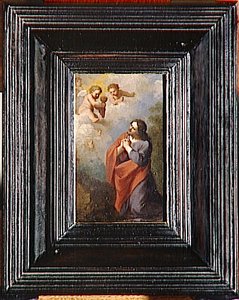
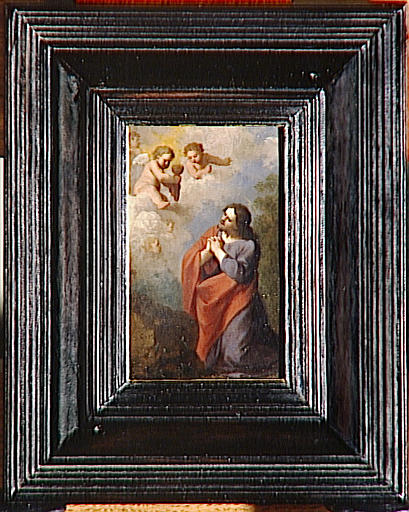
JESUS AU JARDIN DES OLIVIERS


 Read More
Giclée / Art Print
Museum-quality giclée or canvas print with fast production and flexible finish options. ( Buy Hand Made Painting Buy Image)




P118B $10

P118H $10

P118W $10

P438Z $10

P508JH $12

P508YH $12

P805H $10

P805Z $10

P919BZ $10

P919G $10

P919XJ $10

P959ZH $10

P968JZ $12

W106C $8

W218G $10

W218JH $8

W218Y $10

W307PJ $10

W316G $10

W316PJ $8

W316Y $10

W398PJ $8

W4111J $10

W500HY $15

W500JH $15

W692G $12

W849H $8

W940BG $15

W953PJ $8




Pick from our preset sizes that match the artwork's original proportions.

You may enter your own dimensions to fit a specific frame or space. If your selected size does not match the original image's proportions, we will either crop the artwork or extend the image with a mirrored or solid-fill edge. A digital mockup will be sent for your approval before production begins.
Please note that the on-screen preview does not reflect the actual cropping or extension. Only the mockup will accurately show the final composition.
While custom sizes are available, we recommend selecting a dimension from the predefined list to preserve the original proportions.
Worldwide Delivery () in 2 weeks instead of standard 4/5 weeks. (26 August)

Free Worldwide Express Shipping

High-Quality Linen Canvas

Full Shipping Insurance

Customs Tax Refund Guarantee

True Color Matching Guarantee

60-Day Return Policy (Defects Only)

100% Money-Back Guarantee

Bulk Discount Offer
 Glass option is only available in size under 110 CM

JESUS AU JARDIN DES OLIVIERS
Giclée / Art Print
Reproduction Size
-


Total Price
$ 63
Collectible Description
A Moment of Divine Solitude in the Garden of Olives
This evocative painting transports the viewer directly to the hallowed grounds of the Garden of Olives, capturing one of the most profoundly poignant moments in Christian iconography: Christ's prayer before his betrayal. The composition immediately draws the eye to the central figure of Jesus, kneeling in an attitude of deep supplication. It is a scene steeped in palpable tension and spiritual weight. The artist has masterfully employed dramatic lighting, characteristic of the Baroque period, where a strong, directional light source seems to emanate from above, illuminating Christ’s form while allowing the surrounding landscape to recede into atmospheric shadow. This interplay between brilliant illumination and deep shadow is not merely decorative; it is a profound narrative tool, emphasizing the emotional intensity and divine focus of the moment.
Baroque Drama and Compositional Grace
The stylistic hallmarks of Baroque art are unmistakable here. One observes the dramatic use of light and shadow, known as tenebrism, which heightens the emotional stakes for the viewer. The composition is carefully balanced, featuring Jesus at its heart, supported visually by two cherubic angels gazing down with heavenly concern. These figures introduce a sense of divine witness to the human vulnerability displayed by Christ. While the background suggests an olive grove through muted earth tones and indistinct foliage, the focus remains intensely personal. The artist utilizes sweeping, curved lines in the drapery—particularly the vibrant red cloak draped over Jesus’s shoulders—to guide the eye and imbue the static scene with a sense of contained dynamism.
Symbolism Woven into Texture and Tone
The symbolism within this work is rich and deeply resonant. The act of kneeling itself speaks volumes of humility, profound contemplation, and ultimate surrender to fate. The angels serve as celestial guardians, suggesting divine support amidst human tribulation. Color plays a crucial symbolic role; the warm reds and browns anchor the human drama, contrasting beautifully with the cooler blues and greens of the distant landscape. Furthermore, the visible texture in the rendering of the fabric and skin suggests an almost tangible reality, inviting the collector to contemplate the weight of history captured on canvas. The overall emotional impact is one of solemnity—a breathtaking confluence of vulnerability and divine assurance.
A Masterful Blend of Technique and Atmosphere
Technically, the painting showcases a sophisticated handling of oil paint. The artist has achieved depth not through strict linear perspective, which remains somewhat flattened in keeping with the period's conventions, but through masterful layering and tonal variation. This atmospheric approach allows the background landscape to recede convincingly while keeping the foreground figures sharply defined. For those interested in acquiring a reproduction, understanding this technique is key; it speaks to an original commitment to rich color saturation and visible brushwork that adds life and movement to what might otherwise be a static devotional scene. It is a piece designed not just for viewing, but for feeling.
Related Artworks



Artist Biography
early life and training
cornelis van poelenburgh, a prominent dutch landscape painter, was born in utrecht, netherlands in 1594. he initially trained with abraham bloemaert, a renowned artist of the time. this foundational training laid the groundwork for van poelenburch's future success.artistic career and influences
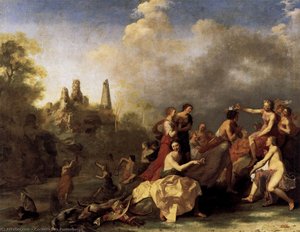
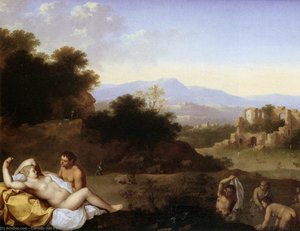
van poelenburch's travels to rome in the early 17th century significantly influenced his work, making him a leading representative of the first generation of dutch landscape painters active in italy. his small-scale paintings, often featuring italianate landscapes with small figures enacting biblical or mythological scenes, showcased his unique style. notable works:- satyrs spying on nymphs (after 1627), a characteristic example of van poelenburch's work, featuring archaic landscapes with figures bathing. (view on ArtsDot)
- council of the gods (c. 1630), a painting showcasing van poelenburch's idealized hilly landscape and roman-inspired goddesses, now housed in the mauritshuis (the hague, netherlands). (view on ArtsDot)
legacy and later life
van poelenburch's work was highly regarded by his contemporaries, including the grand duke of tuscany and the dutch stadholder. he later returned to utrecht, where he passed away in 1667, just a few years after his old teacher abraham bloemaert. key points:- born in utrecht, netherlands in 1594
- trained with abraham bloemaert
- influenced by his time in rome
- known for small-scale italianate landscapes with figures
- died in utrecht in 1667 view cornelis van poelenburch's artworks on ArtsDot learn more about cornelis van poelenburgh on wikipedia
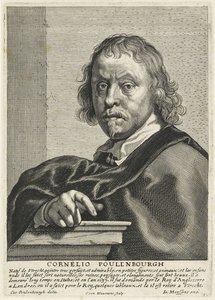
cornelis van poelenburch
1594 - 1667 , Netherlands
Quick Facts
- Artistic Movement Or Style: Dutch Landscape, Romanate
- Artists Or Movements Influenced By This Artist: ['Claude Lorraine']
- Artists Who Influenced This Artist: ['Abraham Bloemaert']
- Date Of Birth: 1594, Utrecht, Netherlands
- Date Of Death: 1667, Utrecht, Netherlands
- Full Name: Cornelis van Poelenburgh
- Nationality: Dutch
- Notable Artworks:
- Satyrs spying on nymphs
- Council of the gods
- Place Of Birth: Utrecht, Netherlands
Related Articles
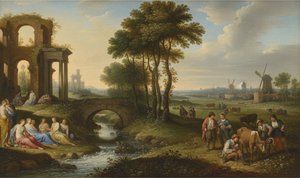
Cornelis van Poelenburch: Bridging Mannerism & the Dutch Baroque Landscape
Discover Cornelis van Poelenburch, a pivotal Dutch Baroque landscape painter bridging Mannerism & Italianate styles. Explore his life, key works, and lasting influence on 17th-century art with ArtsDot.

Rembrandt's Masterpieces: Explore 25 Iconic Paintings & Prints | ArtsDot
Journey through Rembrandt van Rijn's 25 most iconic paintings & etchings. Explore Dutch Golden Age masterpieces, dramatic chiaroscuro, and timeless portraits. Find museum-quality art reproductions to elevate your home decor on ArtsDot.com.
Cultivating Paradise: A Historical & Artistic Exploration of Gardens in Painting
Explore the rich history of gardens in painting! Discover masterpieces from Renaissance to Impressionism & beyond. Learn about symbolism, artists like Monet & Klimt, and find your perfect artwork at ArtsDot.

Dutch Baroque Masters: 10 Paintings That Shaped an Era | ArtsDot
Journey through the Golden Age with our guide to the Top 10 Dutch Baroque masterpieces! Explore iconic paintings by Rembrandt, Vermeer & Frans Hals. Find museum-quality art reproductions and elevate your home decor at ArtsDot.com.
Sir Anthony van Dyck: Courtly Portraiture & the Shaping of Baroque Identity
Explore the life & legacy of Sir Anthony van Dyck, the leading court painter of his era. Discover his innovative portraiture, Baroque masterpieces, and investment potential for discerning collectors. Learn more at ArtsDot.