 Preview
 Send
Send Share
Share
 Details

 Download
 Similars
 X-Ray
X-Ray Diaporama
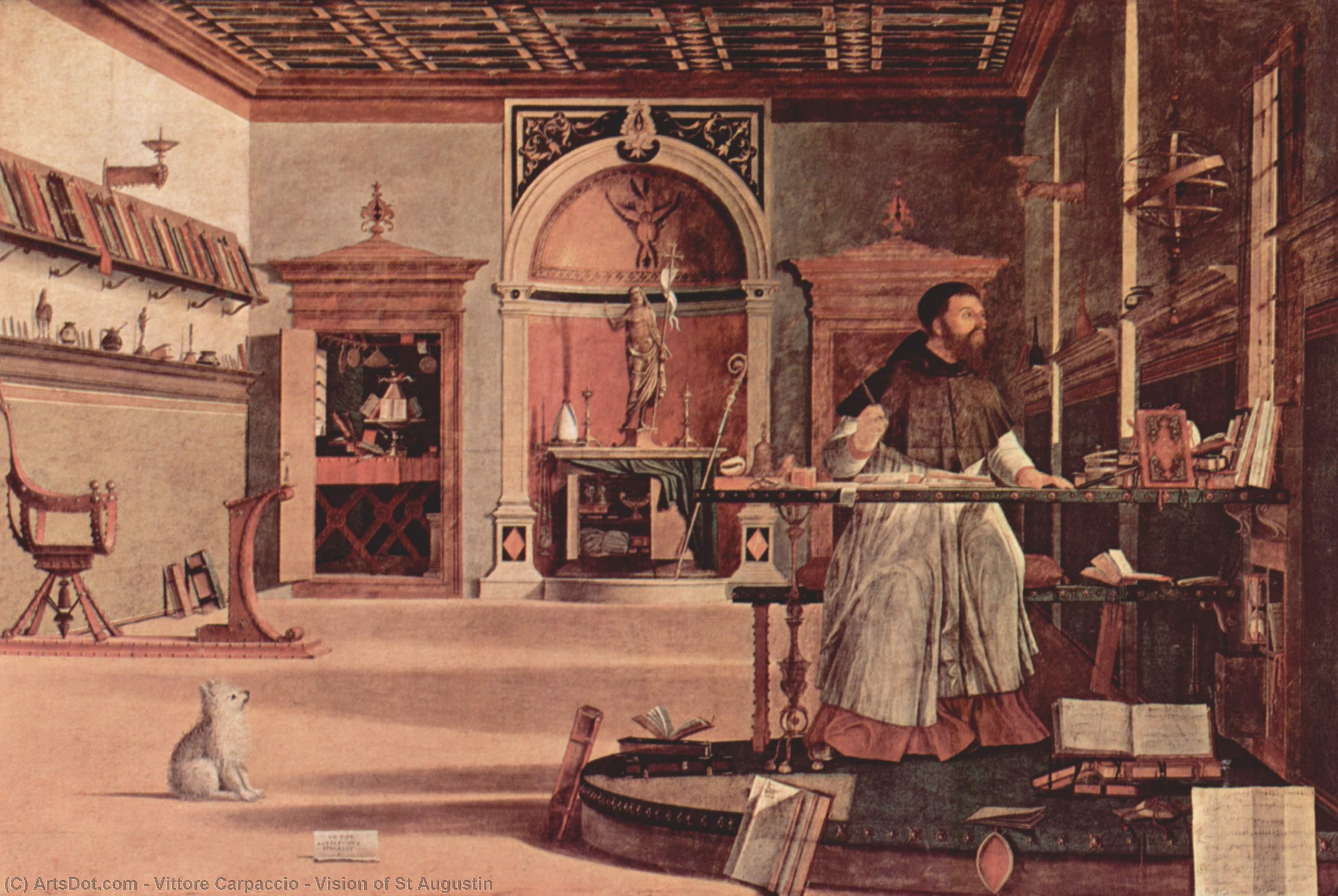
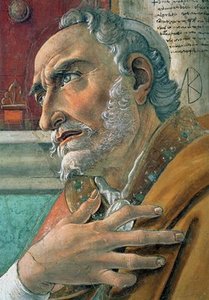
Vision of St Augustin
 Oil
Oil- WallArt
- Venetian Renaissance
 1502
1502- Renaissance
 141.0 x 210.0 cm
 Scuola di San Giorgio degli Schiavoni
 Read More
Giclée / Art Print
Museum-quality giclée or canvas print with fast production and flexible finish options. ( Buy Hand Made Painting Buy Image)




































Pick from our preset sizes that match the artwork's original proportions.

You may enter your own dimensions to fit a specific frame or space. If your selected size does not match the original image's proportions, we will either crop the artwork or extend the image with a mirrored or solid-fill edge. A digital mockup will be sent for your approval before production begins.
Please note that the on-screen preview does not reflect the actual cropping or extension. Only the mockup will accurately show the final composition.
While custom sizes are available, we recommend selecting a dimension from the predefined list to preserve the original proportions.
Worldwide Delivery () in 2 weeks instead of standard 4/5 weeks. (17 August)

Free Worldwide Express Shipping

High-Quality Linen Canvas

Full Shipping Insurance

Customs Tax Refund Guarantee

True Color Matching Guarantee

60-Day Return Policy (Defects Only)

100% Money-Back Guarantee

Bulk Discount Offer
 Glass option is only available in size under 110 CM

Vision of St Augustin
Giclée / Art Print
Reproduction Size
-


Total Price
$ 63
Collectible Description
A Sanctuary of Thought: The Intimate World of St. Augustine
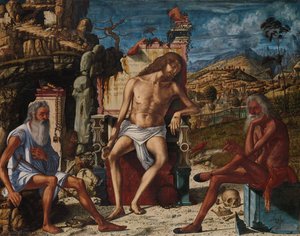
In the quiet, sun-drenched corners of the Venetian Renaissance, Vittore Carpaccio captured moments of profound spiritual and intellectual stillness. His masterpiece, Vision of St. Augustin, invites the viewer into a private sanctuary where the boundaries between the earthly and the divine begin to blur. The painting presents us with the venerable Saint Augustine not in a moment of grand, public spectacle, but within the intimate confines of his study. This is a space defined by the weight of knowledge and the pursuit of truth, where every object—from the heavy leather-bound books resting upon his desk to the delicate vases placed thoughtfully around the room—serves as a testament to a life dedicated to contemplation. The composition breathes with a sense of lived-in tranquility, suggesting that even in the midst of rigorous academic labor, there is a profound space for divine revelation.
Carpaccio’s mastery lies in his ability to weave together the meticulous detail of the early Netherlandish tradition with the luminous, atmospheric grace of the Venetian school. As a pupil of Gentile Bellini, Carpaccio possessed an extraordinary gift for rendering texture and light, a skill that is palpably present in this work. One can almost feel the grain of the wooden furniture, the coolness of the stone floors, and the soft warmth of the light filtering through the room. The inclusion of subtle, domestic details—a cat resting peacefully in a corner, a clock marking the relentless passage of temporal time, and a dining table set for leisure—grounds the spiritual subject matter in a relatable, human reality. This juxtaposition of the mundane and the miraculous creates a tension that is both captivating and deeply moving.
Symbolism and the Architecture of the Soul
Beyond its surface beauty, Vision of St. Augustin functions as a complex tapestry of symbolic meaning. The study itself acts as an architectural metaphor for the human mind: organized, filled with the accumulated wisdom of the past, yet open to the unexpected light of inspiration. The books are not merely props; they represent the intellectual foundation upon which Augustine built his theological triumphs. The presence of the clock serves as a memento mori, a gentle reminder of mortality that heightens the importance of the spiritual vision occurring within the frame. Even the scattered chairs suggest a history of dialogue and communal learning, hinting that while the saint’s current moment is solitary, his work is part of a much larger, interconnected human discourse.
For the discerning collector or interior designer, this painting offers more than just aesthetic elegance; it provides an emotional anchor. The artwork possesses a unique ability to transform a space, imparting a sense of scholarly prestige and meditative calm. Whether placed in a grand library or a contemporary living area, a high-quality reproduction of this piece brings with it the timeless aura of the Renaissance. It is a work that rewards repeated viewing, revealing new layers of light, shadow, and narrative depth with every encounter, making it an enduring investment for those who seek to surround themselves with art that speaks to the eternal.
Related Artworks



Artist Biography
early life and training
vittore carpaccio, a prominent italian painter, was born in venice around 1465. he studied under the tutelage of gentile bellini, a renowned artist of the venetian school. this apprenticeship laid the foundation for carpaccio's future success.artistic style and influences
carpaccio's style was characterized by its conservative nature, showing minimal influence from the humanist trends that transformed italian renaissance painting during his lifetime. his work was influenced by antonello da messina's style and early netherlandish art. this unique blend of styles resulted in a distinctive approach to venetian painting.notable works
- the legend of saint ursula, a cycle of nine paintings, is carpaccio's most famous work. this series, now housed in the gallerie dell'accademia, showcases his mastery of narrative painting.
- glory of st. ursula altarpiece (1491) demonstrates carpaccio's skill in capturing light and color, reminiscent of giovanni bellini's style.
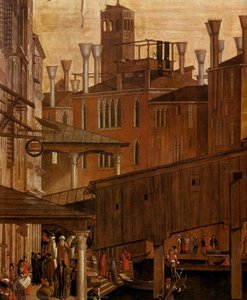
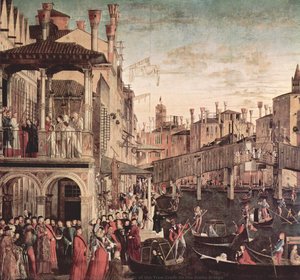
- miracle of the relic of the cross at the ponte di rialto (1494) highlights carpaccio's ability to balance composition and narrative.
career highlights and legacy
- carpaccio's principal works were executed between 1490 and 1519, ranking him among the early masters of the venetian renaissance.
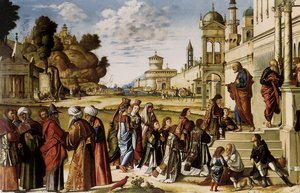
- his orientalist style, as seen in st. george baptizing the selenites, reflects a new fascination with the levant.
- carpaccio's work has been somewhat overlooked in comparison to his contemporaries, such as giovanni bellini or giorgione.
references and further reading
discover more about vittore carpaccio and the venetian school on ArtsDot.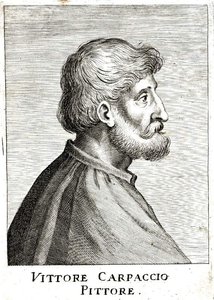
Vittore Carpaccio
1465 - 1526 , Italy
Quick Facts
- Artistic Movement Or Style: Early Venetian Renaissance
- Artists Or Movements Influenced By This Artist: ['Early Netherlandish Painting']
- Artists Who Influenced This Artist:
- Antonello da Messina
- Gentile Bellini
- Date Of Birth: Venice, Italy (c. 1465)
- Date Of Death: 1526
- Full Name: Vittore Carpaccio
- Nationality: Italian
- Notable Artworks:
- The Legend of Saint Ursula
- Glory of St. Ursula Altarpiece
- Miracle of the Relic of the Cross at the Ponte di Rialto
- Place Of Birth: Venice
Related Articles
Vittore Carpaccio: Venetian Renaissance Narrative & the Poetics of Detail
Explore the captivating world of Vittore Carpaccio, a master storyteller of the Venetian Renaissance. Discover his intricate details, narrative cycles like 'The Legend of St. Ursula,' and unique artistic style.

Jacopo Tintoretto's Masterpieces: 25 Paintings That Define Venetian Drama | ArtsDot
Explore 25 breathtaking masterpieces by Jacopo Tintoretto, the Venetian master of drama and light. Discover the stories behind iconic Renaissance paintings & find museum-quality art reproductions to elevate your home decor on ArtsDot.com.

The Intimate Gaze: Study & Intellectual Pursuit in Western Art
Explore the fascinating history of study and intellectual pursuit in Western art! Discover Renaissance scholars, iconic portraits like Holbein's Erasmus, and Leonardo’s studies – a journey through humanist ideals & artistic mastery. Learn more at ArtsDot.
Pietro Longhi's Venetian Scenes: A Study of Rococo Society & Domestic Life
Explore the captivating world of Pietro Longhi's Venetian scenes! Discover insightful analysis of his Rococo masterpieces & social commentary on 18th-century life. Learn about this 'Venetian Hogarth' and his lasting artistic legacy.
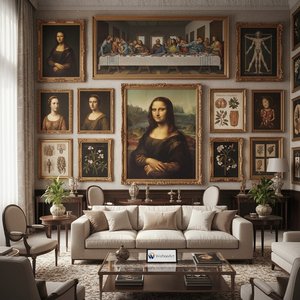
Leonardo da Vinci's Masterpieces: Explore 25 Iconic Artworks for Your Home | ArtsDot
Journey through Leonardo da Vinci's genius with our curated selection of 25 iconic artworks. Explore the stories behind Mona Lisa, The Last Supper & more Renaissance masterpieces. Find museum-quality art reproductions for your home at ArtsDot.com.