 Preview
 Send
Send Share
Share
 Details

 Download
 Similars
 X-Ray
X-Ray Diaporama
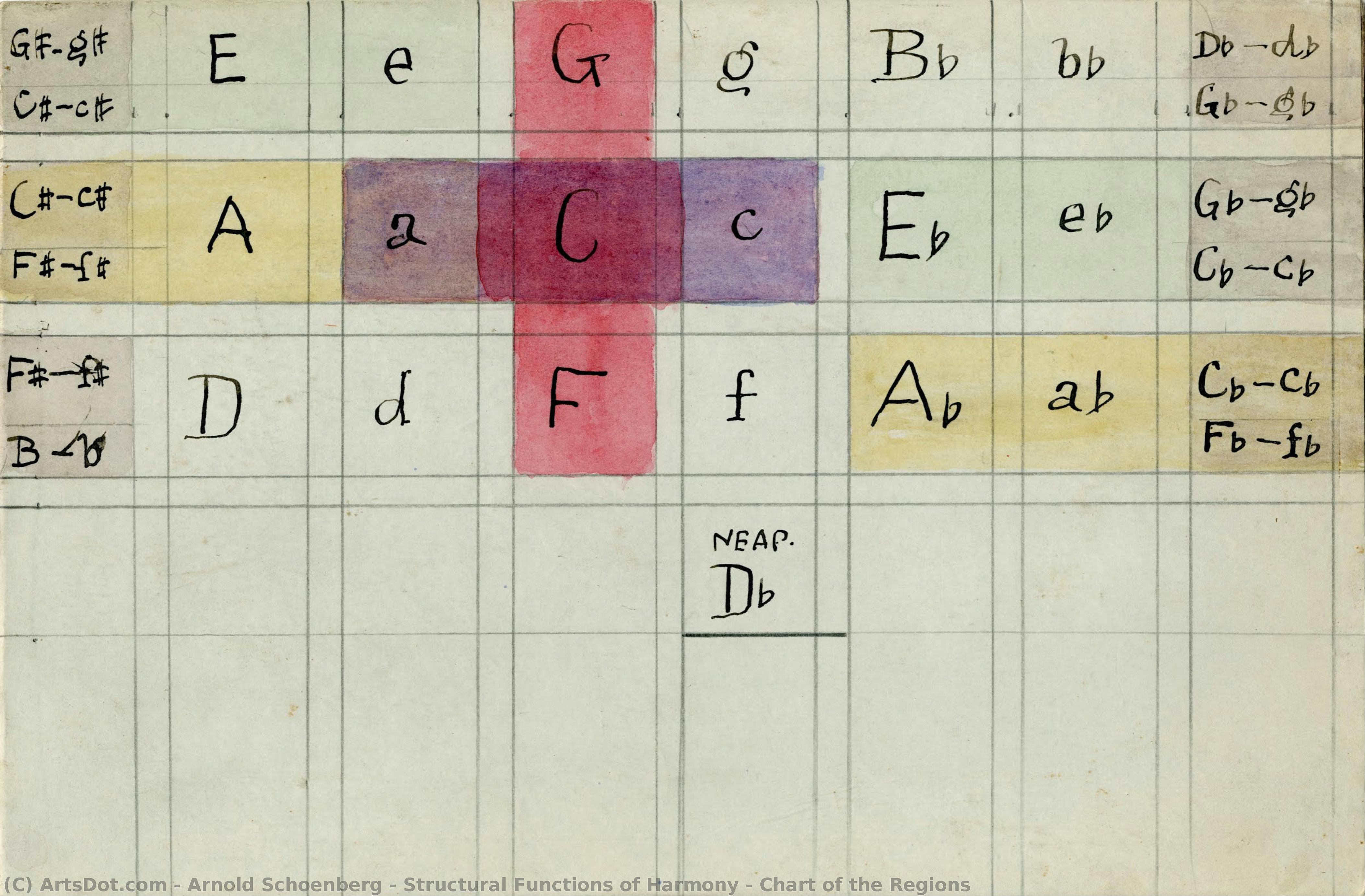
Structural Functions of Harmony - Chart of the Regions
 Drawing
- WallArt
 1948
1948- Modern
 30.0 x 20.0 cm
 Arnold Schönberg Center
 Read More
Hand Made Oil Reproduction
Hand-painted oil on canvas in your size and frame, made to order by our artists. ( Buy Print Buy Image)




P118B $10

P118H $10

P118W $10

P438Z $10

P508JH $12

P508YH $12

P805H $10

P805Z $10

P919BZ $10

P919G $10

P919XJ $10

P959ZH $10

P968JZ $12

W106C $8

W218G $10

W218JH $8

W218Y $10

W307PJ $10

W316G $10

W316PJ $8

W316Y $10

W398PJ $8

W4111J $10

W500HY $15

W500JH $15

W692G $12

W849H $8

W940BG $15

W953PJ $8




Pick from our preset sizes that match the artwork's original proportions.

You may enter your own dimensions to fit a specific frame or space. If your selected size does not match the original image's proportions, we will either crop the artwork or extend the painting with additional hand-painted elements. A digital mockup will be sent for your approval before production begins.
Please note that the on-screen preview does not reflect the actual cropping or extension. Only the mockup will accurately show the final composition.
While custom sizes are available, we recommend selecting a dimension from the predefined list to preserve the original proportions.
After order, ArtsDot.com team will email client for instructions and provide a mockup preview
Worldwide Delivery () in 3/4 weeks instead of standard 5 weeks. (17 August). No compromise on quality.

Free Worldwide Express Shipping

High-Quality Linen Canvas

Full Shipping Insurance

Customs Tax Refund Guarantee

True Color Matching Guarantee

60-Day Return Policy (Defects Only)

100% Money-Back Guarantee

Bulk Discount Offer
 Glass option is only available in size under 110 CM

Structural Functions of Harmony - Chart of the Regions
Reproduction Medium
Reproduction Size
-


Total Price
$ 263
Artwork Description
The Architecture of Sound: Decoding Schoenberg’s Harmonic Vision
In the quiet intersection where mathematical precision meets musical intuition, we find Structural Functions of Harmony - Chart of the Regions. This evocative drawing from 1948 serves as a profound window into the mind of Arnold Schoenberg, one of the most transformative figures in the history of Western music. Rather than a mere diagram, this work presents a visual manifestation of musical logic, capturing the moment where the composer sought to codify the very essence of tonal movement. The piece functions as a bridge between the abstract world of theory and the tangible reality of the keyboard, inviting the viewer to perceive music not just as an auditory experience, or even a temporal one, but as a structured, spatial landscape.
The composition is centered around a meticulously rendered musical keyboard, yet it transcends simple illustration. Through a delicate interplay of letters and numbers, Schoenberg maps out his revolutionary concept of "regions"—an expansion of traditional modulation that redefined how we understand the relationship between different keys. The use of soft pink and purple hues to highlight specific keys adds a layer of poetic depth to the technical rigor, suggesting that within the strict laws of harmony, there exists a vibrant, chromatic life. This subtle use of color transforms a pedagogical tool into an expressive piece of graphic art, where the rhythmic placement of symbols creates a visual melody that dances across the ivory and ebony surfaces.
A Legacy of Innovation and Intellectual Rigor
To understand this work is to understand the turbulent and brilliant era of the Second Viennese School. Created during Schoenberg's American period, this chart reflects his tireless dedication to pedagogy and the formalization of his groundbreaking theories. Having fled the rise of Nazism in Europe, Schoenberg brought with him a profound intellectual weight, seeking to provide his students with the structural foundations necessary to navigate the complexities of modern composition. The drawing is a testament to his belief that even the most radical innovations—such as atonality and the twelve-tone technique—must be rooted in a deep, structural understanding of harmonic function.
For the discerning collector or interior designer, this piece offers a unique opportunity to introduce an element of intellectual sophistication into a space. It is a work that speaks to the beauty of order and the elegance of logic. Whether placed in a study, a music salon, or a contemporary gallery setting, the Chart of the Regions acts as a conversation starter, drawing the eye toward its intricate details and prompting reflections on the hidden structures that govern our perception of harmony. It is more than a reproduction; it is an invitation to contemplate the profound symmetry between the visual and the sonic worlds.
Related Artworks

Artist Biography
early life and musical beginnings
arnold schoenberg, an austrian-american composer, was born on september 13, 1874, in vienna, austria. his early life was marked by a humble beginning, with his father being a shoe-shopkeeper. despite this, schoenberg's innate passion for music led him to largely self-educate himself in the field.- schoenberg explored film music and wrote more tonal music, completing his chamber symphony no. 2 in 1939.
- he satirized fascist tyrants in ode to napoleon (1942), after byron.
- post-war vienna offered him honorary citizenship, but he was ill, as depicted in his string trio (1946).
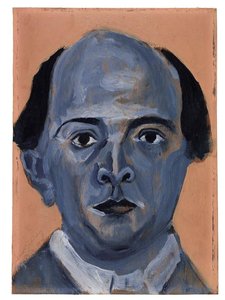
arnold schoenberg
1874 - 1951 , Austria
Quick Facts
- Artistic Movement Or Style: Twelve-tone technique; Expressionism
- Artists Or Movements Influenced By This Artist:
- Anton Webern
- Alban Berg
- Artists Who Influenced This Artist:
- Johannes Brahms
- Richard Wagner
- Date Of Birth: September 13, 1874
- Date Of Death: 1951
- Full Name: Arnold Schoenberg
- Nationality: Austrian-American
- Notable Artworks:
- Suite, op. 29
- Music Typewriter
- Staffliner
- Place Of Birth: Vienna, Austria
Related Articles
Blush & Brilliance: 10 Iconic Paintings Dominated by Light Pink Tones |
Explore 10 iconic paintings bathed in captivating light pink tones! From Monet's Impressionism to Renoir’s romance, discover the stories behind these blush-hued masterpieces. Find museum-quality art reproductions & decor inspiration at .
Harmonies on Canvas: Exploring the Visual Representation of Music in Art History
Explore the fascinating history of music's visual representation in art! From ancient symbolism to modern abstraction, discover how artists have captured sound and emotion on canvas. Expert insights & stunning examples.

Echoes of Place: Regionalism & American Identity in Interwar Art
Explore the rise of American Regionalism in interwar art! Discover Grant Wood, Thomas Hart Benton & the movement's impact on American identity. Expert analysis & historical context.

American Regionalism: A Crucible of Identity – Exploring Themes of Place, Labor & Social Commentary
Explore American Regionalism's powerful depiction of the American heartland during the Great Depression. Discover Grant Wood, Thomas Hart Benton & more. Expert analysis & high-quality art reproductions at ArtsDot.

Chromatic Harmonies & Discord: A History of Color Theory in Art
Explore the fascinating evolution of color theory in art history! Discover Impressionism, Neo-Impressionism & beyond with expert insights for collectors and enthusiasts. Learn about Seurat's techniques & the psychology of color.